Choosing a recycled plastic manufacturer used to be a niche decision. Today, it’s a high-stakes procurement move. With the Australian Government’s push toward a circular economy and businesses racing to meet 2025-2030 sustainability targets, the demand for recycled materials is skyrocketing.
But here’s the kicker: not all “recycled” products are created equal.
As the CEO of Resourceful Living, I’ve seen it all: from “greenwashed” imports that break down after a summer in the Aussie sun to products that claim to be recycled but actually contain 60% virgin plastic fillers. If you’re a procurement officer, a council project manager, or a business owner, you need to know exactly what you’re paying for.
Before you sign that supply contract, here are the 10 critical questions you need to ask your recycled plastic manufacturer.
1. Is it 100% recycled, or does it contain additives and fillers?
This is the big one. Many manufacturers add “fillers” or virgin resin to make the manufacturing process easier or cheaper. While a product with 20% recycled content is a start, it doesn’t move the needle much for a circular economy.
✅ What to look for: A manufacturer that uses 100% post-consumer or post-industrial waste. If they use additives, ask what they are and why they’re there. True sustainability means keeping plastic in the loop, not adding new materials to the mix.
“True circularity isn’t about just using a bit of waste; it’s about transforming waste into a primary resource without relying on virgin materials to ‘bridge the gap’.”
2. Is it made in Australia from Australian waste?
It sounds simple, but you’d be surprised how much “Australian” recycled plastic is actually imported as pellets from overseas. Shipping waste around the globe to be processed and shipped back as a bench seat is a massive carbon footprint own-goal.
Ask where the raw waste is sourced. At Resourceful Living, we’re big believers in local solutions. Sourcing Australian waste to solve Australian infrastructure problems is how we actually address plastic pollution in Australia.
3. Can you trace the source of the plastic?
Transparency is the enemy of greenwashing. If a manufacturer can’t tell you exactly where their feedstock comes from: whether it’s soft plastic from supermarkets or hard hats from a mining site: that’s a red flag.
Traceability allows you to report accurately on your ESG (Environmental, Social, and Governance) targets. Knowing that your new wheel stops for mining sites came from actual local industrial waste is a powerful story for your stakeholders.
4. Do you have a “Take-Back” program?
A product is only truly sustainable if it has an end-of-life plan. What happens to that recycled plastic panel in 20 years? Does it go to landfill? Or can the manufacturer take it back, shred it, and turn it into a new product?
This is called Closed-Loop Manufacturing. If a manufacturer doesn’t have a closed-loop ESG partner program, they are just delaying the trip to the landfill, not preventing it.
5. What testing has been done for UV stability?
The Australian sun is brutal. Plastic that hasn’t been properly UV-stabilised will become brittle and “chalky” within a few years.
Ask for UV testing data. Recycled HDPE (High-Density Polyethylene) is incredibly durable, but it still needs to be processed correctly to withstand 40-degree days in outback NSW or coastal QLD. This is especially vital for rehabilitation products used in mining, where failure isn’t an option.
6. What is the structural/strength rating?
Recycled plastic is not a “one-size-fits-all” replacement for timber or steel. It has different properties. You need to know:
- What is the load-bearing capacity?
- How does it handle thermal expansion?
- Is it suitable for the specific thickness required?
Before you buy, check out our guide on how to choose the right thickness for your project to ensure you aren’t under-speccing your materials.
7. How do you handle contaminated waste streams?
One of the hardest parts of recycling is contamination (food scraps, labels, dirt). A high-quality manufacturer will have a rigorous cleaning and sorting process. If they don’t, those contaminants stay in the final product, creating weak spots and aesthetic flaws.
We love showing people what happens behind the scenes of our process. It’s not just about melting plastic; it’s about engineering a clean, reliable material.
8. What is the expected lifespan and maintenance?
The biggest selling point for recycled plastic is that it outlasts timber and steel in high-moisture or high-corrosion environments. It doesn’t rot, it doesn’t rust, and termites hate it.
Ask the manufacturer for a lifecycle comparison. Usually, the slightly higher upfront cost is dwarfed by the savings in maintenance over 10-15 years. You can see the breakdown here: Recycled Plastic vs Timber vs Steel Cost & Lifespan.

9. Can you customise dimensions or colours?
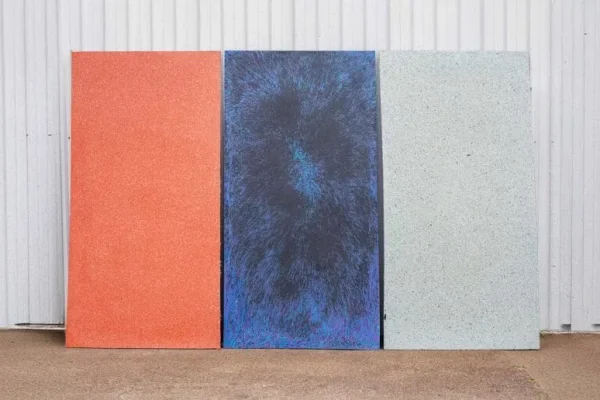
Many large-scale manufacturers only offer standard “off-the-shelf” profiles (like 90×90 posts). If your project requires custom panels, specific thicknesses, or bespoke colours to match branding, you need to know if their machinery can handle it.
Customisation is often where the best innovations happen. Whether it’s unique recycled plastic panels for a fit-out or specialized mining equipment, ensure your manufacturer is a partner in design, not just a supplier.
10. How will this purchase help us meet our sustainability targets?
At the end of the day, you probably have a boss or a board asking for a report on diverted landfill. Your manufacturer should be able to provide you with the data:
- Kilograms of plastic diverted from landfill.
- Carbon emissions saved compared to virgin materials.
- Contribution to Circular Procurement goals.
Using circular procurement to reduce landfill costs is one of the smartest financial moves a modern organisation can make.
Summary Checklist for Your Next Tender
To make it easy, here is a quick “cheat sheet” you can use when evaluating Australian recycled plastic manufacturers:
| Feature | What to Look For |
|---|---|
| Material Origin | 100% Australian Waste 🇦🇺 |
| Purity | 100% Recycled (No virgin fillers) |
| End of Life | Active Take-Back / Closed-Loop Program |
| Durability | UV Stabilised & Strength Tested |
| Reporting | Landfill Diversion Data Provided |
Don’t Fall Into the Greenwash Trap
It’s easy to get caught up in the “sustainable” buzzwords, but as we often say, there are 5 common mistakes when buying sustainable building materials. The biggest mistake is assuming all recycled plastic is created equal.
By asking these 10 questions, you aren’t just buying a product; you’re investing in a piece of infrastructure that actually does what it says on the tin. You’re supporting Australian jobs, reducing local landfill, and proving that the recycled plastic circular economy is here to stay.
Ready to start your next project?
If you want to see how we handle these questions at Resourceful Living, reach out to our team. We’re always up for a chat about how we can turn your waste into your next asset.