

Choosing the Wrong Material Can Cost You for Decades
Here’s the thing about infrastructure it doesn’t whisper its costs. It shouts them… just slowly.
A timber bollard that rots in five years.
A steel handrail that corrodes near the coast.
A boardwalk that needs replacing twice in 20 years.
Material selection isn’t just about today’s invoice. It’s about lifecycle cost, ESG impact, maintenance burden, and asset resilience.
Think of it like buying a ute for your fleet. You don’t just compare the sticker price you factor in fuel, servicing, reliability, and resale. Infrastructure materials deserve the same scrutiny.
In this detailed comparison of recycled plastic vs timber vs steel, we’ll break down:
Upfront cost vs lifecycle cost
Maintenance demands
Climate performance (especially Australian conditions)
Carbon footprint
Asset lifespan
Circular economy alignment
Let’s get into it.
🪵 Timber: Natural Appeal, Ongoing Maintenance Burden
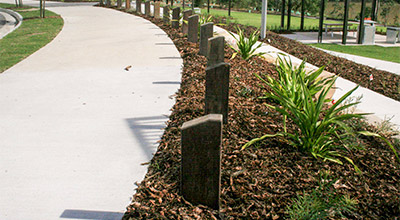
Timber is familiar. It’s been used in infrastructure for generations. It looks good, feels natural, and is widely available.
But here’s the catch: timber performs beautifully until it doesn’t.
Key Vulnerabilities
Rot & decay in damp or shaded areas
Termite damage, particularly in warmer climates
Moisture absorption, leading to swelling and splitting
UV degradation causing cracking and greying
Warping and cupping in exposed applications
In many Australian environments coastal zones, high rainfall regions, or termite-prone areas timber becomes a high-maintenance asset.
The Maintenance Reality
Timber infrastructure often requires:
Regular sealing or staining (every 1–3 years)
Structural inspections
Board replacements
Fastener tightening or replacement
Over 20 years, maintenance costs can exceed the original purchase price.
According to infrastructure asset management studies, timber elements in outdoor civil works frequently require partial replacement within 7–15 years, depending on exposure.
As architect Frank Lloyd Wright once said:
“Wood is universally beautiful to man. It is the most humanly intimate of all materials.”
True. But beauty doesn’t pay the maintenance budget.
ESG Considerations
Timber can be sustainable when responsibly sourced. However:
Treated timber introduces chemical leaching concerns
Replacement cycles increase embodied carbon over time
End-of-life recycling options are limited
Practical Tip: If specifying timber, calculate resealing labour and projected replacement rates across a 20-year asset lifecycle — not just installation cost.
🔩 Steel: Structural Strength, Carbon Weight
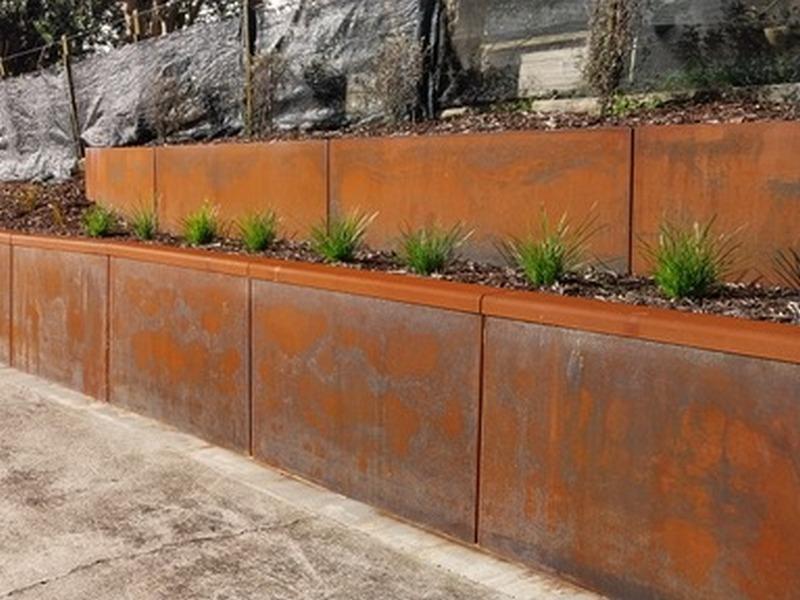
Steel is synonymous with strength. It’s load-bearing, durable under pressure, and trusted in structural applications.
But it carries hidden trade-offs.
Carbon Impact
Steel production accounts for approximately 7–9% of global CO₂ emissions, according to the International Energy Agency. It’s one of the most carbon-intensive building materials globally.
For organisations with Scope 3 reporting obligations, steel selection significantly impacts embodied emissions profiles.
Corrosion & Coastal Challenges
In Australian coastal and high-humidity regions, steel faces:
Rust formation
Pitting corrosion
Protective coating breakdown
Repainting requirements
Galvanising and powder coating extend lifespan but they also add cost and maintenance.
Maintenance & Lifecycle
Steel infrastructure often requires:
Repainting every 5–10 years
Rust remediation
Corrosion monitoring
Replacement of compromised sections
While structural steel can last decades, surface degradation often drives earlier refurbishment costs.
Henry Bessemer, pioneer of modern steelmaking, once said:
“We are but dwarfs standing upon the shoulders of giants.”
Steel helped build the modern world no doubt. But in many non-structural civil applications, its carbon intensity and corrosion risks raise questions.
ESG & Circularity
Steel is recyclable, which is a strength. However:
Recycling steel remains energy-intensive
Embodied carbon remains high compared to polymer alternatives
Protective coatings complicate recycling streams
Practical Tip: For steel infrastructure in marine or high-corrosion zones, factor in full recoating cycles over 25 years when comparing materials.
♻️ Recycled Plastic: Engineered for Longevity & Circularity

Recycled plastic infrastructure products are often misunderstood. Many still picture flimsy garden edging. But modern recycled polymer profiles are engineered, load-rated, and designed for civil durability.
And here’s where things get interesting.
Performance Advantages
No rot
No termite damage
No moisture absorption
No corrosion
UV stabilised for Australian conditions
This makes recycled plastic particularly suited for:
Coastal infrastructure
Marine piles and jetties
Boardwalks
Bollards
Fencing
Park furniture
Lifespan
Many recycled plastic infrastructure products are designed to last 40–50+ years, depending on application and installation.
Because they don’t degrade the same way organic or metal materials do, replacement cycles are dramatically reduced.
That alone reshapes lifecycle economics.
Maintenance Requirements
Minimal:
No painting
No sealing
No rust treatment
No chemical treatments
Cleaning typically requires nothing more than pressure washing.
Over 20–30 years, this can represent substantial operational savings for councils and contractors.
Architect Carl Elefante famously said:
“The greenest building is the one that already exists.”
Closed loop recycled plastic extends that philosophy by turning existing waste into durable new infrastructure.
ESG & Circular Economy Impact
This is where recycled plastic shines.
Diverts plastic waste from landfill
Reduces virgin material demand
Can lower embodied carbon compared to steel
Fully recyclable again at end-of-life in a closed loop system
Instead of becoming waste again, it re-enters the manufacturing cycle.
That’s true circularity.
Practical Tip: Request lifecycle performance data and recycled content certification when evaluating recycled plastic suppliers.
📊 20-Year Lifecycle Snapshot Comparison
| Factor | Timber | Steel | Recycled Plastic |
|---|---|---|---|
| Upfront Cost | Moderate | High | Moderate |
| Maintenance Frequency | High | Moderate | Very Low |
| Susceptible to Rot/Corrosion | Yes | Yes | No |
| Expected Replacement Cycle | 7–15 yrs | 15–25 yrs (surface treatment) | 40+ yrs |
| Embodied Carbon | Moderate | High | Lower (post-consumer content) |
| End-of-Life Circularity | Limited | Recyclable | Fully recyclable |
The key takeaway?
Upfront cost rarely tells the whole story.
The Bigger Question: What Are You Optimising For?
Lowest initial purchase price?
Lowest maintenance budget?
Best ESG performance?
Longest asset life?
Material selection shapes financial, environmental, and operational outcomes for decades.
The World Green Building Council notes that lifecycle thinking is critical in achieving net-zero targets across infrastructure sectors.
When comparing recycled plastic vs timber vs steel, the decision should be based on:
20–30 year cost modelling
Maintenance resource allocation
Carbon reporting impact
Environmental exposure conditions
Circular economy alignment
Final Word
Material choice isn’t a procurement line item. It’s a long-term strategy.
Timber offers familiarity but ongoing maintenance.
Steel delivers strength but carries carbon and corrosion risk.
Recycled plastic provides durability, minimal upkeep, and closed loop potential.
And in a world moving toward circular infrastructure, that matters more than ever.
Practical Tip: Before specifying materials, model a full 25-year lifecycle cost and maintenance scenario including labour, transport, resurfacing, and disposal.
Because the cheapest option today can easily become the most expensive decision tomorrow.


