If you’ve been keeping an eye on the Australian renovation scene lately, you’ll know that the "stone age" is officially over. For decades, engineered stone was the go-to for anyone wanting a high-end kitchen or bathroom. It looked great, felt solid, and was reasonably affordable.
But things have changed. With the recent national ban on engineered stone due to the risks of silicosis, homeowners, architects, and builders are scrambling for a replacement that doesn't just look good but is actually safe and sustainable.
Enter recycled plastic benchtops.
At Resourceful Living, we’re seeing a massive shift in how people view waste. What used to be a milk bottle or an industrial pipe is now being transformed into stunning, high-performance surfaces. But how does it actually stack up against the old-school stone?
Let’s break down the head-to-head comparison between recycled plastic and engineered stone to see which one deserves a spot in your next project.
1. The Safety Factor: Silicosis vs. Zero-Harm Materials
The biggest driver for the move away from engineered stone in Australia is health. Engineered stone contains high levels of crystalline silica. When cut, ground, or polished, it releases fine dust that, when inhaled, causes silicosis: a terminal lung disease.
Recycled plastic benchtops contain zero silica.
When we manufacture our panels, we use heat and pressure to fuse 100% Australian post-industrial and post-consumer plastic. Whether you are cutting it on-site or we are fabricating it in our shed, there are no toxic dust clouds.
- Engineered Stone: Requires intensive PPE, specialized ventilation, and now faces strict government bans.
- Recycled Plastic: Safe to handle, safe to cut, and safe for your family once installed.
2. Environmental Impact: Mining vs. Circularity
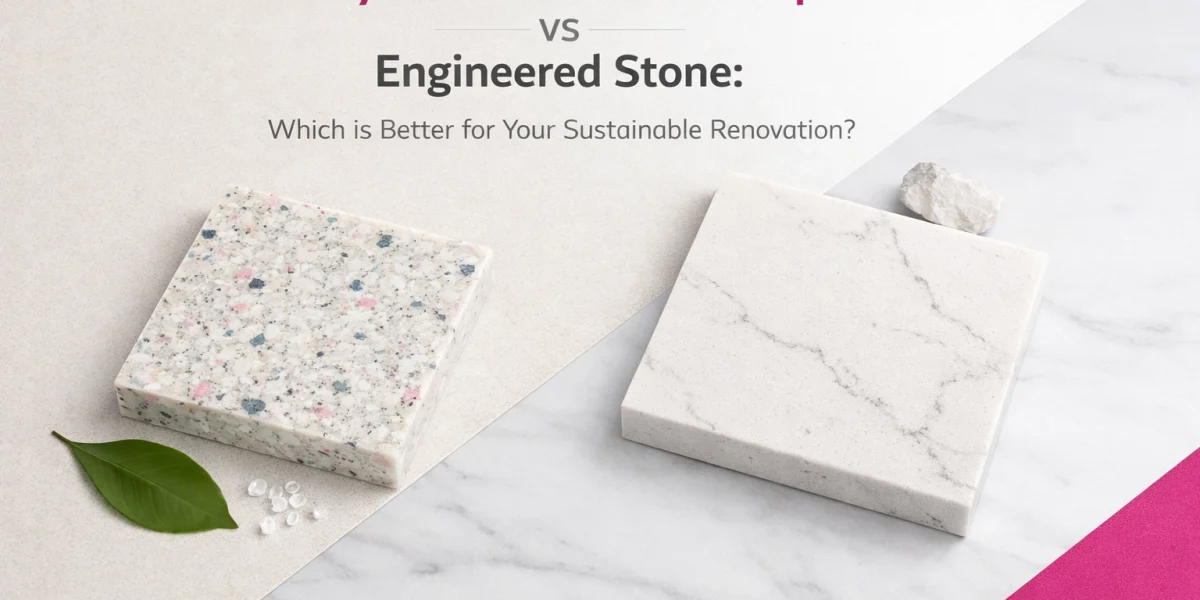
Most people assume "stone" is natural, but engineered stone is a composite made of crushed quartz bound together by polymer resins (essentially plastic glues). The quartz has to be mined, often overseas, and shipped to Australia, creating a massive carbon footprint.
On the flip side, recycled plastic benchtops are a masterclass in the circular economy. We take waste that was headed for a NSW landfill: like lids, crates, and bottles: and turn it into a high-value product.
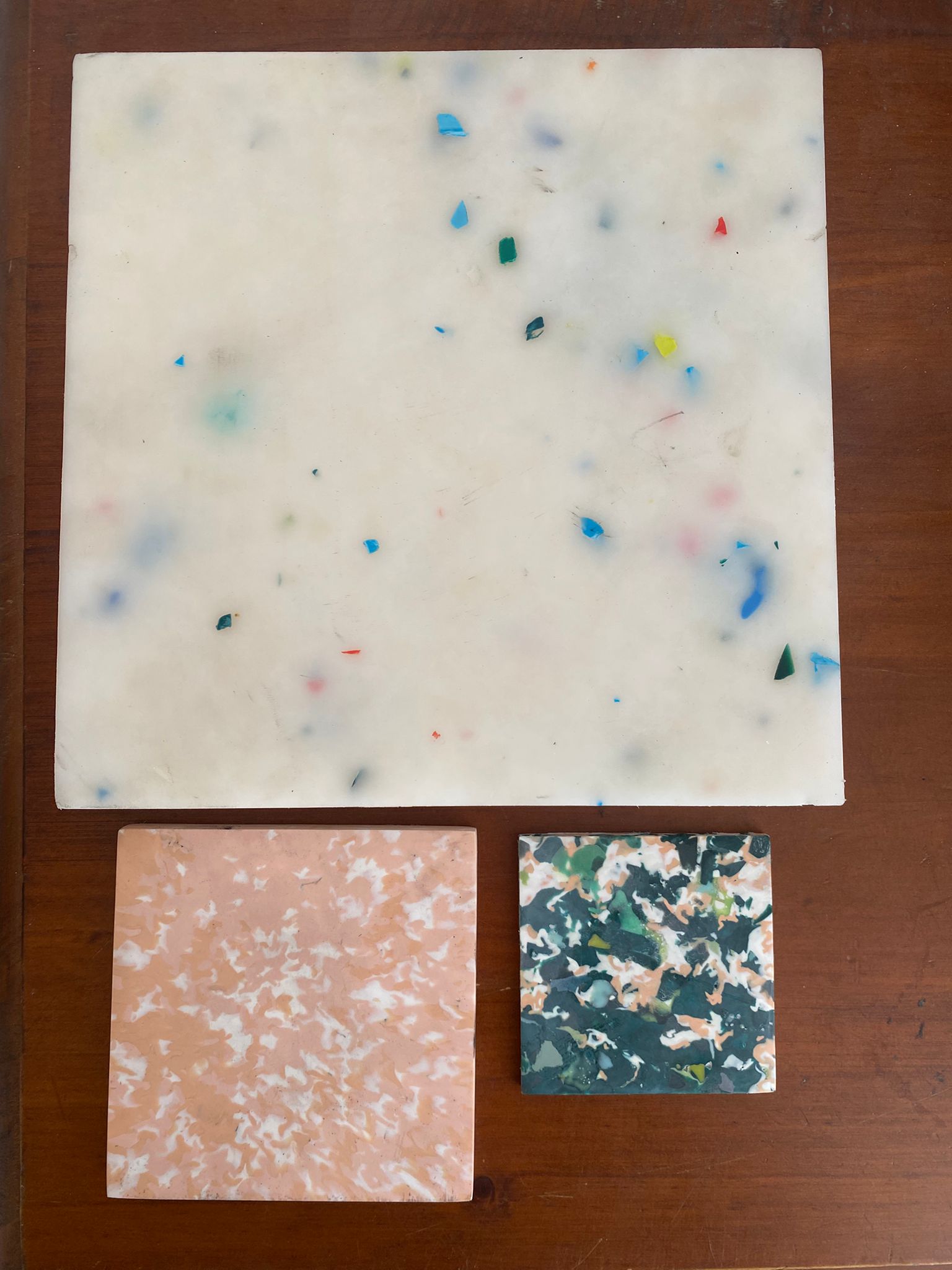
By choosing recycled plastic, you aren't just buying a benchtop; you are actively participating in closed-loop manufacturing in Australia. You’re diverting waste from the environment and giving it a second life that could last decades.
"The true value of a material isn't just in its price tag; it's in its history and its future. Engineered stone has a destructive past and a dangerous future. Recycled plastic has a resourceful past and an infinite future." : Jess Hodge, CEO
3. Durability and Maintenance: Which Lasts Longer?
In a kitchen environment, your benchtop needs to handle spills, heat, and heavy pots.
Stain Resistance
Engineered stone is non-porous, which is one of its strengths. However, recycled plastic benchtops (specifically HDPE) are chemically inert. This means they won't react with vinegar, lemon juice, or red wine. You can literally wipe them down with soapy water, and they look brand new.
Impact and Cracking
We’ve all seen it: someone drops a heavy cast-iron pan on a stone benchtop and crack. Stone is brittle. Recycled plastic, however, has a degree of flexibility. It is incredibly impact-resistant. If you drop a mug on it, the mug might survive, and the benchtop definitely will.
Heat Resistance
This is the one area where stone wins slightly. Engineered stone can typically handle higher temperatures before the resins react. With recycled plastic, you must use a trivet. Because it is a thermoplastic, it will soften if you put a boiling hot pot directly on it. It’s a small habit change for a huge environmental gain.
4. Aesthetics: The "Stone Look" vs. "The Story"
Engineered stone tried very hard to look like marble. Recycled plastic doesn't try to be anything else: it celebrates its origins.
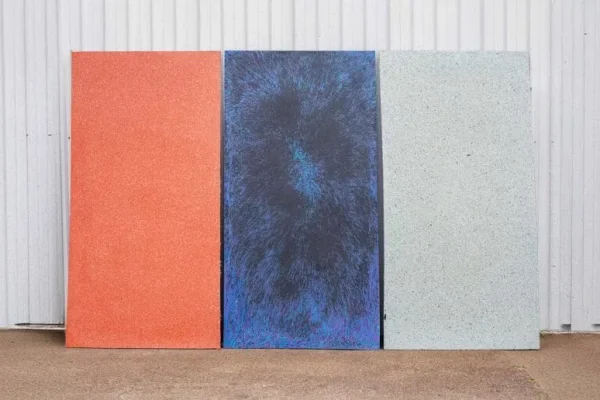
At Resourceful Living, our patterns like the N70 White Confetti or our Navy Marble offer a depth of character that stone simply can't replicate. Each sheet is slightly unique, reflecting the specific mix of plastic processed that day.

If you are looking for that high-end, bespoke feel, our panels provide a texture and "story" that becomes a talking point in any home. You can even tell your guests exactly where the material came from. Check out the ultimate guide to recycled plastic sheets for more on our different finishes.
5. Cost and Long-Term Value
When you look at the ROI of recycled plastic sheets and boards, the math starts to look very good.
- Installation: Recycled plastic is lighter than stone. This means you don't need reinforced cabinetry to hold the weight, and installation is often faster and cheaper.
- Fabrication: Standard woodworking tools can be used on our panels. You don't need a specialised stone mason with wet-cutting equipment.
- End-of-Life: This is the kicker. When you're done with a stone benchtop in 20 years, it goes to landfill. When you’re done with a Resourceful Living benchtop, we take it back, shred it, and turn it into something else. That is true circularity.
Comparison Table: At a Glance
| Feature | Engineered Stone | Recycled Plastic Benchtops |
|---|---|---|
| Silica Content | High (Dangerous) | Zero (Safe) |
| Source | Mined minerals & resin | 100% Recycled Australian Waste |
| Weight | Very Heavy | Lightweight / Manageable |
| Impact Resistance | Low (Can chip/crack) | High (Very durable) |
| Maintenance | Low | Very Low (Stain proof) |
| Recyclability | Non-recyclable | 100% Recyclable |
| Installation | Specialist Mason required | Standard Trade tools |
Why Australian Manufacturers Are the Secret Sauce
Choosing local is more important than ever. When you buy from Resourceful Living, you aren't just getting a product; you’re supporting recycled plastic manufacturers in Australia who are building the infrastructure we need to solve our waste crisis.

We offer full traceability. You can see how we turn raw waste into high-end panels through our on-site shredding units. This level of transparency is something international stone suppliers simply cannot offer.
How to Make the Switch in Your Next Renovation
Ready to ditch the stone and go circular? Here’s how to get started with recycled plastic benchtops:
- Measure Your Space: Just like any other material, start with a clear plan of your benchtop dimensions.
- Pick Your Palette: Do you want the clean look of N70 White Confetti or a bolder statement?
- Talk to Your Builder: Let them know they’ll be working with HDPE panels. Most carpenters love working with our material because it's familiar to work with but yields a premium result.
- Check Your ESG Goals: If you’re a commercial developer, using these materials will help you meet recycled content targets for government audits and green ratings.
The Verdict
Engineered stone had its time, but the risks to human health and the environment are no longer worth it. Recycled plastic benchtops offer a safer, more durable, and infinitely more sustainable alternative for the modern Australian home.
By choosing a material that supports local industry and clears our coastlines of plastic, you aren't just renovating your kitchen: you're renovating the way we live.
Want to see the material for yourself? Contact us at Resourceful Living to order samples or discuss your next project. Let’s build something that lasts without costing the earth.