It's that time of year again. The EOFY scramble is officially on.
If you’re sitting on a remaining budget and staring down the June 30 deadline, you’re likely facing the classic "use-it-or-lose-it" dilemma. In previous years, this might have meant a bulk order of office chairs or a literal mountain of stationery that no one needs.
But in 2026, the rules have changed. With circular construction 2026 standards now a major driver in Australian procurement, "buying stuff" isn't enough. You need to be buying assets that lower your embodied carbon, eliminate maintenance costs, and prove your commitment to a local circular economy.
At Resourceful Living, we help businesses and councils turn those "last-minute" funds into high-performance, maintenance-free infrastructure. Here is how you can turn a leftover budget into a long-term sustainability win.
The "Use-It-or-Lose-It" Reality: Why Sustainability is the Ultimate Budget Protector
Budget logic usually dictates that if you don't spend it by midnight on June 30, it’s gone next year. But if you spend it on traditional materials, like timber signage or plywood site hoarding, you’re actually creating a future debt.
Timber rots. It splinters. It requires sanding, oiling, and eventual replacement. By choosing sustainable building materials in Australia made from 100% recycled plastic, you aren't just spending a budget; you're protecting future ones.
"The ROI of recycled plastic isn't just about the initial purchase. It's about the fact that you won't have a $5,000 maintenance line item for it in three years' time." , Jess Hodge, Resourceful Living.
The Circular Construction 2026 Shift
The Australian building industry is currently undergoing its biggest material revolution in decades. Government tenders now heavily weight recycled content and traceability. Using your remaining FY26 budget to secure these materials now positions your firm as a leader for the next wave of infrastructure projects.
Product Spotlight: High-Impact Infrastructure You Can Order Today
If you need to move budget fast, you need products that are functional, durable, and ready to ship. We’ve streamlined our manufacturing to produce up to 1 tonne of plastic per day, ensuring we can meet the EOFY rush.
1. Recycled Plastic Bins & Enclosures
Public bins are a council's highest-traffic asset. Traditional metal or timber-clad bins succumb to salt spray and vandalism. Our 100% recycled plastic enclosures are:
- Graffiti Resistant: Paint doesn't bond easily to HDPE, making cleanup a breeze.
- Waterproof: They won't rot or rust, even in coastal environments.
- Circular proof: Made from the very waste residents put in their yellow bins.
2. Wayfinding & Public Signage
From trailhead markers to estate signage, recycled plastic sheets in Australia are replacing marine ply. They don't delaminate and the colour is solid throughout, meaning even deep scratches are barely visible.
3. Site Hoarding & Construction Sheets
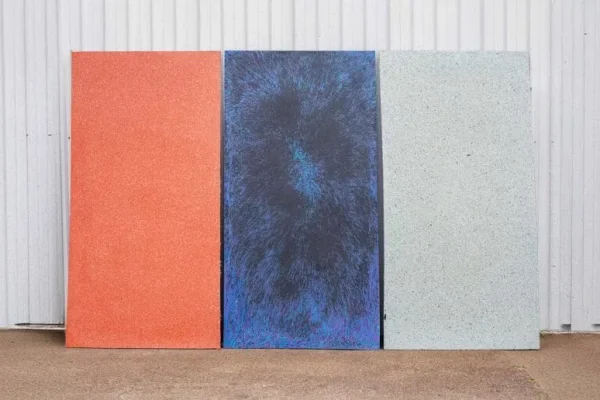
Are you still using disposable plywood for site hoarding? Our 100% recycled panels (standard 2400mm x 1200mm) are 100% waterproof and can be used across multiple projects. When they finally reach the end of their life, we take them back for free and turn them into new sheets.

Success Story: The Bunnings Trial (Waste into Infrastructure)
One of the most powerful examples of circularity in action is our recent work with retail giants like Bunnings.
The goal was simple: Turn store-generated waste into store-ready infrastructure.
Instead of shipping their soft plastic waste to landfill (or overseas), it was diverted to our Hunter Valley facility. We shredded, washed, and pressed that waste into high-durability panels. These panels were then used back in the stores for retail displays and internal fit-outs.
The Result?
- Zero Waste to Landfill: Tons of soft plastic were diverted.
- Traceable Social Procurement: The store could point to the display and tell customers exactly where it came from.
- Durability: The recycled panels handled the high-traffic retail environment better than traditional MDF or timber alternatives.
The "Local Buy" Advantage: Why Councils are Leading the Charge
For Australian local governments, procurement is a superpower. By using the Local Buy framework, councils can bypass complex tender processes for smaller EOFY spends while supporting local manufacturing.
Choosing Australian-made recycled materials solves three problems at once:
- It hits waste diversion targets: Every 12,000kg of plastic used is roughly 12,000kg diverted from the local tip.
- It supports local jobs: We manufacture seven days a week right here in Australia.
- It simplifies ESG reporting: We provide the data on plastic diversion and carbon savings you need for your annual report.
| Feature | Timber / Concrete | Resourceful Living Recycled Plastic |
|---|---|---|
| Maintenance | Sanding, painting, oiling required | Zero maintenance |
| Lifespan | 5-10 years (in wet areas) | 20+ years |
| End of Life | Landfill | 100% Recyclable (Take-back program) |
| Moisture | Absorbs and rots | 100% Waterproof |
| Origin | Often imported | 100% Australian Waste |
The 24-Hour Invoice: How to Hit Your June 30 Deadline
We know how the EOFY works. You need the paperwork done yesterday so you can lock in the spend today.
To help you hit your deadline, we’ve optimized our quoting and invoicing process for the month of June.
- Fast Quoting: Send us your project dimensions or product list (bins, signage, sheets).
- Immediate Allocation: We have 6 popular colours (including Ochre, River, and Lumen) ready to be allocated to your order.
- Audit First: Not sure what you need? Book a Waste Audit before June 30 to use your budget for strategic planning, identifying exactly how much waste your site is producing and how to turn it into furniture for your next project.

Don’t Let the Budget Expire: Invest in a Circular Future
Buying sustainable materials isn't just about "doing good": it's about doing smart business. By choosing recycled plastic sheets, you are investing in a product that outlasts timber, reduces your carbon footprint, and supports the local economy.
Stop the "Check-the-Box" EOFY spending. Turn that leftover budget into infrastructure that your community will still be using in 2046.
Your EOFY Checklist:
- Review your remaining CAPEX/OPEX budget.
- Identify rot-prone timber signage or furniture needing replacement.
- Check your Circular Construction 2026 targets.
- Request a fast-track quote from Resourceful Living.
Ready to beat the June 30 clock?
Request a Quote Today or book a site waste audit to secure your budget for a sustainable 2027.