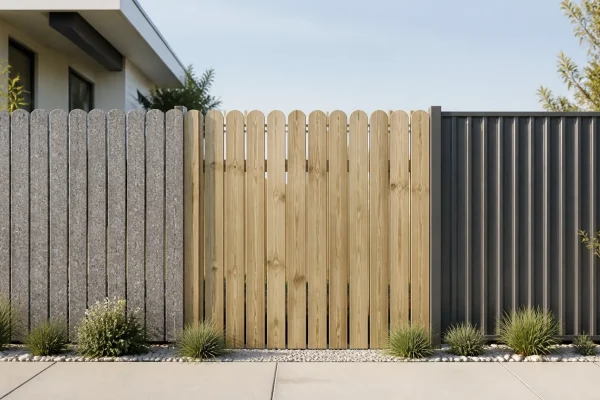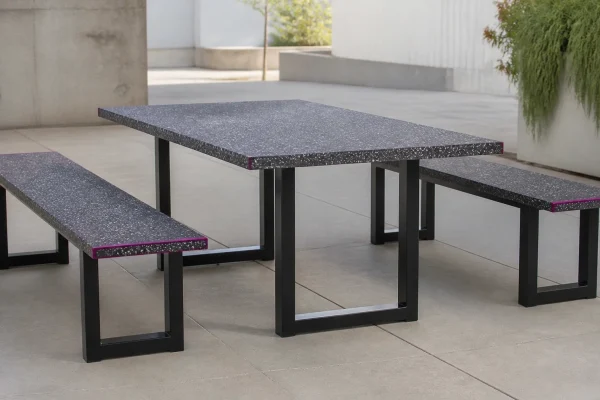
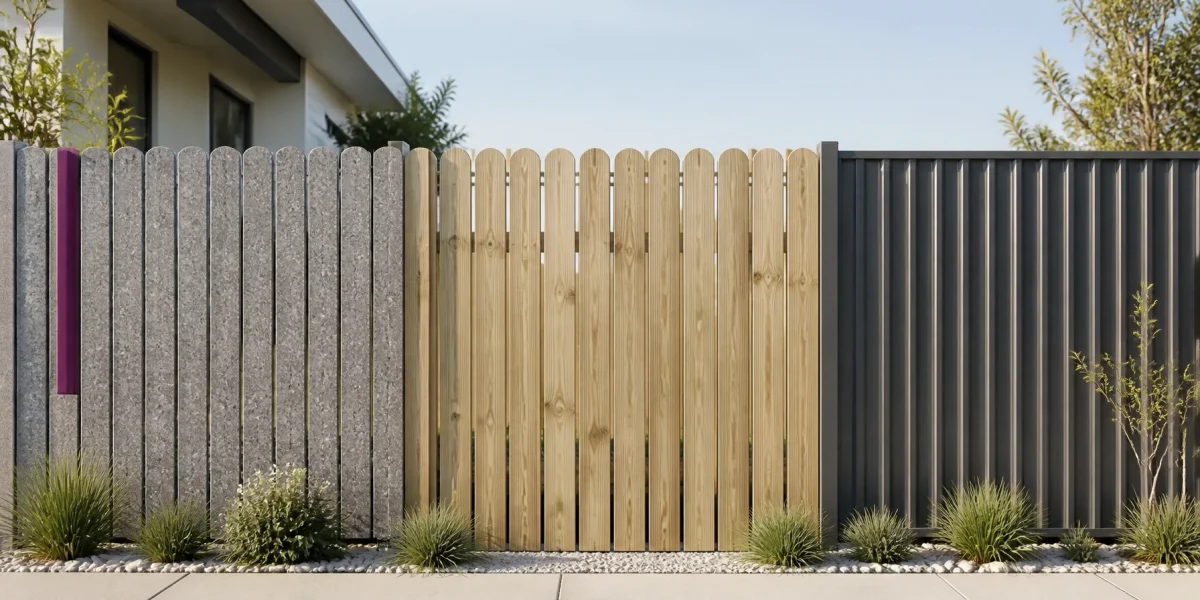
Choosing a fence in Australia involves more than comparing the purchase price. UV exposure, rainfall, salt air, termites, maintenance labour and end-of-life recovery can all affect the real cost of your project.
This guide compares recycled plastic fencing, timber and COLORBOND® steel across the factors that matter most: cost, lifespan, maintenance, weather resistance, installation and environmental impact.
The cheapest fence to install isn’t always the cheapest fence to own. Compare the full service life, not just the first invoice.
Quick comparison: recycled plastic vs timber vs Colorbond
The table below provides a practical starting point for a standard fence of approximately 1.8 metres high. Actual costs vary by state, access, ground conditions, gates, demolition, footing design, fence profile and labour rates.
| Factor | Recycled plastic fencing | Treated timber or hardwood | COLORBOND® steel |
|---|---|---|---|
| Indicative upfront cost | Usually a premium material option; recycled plastic material can be approximately 1.8 times treated pine before project-specific installation costs | Approximately $80–$190 per metre installed, depending on timber and design | Approximately $85–$150 per metre installed for a standard system; complex metro projects may cost more |
| Typical service-life expectation | 50+ years in suitable applications when correctly specified and installed | Approximately 10–20 years for treated pine; hardwood may reach 15–30 years with appropriate maintenance | Commonly 20+ years, depending on coating condition, corrosion exposure and installation quality |
| Maintenance | Very low: periodic cleaning and inspection | Medium to high: staining, painting, repairs and replacement of damaged sections | Low: occasional washing and inspection |
| Rot and termites | Does not rot and is not susceptible to termites | Vulnerable to rot, termites, splitting and swelling | Does not rot or suffer termite attack |
| Moisture resistance | 0.0% moisture absorption for the recycled HDPE material described by Resourceful Living | Absorbs and releases moisture, causing movement over time | High, although cut edges, fixings and damaged coatings require attention |
| UV performance | Tested for weather resistance; colour change should still be considered over long periods of intense exposure | Greys, cracks and degrades without protective coatings | Strong factory-applied coating; colour and corrosion performance depend on location and product selection |
| End of life | Recyclable through Resourceful Living’s take-back programme | Often difficult to recover if painted, treated or contaminated | Widely recyclable as steel, subject to local recovery pathways |
Published Australian fencing guides commonly place standard timber and Colorbond installations within the ranges above. For example, see the Hipages fencing cost guide and Colorbond cost information from Service.com.au.
Important: recycled plastic fencing is not identical to lightweight PVC or vinyl fencing. Resourceful Living’s fence products use solid recycled plastic material, so you should request a project-specific quote rather than relying on generic PVC pricing.
1. Recycled plastic fencing: the low-maintenance option
Resourceful Living manufactures recycled plastic panels from 100% Australian plastic waste. The material is a solid block of recycled HDPE with no veneers, fillers or additives, and it can be fabricated into bespoke fence components and recycled plastic fence panels.
The standard panel format is 2400mm x 1200mm, with thicknesses from 3mm to 40mm. Panels can be cut, drilled and CNC-routed to suit a specific design, although the correct thickness and support system must be determined for the intended application.

Key benefits
- ✅ No rot, rust or termite damage
- ✅ Waterproof material profile
- ✅ Low routine maintenance
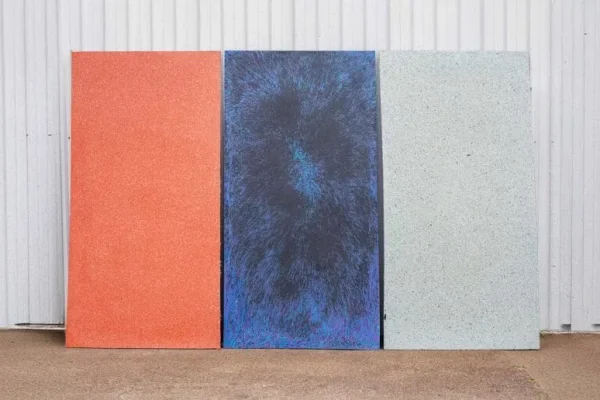
- ✅ Solid colour and consistent material through the panel
- ✅ Suitable for custom sizes and fabricated designs
- ✅ Made from traceable Australian plastic waste
- ✅ Recyclable through a take-back pathway
The main cost consideration is the higher upfront material price compared with basic treated pine. However, the difference should be assessed against fewer coating cycles, fewer repairs and a longer expected service life.
For commercial projects, that can also reduce the need to schedule regular maintenance crews or manage repeated replacement works.
Where recycled plastic performs well
Recycled plastic fencing is particularly relevant for:
- Coastal and high-humidity locations
- Areas exposed to frequent rain or irrigation
- Projects where termites are a concern
- Commercial sites with limited maintenance access
- Developments with recycled-content or local-sourcing targets
- Homeowners seeking a long-life alternative to regular timber treatment
Resourceful Living’s coastal construction guide explores how recycled plastic performs in salt air, moisture and other demanding environments.
2. Timber fencing: lower entry cost, higher ongoing effort
Timber remains popular because it is familiar, readily available and easy to customise on site. Treated pine can be cost-effective for straightforward residential fencing, while hardwood offers a more substantial appearance and may provide a longer service life when correctly maintained.
The trade-off is that timber is a maintenance-dependent material.
Common timber maintenance tasks
Depending on exposure and timber selection, you may need to:
- Re-stain, oil or paint the fence periodically
- Replace split, warped or rotten palings
- Check posts and rails for movement
- Maintain drainage around the base
- Monitor for termites and other biological attack
- Repair damage after storms or impact
Timber’s performance is strongly influenced by ground contact, drainage, humidity, sun exposure and construction quality. A well-detailed timber fence can perform effectively, but a poorly ventilated or persistently damp installation can deteriorate much faster.
When timber may be the right choice
Timber can still make sense when:
- Your initial budget is the primary constraint
- You want a traditional or natural appearance
- You’re comfortable carrying out regular maintenance
- The location is relatively dry and accessible
- The fence is designed for a shorter service life
You should include maintenance products, labour and likely component replacement in your whole-of-life budget.
3. Colorbond steel: reliable, fast and widely available
COLORBOND® steel is a well-established Australian fencing option. It provides a clean appearance, quick installation and low routine maintenance, making it a practical choice for many suburban and commercial applications.
Standard Colorbond fencing commonly costs around $85–$150 per metre installed, although prices can rise with difficult access, sloping sites, premium profiles, retaining requirements or metropolitan labour rates.
Colorbond maintenance requirements
Colorbond generally requires:
- Occasional washing to remove dirt and salt deposits
- Inspection of posts, rails and fasteners
- Prompt attention to damaged coatings or cut edges
- Appropriate detailing in high-corrosion coastal zones
Steel is non-combustible and resistant to rot and termites, but it isn’t immune to corrosion. In coastal locations, salt accumulation and damaged protective coatings can shorten service life if they’re ignored.
For a broader material-selection framework, read Resourceful Living’s sustainable building materials buyer’s guide.
Cost versus value: what should you include?
A realistic fencing comparison should include five cost categories:
- Materials: panels, palings, sheets, rails, posts and fixings
- Installation: labour, excavation, concrete and access requirements
- Preparation: demolition, disposal, vegetation removal and levelling
- Maintenance: coatings, washing, repairs and replacement components
- End of life: removal, disposal, recycling or take-back costs
A timber fence may have the lowest starting price, but repeated staining and repairs can materially increase the total cost over 20 or 30 years.
Colorbond offers a strong balance of moderate upfront cost and low maintenance. Recycled plastic fencing may require a higher initial investment, but its resistance to moisture, termites and rot can make it attractive where long service life and minimal intervention matter most.
Installation notes for recycled plastic fence panels
Recycled plastic fence panels need to be installed as an engineered material, not treated exactly like timber.
Before installation
Confirm:
- Required fence height and wind-loading conditions
- Panel thickness and support spacing
- Post and rail material
- Fixing type and corrosion resistance
- Ground conditions and footing requirements
- Gate loads and hinge locations
- Required clearances from soil and standing water
- Allowance for thermal movement

During installation
Use the supplier’s fixing schedule and installation guidance. Predrilling, suitable fixings and correctly spaced supports are important, particularly for large panels and exposed locations.
Plastic can expand and contract with temperature changes. Avoid over-constraining panels, and allow for movement where the design requires it. Your installer should also check panel handling requirements because solid recycled plastic components can be heavier than comparable hollow products.
For commercial, coastal or high-wind applications, request technical advice before finalising the design.
Environmental impact and circular economy
Each material has an environmental profile that extends beyond its first use.
Recycled plastic
Resourceful Living uses 100% Australian plastic waste, helping keep feedstock, manufacturing and economic value within Australia. The company manages the process from sourcing and sorting through to manufacturing, supporting traceability for procurement and sustainability reporting.
Its panels are designed to be recycled again, rather than sent directly to landfill. Through the take-back programme, Resourceful Living can collect its products free of charge at the end of their useful life for remanufacturing.

Timber
Timber is a renewable material, but its impact depends on forestry practices, transport, treatment, coatings and replacement frequency. Treated or painted timber can also be more difficult to recover at end of life.
Colorbond steel
Steel has established recycling pathways and can provide a long service life. However, manufacturing is energy-intensive, and the environmental outcome depends on recycled content, coating systems, transport and whether the product is recovered after demolition.
Circularity means planning for the next use, not just selecting recycled content for the first use.
Which fencing material should you choose?
Choose recycled plastic fencing when you prioritise:
- Long service life
- Moisture, rot and termite resistance
- Minimal maintenance
- Australian recycled content
- Product traceability
- A credible take-back programme
- Custom recycled plastic fence panels
Choose timber when initial cost and a traditional appearance outweigh long-term maintenance considerations.
Choose Colorbond when you want a widely available, low-maintenance system with a familiar installation process and a broad colour range.
Your 2026 fencing decision checklist
Before requesting quotes, confirm:
- Required fence height and total linear metres
- Site exposure to salt, wind, rain and UV
- Soil, slope and access conditions
- Gates, retaining structures and demolition requirements
- Expected service life
- Maintenance budget and access
- Recycled-content and local-sourcing requirements
- End-of-life recycling or take-back arrangements
- Product samples and technical information
Ready to compare materials for your next residential, commercial or construction project? Request a quote or request a recycled plastic sample from Resourceful Living.
You can also learn more about how Resourceful Living sources, manufactures and delivers 100% Australian recycled plastic before specifying recycled plastic fencing or custom panels.