Choosing sustainable building materials is no longer a specialist concern reserved for green buildings. In Australia, embodied carbon reporting, recycled-content policies, client ESG requirements and circular construction targets are changing how materials are selected, documented and managed.
For your next commercial, residential or infrastructure project, sustainability should be assessed across the material’s full life cycle: not just its recycled-content percentage or marketing claims.
This guide explains what to look for in 2026, including embodied carbon, operational carbon, local sourcing, recycled content, certification, durability and end-of-life planning.
The most sustainable material is not simply the one with the highest recycled content. It’s the one that performs efficiently, lasts as specified, can be traced and has a credible pathway beyond its first use.
What qualifies as a sustainable building material?
A sustainable building material should demonstrate measurable performance across several areas:
- ✅ Lower embodied carbon across manufacturing, transport, installation, maintenance and end-of-life
- ✅ Responsible or recycled content with evidence of source and percentage
- ✅ Durability appropriate to the project’s environment and expected service life
- ✅ Efficient manufacturing and transport
- ✅ Low maintenance requirements
- ✅ Transparent documentation, such as an Environmental Product Declaration (EPD) where available
- ✅ Reusability, recyclability or take-back options
- ✅ Compatibility with project rating tools and reporting requirements
No single material will be the best choice for every application. The correct approach is to compare whole-of-life performance against the project’s functional, structural, regulatory and budget requirements.
Embodied carbon vs operational carbon
What is embodied carbon?
Embodied carbon refers to the greenhouse gas emissions associated with a material throughout its life cycle. Depending on the assessment method, this can include:
- Raw material extraction or collection
- Processing and manufacturing
- Transport to the project
- Installation and construction activities
- Maintenance, repair and replacement
- Demolition, processing, reuse or disposal
Upfront embodied carbon: often described through life-cycle modules A1–A5: is particularly important because these emissions are released before the building is occupied.
The Australian construction sector is increasingly expected to measure and report these impacts. Infrastructure Australia has projected substantial annual upfront embodied carbon from buildings and infrastructure, reinforcing the importance of material decisions made during concept and design development.
What is operational carbon?
Operational carbon comes from running a building or facility. It includes energy used for:
- Heating and cooling
- Lighting
- Ventilation
- Hot water
- Equipment and appliances
Operational efficiency remains critical, but reducing energy use doesn’t remove the need to address materials. A project can perform well operationally while still carrying a high upfront carbon impact from its construction.
Why both matter in 2026
A strong sustainability strategy considers embodied and operational carbon together. Your design team should establish targets early, then use a life-cycle assessment or an approved reporting framework to test whether material changes genuinely improve the project’s overall performance.
For current Australian guidance, refer to:
- NABERS Embodied Carbon
- Infrastructure Australia’s embodied carbon projections
- The NSW embodied emissions technical note
Recycled content: look beyond the percentage
Recycled content is an important part of sustainable building materials, but the number alone doesn’t tell the complete story.
When comparing products, ask:
- What material has been recycled?
- Is the feedstock post-consumer, post-industrial or a blend?
- Where was the waste collected?
- Where was it manufactured?
- Does the product contain virgin material, additives, glues or veneers?
- Can the product be recycled again?
- Is the recycled-content claim independently verified?
Why local sourcing matters
Using locally sourced recycled feedstock can reduce transport impacts, improve traceability and support domestic resource recovery. It also gives you stronger evidence for project sustainability documentation than a vague claim that a product is “made from recycled materials”.
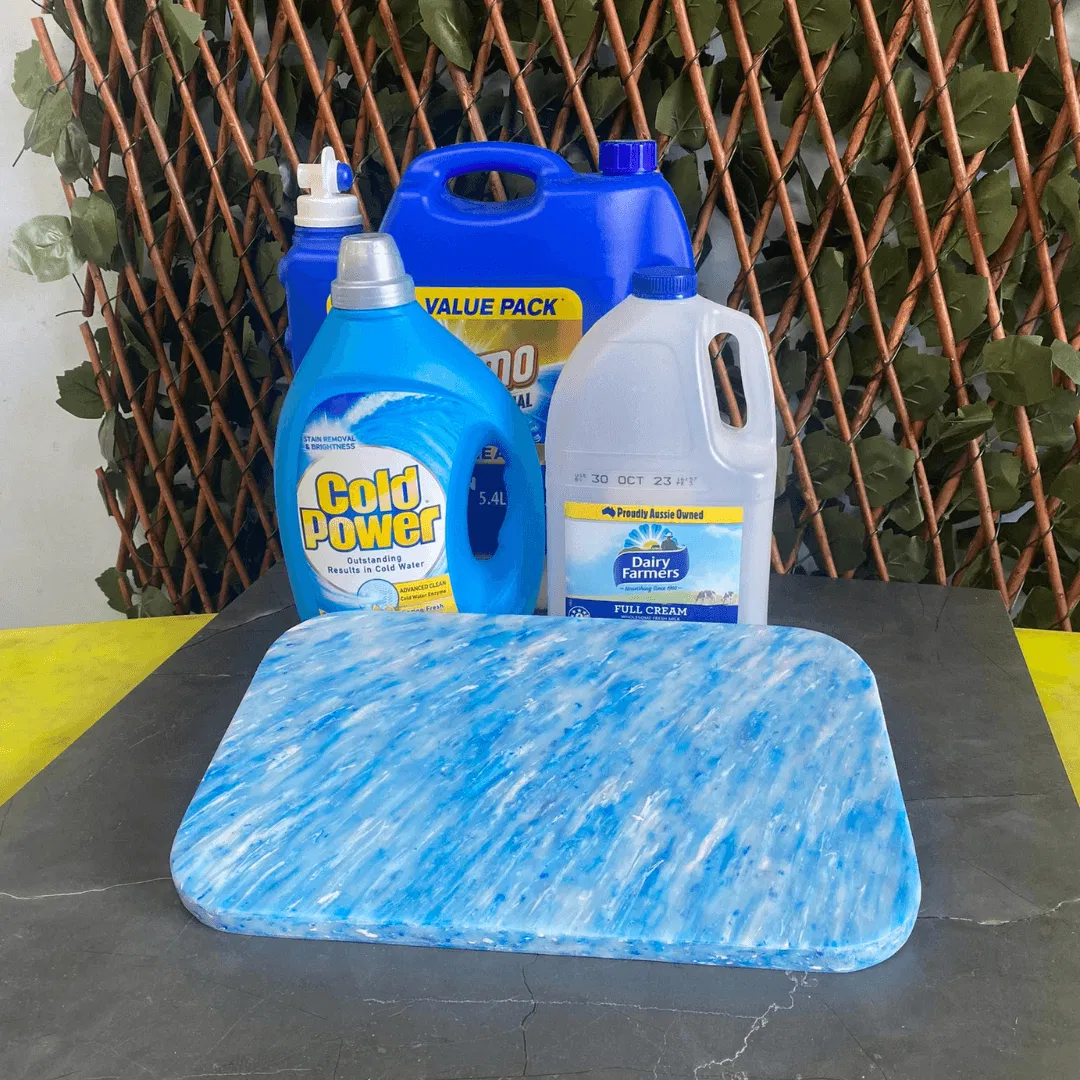
Resourceful Living uses 100% Australian plastic waste and manages the process from sourcing through to manufacturing. This end-to-end model helps trace the material source and gives customers clearer information for procurement, ESG and circularity discussions.
A practical example: recycled plastic panels
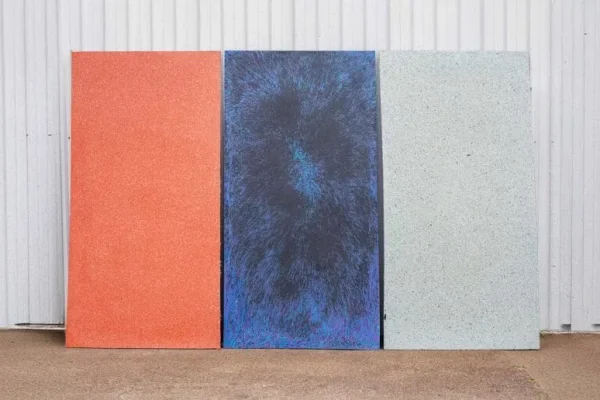
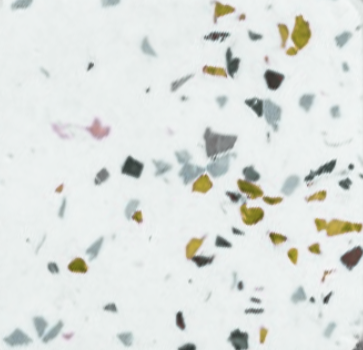
Resourceful Living’s panels are solid blocks of 100% recycled and recyclable plastic. They contain no additives or veneers and are available in standard dimensions of 2400mm x 1200mm, with thicknesses from 3mm to 40mm.
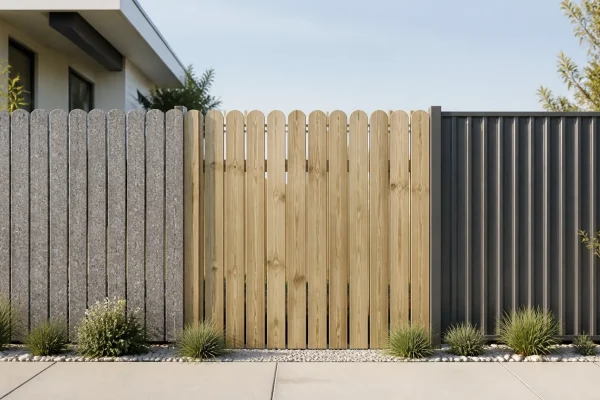
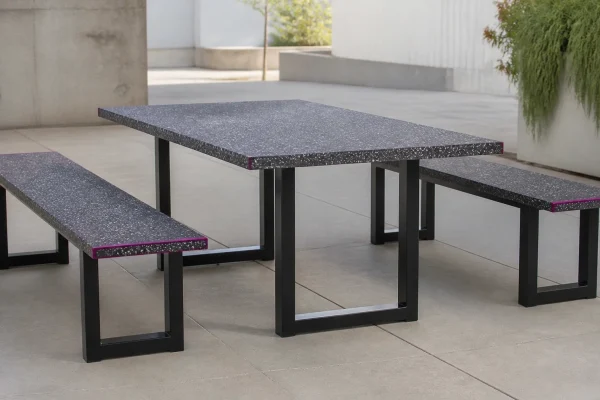
Depending on the design and performance requirements, they can be considered for applications including:
- Construction components
- Erosion-control systems
- Noise barriers
- Kitchen and bathroom renovation elements
- Retail displays
- Storage and custom fabricated products
The material is tested for strength, durability and weather resistance. As with any building product, the final specification should be checked against the relevant structural, fire, moisture, UV and installation requirements.
Durability is a carbon strategy
A low-impact material that needs frequent replacement may not deliver a low-impact result over the building’s life.
Durability reduces embodied carbon associated with:
- Replacement products
- Additional transport
- Installation labour
- Maintenance materials
- Disposal of failed components
When assessing a product, consider the actual conditions it will face. Australian projects may need to account for high UV exposure, moisture, salt air, temperature variation, heavy use and weather events.
Resourceful Living’s recycled plastic materials are designed for durability and weather resistance, with a lower-maintenance profile than some conventional alternatives. They don’t require paint or oiling in the same way as many timber products, although cleaning and installation requirements should still be confirmed for the intended application.
Certification, EPDs and project documentation
What is an EPD?
An Environmental Product Declaration is a standardised document that reports a product’s environmental impacts based on life-cycle assessment. It’s generally more useful than an unverified sustainability claim because it follows defined rules and provides comparable data.
Where available, prioritise:
- Product-specific, third-party verified EPDs
- Industry-average EPDs
- Recognised generic databases or emission factors
Not every product will have an EPD, particularly bespoke or emerging materials. In that case, request a technical data pack covering recycled content, manufacturing location, material composition, durability testing and end-of-life options.
Green Star and NABERS
For projects pursuing Green Star, material selection should be coordinated with the project’s sustainability consultant. Green Star Buildings v1.1 places greater emphasis on life-cycle assessment, upfront embodied-carbon reduction and responsible materials.
NABERS Embodied Carbon provides a framework for measuring and reporting embodied emissions using defined life-cycle rules and national material emission factors.
These tools don’t automatically make a product sustainable, and a product shouldn’t be specified solely because it might contribute to a rating. Instead, use them to establish a transparent process for comparing options and documenting decisions.
Important: Resourceful Living materials may support a project’s recycled-content, local-sourcing or circularity objectives, but your Green Star, NABERS or regulatory outcomes depend on the complete project design and the evidence accepted by the relevant assessor.
Design for circularity from the beginning
Circular construction aims to keep materials and products in use for as long as possible. It changes the question from “What happens when this building is demolished?” to “How can these components be removed, reused or remanufactured?”
Practical circular-design principles
- Choose simple material compositions that can be separated
- Avoid unnecessary composite layers that complicate recycling
- Use mechanical fixings where practical instead of permanent bonding
- Record product locations and specifications
- Design components for access and removal
- Plan for reuse before disposal
- Include end-of-life responsibilities in procurement documents
Resourceful Living offers a take-back programme, collecting its products free of charge at the end of their useful life for remanufacturing. Including that pathway in your project documentation can help turn a sustainability intention into a practical end-of-life plan.
Sustainable building materials: quick comparison
| Assessment area | Conventional product with limited documentation | 100% recycled Australian plastic panel |
|---|---|---|
| Feedstock traceability | May be unclear | Australian plastic waste source |
| Recycled content | Varies by product | 100% recycled plastic |
| Composition | May include mixed layers or veneers | Solid recycled plastic block |
| Moisture performance | Depends on product and treatment | Waterproof material profile |
| Maintenance | May require coatings or treatments | Low-maintenance application potential |
| End-of-life | Often disposal-dependent | Recyclable with take-back pathway |
| Supply | May rely on imports | Manufactured in Australia |
| Customisation | Standard product range | Standard and bespoke sizes/colours |
The comparison is a starting point, not a substitute for project-specific testing. Always confirm load requirements, fixings, tolerances, fire performance and compliance before final specification.
A 2026 specification checklist
Use this process when reviewing sustainable building materials for your next project:
1. Set measurable targets
Define targets for:
- Upfront embodied-carbon reduction
- Recycled content
- Local sourcing
- Service life
- Reuse and recycling
- Waste diversion
2. Request evidence
Ask suppliers for:
- Material composition
- Recycled-content percentage
- Feedstock location
- Manufacturing location
- Testing and technical data
- Maintenance requirements
- End-of-life arrangements
- EPD or life-cycle data, where available
3. Compare whole-of-life value
Don’t compare purchase price alone. Consider installation time, maintenance, replacement frequency, transport, durability and end-of-life costs.
4. Confirm project compatibility
Check the material against the application, relevant Australian Standards, consultant requirements, building approvals and any Green Star, NABERS or state reporting criteria.
5. Document the decision
Keep product data, supplier declarations, quantities and installation locations in the project record. This makes future reporting, maintenance and recovery much easier.
Build a lower-carbon, more circular project
Sustainable building materials should make environmental performance more measurable: not more confusing. By combining lower embodied carbon, recycled content, local sourcing, durability, verified data and a realistic end-of-life plan, you can make stronger decisions across the project life cycle.
Resourceful Living transforms 100% Australian plastic waste into functional, durable and recyclable sheets, panels, furniture and bespoke products. We manufacture up to one tonne of plastic per day, offer six popular colours with custom manufacturing available seven days a week, and provide a take-back programme to support circular material use.
Get a quote or request samples from Resourceful Living for your next construction, renovation, fit-out or bespoke manufacturing project.
For deeper reading, explore our guides to how 100% Australian recycled plastic is sourced and manufactured, embodied-carbon reporting, and choosing recycled plastic sheets in Australia.