Commercial furniture has to do more than look good on installation day. It needs to withstand sun, rain, salt air, heavy use, cleaning, vandalism and changing budgets: while supporting your project’s sustainability commitments.
That’s why more Australian councils, schools, hospitality venues, builders and landscape designers are considering recycled plastic outdoor furniture.
The key question isn’t simply, “What’s the purchase price?” It’s:
What will this furniture cost to own, maintain, replace and responsibly manage over its full service life?
This 2026 buyer’s guide compares recycled plastic furniture with timber, explains the commercial-grade specifications to check, and outlines how locally manufactured options can support a more circular project.
Why commercial buyers are switching to recycled plastic furniture
Traditional timber furniture can be appropriate for some projects, but it typically requires ongoing sealing, oiling, staining or replacement: particularly in exposed Australian conditions.
Recycled plastic furniture addresses several common procurement problems:
- ✅ No painting, oiling or sealing is generally required
- ✅ Resistant to rot, termites, moisture and splintering
- ✅ Suitable for many coastal, wetland and high-use environments
- ✅ Available in multiple colours and custom configurations
- ✅ Made using plastic waste that would otherwise require disposal
- ✅ Can support end-of-life recycling and take-back programmes
- ✅ Reduces maintenance labour and replacement cycles
Sustainability Victoria’s guidance identifies recycled plastic furniture as a low-maintenance, long-lasting option that can be manufactured in a range of furniture types, colours and custom designs. Its guidance also recommends assessing the product’s composition, testing, installation, maintenance and end-of-life pathway before procurement.
Durability: recycled plastic furniture vs timber
For commercial applications, durability is measured in more than years. You should also consider how the material behaves between installation and replacement.
Timber may crack, warp, rot, split or develop splinters as it absorbs moisture and responds to repeated wet and dry cycles. Recycled plastic doesn’t absorb water in the same way, and quality products are designed to resist many of the deterioration mechanisms associated with timber.
Market benchmarks vary by product, exposure and construction quality. Some Australian recycled plastic furniture suppliers report service lives of 20 to 40 years or more, while timber furniture may require significant repair or replacement sooner in exposed, high-traffic locations.
| Consideration | Commercial timber | Recycled plastic furniture |
|---|---|---|
| Moisture exposure | Can absorb water and deteriorate over time | Resistant to moisture and water damage |
| Rot and termites | May be vulnerable without treatment and maintenance | Resistant to rot and termite damage |
| Splintering | Can become a safety and maintenance issue | Splinter-free surface |
| Routine finish | Often requires oiling, staining or sealing | Usually requires cleaning only |
| Colour and appearance | May grey, fade or require refinishing | Available in consistent or marbled colours |
| Replacement cycle | Dependent on species, coating and exposure | Quality products can provide a long service life |
| End of life | May be difficult to reuse if treated or damaged | Can potentially be remanufactured, depending on composition |
Important: service life isn’t guaranteed by the word “recycled”. Ask for product-specific testing, warranties and performance information before you specify a material.

Weather resistance in Australian conditions
Australian outdoor furniture can face high UV exposure, intense heat, rain, humidity, salt air and sudden temperature changes. Your specification should therefore address the actual site: not just a generic “outdoor use” claim.
What recycled plastic can offer
Quality recycled plastic furniture is commonly specified for its resistance to:
- Water and humidity
- Rot and biological deterioration
- Termites and other pests
- Sun exposure
- Coastal and wetland conditions
- Cracking, warping and splintering
Some products use UV stabilisers or other formulation controls to improve colour and surface performance. However, no outdoor material is completely unaffected by UV over decades. Colour variation, surface weathering or fading may still occur depending on the material, colour, location and exposure.
Dark colours can also absorb more heat in direct sunlight. For schools, playground-adjacent areas and public seating, ask your supplier about surface temperature, colour selection and shade conditions.
Questions to ask your supplier
Before approving a product, request:
- What percentage of the product is recycled content?
- Is the material 100% recycled plastic, or does it contain timber fibre, virgin plastic or other materials?
- Has the product been tested for strength, weather resistance or fire performance?
- Is the product suitable for coastal or high-UV locations?
- What warranty applies to the material, structure, colour and fixings?
- What cleaning and inspection schedule is recommended?
Resourceful Living manufactures solid products from 100% recycled Australian plastic waste, without additives or veneers. Its recycled plastic materials are tested for strength, durability and weather resistance.
Maintenance and whole-of-life cost
The initial purchase price is only one part of the business case.
Timber furniture may require periodic sanding, coating and repair. It can also require more frequent replacement when installed in highly exposed locations. For councils, schools and hospitality operators, those tasks create ongoing costs in:
- Labour
- Cleaning and preparation
- Coatings and consumables
- Site access and contractor coordination
- Temporary removal or isolation
- Replacement furniture and disposal
Recycled plastic furniture is often described as maintenance-free, but “low maintenance” is the more useful procurement term. You’ll still need to:
- Wash surfaces with mild soap and water
- Remove dirt, food residue and spills
- Check fixings and connections periodically
- Inspect for impact damage or vandalism
- Follow the manufacturer’s care instructions
That modest routine can be considerably simpler than repainting, oiling or replacing timber components.
A practical cost comparison
| Cost factor | Timber | Recycled plastic furniture |
|---|---|---|
| Initial purchase | May be lower or comparable, depending on species and design | Can have a higher upfront cost |
| Ongoing coating | May require oil, stain or sealant | Usually not required |
| Cleaning | Standard cleaning | Standard cleaning |
| Repairs | Potential splitting, rot, warping or splintering | Check impact damage and fixings |
| Replacement | May occur sooner in harsh conditions | Designed for extended service life |
| End-of-life planning | Depends on treatment and condition | Can support remanufacturing where accepted |
The correct comparison is whole-of-life cost, not catalogue price. Request a quote that includes delivery, assembly, anchoring, maintenance assumptions and end-of-life arrangements.
Where commercial recycled plastic furniture works best
Parks and public spaces
Parks need furniture that can handle daily exposure and varied use. Recycled plastic benches, tables and settings can be designed for high-traffic public environments, with options for bolt-down or fixed installation where required.
Schools and education precincts
A splinter-free surface is a practical advantage in school settings. Choose designs that support safe movement, accessible use and straightforward cleaning, and confirm that the product is appropriate for the intended location.

Stadiums and sporting facilities
Stadiums and sports facilities need robust assets that reduce maintenance interruptions. Consider recycled plastic furniture for concourses, outdoor gathering areas, training precincts, viewing areas and amenity zones.
For high-use locations, specify commercial-grade frames, corrosion-resistant fixings and secure installation. Your supplier should also advise on load ratings and relevant compliance requirements.
Hospitality venues
Cafés, pubs, resorts and food-service venues benefit from furniture that is easy to clean and less vulnerable to water damage. Material colour and design can also help you maintain a consistent brand or precinct aesthetic.
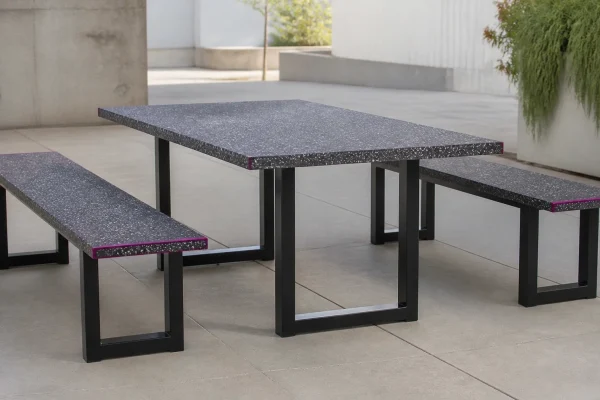
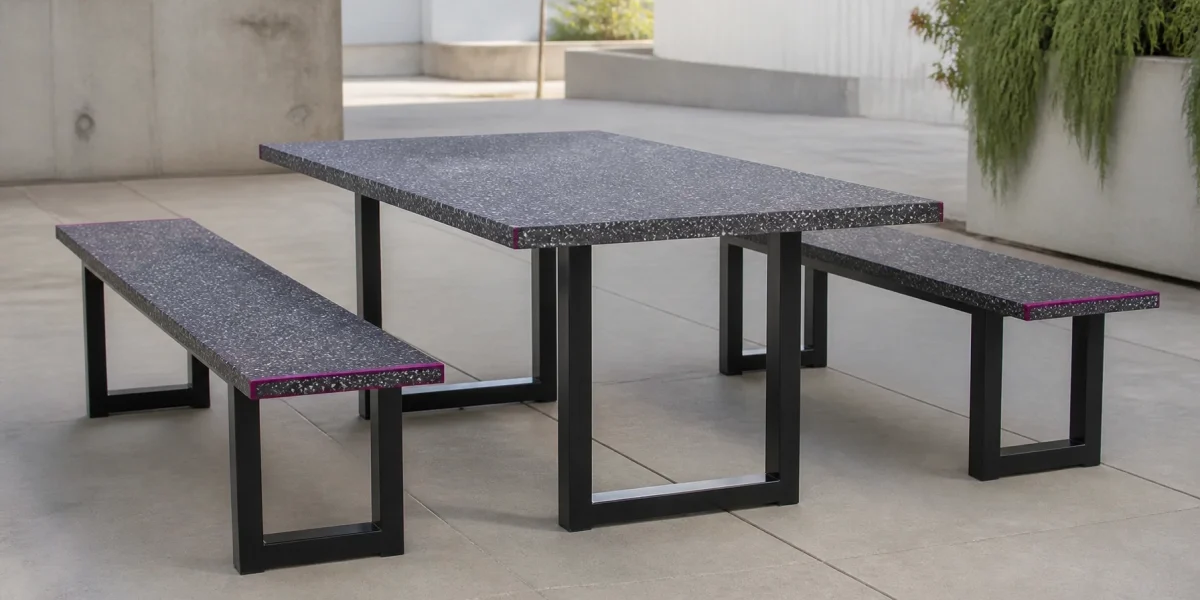
Resourceful Living’s Nox Table, for example, demonstrates how recycled plastic can be used in a contemporary hospitality-style furniture design.

Custom manufacturing and colour options
Off-the-shelf furniture can simplify procurement, but commercial projects often have site-specific requirements.
You may need:
- Custom dimensions
- A particular seat height or table configuration
- Accessible clearances
- Integrated branding or signage
- Matching furniture across multiple sites
- A specific colour palette
- Components manufactured for a bespoke design
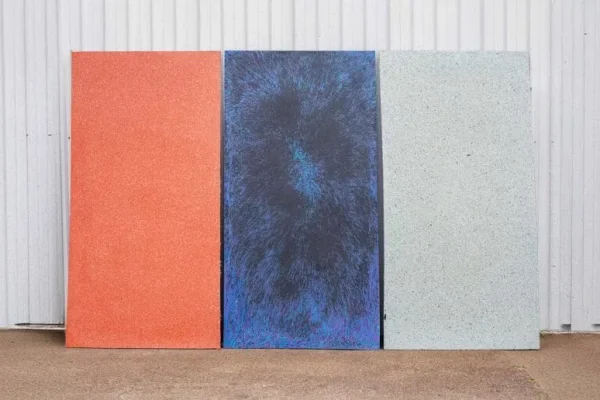
Resourceful Living offers 100% recycled and recyclable furniture, recycled plastic sheets and bespoke products. Its manufacturing capability includes six popular colours readily available, custom manufacturing seven days a week and production of up to one tonne of plastic per day.
Because the business manages the recycling and manufacturing cycle, it can also help clients understand where the material comes from. That traceability can support sustainability reporting, tender responses and project documentation.
Circularity and the take-back advantage
A product’s environmental value shouldn’t end at installation. Ask what happens when the furniture is damaged, redeveloped or no longer required.
Resourceful Living offers a take-back programme, collecting its products free of charge at end of life for remanufacturing. This gives commercial buyers a defined pathway beyond landfill or uncertain third-party disposal.
When comparing suppliers, request written information about:
- Recycled content percentage
- Australian source of the plastic
- Manufacturing location
- Product disassembly
- Reuse or remanufacturing options
- Collection responsibilities and costs
- Treatment of frames, fixings and other components
A take-back arrangement should be recorded in your purchase documentation or project sustainability plan.
2026 commercial buyer’s checklist
Before you approve recycled plastic outdoor furniture, confirm:
- The product is suitable for commercial use
- Recycled content and material composition are documented
- Weather and strength performance have been tested
- UV exposure and colour selection have been considered
- Fixings and frames suit the site conditions
- Installation and anchoring requirements are clear
- Cleaning and inspection instructions are supplied
- Warranty terms are written and product-specific
- Delivery lead times fit your programme
- End-of-life recycling or take-back is defined
- The whole-of-life cost has been compared with timber
For a deeper look at local sourcing and closed-loop production, read How it works: sourcing, manufacturing and delivering 100% Australian recycled plastic. You can also review Resourceful Living’s recycled plastic outdoor furniture overview.
Get a quote for your next project
Recycled plastic furniture can provide a durable, low-maintenance and traceable alternative for Australian commercial environments. The best outcome depends on selecting the right design, colour, installation method and end-of-life pathway for your site.
Planning furniture for a park, school, stadium, hospitality venue or commercial development?
Contact Resourceful Living to get a quote or request samples. Tell us your quantities, dimensions, location and intended use, and we’ll help you assess the right recycled plastic furniture solution.