
Don’t be fooled, avoid these 5 common mistakes when buying sustainable building materials. Choosing eco-friendly building materials can be a smart, sustainable decision or a costly misstep. With more builders, architects, and councils prioritising green materials, the market has exploded with options. But not all “eco” products are created equal.
In this guide, we’ll explore the 5 most common mistakes people make when buying sustainable building materials and how you can avoid them to ensure your project stays compliant, cost-effective, and truly sustainable.
✅ Shop our fully recycled, Australian-made panel range
📎 Related: Buying Recycled Plastic Panels: What You Need to Know
Mistake 1: Prioritising Price Over Lifecycle Value
Choosing the cheapest upfront option often means:
- More frequent repairs or replacements
- Higher maintenance costs
- Poorer environmental performance
For example, MDF or plywood might be cheaper than recycled plastic, but they:
- Absorb water and swell over time
- Need sealing, painting, or replacing regularly
- Don’t support circular economy goals
✅ Compare recycled plastic vs timber, MDF and plywood
💡 Solution: Evaluate the total cost of ownership, including installation, maintenance, and end-of-life recyclability.
Mistake 2: Overlooking Certifications or Provenance
Not all eco-materials are verified. Some imported “green” products:
- Lack Australian certification
- Have unclear or exaggerated claims
- Aren’t recyclable or made from recycled content
💡 Solution: Always ask for documentation:
- Recycled content %
- Third-party certifications (e.g. Global GreenTag)
- Local manufacturing credentials
Mistake 3: Ignoring Thickness and Structural Suitability
A panel or board might be eco-friendly but that doesn’t mean it’s right for your application.
- Too thin = warps, cracks, fails under load
- Too thick = waste of material, difficult install
📎 Related: How to Choose the Right Thickness for Your Project
💡 Solution: Match thickness to function. For example:
- 10–15mm = signage, cladding
- 20–30mm = planter boxes, screens
- 40–50mm = structural seating, bollards
✅ Explore applications by panel thickness
Mistake 4: Ignoring End-of-Life Recycling
Many materials claim to be eco-friendly but end up in landfill because:
- They’re composite and can’t be separated
- There’s no local take-back program
- Their end use isn’t covered by manufacturer recycling policies
✅ Learn about panel recyclability and take-back options
💡 Solution: Choose materials that are:
- Made from recycled plastic (like HDPE or PP)
- Fully recyclable again at end of life
- Supported by a closed-loop manufacturer
📎 Related: Maintenance & Longevity: How Recycled Plastic Stacks Up
Mistake 5: Choosing Looks Over Performance
It’s easy to get caught up in colour swatches and surface textures but outdoor durability, water resistance and load-bearing matter far more in the long run.
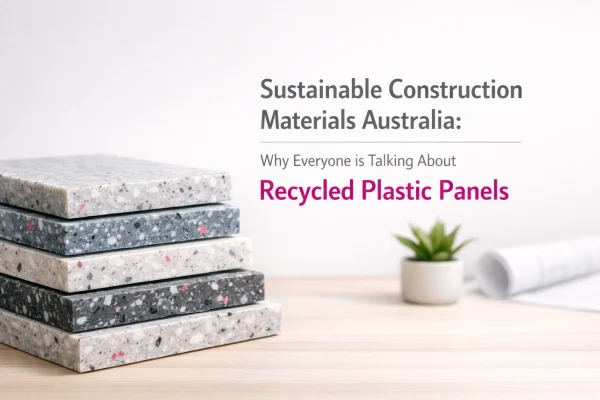
Recycled plastic panels offer:
- Colour-through material (won’t chip or peel)
- No painting or sealing needed
- UV and water resistance for 20–50+ years
📎 Related: Buying Recycled Plastic Panels: What You Need to Know
💡 Solution: Always balance form and function. Choose materials that are:
- Designed for your climate and conditions
- Strong enough for the load
- Proven through case studies
✅ Book a product consult to get material recommendations
Avoid Greenwashing Ask These Questions First
Before committing to any material claiming to be “eco” or “green,” ask:
- Is it certified by a third party?
- What’s the actual recycled content?
- Can it be recycled again?
- Is it locally made or imported?
- Is there a performance warranty?
Summary: Get Sustainability Right from the Start
By avoiding these common mistakes, you can:
- Lower your long-term costs
- Build with materials that last
- Meet your sustainability targets
- Support Australian circular economy initiatives
Recycled plastic panels are one of the few materials that check every box: durability, low maintenance, closed-loop manufacturing, and real environmental impact.
✅ Shop by application or thickness
✅ Speak to our sustainability experts