If you're a builder or project manager in Australia right now, you've probably noticed the goalposts haven't just moved: they've been completely redesigned. As of May 2026, the industry shift toward embodied carbon reporting has moved from a "nice-to-have" sustainability badge to a mandatory requirement for most commercial, government, and high-end residential tenders.
Whether you’re chasing a Green Star rating or navigating the new NABERS Embodied Carbon framework, the pressure is on to prove exactly how much carbon is "locked" into your building before the keys are even handed over.
The good news? You don't need a PhD in climate science to nail your next report. You just need to know where the low-hanging fruit is. In this guide, we'll break down the 2026 reporting landscape and show you how a simple shift in material selection can effectively do the heavy lifting for your carbon targets.
The 2026 Landscape: NABERS and Green Star Simplified
In the past, we focused almost entirely on operational carbon: the energy used to light and cool a building. Today, the focus has shifted to upfront carbon (Stages A1-A3 of the Lifecycle Assessment). This is the carbon emitted during the extraction, transport, and manufacturing of building materials.
NABERS Embodied Carbon
The NABERS Embodied Carbon tool is now the gold standard. It provides a certified rating for new builds and major renovations. To get a high rating, you need verified evidence. We’re talking about actual onsite delivery dockets and detailed Bills of Quantities (BoQ). Assessors no longer accept "vague estimates"; they want to see that you've prioritised materials with low global warming potential (GWP).
Green Star Buildings v1.1
From May 2026, all new Green Star projects must register under v1.1. This update tightens the screws, requiring a minimum 10% reduction in upfront carbon compared to a standard reference building. If you're aiming for a 6-star rating, that target often jumps to 20% or even 40%.
Why Fitouts are Your "Secret Weapon" for Carbon Reduction
When builders look at a site, they see the "Big Three" carbon offenders: concrete, steel, and aluminium. These often account for over 70% of a building's embodied carbon. While you can't always swap a structural steel beam for something else, you can drastically change the numbers by looking at the remaining 30%.
This is where the "low-hanging fruit" comes in. Internal fitouts, wet areas, signage, and site infrastructure are the easiest places to achieve quick, massive carbon savings without redesigning the entire structure.

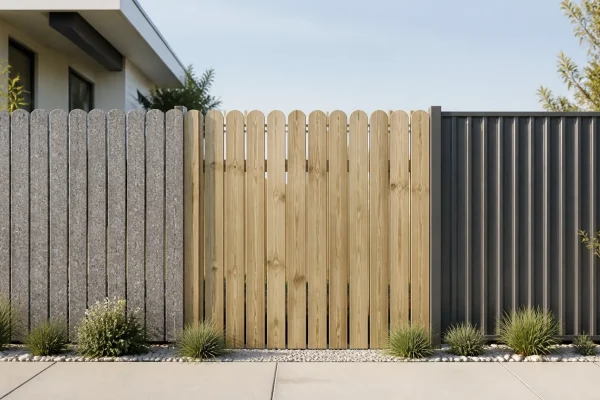
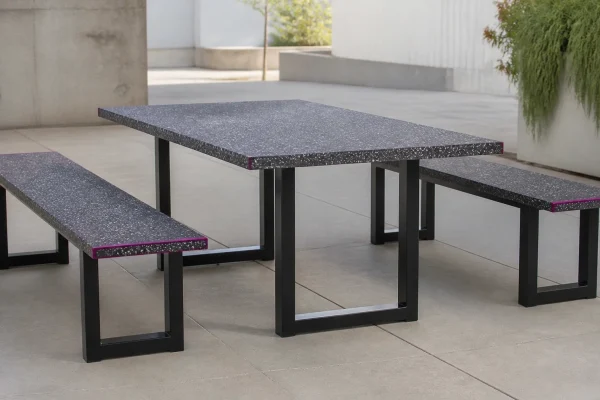
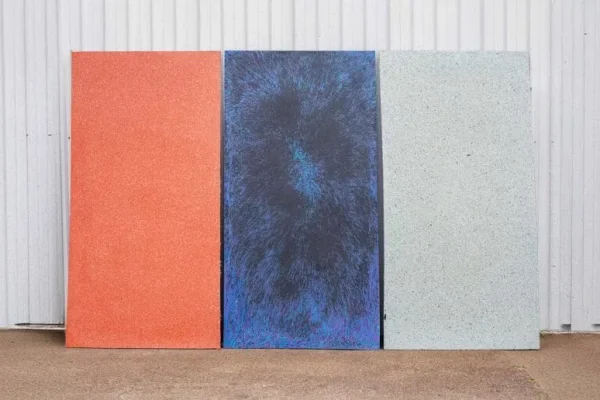
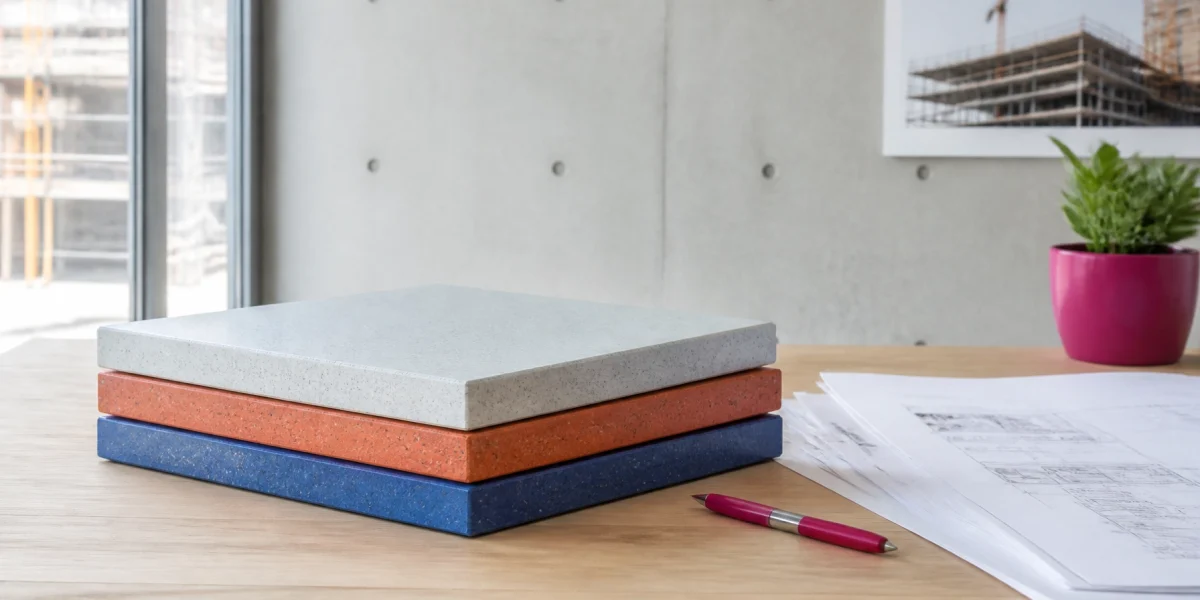
By swapping out traditional materials: like treated timber, marine plywood, or virgin plastics: for 100% recycled HDPE (High-Density Polyethylene) sheets, you're making an immediate, verifiable dent in your report.
The "Math" of Carbon Savings: Why Recycled Plastic Wins
In 2026, data is the new currency. When you specify materials from Resourceful Living, you aren't just getting a durable panel; you're getting a "carbon credit" in your reporting.
Here is how the numbers stack up for sustainable building materials in Australia:
- 1 Ton of Recycled HDPE = ~1.75 Tons of CO2 Saved: For every ton of plastic waste we divert from landfill and manufacture into panels, we prevent up to 1.75 tons of carbon from entering the atmosphere.
- 50-70% Reduction: Compared to using virgin plastic (which requires new oil extraction and heavy processing), our recycled panels represent a massive reduction in upfront emissions.
- Zero Waste on Site: Because our panels don't delaminate or rot, the wastage rates are significantly lower than timber or plywood, further improving your project’s carbon footprint.
"Measurement is the first step toward management. If you can't accurately report the carbon you're putting into the ground today, you can't hope to hit your 2030 targets."
Comparing the "Old Guard" to Circular Construction
When you're trying to choose the best sustainable building materials, it helps to look at the practicalities of the "Old Guard" materials versus modern circular solutions.
| Material | Embodied Carbon Impact | Traceability | Lifespan in Wet Areas |
|---|---|---|---|
| Virgin Timber | Medium (Transport heavy) | Variable (FSC required) | Low (Needs chemicals/rot risk) |
| Virgin Plastic | High (Oil-based) | Low | High |
| Recycled HDPE | Low (Waste-based) | High (100% Australian) | Extremely High (Rot-proof) |
Many builders are finding that recycled plastic vs concrete structural choices for non-load-bearing elements (like noise walls or retaining walls) is the fastest way to meet local council sustainability mandates.

Traceability: The Cure for Reporting Headaches
One of the biggest hurdles in embodied carbon reporting in Australia is the paper trail. NABERS assessors require proof of origin.
Because Resourceful Living manufactures right here in Australia using 100% Australian waste, our supply chain is short, transparent, and fully traceable. We provide the documentation you need: from the source of the waste to the energy used in manufacturing: so you can stop chasing suppliers for data and start winning tenders.
The Take-Back Program: Closing the Loop
A truly circular construction strategy requires an end-of-life plan. What happens to those fitout materials in 15 years when the building is refurbished?
Most materials end up in a skip bin, adding to the building's Whole of Life carbon cost. Resourceful Living offers a free take-back program. We collect our products at the end of their useful life and recycle them back into new panels. This "infinite loop" effectively removes the end-of-life disposal emissions from your project's balance sheet.
Quick-Start Checklist for Project Managers
Ready to nail your next 2026 tender? Follow these four steps to ensure your embodied carbon reporting is airtight:
- ✅ Engage Your Assessor Early: Don't wait until the slab is poured. Get your NABERS or Green Star assessor involved during the design phase to set realistic carbon targets.
- ✅ Audit Your Fitouts: Identify high-moisture or high-wear areas where timber or virgin plastic is currently specified. Swap these for recycled plastic sheets to bag easy carbon wins.
- ✅ Demand EPDs (Environmental Product Declarations): If a supplier can't provide a verified EPD or a detailed recycled content certificate, you'll be forced to use "default" high-carbon industry averages in your report.
- ✅ Collect Dockets: Set up a system for your site managers to photograph and file every material delivery docket. These are your "receipts" for carbon accounting.

Future-Proofing Your Business
The shift toward circular construction 2026 isn't just a trend; it’s a fundamental change in how the Australian built environment operates. Builders who master carbon reporting now will have a massive competitive advantage as the NCC 2028 updates move closer to making these metrics mandatory across the board.
By switching to locally manufactured, traceable recycled materials, you aren't just saving the planet: you're streamlining your reporting, reducing maintenance costs, and positioning your business as a leader in the new green economy.
Want to see the data for your next project? Contact our team today for a technical spec sheet and carbon savings breakdown.