If you’ve been on an Australian job site lately, you know the vibe is changing. It’s no longer just about getting the project done fast and cheap; it’s about proving your build can actually withstand the elements and meet the tightening grip of the National Construction Code (NCC).
As of May 2026, we aren't just talking about "sustainable building materials in Australia" as a lifestyle choice. We’re talking about them as a regulatory necessity. With the recent NCC 2025 updates and the looming 2028 mandates on the horizon, the "old guard" of materials: like marine plywood and MDF: is starting to look like a liability.
At Resourceful Living, we’re seeing a massive influx of builders and specifiers ditching traditional materials for our 100% recycled plastic panels. Why? Because when the code gets tougher, performance matters more than tradition.
The NCC 2025 "War on Moisture"
The NCC 2025 updates (published in early 2026) have made one thing very clear: moisture management is no longer optional.
The new Clause F8D3 has essentially declared war on poorly ventilated wall systems. For most external wall systems, builders are now required to incorporate a drained and vented cavity. This is specifically designed to stop moisture from getting trapped, which leads to mould, rot, and structural failure.
Why This Spells Trouble for Timber
If you’re still using timber or plywood in these moisture-heavy zones, you’re playing a dangerous game. Even "treated" timber has a shelf life when exposed to constant condensation within a vented cavity.
- Swelling: Traditional boards absorb moisture, leading to delamination.
- Rot: Trapped humidity is a breeding ground for fungi.
- Maintenance: Once a timber board inside a wall cavity starts to fail, the remediation costs are astronomical.
This is where circular construction 2026 principles come in. Our recycled plastic sheets are 100% waterproof. They don’t swell, they don’t rot, and they don’t require a single drop of sealant to stay that way. When you install a 100% recycled HDPE panel, you're installing a "set and forget" solution that meets the most stringent moisture resistance standards in the NCC.

Embodied Carbon Reporting: The 2026-2028 Roadmap
While moisture is the immediate fire builders are putting out, embodied carbon reporting in Australia is the slow-burn challenge that will define the next two years.
Currently, under NCC 2025, reporting embodied carbon is largely a voluntary pathway for commercial buildings. However, the industry consensus is that this is the "warm-up lap." By the time the NCC 2028 updates roll out, what is currently "voluntary" is expected to become a mandatory pass/fail requirement.
Future-Proofing with Data
If you’re tendering for government or large-scale commercial work today, you're already being asked for data. Rating tools like NABERS and Green Star are already demanding a minimum 10-20% reduction in embodied carbon compared to standard reference buildings.
Using our recycled plastic sheets gives you an immediate "carbon win" on your reporting:
- Zero Virgin Extraction: We aren't drilling for new oil; we’re using what’s already in the yellow bin.
- Local Manufacturing: All our panels are made right here in Australia, slashing the "Stage A4" transport emissions that blow out the carbon footprint of imported materials.
- End-of-Life Certainty: We offer a take-back program where we collect our products at the end of their life for remanufacturing. That’s a closed-loop story that auditors love.
"The circular economy isn't just about using recycled stuff; it's about what happens next. Builders who can prove a material's end-of-life plan are winning the best tenders in 2026." : Jess Hodge, Owner of Resourceful Living.
Performance Comparison: Recycled Plastic vs. The "Old Guard"
When you're trying to choose the best sustainable building materials, you have to look at the total lifecycle.
| Feature | Marine Plywood | Virgin Plastic (Imported) | Resourceful Living Panels |
|---|---|---|---|
| Water Resistance | Low (Absorbs & Swells) | High | High (100% Waterproof) |
| Maintenance | High (Painting/Oiling) | Low | Zero |
| Embodied Carbon | Medium | High | Low (100% Recycled) |
| Traceability | Variable | Low | High (Australian Made) |
| End of Life | Landfill | Landfill | 100% Recyclable (Take-Back) |
Whether you're looking at recycled plastic vs concrete for infrastructure or comparing it to timber for a wet-area fit-out, the data consistently points to recycled plastic as the superior long-term performer.

Technical Specs for the Modern Specifier
We know that "sustainable" doesn't mean much if the product doesn't stand up to the rigours of a site. Our panels are engineered to be high-performance tools, not just eco-friendly alternatives.
- Standard Size: 2400mm x 1200mm sheets.
- Thickness Range: From 3mm for signage up to 40mm for structural blocks.
- Material: 100% Australian recycled HDPE (High-Density Polyethylene) or PP (Polypropylene).
- Finish: Solid blocks with no veneers or additives: meaning you can cut, drill, and router them just like timber, without exposing a vulnerable core.
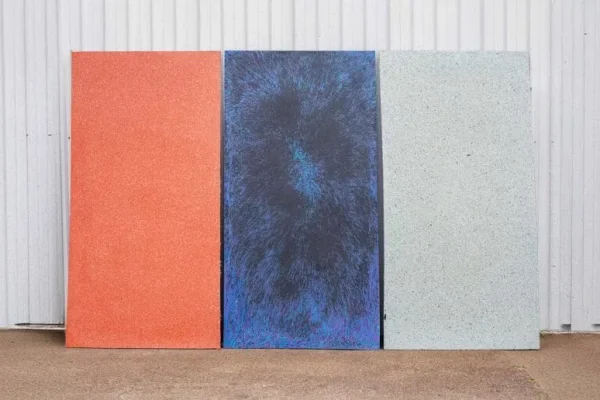
- Colours: We have 6 popular "standard" colours always available, with custom manufacturing running seven days a week to meet tight project deadlines.
High-Impact Zones for Replacement
Not sure where to start? We recommend identifying your "Low Hanging Fruit": the areas where traditional materials are currently costing you the most in maintenance or replacement:
- Site Hoarding: Stop throwing away battered plywood after every job.
- Wet Area Substrates: Use as a rot-proof backing for bathrooms and kitchens.
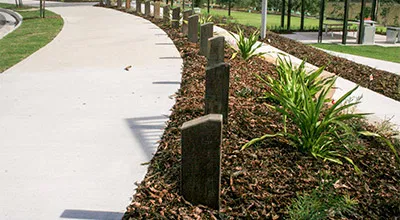
- Public Infrastructure: Councils are already switching to recycled plastic for garden edging and retaining walls to avoid constant rot cycles.
- Acoustic Barriers: Our high-density panels are excellent for noise reduction on busy roadworks.
Don't Get Left Behind by NCC 2028
The shift toward circular construction isn't a "trend": it's an evolution of the building code. By the time 2028 rolls around, the builders who are already comfortable with embodied carbon reporting and moisture-resilient materials will be the ones leading the market.
At Resourceful Living, we make the transition easy. We manage the end-to-end recycling and manufacturing cycle, which means we can give you the exact traceability data you need for your sustainability targets.
Ready to Spec Out Your Next Project?
Stop letting "good enough" materials bleed your budget dry through maintenance and non-compliance. It’s time to switch to a material that performs as hard as you do.
- Order a Sample Pack: See the quality and texture of our 100% recycled panels for yourself.
- Book a Consultation: Let’s talk about how to integrate circular materials into your next tender to give you the competitive edge.
- Join the Loop: Ask about our ESG Partner Program to automate your circularity reporting.
Performance matters. Make sure your materials are up to the task.