
For decades, the Australian infrastructure playbook was simple: if it needs to last, you use concrete. But as we move through 2026, that "concrete-first" mentality is being disrupted by a perfect storm of carbon mandates, skyrocketing maintenance costs, and a massive shift toward circular construction.
In 2026, the question isn't just "will it hold the load?" but "what is the total carbon cost over its lifetime?" This is where the battle between traditional concrete and high-performance recycled plastic (rHDPE) becomes critical for every project manager and engineer in the country.
At Resourceful Living, we’re seeing a massive uptick in infrastructure specifiers ditching traditional materials for our 100% recycled plastic panels. Here’s why the industry is moving away from the heavy stuff and going circular.
The 2026 Context: Why "Circular" is No Longer Optional
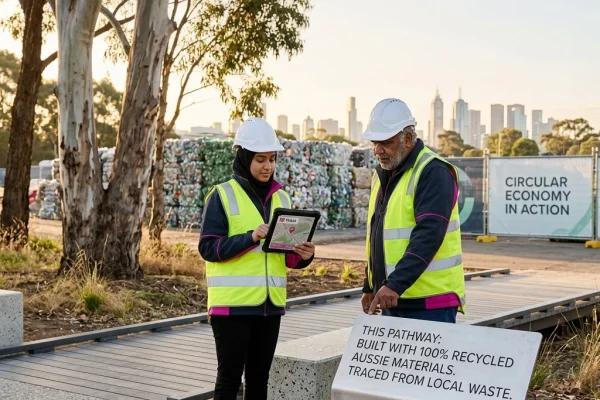
The Australian construction landscape has fundamentally changed this year. With the 2026 plastic ban now in full swing and new procurement guidelines favouring projects with high recycled content, circularity has moved from a "nice-to-have" marketing buzzword to a mandatory technical requirement.
Circular infrastructure means designing for the long haul: using waste as a resource and ensuring that at the end of a project’s life, those materials can be remanufactured again. Concrete, while durable, is notoriously difficult to fully "circularise" due to the high energy required for crushing and the loss of structural integrity in recycled aggregates.
The Carbon Reality Check 📉
Concrete is the third most used substance on Earth, but its environmental price tag is massive. Cement production alone accounts for roughly 8% of global CO2 emissions. For Australian projects aiming for Net Zero, concrete is the biggest hurdle in the embodied carbon reporting process.
On the flip side, rHDPE (Recycled High-Density Polyethylene) acts as a carbon sink. By taking post-consumer waste: like the milk bottles and shampoo containers we process at Resourceful Living: and locking them into structural panels, we are effectively preventing that carbon from being released via incineration or landfill decomposition.
"In 2026, ignoring the embodied carbon of your materials is a fast track to losing government contracts. You need to know your numbers before you break ground." : Resourceful Living Engineering Team
Technical Performance: Structural vs. Environmental Strength
We aren't going to tell you that recycled plastic will replace the foundations of a 50-storey skyscraper. Concrete still wins on pure compressive strength for primary load-bearing structures. However, for a huge percentage of infrastructure: retaining walls, coastal protection, drainage systems, and site hoardings: recycled plastic is objectively superior.
1. Corrosion and Saltwater Resistance
Concrete’s biggest enemy in Australia is the coast. Saltwater ingress leads to rebar corrosion, which causes "concrete cancer" and structural failure. This requires constant, expensive remediation.
rHDPE is 100% inert. It doesn’t matter if it’s submerged in the Pacific Ocean or buried in acidic soil; it will not rot, rust, or degrade.
2. Ductility vs. Brittleness
Concrete is brittle. It cracks under ground movement or thermal expansion. Our rHDPE panels are ductile; they have a degree of flexibility that allows them to absorb impact and movement without catastrophic failure.
3. Weight and Logistics
Concrete is heavy. Moving it requires heavy machinery, high fuel costs, and significant site prep. Our rHDPE sheets are significantly lighter, meaning you can move more material per truckload and often install them with smaller crews and lighter equipment.
The Maintenance Trap: OPEX vs. CAPEX
This is where project budgets often fall apart. Concrete is often cheaper upfront (CAPEX), but it’s an OPEX nightmare. Between 2026 and 2036, the cost of maintaining traditional infrastructure is projected to rise as labour and material costs climb.
| Feature | Concrete | Resourceful Living rHDPE |
|---|---|---|
| Initial Cost | Moderate | Competitive |
| Maintenance | High (cracks, sealing, painting) | Zero |
| Lifespan | 20-50 years (varies) | 50+ years |
| End of Life | Downcycled/Landfill | 100% Recyclable |
| Installation | Heavy machinery required | Light-medium equipment |
For many councils and mining operations, the shift is about moving OPEX to CAPEX. By spending slightly more: or even the same: upfront on a material that requires zero painting, zero sealing, and zero crack repairs, you save hundreds of thousands over a 10-year asset cycle.
Circular Construction in Action: Where rHDPE is Winning
In 2026, we are seeing recycled plastic displace concrete in several key infrastructure categories:
Retaining Walls and Erosion Control
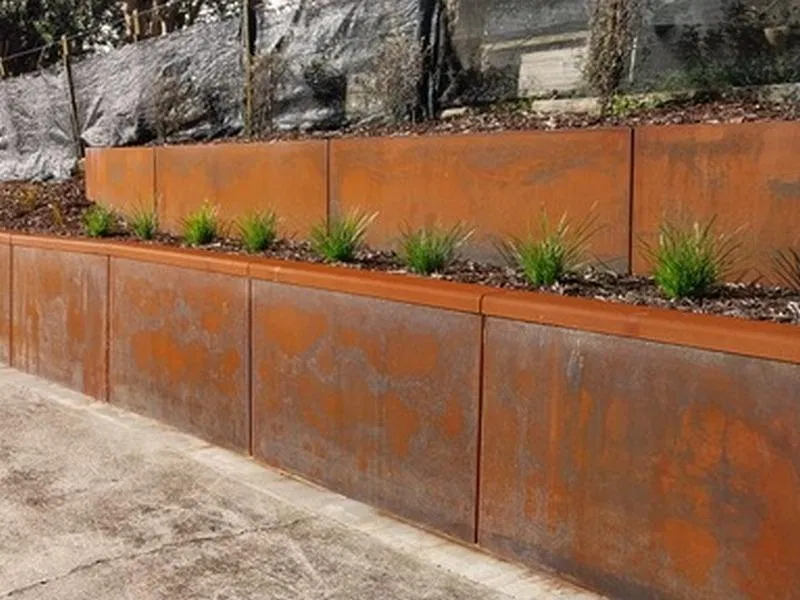
Traditional concrete sleepers are heavy and prone to cracking. Our rust-effect rHDPE panels provide the same aesthetic as Corten steel or the strength of concrete but with much faster installation times. They are perfect for public pathways and parklands where aesthetics matter as much as durability.
Coastal and Marine Infrastructure
Because rHDPE doesn't leach chemicals and resists saltwater, it’s becoming the gold standard for boardwalks, sea wall liners, and pier fendering. Check out this case study on a coastal boardwalk that saved $85k in maintenance costs just by making the switch.
Site Management and Hoarding
Why use single-use plywood or heavy pre-cast concrete barriers for site hoarding? 100% recycled plastic panels can be used, dismantled, and reused across multiple projects. If they do eventually get damaged, we take them back and turn them into new panels. That is the definition of a closed-loop ESG partner program.

How to Integrate Embodied Carbon Reporting
If you're managing a project in 2026, you’re likely staring down a massive spreadsheet for Embodied Carbon Reporting. The shift toward circular materials makes this reporting much easier.
When you specify a Resourceful Living panel, you aren't just getting a building material; you're getting a traceable sustainability metric. We provide the data on exactly how much plastic waste was diverted from Australian landfills to create your project components. This is a massive lever when winning government tenders.
Steps for 2026 Reporting:
- Identify high-impact areas: Where can concrete be replaced (e.g., non-load bearing walls, site hoarding, landscaping)?
- Audit the supply chain: Ensure your plastic is actually Australian-recycled. Many "recycled" products are just imported virgin plastic with a green label.
- Quantify the win: Use our technical guides to calculate the CO2-equivalent savings of using rHDPE over concrete.
Local Traceability: The Resourceful Living Difference
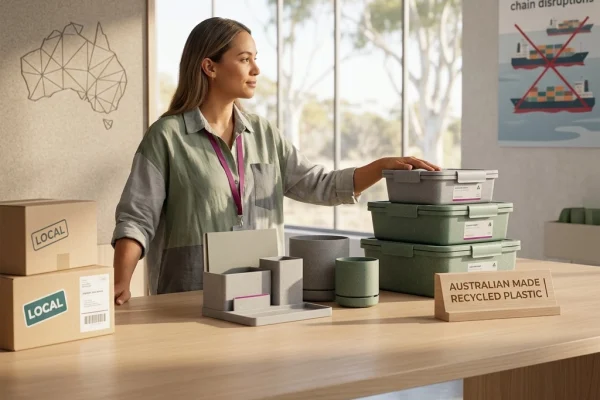
In 2026, "Greenwashing" is a legal risk. You need to be 100% sure your materials are what they say they are. All our panels are manufactured right here in Australia from 100% local waste.

When you look at our range of rHDPE sheets, you're looking at a product that supports local jobs and solves a local waste problem. Whether it's our 'River' blue marbled panels or our solid 'Ochre' construction sheets, the performance is backed by rigorous testing and a commitment to the circular economy.
The Verdict: Concrete or Plastic?
Concrete isn't going anywhere for foundations and high-load bridges. But for everything else? The smart money in 2026 is on recycled plastic.
By choosing rHDPE for your next infrastructure project, you are:
- ✅ Slashing your maintenance budget to near zero.
- ✅ Meeting 2026 carbon mandates with ease.
- ✅ Supporting Australian manufacturing and circularity.
- ✅ Ensuring long-term durability in harsh environments.
If you’re ready to stop the "concrete-and-repair" cycle, it’s time to look at what circular materials can do for your ROI.
Ready to specify?
Check out our technical guide for specifiers or reach out to Jess and the team to see how we can help you win your next tender with high-performance recycled materials. 🚀