

Rehabilitation That Lasts: Building Closure Solutions That Don’t Fail
Mine rehabilitation isn’t just about compliance, it’s about legacy.
Long after extraction stops, the land remains. The structures remain. The environmental responsibility remains.
Here’s the uncomfortable truth: some rehabilitation materials fail before the site has even fully transitioned. Timber fence posts rot. Steel signage corrodes. Path edging deteriorates under UV exposure. Erosion controls collapse in heavy rain.
And when they fail?
You’re back on-site. Back on budget. Back in maintenance mode.
That’s why rehabilitation planning must focus on durability, lifecycle cost, and environmental alignment not just upfront procurement price.
Recycled plastic infrastructure products are increasingly being specified for rehabilitation because they’re engineered to withstand harsh Australian conditions without constant intervention.
Let’s unpack where they make the biggest impact.
Erosion Control That Handles Australian Extremes
Post-mining landscapes face:
Heavy rainfall events
Wind erosion
Temperature extremes
Unstable soils
Water channel redirection
Traditional timber edging and supports absorb moisture and degrade over time. Steel reinforcements corrode, particularly in high-salinity or acidic environments common in mining zones.
Recycled plastic alternatives:
Do not absorb water
Resist chemical exposure
Withstand UV radiation
Maintain structural integrity in wet/dry cycles
Because they don’t rot or rust, they reduce the need for repeat intervention especially critical in remote rehabilitation zones.
Operational Insight: Reduced replacement cycles mean fewer contractor call-backs and lower long-term monitoring costs.
Boundary Fencing That Doesn’t Rot or Rust
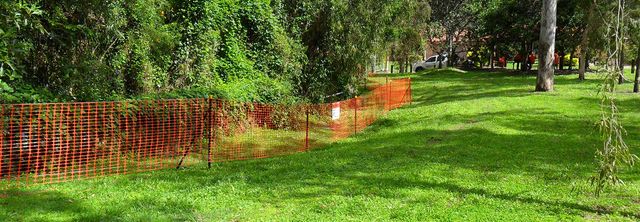
Rehabilitation fencing must last years often decades to:
Protect revegetated areas
Prevent vehicle access
Secure hazardous zones
Support environmental compliance
Timber fence posts deteriorate in soil contact. Steel posts corrode, particularly in coastal or mineral-rich soils.
Recycled plastic fence posts:
Are impervious to moisture
Resist termites and microbial decay
Maintain structural performance in-ground
Require no chemical treatment
For ESG leaders, this matters. Treated timber can introduce chemical leachates into recovering ecosystems. Recycled plastic eliminates that risk.
Lifecycle Advantage: A 40+ year service life dramatically reduces replacement and disturbance of rehabilitated land.
Pathways & Access Infrastructure Built for Longevity
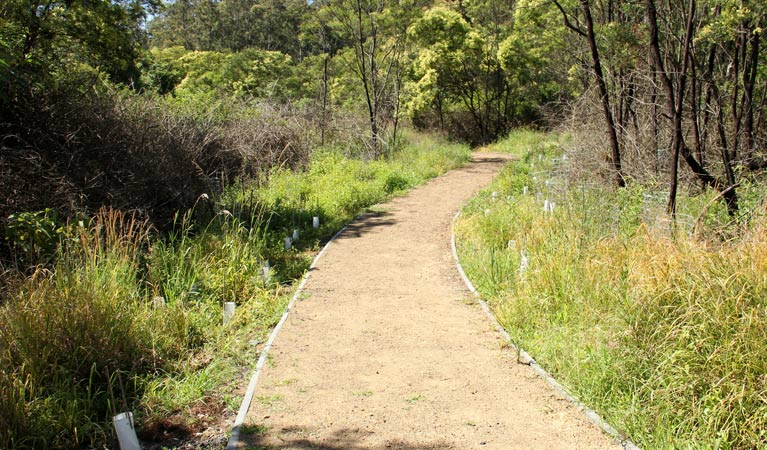
Access paths are critical during monitoring and post-closure maintenance.
They must withstand:
UV exposure
Heavy boots and equipment
Occasional vehicle access
Water runoff
Timber boardwalks can splinter and rot. Steel elements become slippery or corroded.
Recycled plastic profiles provide:
Slip-resistant surface options
Structural stability
No splintering
No corrosion
Minimal upkeep
For remote sites, reduced maintenance equals fewer return trips and lower transport emissions.
Signage Posts That Survive the Elements
Rehabilitation signage plays a regulatory and safety role for years after closure.
Steel posts rust. Timber posts degrade at ground level. Concrete cracks.
Recycled plastic posts:
Are UV stabilised
Maintain colour integrity
Don’t corrode
Don’t require repainting
In high-visibility ESG reporting, even small details like intact signage reflect long-term site stewardship.
Why Recycled Plastic Aligns with ESG & Circular Procurement
Rehabilitation is where environmental performance becomes visible.
Using recycled plastic infrastructure supports:
Landfill diversion (especially if sourced from site-generated waste)
Reduced virgin material demand
Lower embodied carbon compared to some traditional materials
Closed loop manufacturing pathways
Long-term asset durability
For mining companies under investor scrutiny, this provides measurable ESG outcomes:
Tonnes of waste diverted
Circular material reintegration
Reduced maintenance emissions
Reduced lifecycle replacement impact
As sustainability strategist John Elkington noted:
“The future of business is creating value, not just profit.”
Rehabilitation that integrates circular materials demonstrates long-term environmental accountability not just regulatory compliance.
The Financial Case: Long-Term Cost Certainty
Let’s talk numbers not theory.
Rehabilitation budgets often focus on:
Immediate compliance
Short-term capital outlay
Contractor installation cost
But long-term costs include:
Replacement materials
Labour mobilisation
Transport to remote sites
Monitoring and repair
Environmental disturbance
Recycled plastic products reduce:
Replacement frequency
Ongoing maintenance
Surface treatment costs
Soil disturbance during post-closure repairs
Over a 20–40 year period, that difference compounds significantly.
Strategic Insight: In remote regions, freight alone can exceed product cost. Durability reduces transport exposure.
Why Planning Early Makes the Biggest Difference
Here’s where many mining projects miss the opportunity.
Recycled plastic products are often considered late in the rehabilitation phase after materials are already specified.
But the biggest gains happen when circular materials are integrated into:
Mine closure planning
Procurement frameworks
Waste management strategies
ESG roadmaps
If site-generated plastics can be reprocessed into rehabilitation infrastructure, you create a closed loop model:
Waste leaves the active site →
Is reprocessed →
Returns as long-life rehabilitation infrastructure.
That’s powerful operationally and reputationally.
Practical Tip: Integrate recycled plastic product specifications into rehabilitation design documents at the planning stage, not post-approval.
The Opportunity for Mining Operations, Procurement & ESG Leaders
If you’re leading in operations, procurement, or ESG, rehabilitation presents a rare alignment:
✔ Reduce landfill disposal costs
✔ Improve durability in harsh environments
✔ Strengthen measurable ESG outcomes
✔ Lower long-term maintenance exposure
✔ Demonstrate circular economy leadership
Instead of paying landfill twice once for disposal and once for new materials you close the loop.
Rehabilitation becomes more than compliance.
It becomes a legacy strategy.
Ready to See It in Action?
The most practical way to explore this is through a Mining Site Pilot Program (Waste Audit + Prototype).
Audit site plastic waste streams
Identify recoverable volumes
Manufacture prototype rehabilitation products
Trial performance on-site
Measure durability and ESG impact
Low risk. Real data. Site-ready results.
If you’re ready to see how waste from your mining operation can return as high-performance rehabilitation infrastructure, book a Mining Site Pilot Program consultation today.
Because long after extraction ends, your materials and your decisions remain.


