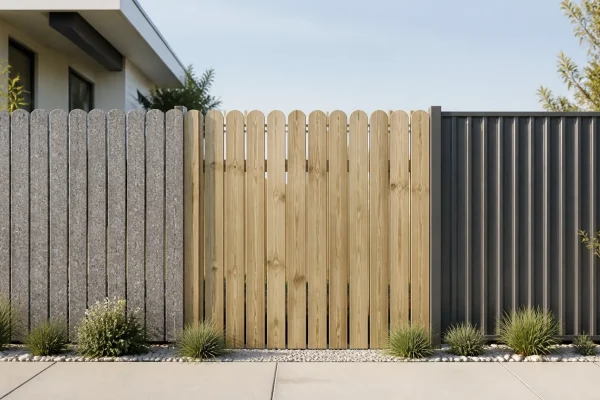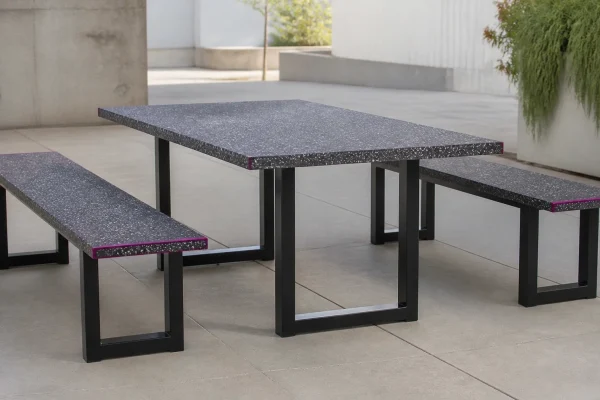
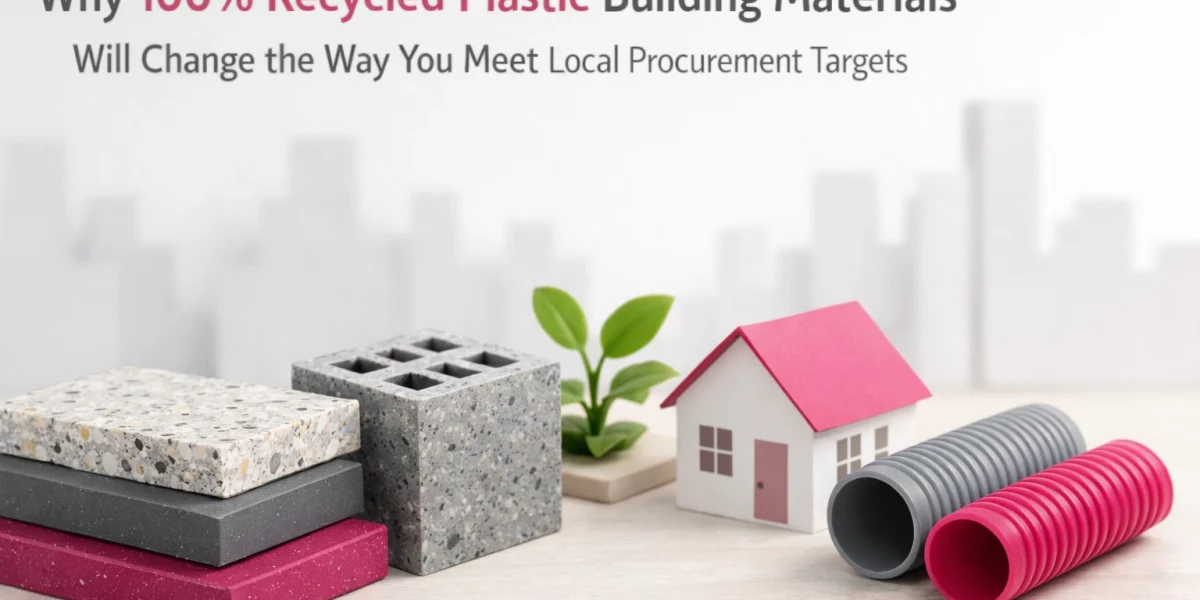
The landscape of Australian procurement is shifting. Whether you’re a local council officer, a Tier 1 contractor, or a sustainability lead for a national retailer, the pressure to "buy better" has never been higher. We’re no longer just looking at the bottom line; we’re looking at carbon footprints, local economic impact, and circularity.
State and Federal governments are tightening the screws with new Environmentally Sustainable Procurement (ESP) policies. It’s a move that’s catching many off guard, as they scramble to find materials that aren't just "less bad" but are actively contributing to a circular economy.
That’s where 100% recycled plastic building materials come in. At Resourceful Living, we’ve seen first-hand how switching from traditional materials: like virgin plastics or imported timber: to locally manufactured recycled panels can solve procurement headaches while delivering a superior product.
The Procurement Pivot: Why "Local" is the New "Luxe"
For years, procurement was a race to the lowest price, often resulting in high-mileage supply chains and materials with questionable environmental credentials. Today, the script has flipped. Local procurement targets are now a core component of most government tenders and large-scale commercial projects.
When you specify materials for a project, you aren't just buying a product; you’re buying into a supply chain. By choosing 100% Australian-made recycled plastic, you’re checking several boxes at once:
- Meeting Local Content Quotas: Supporting regional manufacturing (like our facility in Kurri Kurri).
- Carbon Reduction: Eliminating the emissions associated with international shipping.
- Waste Diversion: Directly contributing to the diversion of Australian waste from Australian landfills.
According to recent economic research, scaling the use of recycled plastics in construction could boost GDP significantly and create thousands of local jobs. It’s an economic win as much as an environmental one.
Breaking the "Greenwashing" Cycle with Traceability
One of the biggest hurdles in sustainable procurement is traceability. It’s easy for a supplier to claim a product is "sustainable," but where did the raw materials come from? Was the "recycled" content actually industrial offcuts from overseas, or was it post-consumer waste from our own backyards?
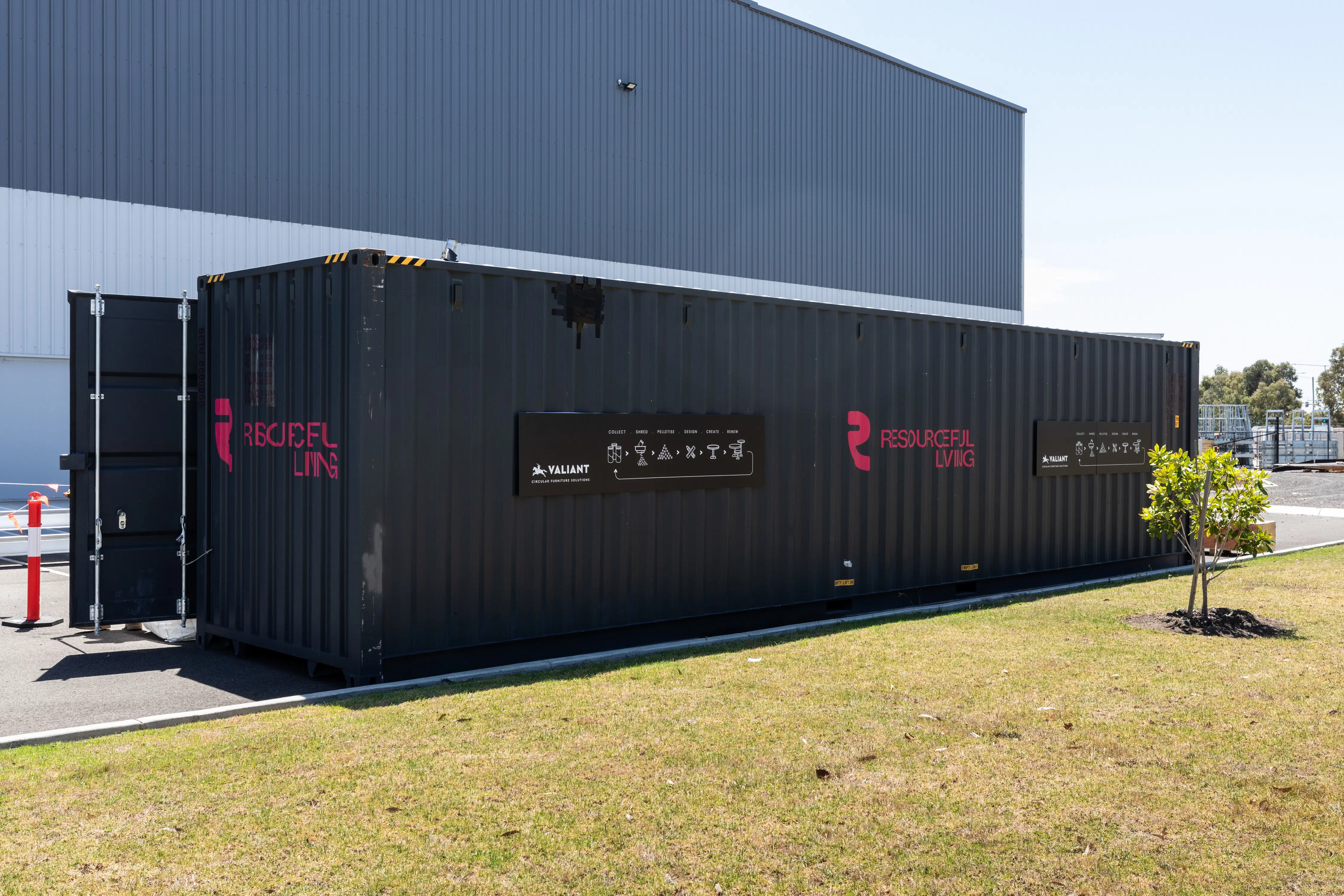
At Resourceful Living, we focus on 100% Australian post-consumer and post-industrial waste. We know exactly where our plastic comes from: whether it’s discarded milk crates, shampoo bottles, or even specialized waste like SIM cards. For example, our work on the Telstra SIM card project demonstrated how 3 million SIM cards could be diverted from landfill and turned into high-value social procurement assets.
When you can point to a benchtop, a bollard, or a partition and say, "This was made from 20,000 recycled milk bottles collected in NSW," you aren't just meeting a target: you’re telling a story that resonates with stakeholders and the community.
Performance Comparison: Recycled Plastic vs. The Status Quo
A common misconception is that "recycled" means "lower quality." In the world of high-performance polymers, the opposite is often true. Our 100% recycled HDPE (High-Density Polyethylene) and LDPE panels are engineered to outperform traditional materials in harsh Australian conditions.
| Feature | Marine Plywood | Virgin Plastic | Resourceful Living Recycled Panels |
|---|---|---|---|
| Moisture Resistance | Moderate (can rot/delaminate) | High | Superior (completely waterproof) |
| Maintenance | High (sanding/painting) | Low | Zero (UV stable and rot-proof) |
| Local Impact | Often Imported | Variable | 100% Australian Made & Owned |
| End of Life | Landfill | Landfill | 100% Recyclable (Take-back program) |
| Carbon Footprint | Moderate | High | Low (Circular manufacturing) |
Our panels are designed for durability and longevity. Whether it’s for mining rehabilitation products or public space infrastructure, these materials don't crack, splinter, or require the constant upkeep that timber does.
Hitting ESG Targets Without the Headache
Environmental, Social, and Governance (ESG) reporting is no longer optional for major corporations and government bodies. Procurement is one of the most effective levers you have to improve your ESG score.
By integrating 100% recycled materials into your specifications, you are actively participating in the circular economy. This isn't just a buzzword; it’s a functional system where waste is designed out. Our "No Goodbyes" philosophy means that if a product ever reaches the end of its useful life, it can be returned to us, shredded, and turned back into a new panel.
This closed-loop system is a powerful metric for any sustainability report. It proves you aren't just buying a product; you're investing in a material that will never see a landfill. If you're wondering how to navigate these new requirements, our Tier 1 Council Specifier Guide is a great place to start.
Versatility in Application: Beyond the Benchtop
When people think of recycled plastic, they often think of park benches. While we love a good bench, the applications for 100% recycled panels are much broader. We are seeing a massive surge in:
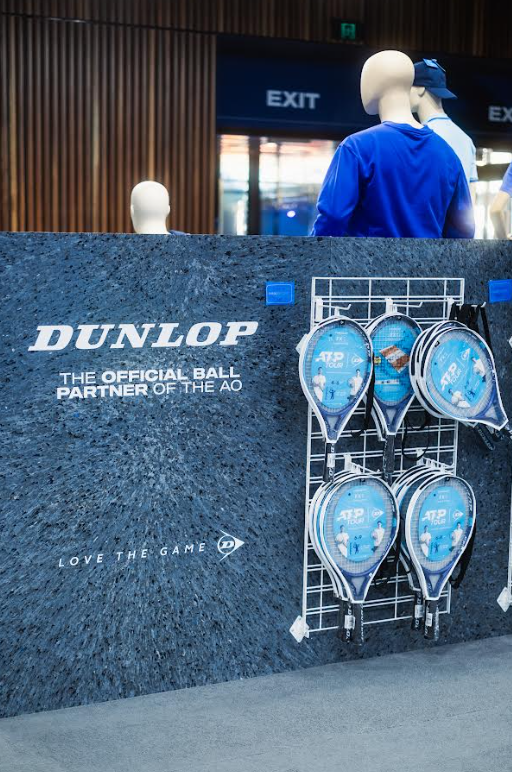
- Commercial Fit-outs: Using sustainable panels for wall cladding, cabinetry, and point-of-sale displays.
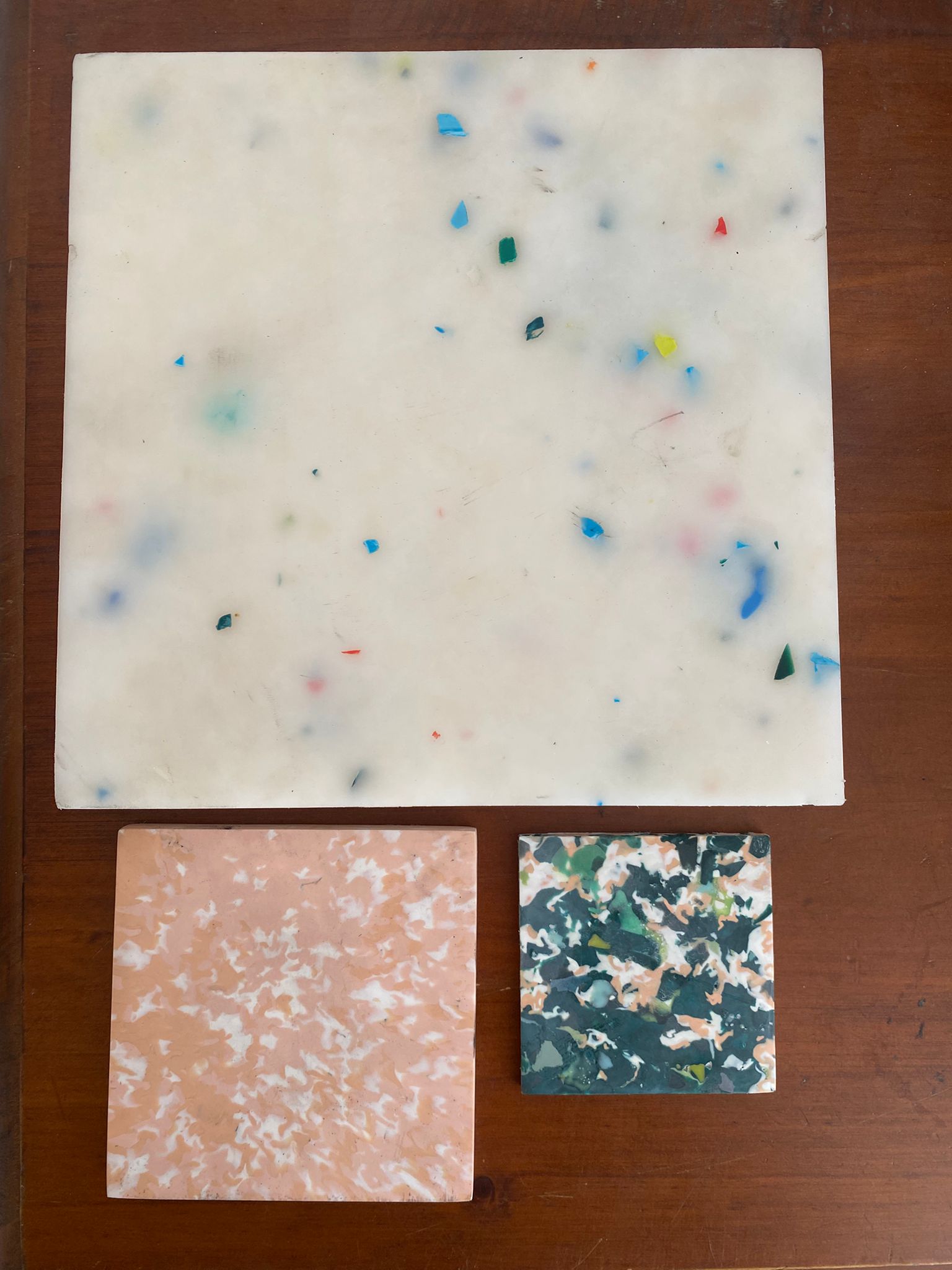
- Retail Displays: Brands are using our patterned sheets to create high-end retail environments that align with their brand values.
- Industrial Solutions: From mining operations requiring chemically resistant surfaces to heavy-duty equipment protection.
- Local Infrastructure: Signage, hoardings, and partitions that need to withstand the elements without failing.
How to Update Your Specifications for Success
If you want to win government tenders or simply stay ahead of the curve, you need to update your material specifications. Here’s a quick checklist to ensure your procurement process is truly circular:
- Specify "100% Recycled": Many products claim "recycled content" but only contain 10-20%. Demand 100% to maximise your impact.
- Verify Origin: Ensure the waste is Australian-sourced to support local waste management infrastructure.
- Check for Additives: Avoid "composite" materials that mix plastic with wood or glue, as these are often impossible to recycle again at the end of their life.
- Request a Take-Back Guarantee: Ensure the manufacturer has a programme in place to recycle the material at the end of its life.
"The true value of a material isn't just in what it does today, but in what it can become tomorrow. Procurement is the catalyst that turns waste back into a resource."
The Bottom Line
Meeting local procurement targets doesn't have to be a box-ticking exercise that compromises on quality. By choosing 100% recycled plastic building materials, you’re choosing a material that is tougher, more sustainable, and better for the Australian economy.
The shift toward circularity is here. It’s time to move past the 7 mistakes many make when choosing sustainable materials and start specifying materials that actually make a difference.
Whether you're designing a new public precinct or upgrading an industrial site, we’re here to help you meet those targets with confidence. Let's build something that lasts: and something that matters.
Ready to see the material for yourself? Explore our range of recycled plastic products and see how we can help you lead the way in sustainable procurement.