![[HERO] Why Everyone Is Talking About Local Sustainable Building Materials Australia (And Why Traceability Is King)](https://cdn.mar2blism.com/nnKDbzbkUeb.webp)
The Australian construction landscape has shifted. We’re no longer in the era where "green" was just a nice-to-have or a marketing badge. By mid-2026, the conversation has moved from vague sustainability claims to hard data, specific metrics, and: most importantly: traceability.
If you’re an architect, builder, or procurement officer, you’ve likely noticed that the scrutiny on sustainable building materials Australia has intensified. It’s not just about the product's performance anymore; it’s about where the raw materials came from, how far they travelled, and what happens to them when the building is eventually decommissioned.
In this deep dive, we’re looking at why local sourcing is the ultimate win for your project’s carbon footprint and why traceability has become the non-negotiable king of the construction industry.
The Local Advantage: Why "Made in Australia" Matters for Net Zero
For years, the industry relied on imported "sustainable" materials. However, when you factor in the massive carbon debt of shipping heavy panels or timber across oceans, the "green" benefit starts to evaporate.
Transport emissions reduction is the primary driver here. Research indicates that sourcing materials locally can save significant amounts of carbon: sometimes up to 23 tonnes for a standard residential build: simply by eliminating international logistics.
Why Local Manufacturing Wins:
- Reduced Embodied Carbon: Shorter supply chains mean less fuel consumed and a lower carbon entry point for your materials.
- Economic Resilience: Supporting local manufacturing like Resourceful Living keeps the circular economy moving within our own borders.
- Supply Chain Certainty: You aren't at the mercy of global shipping delays or international political shifts.
- Verified Standards: Australian-made products must adhere to strict local building codes and environmental regulations.
Using sustainable building materials Australia isn't just a patriotic choice; it's a strategic one. When you source 100% Australian waste that is processed and manufactured onshore, you are actively closing the loop and hitting those pesky procurement targets with ease.
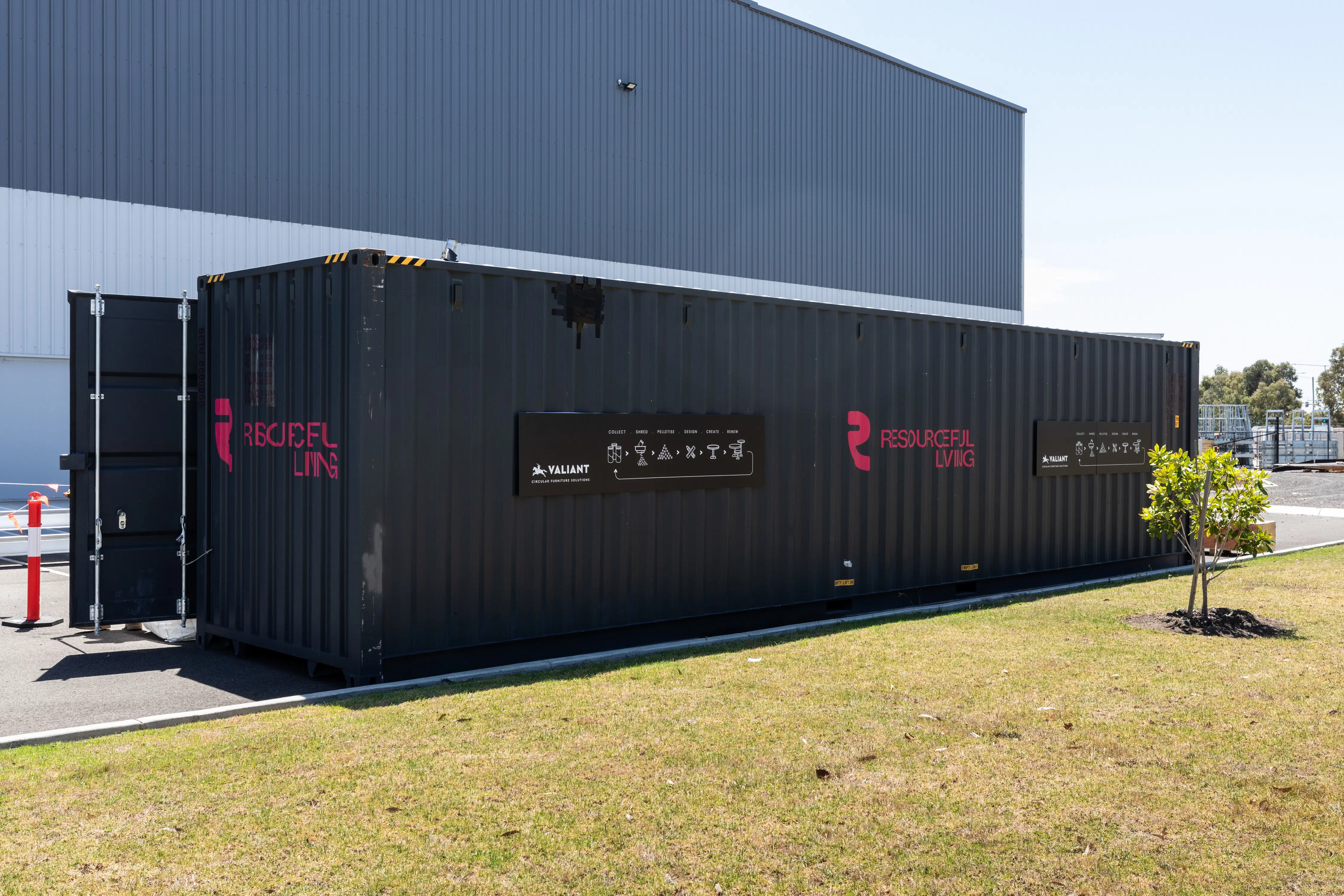
Traceability: The End of Greenwashing
We’ve all seen it: a product labelled "recycled content" with no further explanation. In 2026, that doesn't fly. Traceability is the ability to track the journey of a material from its origin to its final application.
Without traceability, you cannot accurately report on your project's environmental impact. This is particularly critical for embodied carbon reporting, which is now a standard requirement for major Australian tenders.
What Real Traceability Looks Like:
- Source Verification: Knowing exactly which waste stream the material came from (e.g., post-consumer milk bottles from NSW).
- Manufacturing Transparency: Understanding the energy profile of the factory where the panels were pressed.
- Chain of Custody: Documenting every hand the material passed through before reaching your site.
- End-of-Life Planning: Ensuring there is a take-back program in place so the material doesn't end up in a landfill.
"Traceability is the bridge between a 'claim' and a 'fact.' In a world of increasing regulation, facts are the only currency that matters in construction tenders."
The Rise of Recycled Plastic in Sustainable Construction
While timber and concrete have long been the staples of the industry, recycled plastic sheets are rapidly becoming the preferred choice for specific high-performance applications. Why? Because they offer a unique combination of durability and circularity that traditional materials struggle to match.
For example, in "wet area" fit-outs: like school bathrooms, commercial kitchens, or outdoor amenities: timber often fails due to rot, and concrete is too heavy and carbon-intensive. High-density polyethylene (HDPE) panels made from 100% Australian waste are waterproof, chemical-resistant, and: most importantly: can be recycled again at the end of their life.

Comparing the Impact: Local Recycled Plastic vs. Imported Alternatives
| Feature | Local Recycled Plastic (HDPE) | Imported "Sustainable" Timber |
|---|---|---|
| Transport Emissions | Minimal (Source & Factory in AU) | High (International Shipping) |
| Traceability | High (Direct link to AU waste) | Low to Medium (FSC helps, but gaps exist) |
| Durability | Rot-proof, UV stable, Chemical resistant | Susceptible to rot and pests |
| End of Life | 100% Recyclable (Take-back) | Often ends up in landfill or burnt |
If you're looking to move over timber for your next project, the data strongly supports the shift to locally manufactured recycled plastics.
Meeting Recycled Content Targets and Winning Tenders
Government and private developers are now setting strict recycled content targets. If you can’t prove the percentage of recycled material in your build, you risk losing the contract.
By using materials that are 100% recycled and 100% Australian, you aren't just meeting the target; you're setting a new benchmark. This is a massive advantage when aceing your next tender.
Tips for Tender-Ready Documentation:
- Request Technical Data Sheets (TDS): Ensure they specifically mention the origin of the raw material.
- Check for LCA (Life Cycle Assessment) Data: This is vital for calculating the total environmental impact.
- Verify the "Take-Back" Policy: A truly sustainable material must have a pathway back into the manufacturing loop.
Why Local Manufacturing is the Heart of Circular Construction
At Resourceful Living, we believe that the solution to Australia's waste crisis lies in our own backyard. We don't just "recycle"; we manufacture functional, high-performance materials that replace virgin products.
When we talk about sustainable building materials Australia, we are talking about transforming last week’s milk cartons or shampoo bottles into high-end benchtops and construction panels.
The Resourceful Living Difference:
- 100% Australian Waste: We don't import trash. We clean up our own country.
- Zero-Waste Manufacturing: Our offcuts go right back into the machine to make the next panel.
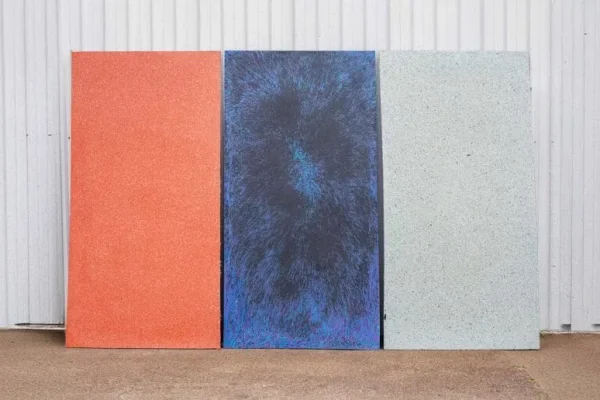
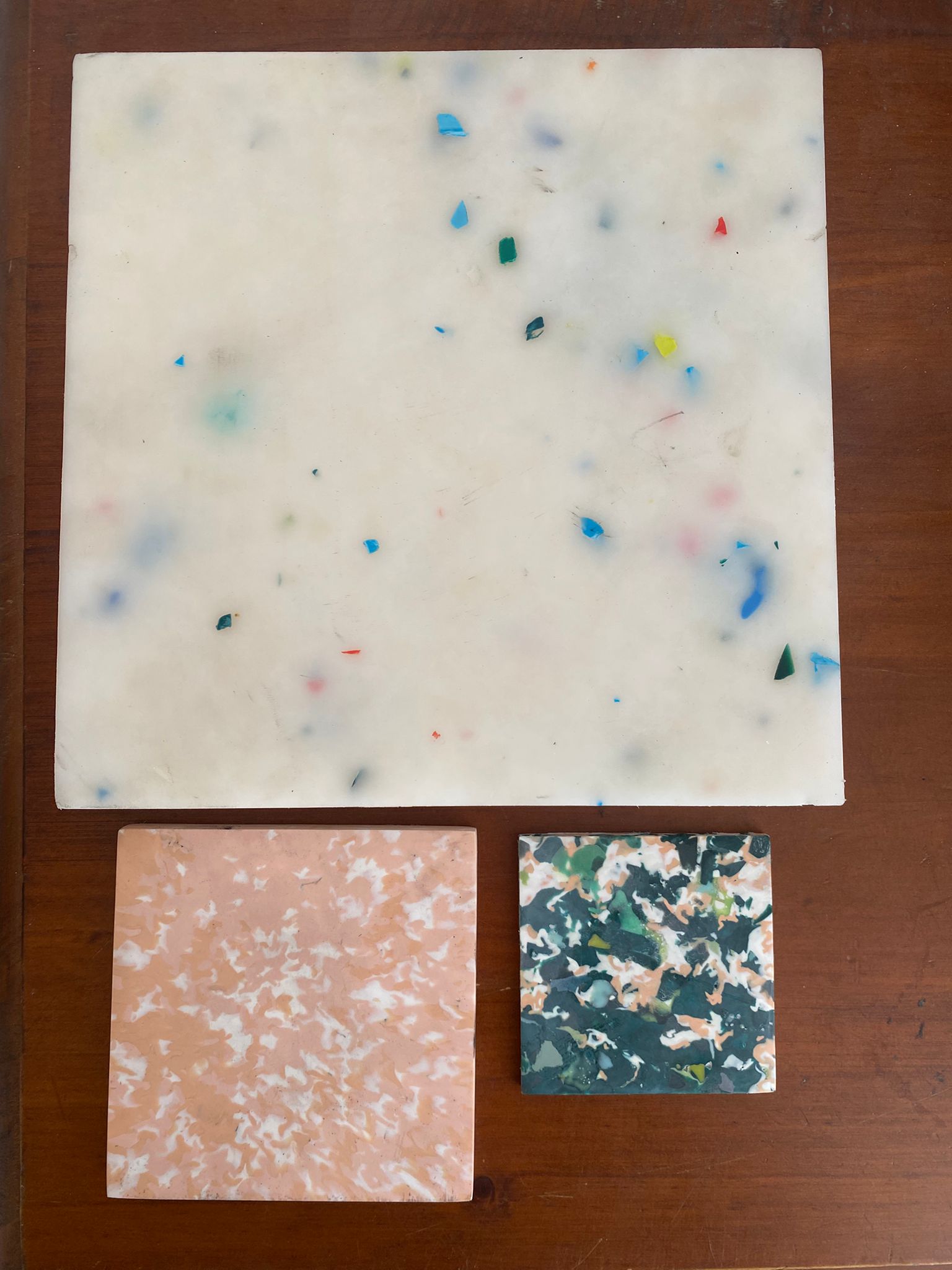
- Tangible Sustainability: You can literally see the history of the plastic in the beautiful, marbled finishes of our panels.

A Checklist for Your Next Project
Ready to make the switch to local, traceable materials? Here’s a quick-start guide to ensure your next project is future-proof:
- Audit Your Current Specs: Identify areas where high-carbon or high-maintenance materials (like timber in wet areas) can be replaced with recycled plastic.
- Demand Traceability Reports: Ask your suppliers for a "Chain of Custody" document. If they can't provide it, they probably aren't as sustainable as they claim.
- Calculate the Transport Carbon: Compare the emissions of a local supplier versus an overseas one. You’ll be surprised at the difference.
- Incorporate End-of-Life Requirements: Write into your contracts that materials must be returned to the manufacturer for recycling at the end of their functional life.
- Review the Aesthetics: Sustainability doesn't have to look "recycled." Modern panels, like our N70 White Confetti, offer a premium aesthetic suitable for high-end retail and commercial spaces.
The Future is Local
The shift toward sustainable building materials Australia is no longer a trend: it is the new operating standard. As the industry moves toward mandatory embodied carbon reporting and stricter circular economy regulations, the winners will be those who embrace traceability and local manufacturing.
By choosing products that are made here, from our own waste, you are doing more than just building a structure; you are building a resilient, circular future for Australia.
Are you ready to lead the charge? Let’s get your material data tender-ready and start building something that actually matters.
Want to see the materials in person? Explore our range of 100% recycled plastic panels and see how they can transform your next fit-out.