Let’s be honest: timber has had a pretty good run. For a few hundred years, it’s been the go-to for everything from the local footy club grandstand to the deck where you burn the sausages on a Sunday. But it’s 2026, and the world: especially the Australian construction industry: looks a lot different than it did even five years ago.
The next generation of Aussie builders, architects, and developers aren't just looking for "what’s always been used." They’re looking for materials that don't rot, don't require a weekend of sanding and oiling every year, and: most importantly: don't carry a massive carbon debt.
Welcome to the age of circular construction. If you’re still specifying treated pine for high-wear environments, you’re not just behind the times; you’re building future maintenance headaches. Here is why the shift toward 100% recycled Australian plastic is no longer a "green niche": it’s the new industry standard.
The Reality Check: Timber’s "Natural" Problem
We love the look of wood, but we’ve been ignoring its flaws for far too long. In the Australian climate, timber is essentially in a constant state of trying to return to the earth. Between the blistering UV rays in Queensland and the relentless damp of a Victorian winter, wood struggles.
1. The Maintenance Trap: Timber requires chemicals. Whether it’s the arsenic in old-school treated pine or the volatile organic compounds (VOCs) in the stains and oils used to keep it looking decent, timber is high-maintenance.
2. The Lifespan Issue: Even with the best care, timber in ground-contact or high-moisture areas has a finite life. Rot, termites, and warping are inevitable.
3. The Carbon Myth: While trees sequester carbon, the industrial process of logging, transporting, treating with heavy chemicals, and eventually sending rotting timber to a landfill (where it releases methane) isn't exactly a win for the planet.
This is why we're seeing a massive pivot. Builders are asking: Are traditional building materials dead? Not necessarily, but for many applications, recycled plastic is simply the superior tool for the job.
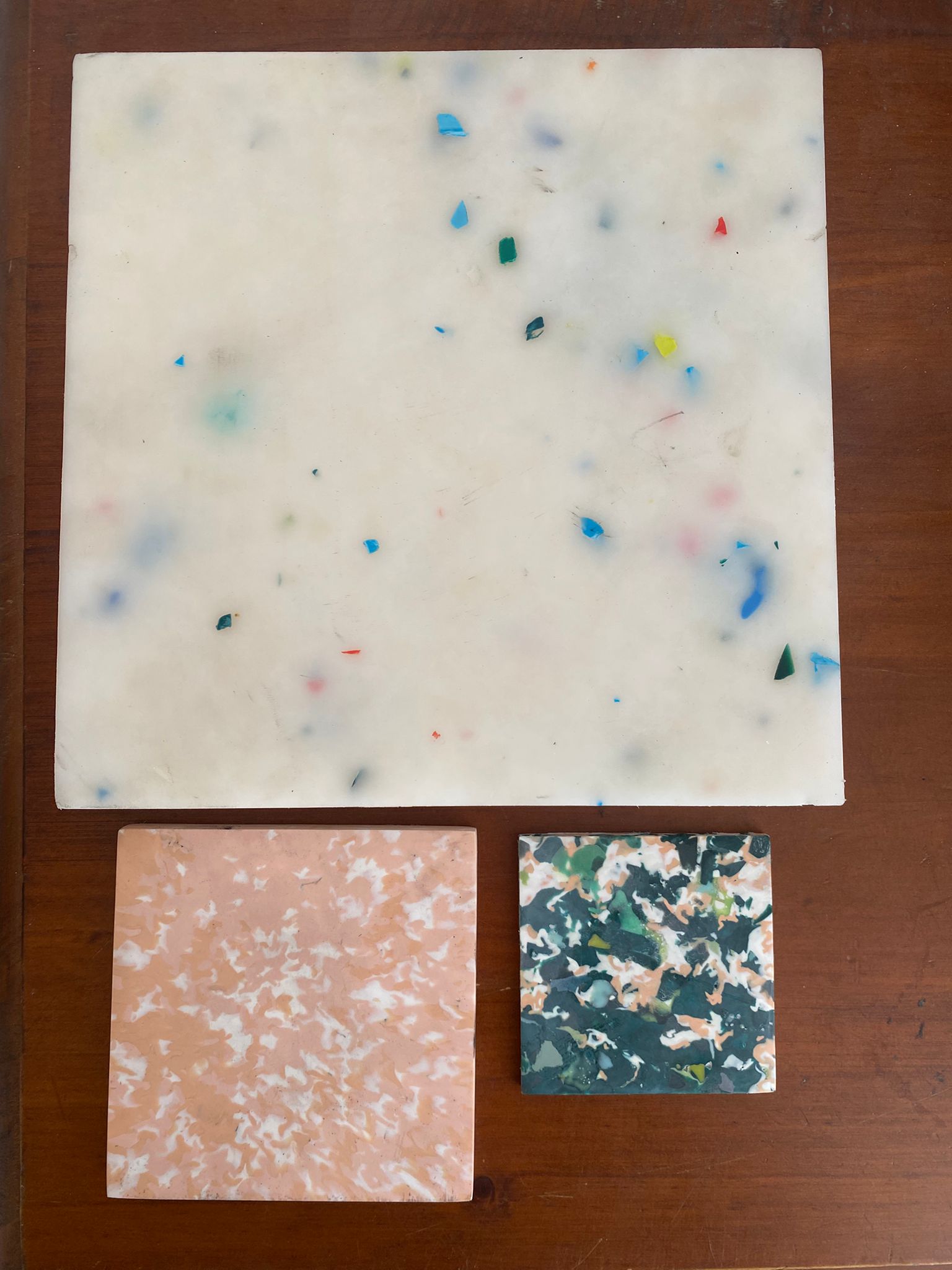
Why Recycled Plastic is Winning in 2026
When we talk about "picking plastic," we aren't talking about the flimsy stuff. We’re talking about high-density, 100% recycled Australian plastic panels engineered specifically for the construction industry.
1. Durability that Timber Can't Touch
Recycled plastic is essentially bulletproof when it comes to the elements. It doesn't absorb water, which means it won't swell, rot, or split. For coastal projects, where salt spray eats through traditional materials for breakfast, the choice is a no-brainer. If you’re weighing up your options, check out our deep dive on recycled plastic board vs treated timber for coastal projects.
2. The Low Embodied Carbon Advantage
In 2026, "embodied carbon" isn't just a buzzword; it’s a metric that can make or break a project’s approval. With Australia’s new embodied carbon rules now in full swing, builders are under pressure to slash the carbon footprint of their materials.
Resourceful Living panels are made from post-consumer waste: milk bottles, soft plastics, and industrial scraps: that would otherwise be clogging up our landfills. By using material that already exists, we bypass the carbon-intensive process of raw material extraction.
3. Circularity is the New "Sustainability"
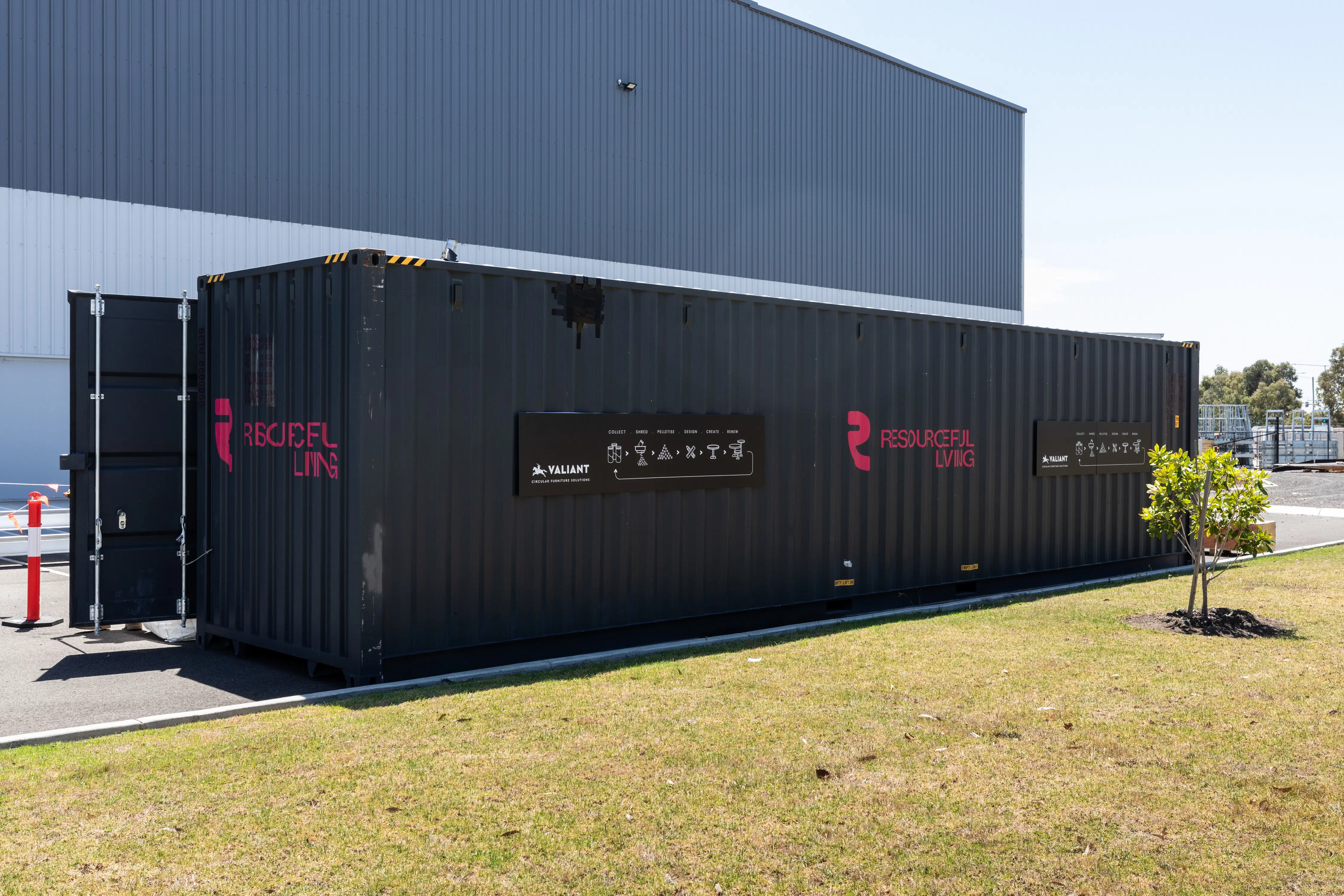
The next generation of builders understands that "recyclable" is a lie if it doesn't actually get recycled. True circularity means the product has a home at the end of its life. Our panels are part of a closed-loop ESG partner program. When a fit-out is done or a structure is decommissioned, we take the plastic back and turn it into new panels. Timber, especially treated timber, usually ends up in a hole in the ground.
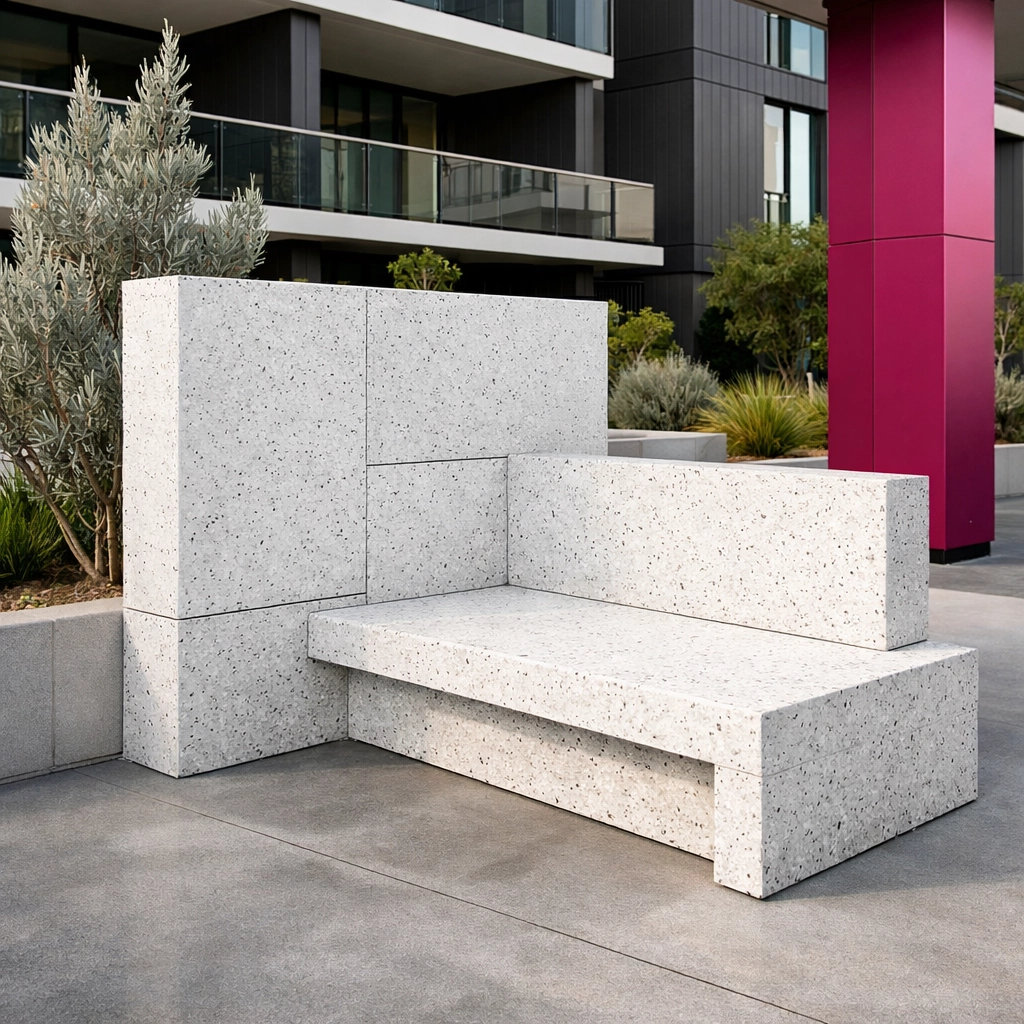
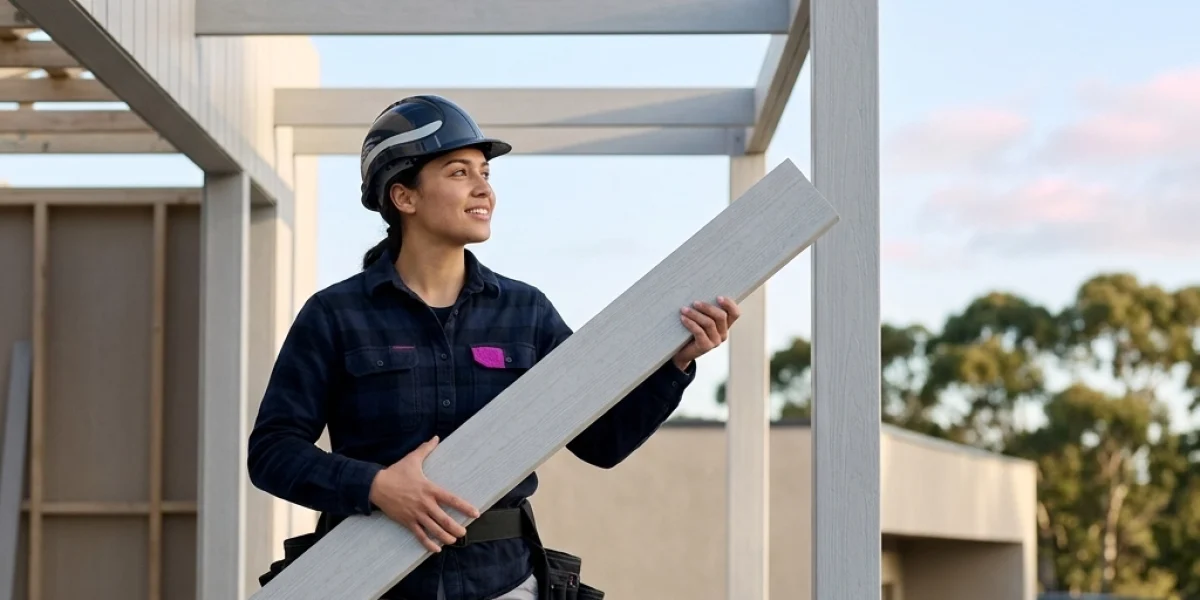
Visual: A modern Australian construction site featuring recycled plastic panels used for hoardings and outdoor furniture, highlighting a clean, contemporary aesthetic.
Recycled Plastic vs. Timber: The Head-to-Head
If you're still on the fence, let's look at the hard data. When comparing recycled plastic vs timber vs steel, the long-term value becomes clear.
| Feature | Timber (Treated) | Resourceful Living Recycled Plastic |
|---|---|---|
| Lifespan | 10-15 years (outdoor) | 40+ years |
| Maintenance | Annual sanding/staining | Zero. Just a hose down. |
| Moisture Resistance | Poor (absorbs water) | 100% Waterproof |
| Termite Resistance | Requires chemical treatment | Naturally immune |
| Embodied Carbon | Moderate to High | Very Low |
| End of Life | Landfill (hazardous if treated) | 100% Recyclable |
The "Next Gen" Values: ESG and NABERS
The builders taking over the industry today are tech-savvy and data-driven. They aren't just building a wall; they're managing a NABERS rating and fulfilling ESG (Environmental, Social, and Governance) mandates.
Using recycled plastic isn't just a "feel-good" choice; it's a strategic business move. It helps projects achieve higher ratings by proving a commitment to circular procurement. If you’re struggling to figure out how to hit those targets, you might want to look at how to integrate low carbon recycled plastic panels with your NABERS rating.
"The shift we're seeing isn't just about the environment; it's about common sense. Why would you pay for a material that requires a maintenance crew every 12 months when you can install a 100% recycled product once and forget about it for forty years?" : Jess Hodge, Resourceful Living
Not All Plastic is Created Equal
We get it: there’s a lot of "greenwashing" out there. Some companies claim to be "sustainable" while shipping plastic waste halfway across the world to be processed.
At Resourceful Living, we keep it local. We take Australian waste and turn it into Australian products for Australian builders. This isn't just about reducing "plastic miles"; it's about traceability. Our partners know exactly where their waste went and exactly what it became. For councils and large-scale developers, this level of transparency is essential for circular procurement.
How to Make the Switch (Without the Headache)
If you're ready to move over from timber but aren't sure where to start, here’s the "cheat sheet" for the modern builder:
- Start with the high-wear areas: Wet areas, outdoor seating, boardwalks, and landscaping are the perfect places to swap timber for plastic.
- Run a Waste Audit: Understand what you’re currently throwing away. You might be surprised at how much of your site waste could be diverted back into the circular economy. We’ve even got a simple waste audit template to help you out.
- Check the Specs: Make sure you're comparing like-for-like. Our panels aren't just "plastic"; they are engineered for structural integrity and aesthetic appeal.
- Think Long-Term: Don't just look at the upfront cost (though plastic is increasingly competitive). Look at the true cost of timber over 20 years.
The Future of Australian Construction
The 2026 landscape is clear: the builders who thrive will be the ones who embrace innovation over tradition. Timber will always have its place, but as we move toward a truly circular economy, 100% recycled plastic is the heavyweight champion of durability and sustainability.
By picking plastic, the next generation isn't just building better structures; they're building a better Australia. They’re turning a waste crisis into a resource revolution.
Ready to see what the future looks like for your next project? Whether it’s a commercial fit-out or a major infrastructure piece, it’s time to stop thinking about recycling as "the bin out the back" and start thinking about it as the building block of your next project.
Want to dive deeper into the technical side? Check out our EPDs 101 guide to understand how our materials stack up in the data-heavy world of modern construction.