
If you’re a builder, developer, or architect in Australia right now, your inbox is probably overflowing with talk about Embodied Carbon. It’s the industry’s biggest shift since the introduction of the 5-star energy rating, and as of March 2026, the "grace period" is officially over.
The rules have changed. The National Construction Code (NCC) has tightened its grip, and NABERS is no longer just about how much electricity your air conditioner uses: it’s about the very "bones" of your building.
If you’re feeling a bit overwhelmed, don’t worry. I’ve broken down the 2026 landscape of sustainable construction materials in Australia so you can stay compliant without losing your mind (or your margin).
🕒 The 3-Minute Breakdown: What’s Changed?
In the old days (way back in 2023), we mostly cared about Operational Carbon: the emissions from running a building. Today, the focus has shifted to Embodied Carbon. This is the greenhouse gas emissions generated during the entire lifecycle of a building material, including:
- Extraction: Mining or harvesting raw materials.
- Manufacturing: The energy used to turn raw materials into products.
- Transport: Getting those materials to your site.
- Installation: The carbon cost of the actual build.
1. The NABERS Embodied Carbon Rating
Launched in late 2024 and updated in February 2026, the NABERS Embodied Carbon tool is now the primary yardstick. To get a rating, you now have to submit a verified Bill of Quantities (BoQ). This means you can’t just say a material is "eco-friendly"; you need data to back it up.
2. NCC 2025/2026 Updates
The National Construction Code now includes a voluntary pathway for reporting embodied carbon in commercial buildings. While it's voluntary today, the industry consensus is that it will become mandatory by 2027–2028. Smart builders are adopting these standards now to avoid being hit with massive retrofitting or compliance costs later.
3. Financial Disclosures are Real
Since January 2025, mandatory climate-related financial disclosures have been in play. If you’re working on large-scale projects, your clients are likely required to report their Scope 3 emissions. If you can’t provide them with low-carbon material data, you might just lose the contract.
Why Recycled Plastic is the "Cheat Code" for 2026 Compliance
Let’s be real: reducing carbon in concrete and steel is hard and expensive. But there’s a "quick win" that many commercial fit-outs are overlooking: recycled plastic building materials.
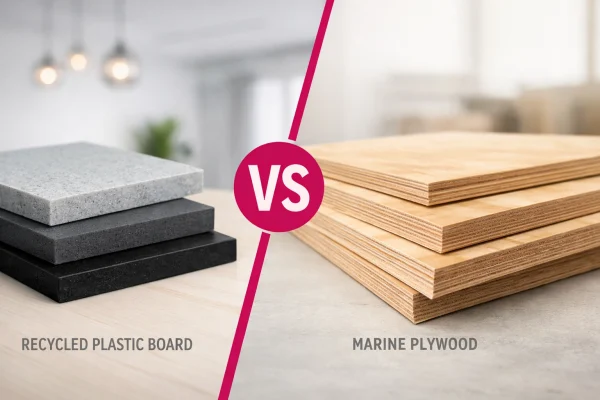
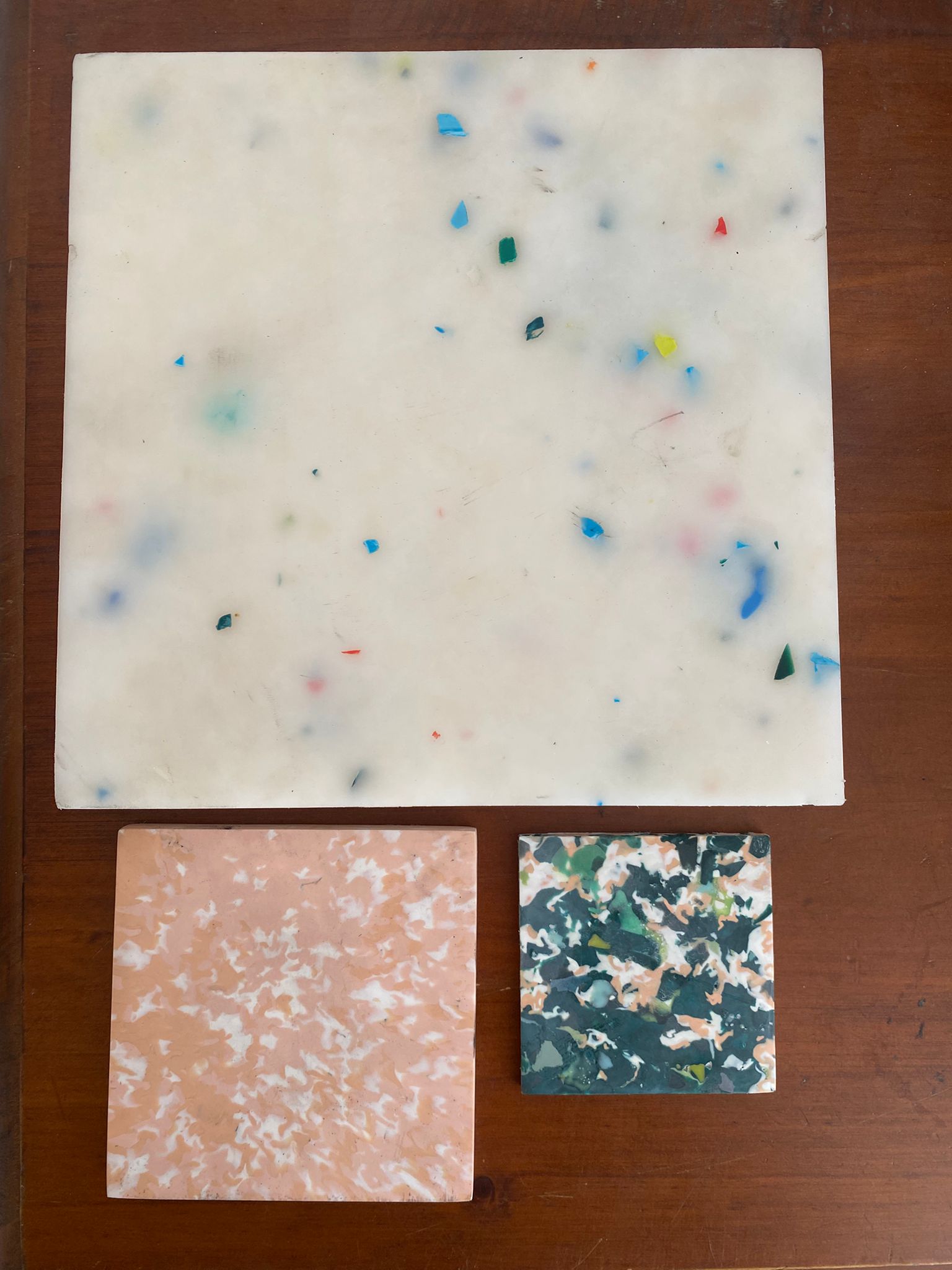
When you swap virgin materials (like virgin plastic, treated timber, or marine plywood) for 100% recycled alternatives, you aren't just doing a "nice thing" for the planet: you are actively slashing the embodied carbon of your project.
The Math is Simple:
- Virgin Materials: High extraction cost + high manufacturing energy = High Embodied Carbon.
- Resourceful Living Panels: Zero raw material extraction + low-energy manufacturing = Ultra-Low Embodied Carbon.
Using our panels can be the difference between a 4-star and a 6-star Green Star rating. In fact, research shows that approximately 23% of construction emissions can be abated right now just by using practical decarbonisation strategies like material substitution.
Is it Actually Strong Enough? (The Durability Question)
I get this question a lot: "Jess, it looks cool, but will it hold up on a commercial site?"
At Resourceful Living, we didn’t just want to make something that looked pretty; we wanted to build something that could outlast the building it’s in. Our recycled plastic building materials are engineered for the tough Australian environment.
- Tested for Strength: Our panels are dense, solid, and structural. Unlike some "eco" materials that are soft or brittle, our sheets are tested to ensure they can handle the load of commercial fit-outs, cabinetry, and even public infrastructure.
- Weather Resistant: They don’t rot, they don’t rust, and they don’t require the toxic chemical treatments found in treated timber or marine plywood.
- Maintenance-Free: You don’t need to sand or paint them. Ever.
"The shift toward circular procurement isn't just about ethics anymore; it's about risk management. If you aren't using traceable, low-carbon materials, you're building a liability." : Jess Hodge, CEO of Resourceful Living.
Integrating with Your NABERS Rating: A Step-by-Step Guide
If you're aiming for a high NABERS or Green Star rating, here is how you use Resourceful Living materials to get there:
Step 1: Request the EPD
An Environmental Product Declaration (EPD) is like a nutrition label for a building material. It tells you exactly how much carbon was used to make it. We provide transparent data to make your NABERS submission a breeze.
Step 2: Use the "Closed-Loop" Advantage
One of the key metrics in modern ratings is circularity. Because we offer a closed-loop ESG partner program, you can claim extra points for ensuring that the material can be returned and recycled again at the end of the building's life.
Step 3: Document the Origin
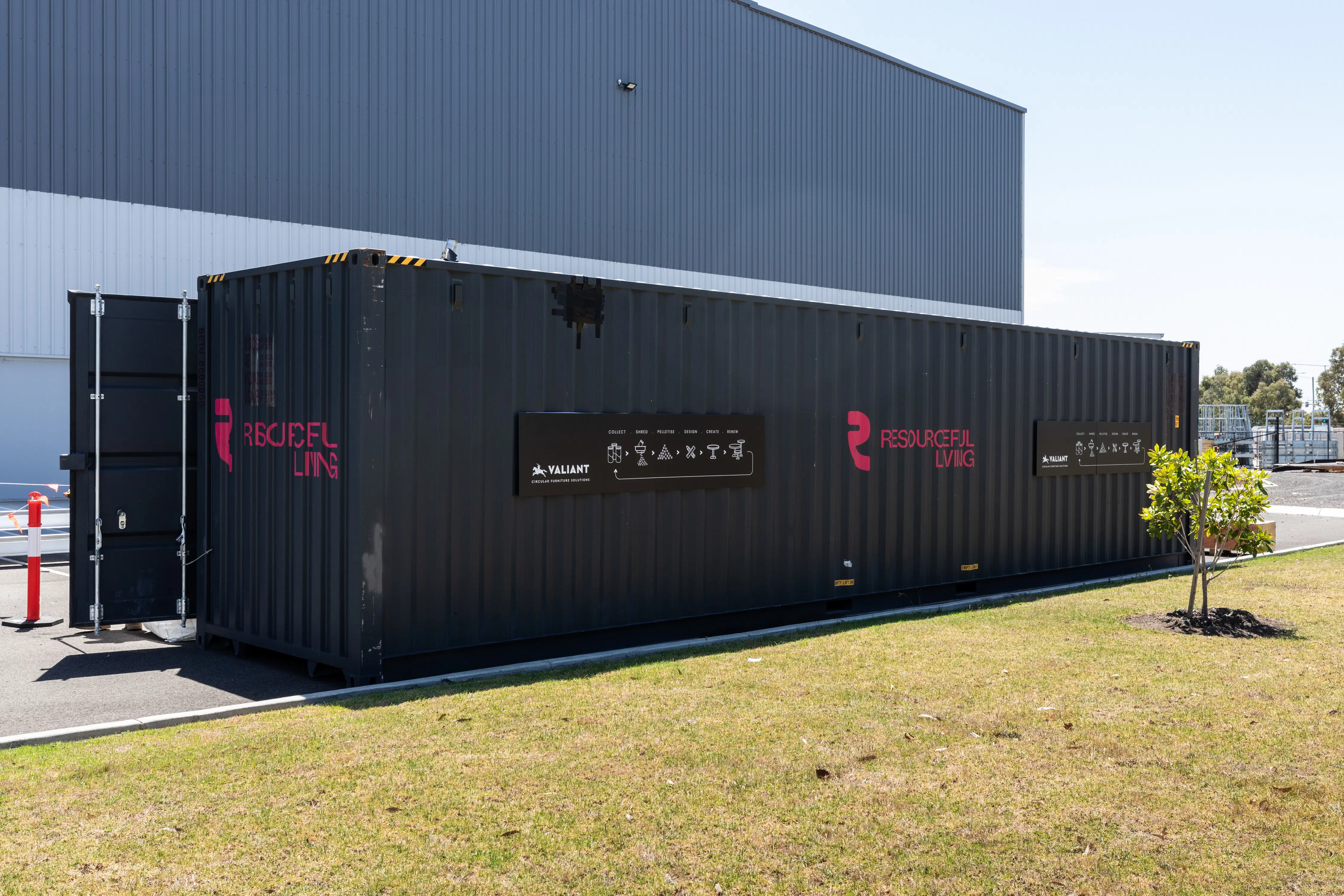
Traceability is huge in 2026. Our materials are 100% Australian-made from Australian waste. We can tell you exactly where the plastic came from: whether it's post-consumer waste or industrial offcuts processed in our on-site shredding unit.
🛠️ Where to Use Recycled Panels in Commercial Fit-outs
If you’re looking for places to swap out high-carbon materials, start here:
| Application | Traditional Material | Low-Carbon Alternative |
|---|---|---|
| Cabinetry & Joinery | MDF or Particle Board | Recycled Plastic Sheets |
| Wet Areas | Marine Plywood | Waterproof Recycled Panels |
| Retail Displays | Virgin Acrylic/PVC | Sustainable Retail Panels |
| Outdoor Benches | Treated Timber | 100% Recycled Plastic Boards |
Using these materials isn't just a win for the environment; it's often a win for the budget when you factor in the ROI of recycled plastic sheets. Because they last significantly longer than timber in high-traffic or outdoor areas, the long-term cost of ownership is much lower.
The "Greenwashing" Warning
With the new Australian rules comes a massive crackdown on greenwashing. The ACCC is watching. If a supplier tells you their product is "recyclable" but has no way of actually taking it back, that’s a red flag.
We pride ourselves on being a true circular economy partner. When we say our panels are sustainable, we mean it. They are made from waste, and they will never become waste. That’s the Resourceful Living difference.
Summary: Your 2026 Checklist
To stay ahead of the curve and keep your projects compliant with Australia’s new embodied carbon rules, keep this checklist handy:
- ✅ Check the NABERS rating requirement for your specific project type.
- ✅ Switch to 100% recycled materials for non-structural elements (fit-outs, furniture, facades) to quickly lower your carbon footprint.
- ✅ Verify your data. Only use suppliers who provide clear, traceable evidence of their material's lifecycle.
- ✅ Think Circular. Prioritize materials that have a "take-back" program to ensure they don't end up in a landfill.
Building in 2026 doesn't have to be more complicated: it just has to be more resourceful. If you're ready to see how our sustainable construction materials in Australia can fit into your next project, take a look at our product catalogue or check out our latest designs.
Want to dive deeper?
Check out our other guides:
- The True Cost of Timber vs. Recycled Plastic
- Closed-Loop Manufacturing in Australia
- Why Recycled Plastic is the Future of Modular Construction
Let’s build something that actually lasts. 🌏🔨