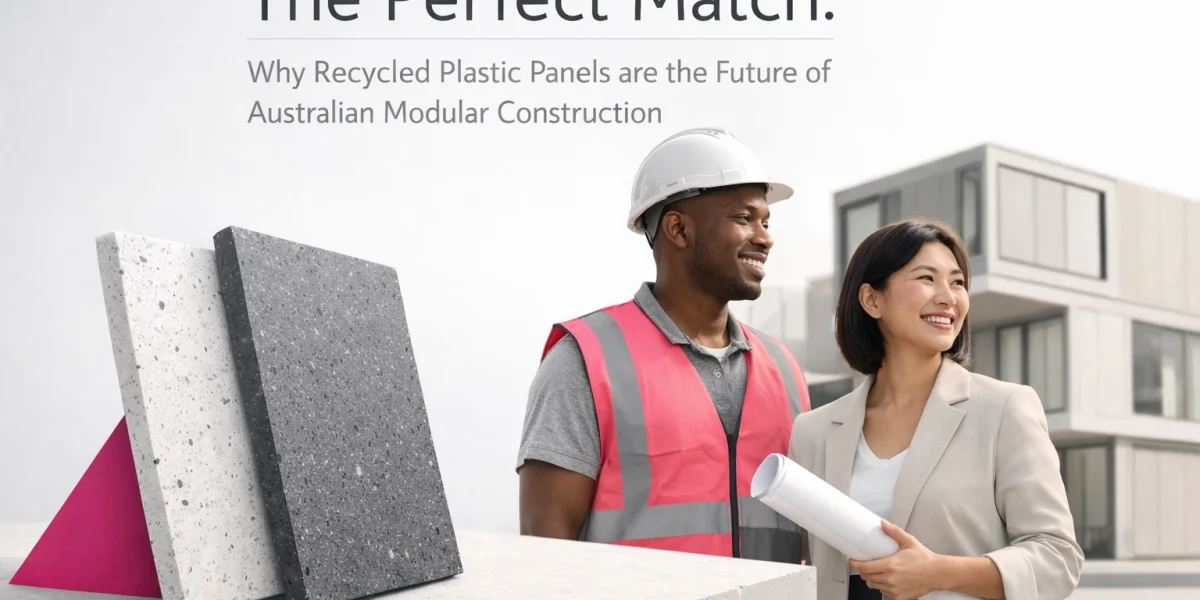
Australia is currently facing a dual challenge: a critical housing shortage and an urgent need to decarbonise the built environment. As traditional construction methods struggle to keep pace with demand, modular and pre-fab construction have emerged as the frontrunners in the race to build more, faster, and better.
But there’s a missing piece in the modular puzzle. To truly revolutionise how we build, we can’t just change how we assemble structures; we have to change what we build them with.
At Resourceful Living, we believe the answer lies in a material that has been overlooked for too long: 100% recycled plastic panels. When you pair the efficiency of modular building with the sustainability of high-performance recycled materials, you get more than just a house: you get a future-proof asset.
The Modular Revolution: Australia’s Answer to the Housing Crisis
The shift toward modular construction isn't just a trend; it's a structural necessity. Traditional "stick-built" homes are often plagued by weather delays, labour shortages, and significant material waste. In contrast, modular buildings are constructed off-site in controlled factory environments, allowing for shorter lead times and tighter quality control.
However, the "sustainable" label often applied to modular homes is sometimes skin-deep. If we’re still relying heavily on carbon-intensive steel or virgin timber that requires high maintenance, we aren’t solving the long-term environmental equation.
The Australian construction industry contributes roughly 18% of the country’s carbon footprint. To hit our 2030 and 2050 targets, modular builders need materials that don't just perform: they need materials that possess low embodied carbon and support a circular economy.
Why Recycled Plastic Panels are the Ideal Building Material
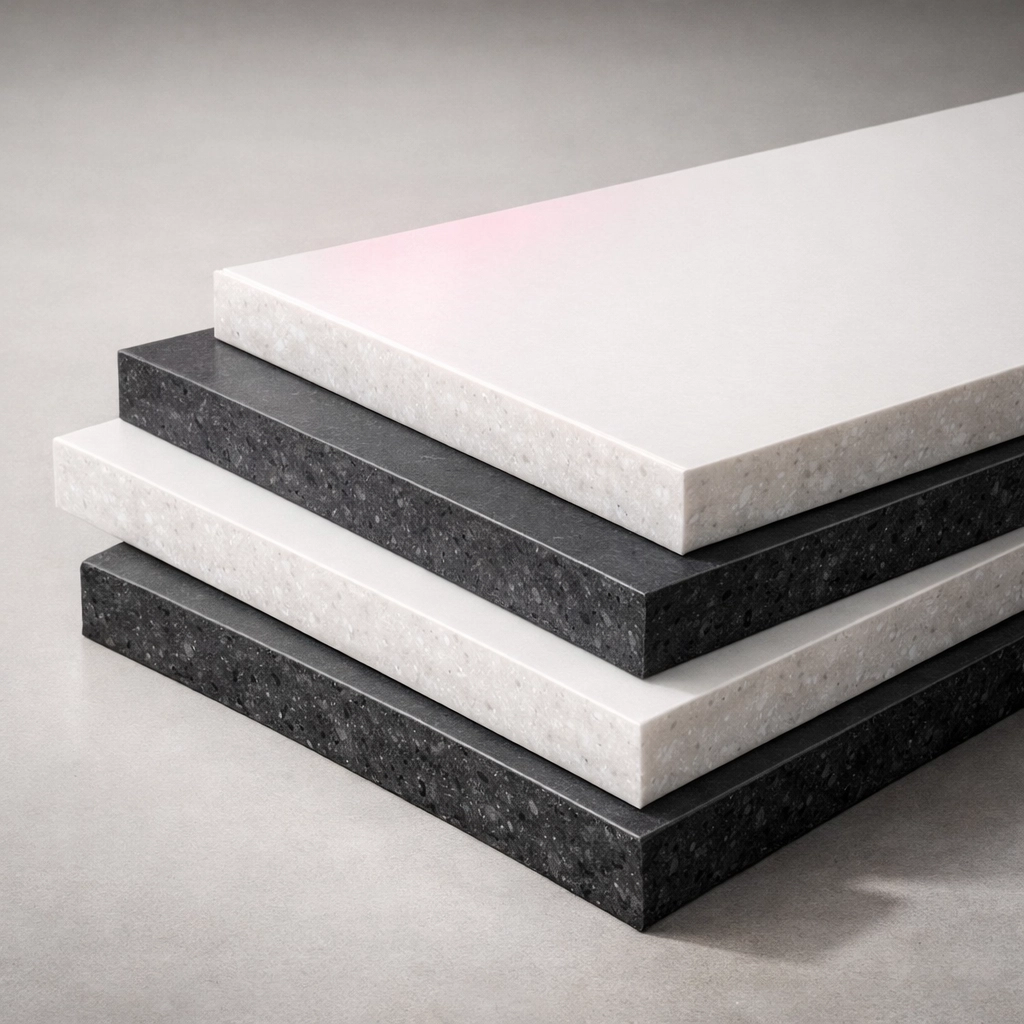
If you’re a developer or an architect, you’re looking for the "Holy Grail" of materials: something that is lightweight, incredibly durable, and easy to work with. Recycled plastic sheets, specifically those manufactured from post-consumer waste like HDPE and soft plastics, tick every single box.
1. Superior Durability and Weather Resistance
Australia’s climate is brutal. Between the high UV index, coastal salt spray, and extreme humidity in the north, traditional materials like timber can rot, warp, or require constant painting and sealing.
Our recycled plastic panels are 100% waterproof and UV-stabilised. They don’t absorb moisture, which means they won’t swell or delaminate in wet areas or external applications. For modular builders shipping units across different climatic zones in Australia, this reliability is a massive "set and forget" advantage.
2. Lightweight but Robust
In modular construction, weight is money. Every extra kilogram adds to the cost of transport and requires heavier cranes for on-site installation. Recycled plastic panels offer a high strength-to-weight ratio. They are significantly lighter than many composite or masonry alternatives, simplifying the logistics of pre-fab delivery.
3. Ease of Fabrication
One of the best things about our panels is that they can be worked with standard woodworking tools. You can saw, drill, and CNC-route them just like timber, but without the risk of splinters or grain direction issues. This makes them perfect for the precision required in factory-based pre-fab manufacturing.
"The goal isn't just to build faster; it's to build smarter. By using materials that are already in the system: like our recycled plastic waste: we stop treating plastic as a problem and start treating it as a high-value resource for the building industry." : Jess Hodge, CEO of Resourceful Living.
The Comparison: Why Shift from Timber or Steel?
When choosing materials for a modular project, it’s helpful to look at the long-term lifecycle. While timber has been the go-to for decades, its susceptibility to termites and rot, combined with the rising cost of high-quality lumber, is making it less attractive for certain applications.
| Feature | Timber | Steel | Recycled Plastic Panels |
|---|---|---|---|
| Moisture Resistance | Low (needs sealing) | High (can rust) | Excellent (100% waterproof) |
| Maintenance | High (painting/staining) | Moderate | Zero |
| Sustainability | Renewable (if certified) | High embodied energy | 100% Recycled & Recyclable |
| Weight | Moderate | High | Lightweight |
| Termite Proof | No | Yes | Yes |
For a deeper dive into the numbers, check out our guide on recycled plastic vs timber vs steel cost and lifespan.
Closing the Loop: The Circular Economy in Modular Building
The term "Circular Economy" is thrown around a lot, but what does it actually mean for a pre-fab developer?
It means designing out waste from the beginning. In a traditional build, up to 30% of materials can end up in a skip bin. In a modular factory using recycled plastic panels, waste is virtually non-existent. Any offcuts from our panels can be returned to us, granulated, and pressed back into new sheets.
By specifying recycled plastic building materials, you are:
- Diverting waste from landfill: Helping solve the soft plastic crisis that has hit Australia hard since the collapse of REDcycle.
- Reducing Embodied Carbon: Our manufacturing process uses significantly less energy than producing virgin plastic, steel, or concrete.
- Future-proofing your project: As government tenders increasingly require "circular procurement" and carbon reporting, using recycled materials gives you a competitive edge.
You can read more about how this works on our recycled plastic circular economy page.
Practical Applications for Modular Developers
So, where do these panels actually go in a modular home? Because they are so versatile, the applications are limited only by your imagination.
Wet Room Substrates and Linings
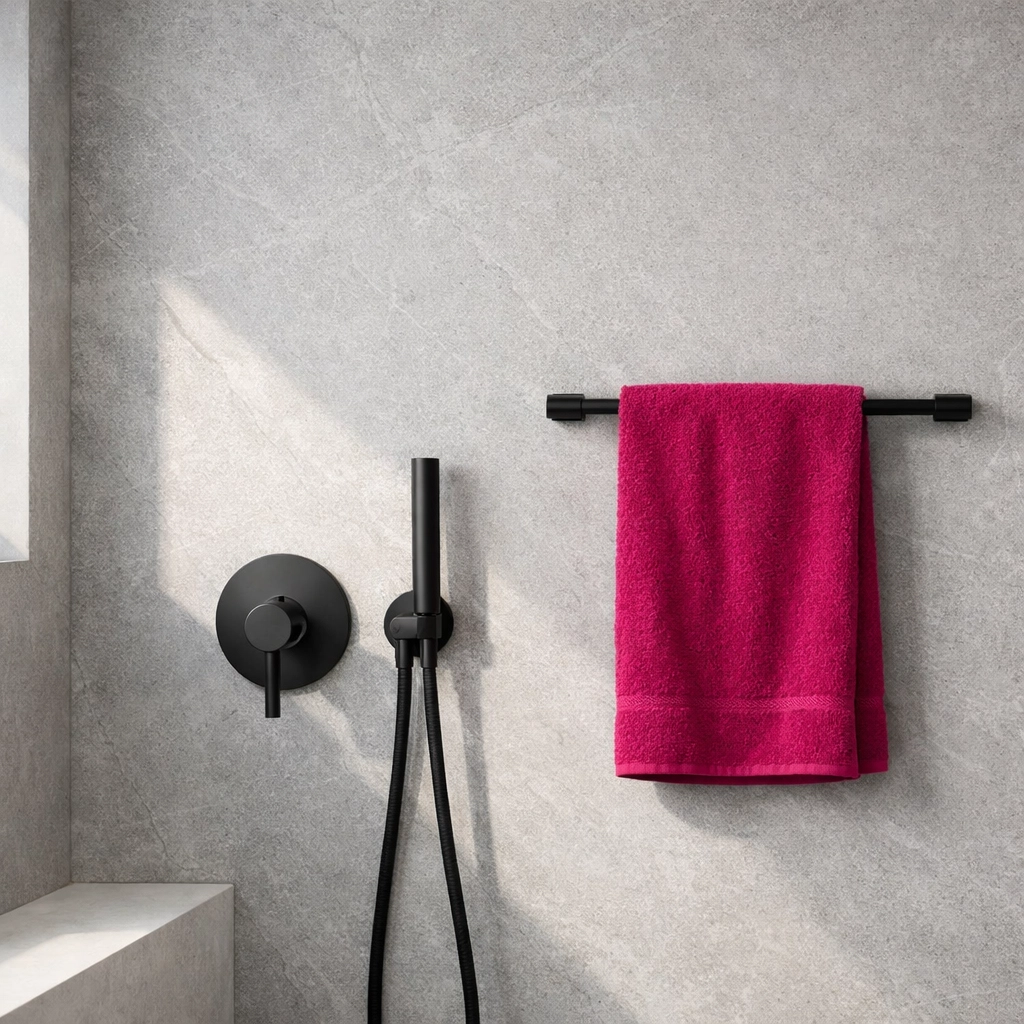
Bathrooms are often the most complex part of a modular build. Using recycled plastic panels as wall linings or sub-flooring in wet areas eliminates the risk of water damage. If a pipe leaks behind the wall, the panel won't rot or grow mould.
External Cladding and Facades
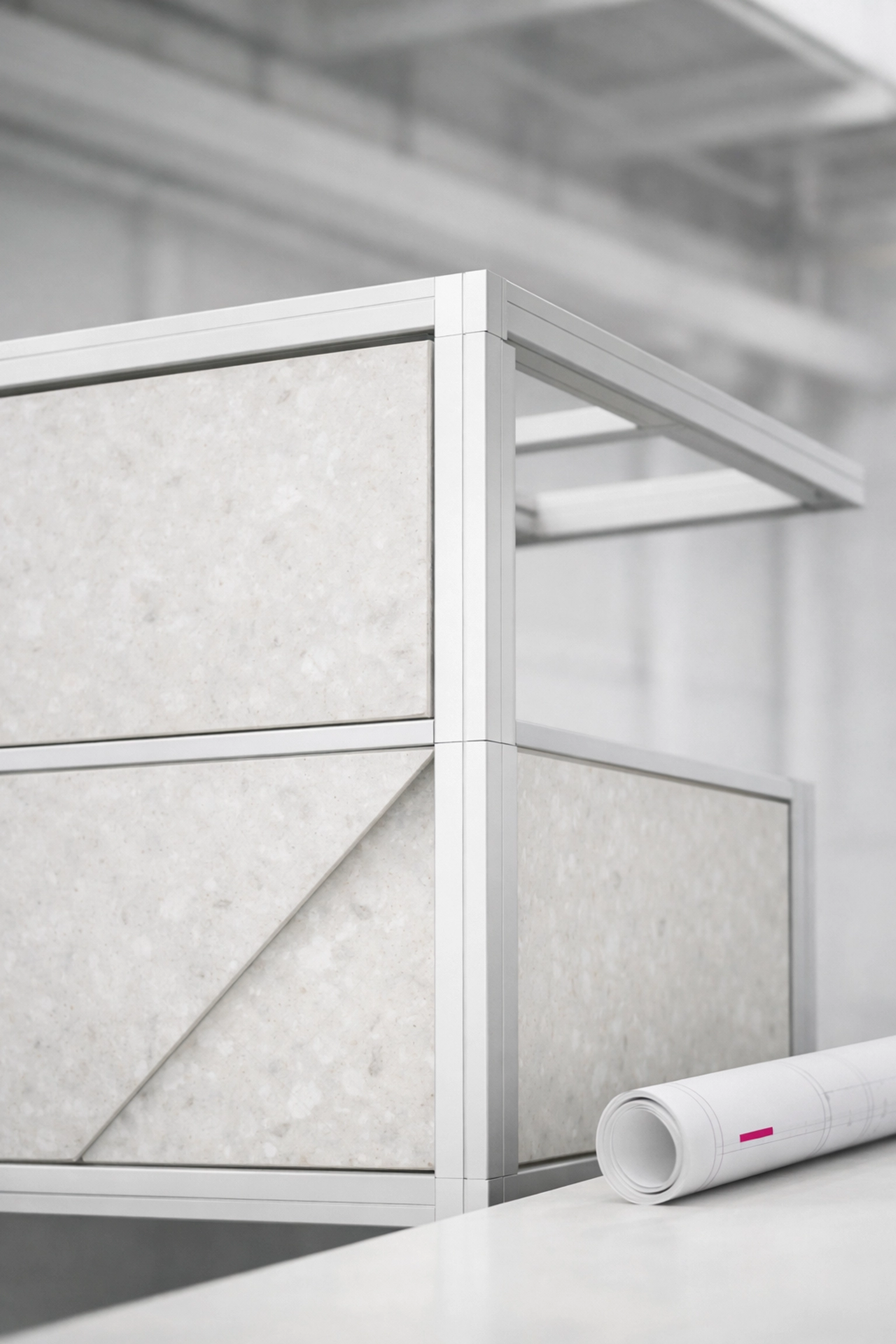
Because our panels come in various colours and textures: often featuring a unique "marble" look from the mixed plastics: they make for stunning, low-maintenance external cladding. They handle the Aussie sun without fading or cracking, providing a sustainable alternative for eco-friendly building.
Cabinetry and Joinery
Kitchens and storage units in modular homes need to be tough. Our sheets provide a durable, impact-resistant surface for cabinetry that can withstand the rigours of transport and the wear and tear of daily life.
Leading the Green Construction Revolution
The data is clear: the future of construction is off-site, and the future of materials is circular. Research into the life cycle environmental impact of recycled plastic panels shows that for every tonne of plastic we recycle into building products, we save significant amounts of CO2 emissions compared to virgin alternatives.
For architects and developers, the shift to recycled plastic is a logical step. It’s about more than just "being green": it’s about using a superior product that solves common building pain points while meeting the growing demand for sustainable housing.
How to Get Started with Resourceful Living
If you’re ready to integrate sustainable materials for modular construction into your next project, here is how you can move forward:
- Run a Waste Audit: Understand the materials currently going into your skip bins and see where recycled alternatives can fit. We have a simple waste audit template to help.
- Request Samples: Feel the weight, test the durability, and see the finish of our 100% recycled plastic sheets for yourself.
- Consult on Specification: Our team can work with your architects to ensure our panels meet the structural and fire-rating requirements for your specific modular design.
The Australian building landscape is changing. Modular construction has given us the speed; now, recycled plastic panels give us the soul. Together, we can build homes that aren't just fast to assemble, but are built to last for generations without costing the earth.
Let’s stop burying our plastic waste and start building our future with it. If you're interested in how we can help your next pre-fab project, explore our full range of products here.