At Resourceful Living, we don’t believe in “disposable” furniture. When we set out to create the The Resourceful Living Outdoor Seat, the goal wasn’t just to make a place for people to sit: it was to create a functional piece of infrastructure that solves a massive environmental problem.
Australia generates millions of tonnes of plastic waste every year. Much of it ends up in landfill or, worse, our oceans. We’ve developed a closed-loop manufacturing procedure that takes 100% Australian plastic waste and transforms it into high-performance street furniture.
This isn’t just about being “green.” It’s about superior engineering, durability, and traceability. If you’re a procurement officer, a landscape architect, or a developer, understanding the lifecycle of your materials is critical for your next project.
1. Discovery: Sourcing 100% Australian Waste
The process begins long before a CNC machine ever touches a panel. It starts with sourcing. We specialise in 100% Australian post-consumer and post-industrial plastic waste.
Why does the “Australian” part matter? Because traceability is king. Many “recycled” products on the market use imported feedstock of dubious origin. By keeping our sourcing local, we reduce transport emissions and support the Australian circular economy.
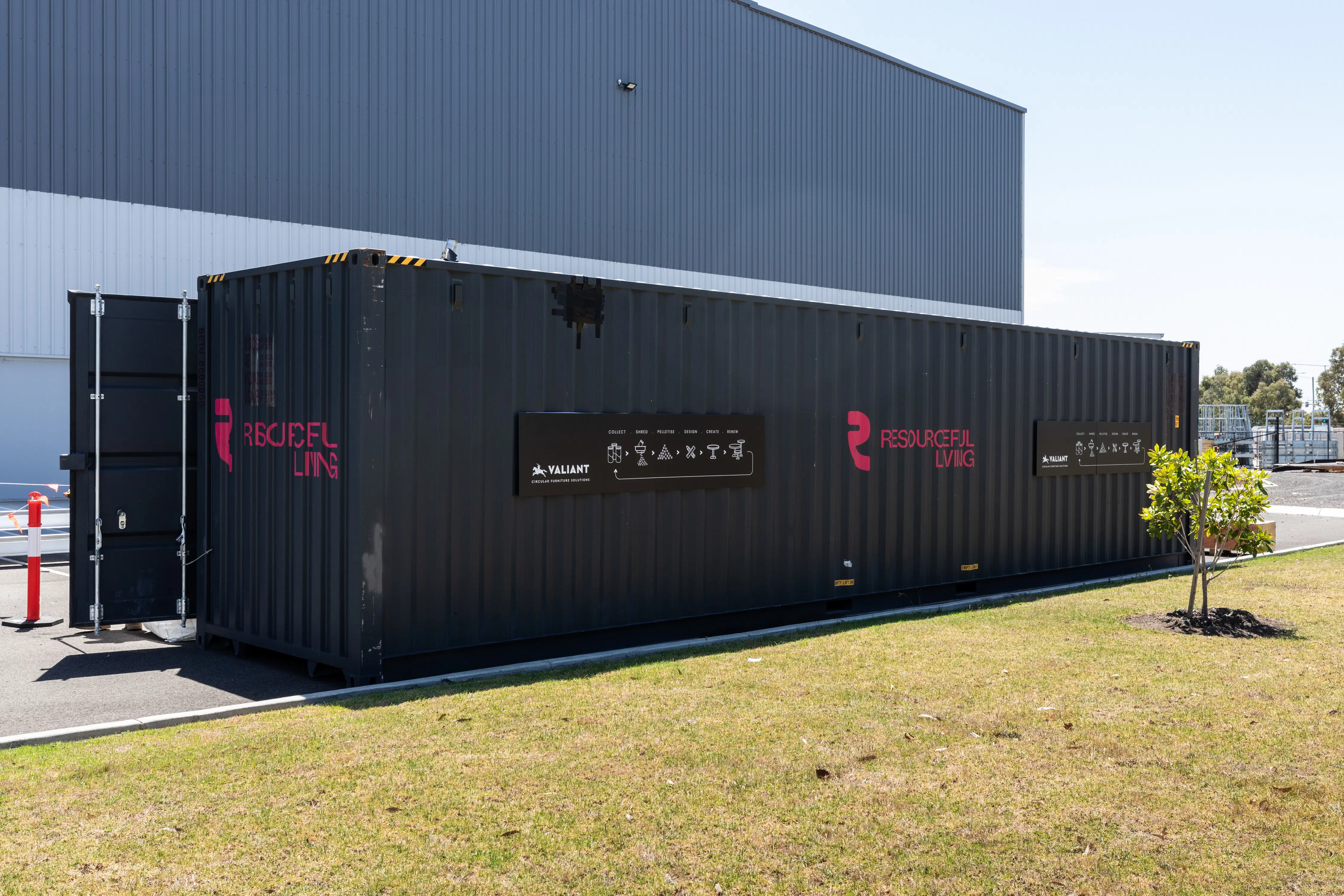
During the Discovery phase, we identify the specific waste streams required, typically High-Density Polyethylene (HDPE). This plastic is prized for its strength, weather resistance, and ability to be remanufactured multiple times without losing structural integrity.
- Audit & Sort: We verify the source of the plastic to ensure it meets our rigid quality standards.
- Traceability: Every batch of material can be traced back to its origin, providing you with the data needed for embodied carbon reporting.
- Contamination Check: We remove labels, adhesives, and non-plastic residues to ensure a pure melt.
2. Design: Circularity by Intent
Designing for recycled plastic is fundamentally different from designing for timber or steel. Plastic expands and contracts differently, and it has unique load-bearing characteristics.
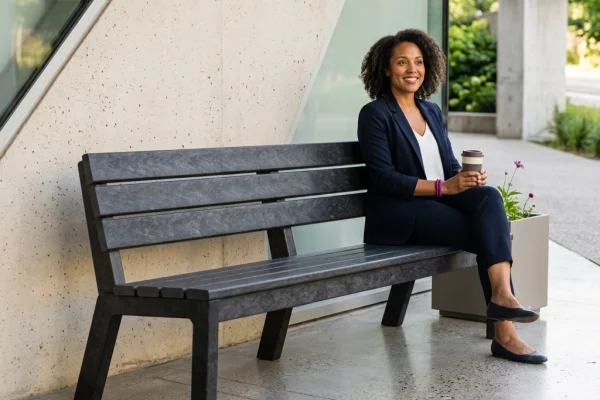
The Classic Galleria Seat features a signature wave profile with slender battens. In the design phase, we use CAD (Computer-Aided Design) to optimise these profiles for both comfort and material efficiency.
“Design is not just what it looks like and feels like. Design is how it works: especially when you intend for that material to be recycled again in twenty years.”
We focus on a minimalist aesthetic that highlights the unique texture of the recycled material. Unlike timber, which requires regular oiling and staining, our recycled plastic design is “set and forget.” It won’t rot, split, or host termites.
For those looking at the long-term ROI, comparing recycled plastic vs. timber furniture usually reveals that the lower maintenance costs of plastic make it the smarter financial choice over a 10-year lifecycle.
3. Prototype: Testing the Limits
Before we move to full-scale production, we prototype. This stage is where we stress-test the assembly methods and the UV stability of the material.
Australia has some of the harshest UV conditions on the planet. A seat that looks great in a showroom but fades or becomes brittle in the Queensland sun is a failure. We integrate high-quality UV stabilisers into our manufacturing process to ensure it maintains its structural integrity for decades.
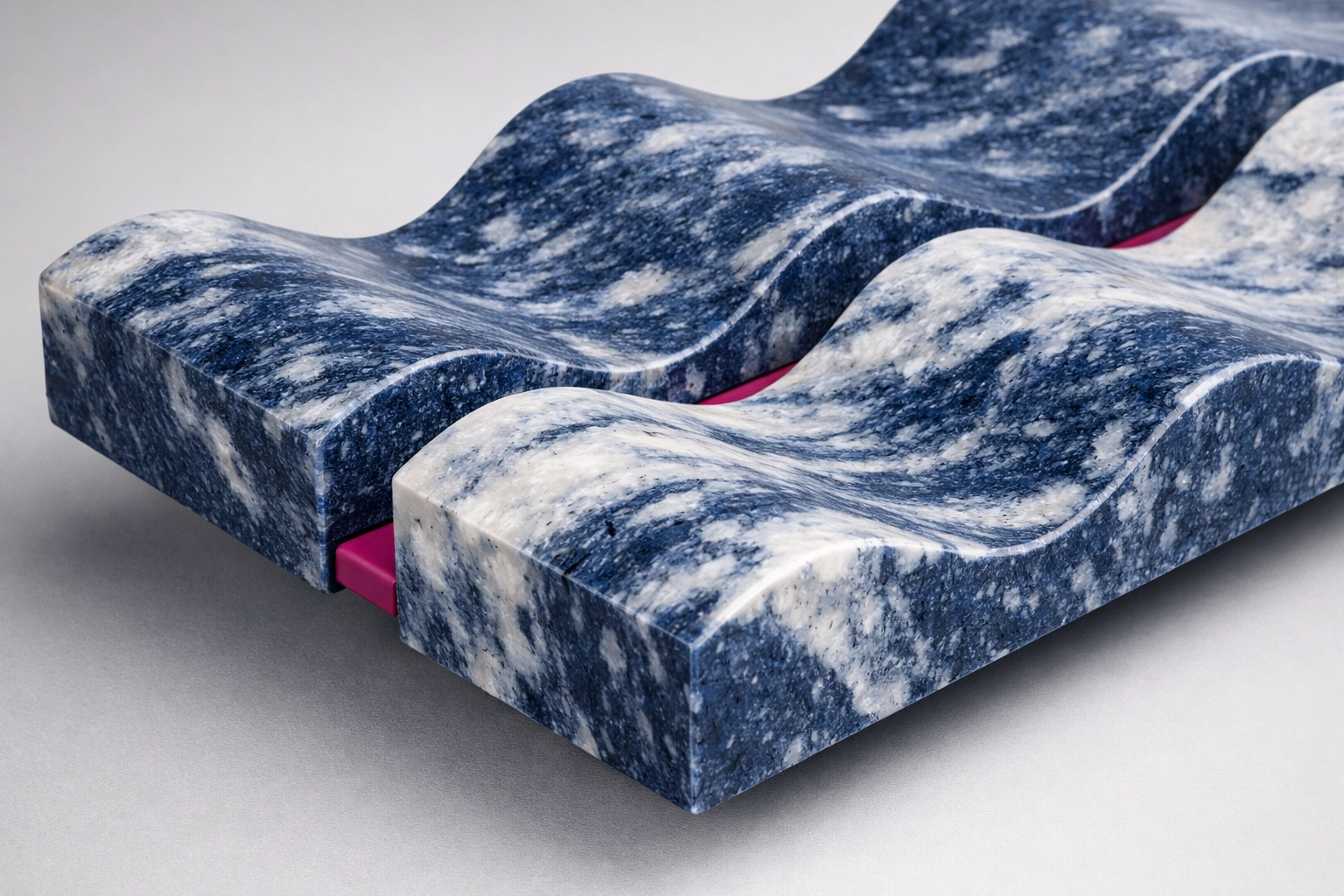
Key Prototype Testing Includes:
- Structural Load Testing: Ensuring the seat can handle heavy public use.
- Fastener Retention: Testing how well the stainless steel fixings hold within the recycled plastic profiles.
- Thermal Expansion: Measuring how much the battens move in extreme heat to ensure the gaps remain safe and aesthetic.
Choosing the right material is vital. If you’re wondering how to choose the best recycled plastic sheets for your project, the prototype phase is where those decisions are validated.
4. Produce: The Technical Transformation
This is the core of our operation. Our manufacturing facility turns raw waste into finished architectural elements through a precise, four-stage production process.
Step A: Shredding
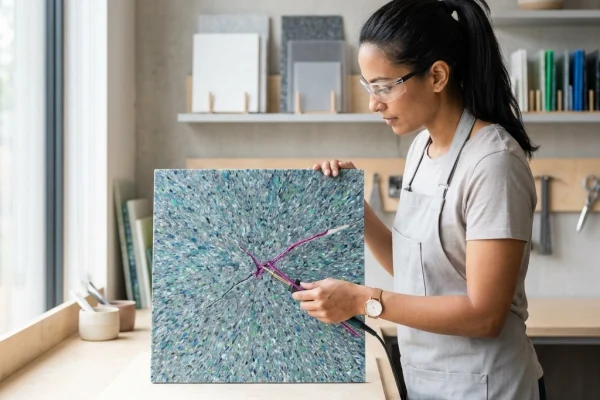
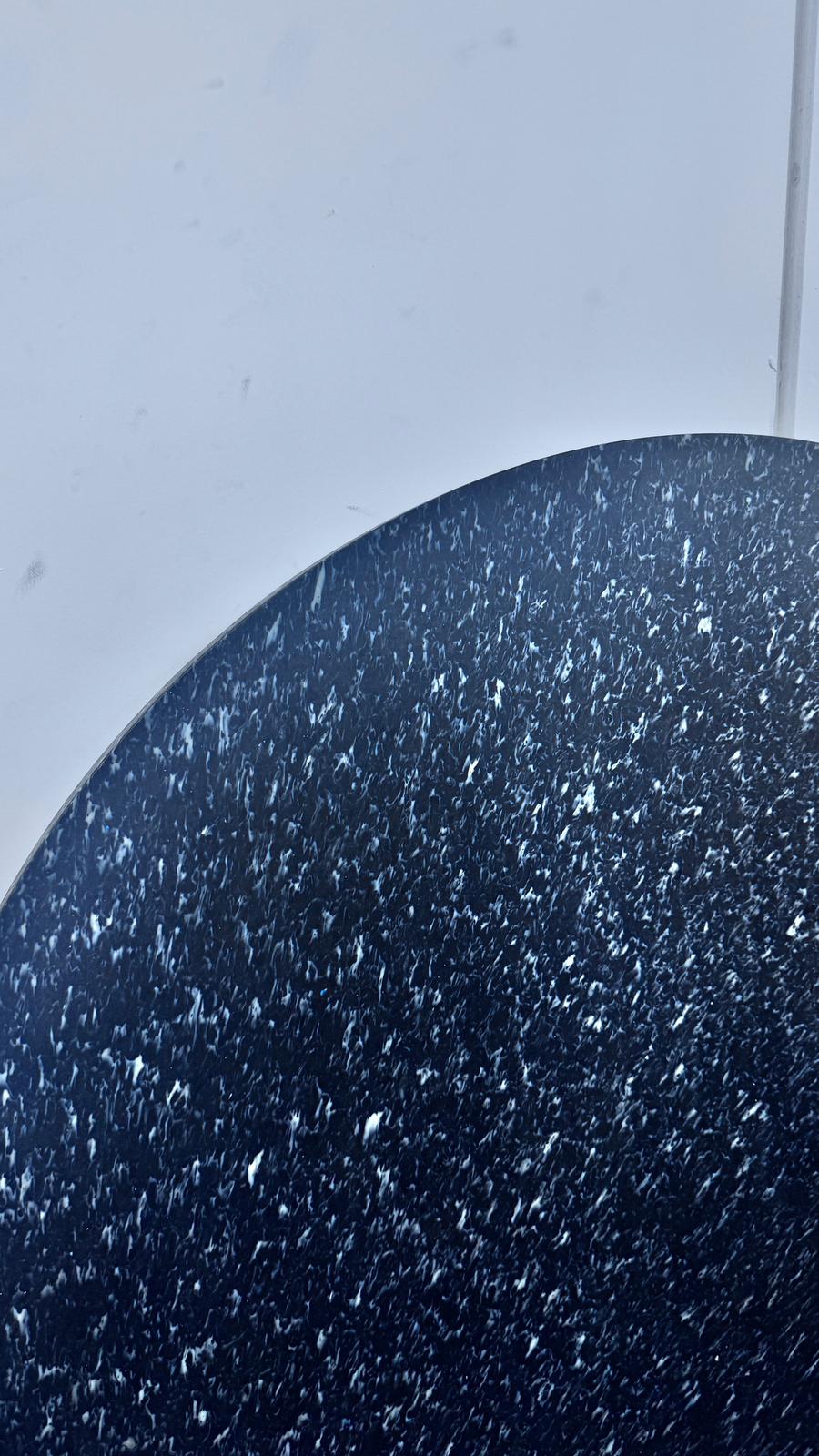
The sorted plastic waste is fed into industrial shredders, reducing it into small, uniform flakes. This increases the surface area for even heating and allows us to create bespoke colour “recipes,” like our popular White Confetti or Navy Marble.
Step B: Compression Moulding
The flakes are loaded into our proprietary compression moulding machines. Unlike injection moulding, which can create internal stresses in large parts, compression moulding produces dense, solid panels and profiles.
- Heat & Pressure: The plastic is heated and subjected to tonnes of pressure.
- Solid Core: This creates a material that is consistent all the way through: no hollow centres or air pockets.
Step C: CNC Precision Cutting
Once the panels and profiles have cooled and cured, they are moved to our CNC (Computer Numerical Control) machines. This is where the magic happens. We cut the slender battens and the wave-profile supports with sub-millimetre precision.
- Clean Edges: CNC cutting provides a smooth, finished edge that is safe for public contact.
- Zero Waste: Any offcuts generated during this stage are collected, re-shredded, and fed back into Step A.
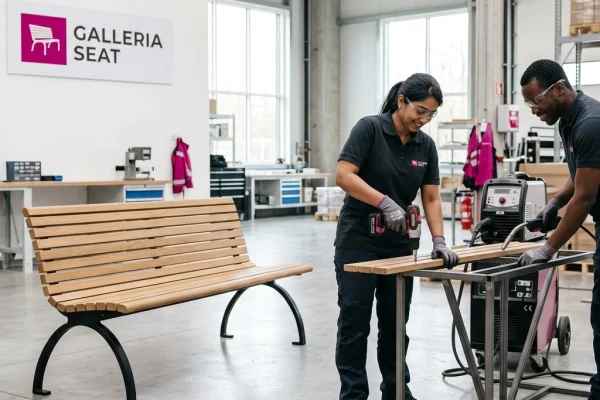
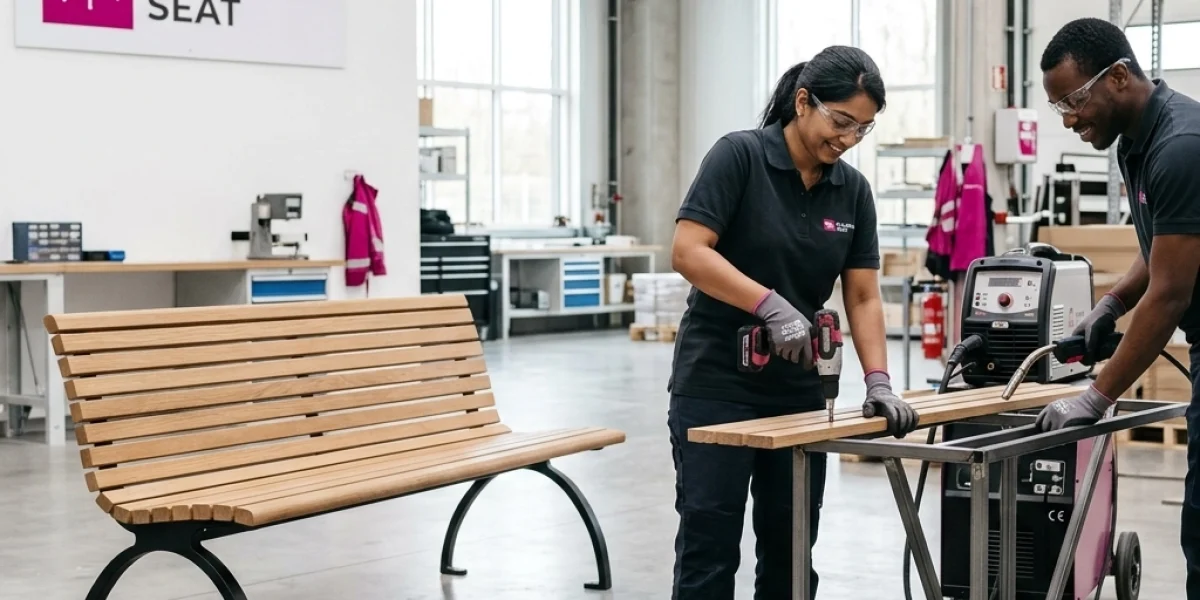
Step D: Assembly
The final stage involves assembling the CNC-cut components. The Resourceful Living Outdoor Seat s built to be robust, vandal-resistant, and aesthetically striking.
5. End-of-Life: Closing the Loop (The Take-Back Program)
The most critical part of the lifecycle is what happens at the end. Most furniture companies consider their job done once the invoice is paid. We don’t.
We operate a formal Take-Back Program. If, in 15, 20, or 30 years, it is no longer needed or the site is being redeveloped, we don’t want it going to a skip bin.
How it works:
- Recovery: We arrange for the collection of the end-of-life seat.
- Deconstruction: We separate the stainless steel hardware from the plastic.
- Remanufacture: The plastic battens are cleaned, shredded, and put back through our compression moulding process to become new seats or panels.
This is the essence of circular construction. By choosing products with a guaranteed end-of-life take-back, you are ensuring your project leaves no permanent waste footprint.
Why This Matters for 2026 and Beyond
As we move further into 2026, government regulations regarding recycled content and waste management are tightening. Whether you’re trying to meet government targets for recycled plastic furniture or you’re aiming for a 5-star Green Star rating, the Resourceful Living OUtdoor Seat provides a documented, traceable solution.
Benefits at a Glance:
- ✅ 100% Recycled: Made from Australian HDPE waste.
- ✅ Maintenance Free: No painting, oiling, or rot.
- ✅ Vandal Resistant: Graffiti can often be removed more easily than from timber or concrete.
- ✅ Circular: Guaranteed take-back for remanufacturing.
Let’s Build Something Better
The Resourceful Living Outdoor Seat is more than just a place to rest; it’s a testament to what’s possible when we stop viewing plastic as “waste” and start seeing it as a valuable resource.
If you’re ready to specify sustainable, Australian-made furniture for your next project, we’re here to help. Our team can provide the technical data, carbon reporting metrics, and design support needed to make your project a success.
Ready to start? Check out our full range of recycled plastic products or get in touch with us today to discuss your custom requirements. Together, we can make resourceful living the new standard for Australian infrastructure.