If you walked onto a Tier 1 construction site five years ago, you’d see a sea of plywood, treated timber, and virgin PVC. Fast forward to Wednesday, 18 of March 2026, and the landscape looks fundamentally different.
The question isn't whether traditional materials are "dead" in a literal sense, we’ll always need concrete for foundations and steel for skeletons, but rather, are they still the smart choice for everything else?
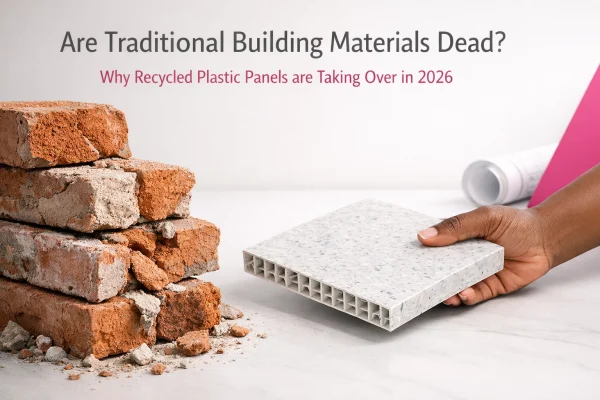
In 2026, the answer is increasingly a resounding "no." Between soaring timber prices, stricter embodied carbon mandates, and a desperate need for materials that don't rot, recycled plastic panels have moved from a "nice-to-have" sustainable alternative to a high-performance industry standard.
As recycled plastic manufacturers in Australia, we’ve seen this shift firsthand. Here is why the industry is pivoting and why your next project might just be built out of yesterday's milk bottles and shampoo containers.
The Cracks in the Traditional Model
For decades, timber was the go-to for formwork, fit-outs, and furniture. But as we lean into a more volatile climate and a more circular economy, the "old ways" are showing their age.
- Timber's Lifespan Problem: Even treated timber eventually succumbs to the Australian elements. Termites, rot, and warping aren't just maintenance headaches; they are liabilities.
- The Virgin Plastic Stigma: Using virgin plastic is no longer socially or economically viable. With the "Recycling Lie" exposed, savvy developers realise that your blue bin isn't saving the planet, and they are demanding traceable, post-consumer content.
- Embodied Carbon Pressure: New regulations mean builders must now account for the carbon footprint of every sheet and board. Traditional manufacturing processes for steel and virgin polymers are simply too "heavy" for a modern ESG report.
Why Recycled Plastic Panels are Winning the Performance War
When people think of "recycled," they often think "inferior." In 2026, the tech has flipped that script. High-density polyethylene (HDPE) and polypropylene (PP) panels are outperforming their traditional counterparts in almost every metric that matters to a site manager.
1. Superior Durability and Weather Resistance
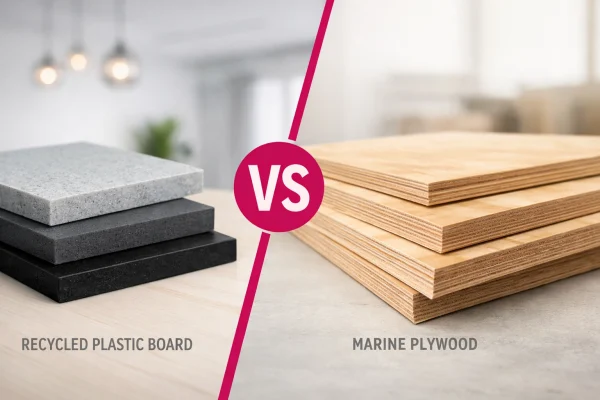
Unlike marine plywood or treated pine, recycled plastic panels are 100% waterproof. They don't absorb moisture, which means they don't swell, delaminate, or rot.
For coastal projects or high-humidity environments, this is a game-changer. You can submerge an HDPE board in saltwater for a decade, and it will emerge with the same structural integrity it had on day one. This makes it the perfect match for Australian modular construction.
2. UV Stability and Colour-Fastness
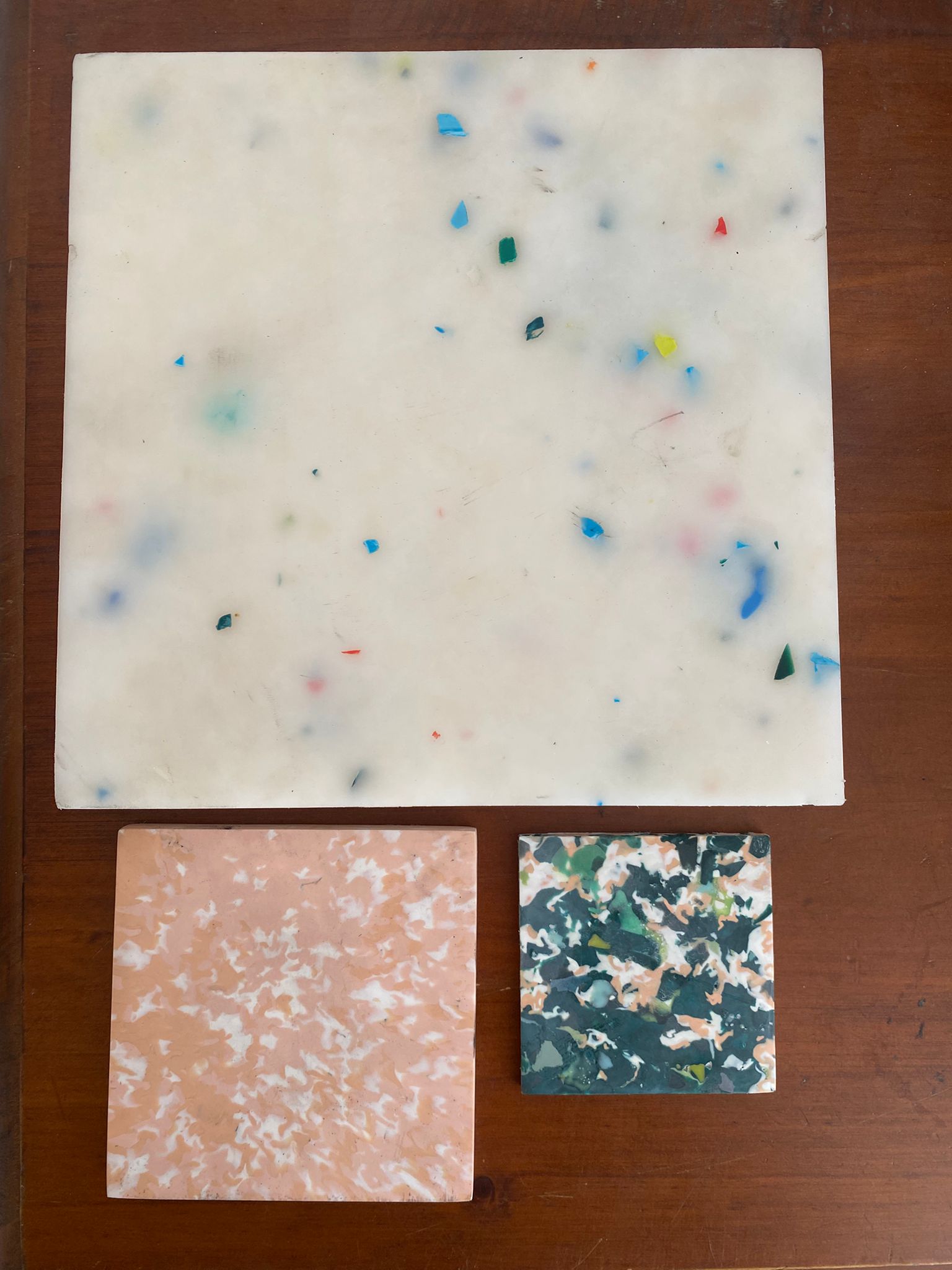
One of the biggest complaints about early-generation recycled materials was fading. At Resourceful Living, our panels are engineered with advanced UV stabilisers. Whether it’s a vibrant "N70 White Confetti" or a deep "Navy Marble," these colours are baked into the material, not just painted on the surface. They won't flake, peel, or bleach under the harsh Australian sun.
3. Zero Maintenance
Think about the cost of sanding, staining, and sealing timber decking or cladding every two years. Now, imagine a material that requires nothing more than a pressure wash. The ROI of recycled plastic sheets becomes obvious when you factor in the "set and forget" nature of the product. Timber is costing your business more than you think when you tally up the labour hours for upkeep.
"We're seeing a massive shift in procurement. It's no longer just about the ticket price of the material; it's about the life-cycle cost. Builders are tired of replacing 'cheap' timber every five years." : Jess Hodge, CEO of Resourceful Living.
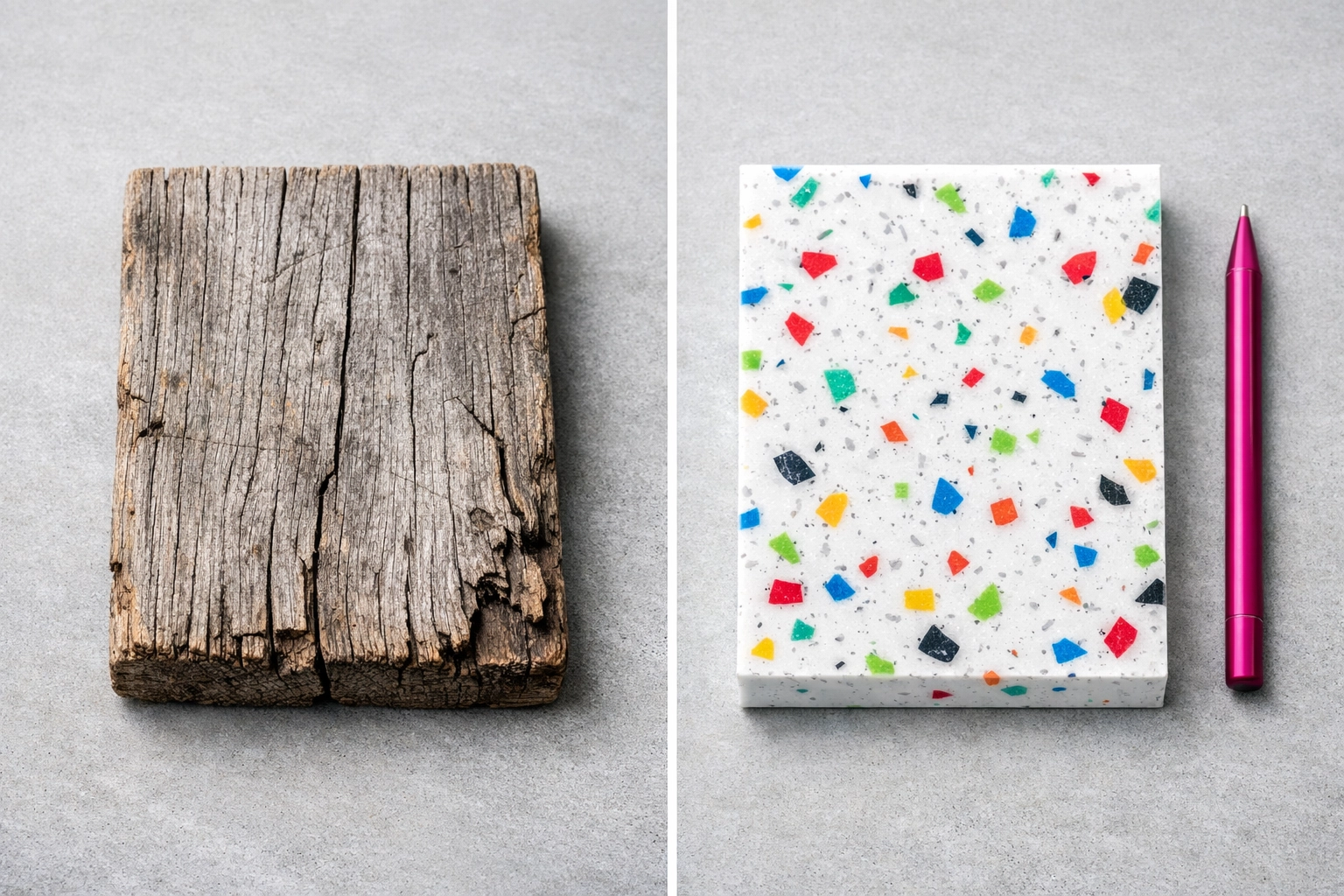
Visual: A side-by-side comparison of a weathered timber board vs. a pristine recycled plastic panel after 5 years of exposure.
The Ultimate Differentiator: The "Take-Back" Program
This is where the "Traditional vs. Recycled" debate really ends. When a timber board reaches the end of its life, it usually goes to a landfill (often contaminated with chemicals from treatment).
At Resourceful Living, we operate on a Closed-Loop model. We don't just sell you a panel; we offer a solution for its entire life.
How the Circular Economy Works in 2026:
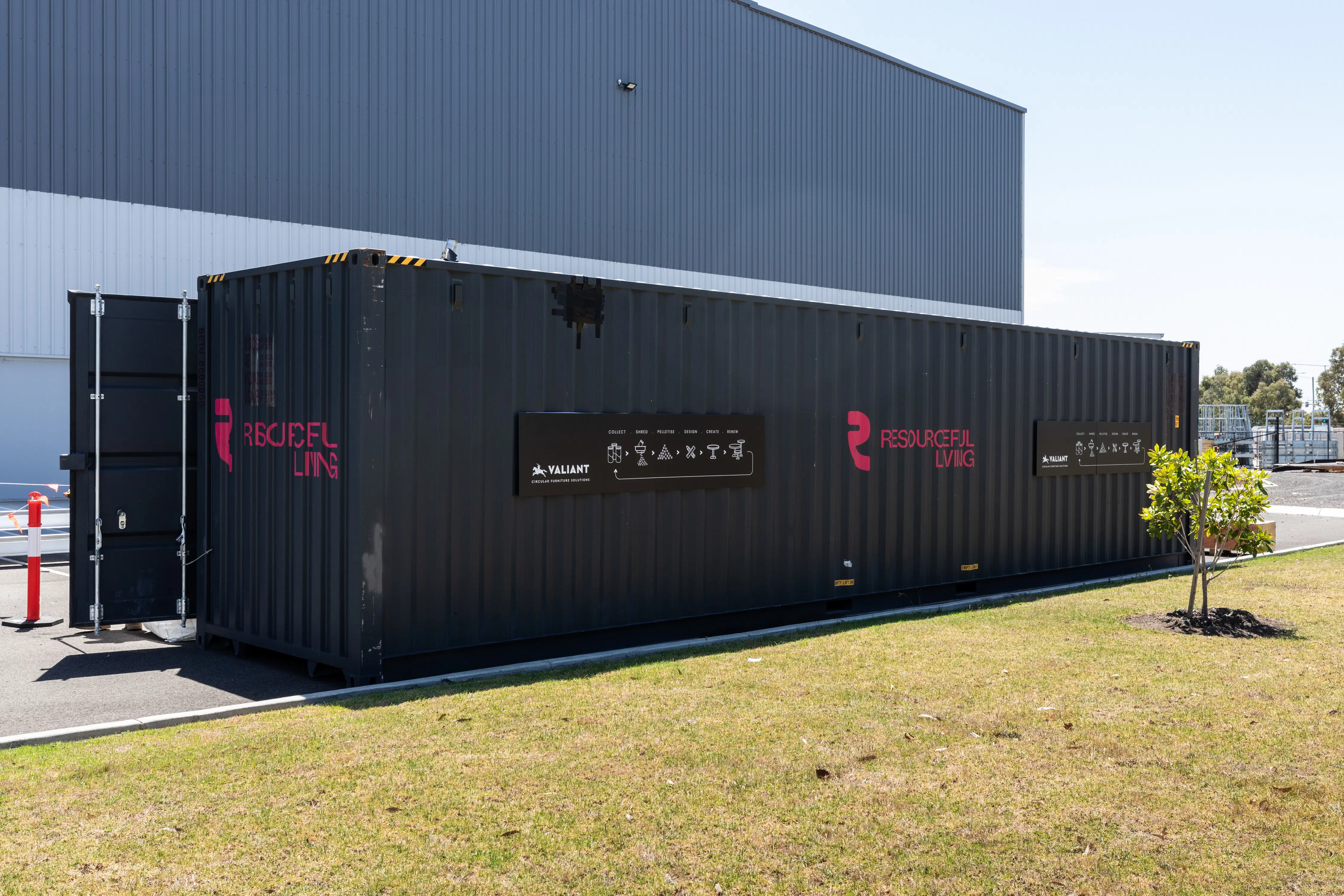
- Manufacturing: We create high-performance panels from 100% Australian post-consumer waste.
- Usage: You use the panels for your fit-out, furniture, or infrastructure.
- The "Take-Back": Once the project is decommissioned: whether that's in 5 years or 50: we take the material back.
- Regranulation: We shred the old panels and turn them into brand-new products.
This isn't just a "green" initiative; it's a massive risk-mitigation strategy for businesses looking for a Closed-Loop ESG partner. It guarantees that your waste never becomes a liability.
Performance Comparison: At a Glance
| Feature | Recycled Plastic Panels (HDPE) | Treated Timber (CCA/LOSP) | Virgin Plastic (PVC) |
|---|---|---|---|
| Water Resistance | ✅ 100% Waterproof | ❌ Absorbs moisture | ✅ 100% Waterproof |
| Pest Resistance | ✅ Termite Proof | ❌ Requires chemical treatment | ✅ Termite Proof |
| Maintenance | ✅ Low (Soap & Water) | ❌ High (Stain/Seal) | ✅ Low (Soap & Water) |
| Circular Potential | ✅ High (Infinity Loop) | ❌ Low (Landfill) | ⚠️ Moderate (Downcycling) |
| Embodied Carbon | ✅ Very Low | ⚠️ Variable (Transport/Logistics) | ❌ High (Fossil Fuel based) |
Commercial Applications: Where the Shift is Happening Fast
We are seeing recycled plastic manufacturers in Australia being pulled into sectors that were once strictly "timber only."
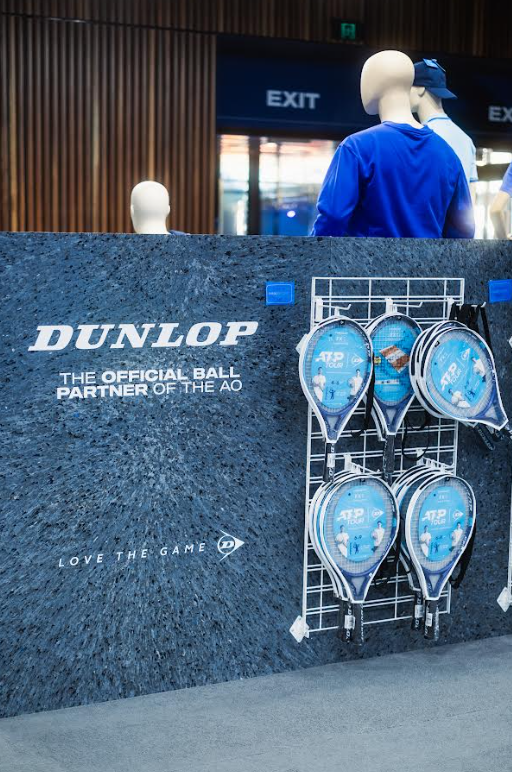
- Retail and Commercial Fit-outs: Brands are using marbled recycled panels for point-of-sale displays and cabinetry. It tells a story of sustainability that resonates with the 2026 consumer. Check out how Valiant Hire transformed event sustainability using this exact approach.
- Public Infrastructure: Councils are swapping wooden park benches and boardwalks for recycled plastic because it stands up to graffiti and heavy foot traffic without splintering. Australian councils are switching because they can't afford the maintenance of traditional materials.
- Industrial Settings: Because these panels are chemical-resistant, they are replacing plywood in workshops and factories where spills are common.
Your Action Plan: How to Transition
If you are still leaning on traditional materials, you don't have to switch overnight. Here is a practical way to integrate more resilient materials into your workflow:
- Start with "High-Stress" Areas: Identify where timber or virgin plastic fails you most: usually wet areas, outdoor seating, or high-impact zones.
- Audit Your Waste: Look at what you are currently throwing away. Could that waste be processed by a mobile shredding unit and turned back into panels for your next project?
- Review the Designer's Cheat Sheet: Understand the 4 principles of a true circular economy before your next procurement meeting.
- Demand Traceability: Ask your suppliers for the origin of their plastic. If it’s not 100% Australian recycled, you’re missing out on the carbon benefits of localized manufacturing.
The Bottom Line
Traditional materials aren't going to vanish, but their dominance is over. In 2026, the industry has realised that durability shouldn't come at the cost of the planet, and "sustainable" shouldn't mean "weak."
By choosing recycled plastic panels, you aren't just ticking an ESG box; you are investing in a material that lasts longer, looks better, and can be recycled indefinitely.
Ready to see the difference for yourself? Explore our range of 100% recycled plastic boards and let's build something that actually lasts.