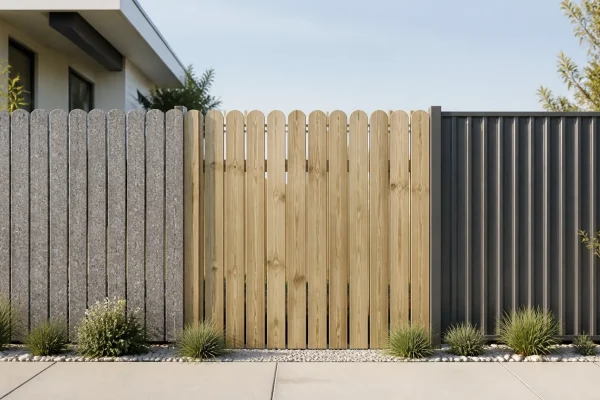
We’ve all seen it: a stunning timber retaining wall or boardwalk that looks world-class for the first six months, only to turn grey, splinter, and eventually succumb to the elements. For years, timber has been the "go-to" for commercial landscaping in Australia. It’s familiar, it's relatively cheap upfront, and we know how to work with it.
But as the industry shifts toward circular procurement and high-performance materials, the cracks in the timber-first approach are starting to show, literally.
At Resourceful Living, we’re seeing a massive surge in project managers and landscape architects asking the same question: Is recycled plastic board actually better than timber?
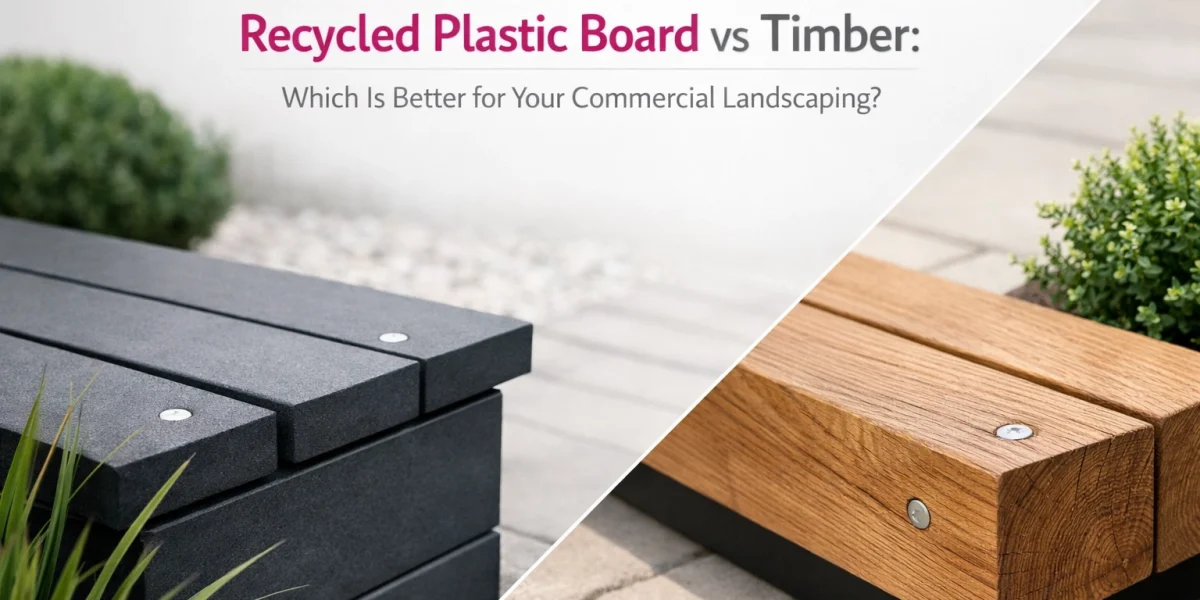
The short answer is yes, but it’s not just about being "green." It’s about long-term ROI, zero-maintenance schedules, and superior durability in our harsh Australian climate. Let’s break down the head-to-head comparison so you can make an informed choice for your next commercial project.
Recycled Plastic Board vs Timber: The Maintenance Myth (and Why Timber Is a Hidden Expense)
When you look at a quote for timber vs. recycled plastic, the timber price tag often looks more attractive at first glance. However, that’s where the "Timber Tax" begins.
Timber is a biological material. It breathes, it absorbs moisture, and it reacts to UV. To keep it from warping or rotting, it requires a recurring cycle of:
- Sanding to remove splinters and weathered layers.
- Oiling or staining every 6 to 12 months to maintain structural integrity.
- Replacement of individual boards as they crack or bow.
Recycled plastic boards require none of this. Once they are installed, your maintenance schedule essentially drops to "zero." You might give them a quick hose down or a pressure wash once a year to remove dust, but there is no oiling, no staining, and no chemical treatments required.
For commercial sites, think councils, parks, or mining rehabilitation projects, the labour savings alone over five years often pay for the material difference twice over.
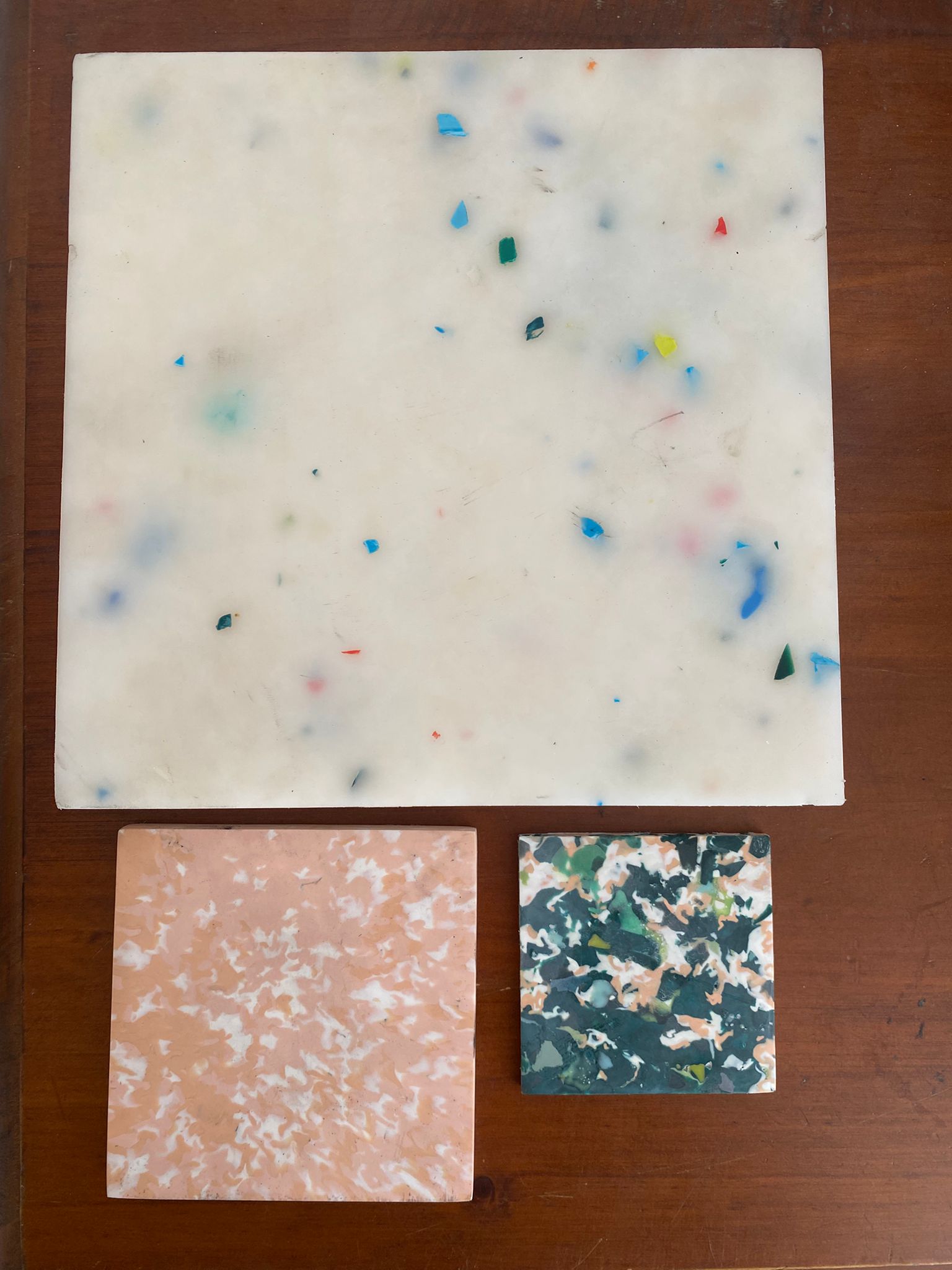
Recycled Plastic Board Durability in the Australian Climate
Australia is a tough testing ground for building materials. From the humidity of Queensland to the dry heat of the Pilbara, timber struggles to keep up.
🚫 Rot and Moisture Resistance
Timber’s biggest enemy is moisture. Even "treated" timber eventually breaks down when in contact with damp soil or standing water. Recycled plastic is 100% waterproof. It doesn't absorb a single drop, meaning it can be submerged or used for garden edging and retaining walls without any risk of internal rot or fungal growth.
🐜 Termites and Pests
If you’ve ever had to replace a commercial deck because of a termite infestation, you know how devastating (and expensive) it is. Termites have zero interest in recycled HDPE. By choosing plastic boards, you’re installing a pest-proof barrier that protects your infrastructure for decades.
☀️ UV Stability and Warping
One of the common mistakes when buying recycled plastic panels is worrying about "plastic melting." Modern recycled plastic boards are engineered for UV stability. Unlike timber, which shrinks and swells with every weather event, high-quality recycled plastic remains consistent, providing a safer, more stable surface for public use.
"In commercial settings, the safety factor of 'no splinters' cannot be overstated. Recycled plastic offers a smooth, safe finish that doesn't degrade into hazardous shards over time." , Jess Hodge, CEO, Resourceful Living.
Environmental Impact: Turning Recycled Plastic Sheets into Infrastructure
Every year, millions of tonnes of plastic end up in Australian landfills. At the same time, we continue to clear forests for "disposable" timber products that might only last 10 years.
Choosing recycled plastic is a direct vote for the circular economy.
- Diverting Waste: Each board or sheet produced by Resourceful Living repurposes thousands of plastic lids and containers that would otherwise stay in the ground for centuries.
- Carbon Sequestration: By using plastic instead of timber, we leave trees in the ground to continue absorbing CO2.
- End-of-Life Recycling: Our panels are 100% recyclable. If a project is decommissioned in 30 years, those boards can be returned to us, shredded, and turned into new products through our closed-loop ESG partner program.
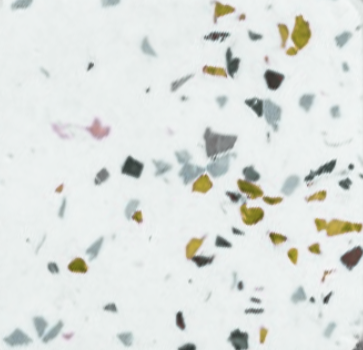
Working With Recycled Plastic Sheets: Practicality for the Modern Tradesperson
A common concern is whether recycled plastic is harder to work with than wood. The reality is that it’s incredibly similar. You can use your standard woodworking tools, saws, drills, and routers, on our recycled plastic sheets.
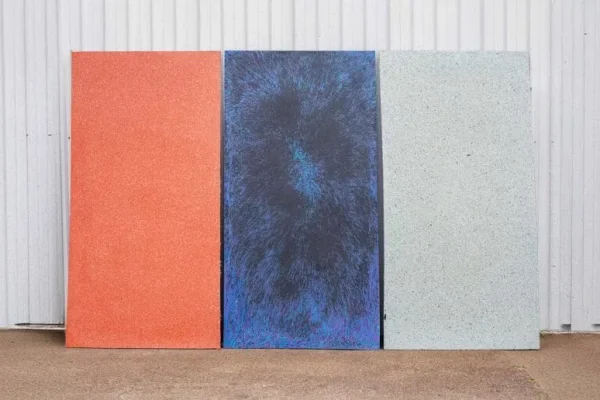
Standard Sheet Sizes: 2400mm x 1200mm
One of the biggest advantages of our manufacturing process is the availability of 2400mm x 1200mm sheets. These large-format panels are a game-changer for commercial landscaping applications like:
- Planter box liners.
- Signage and wayfinding boards.
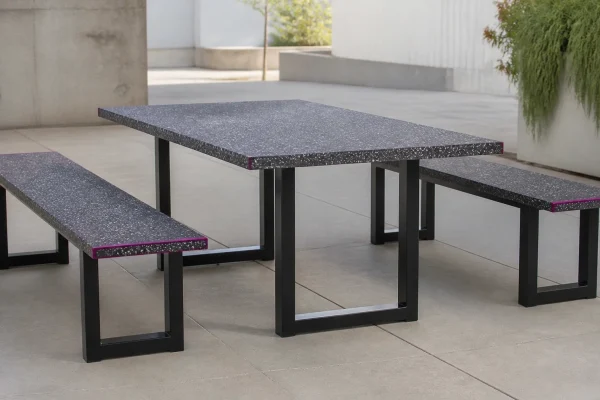
- Recycled plastic furniture components (benches, picnic settings, seating plinths).
- Protective barriers for mining sites.
Having a standard sheet size makes it easy to plan your yields and minimise waste during the construction phase. If you aren't sure which thickness you need for a specific load-bearing application, check out our guide on how to choose the right thickness for your project.

Cost Analysis: Recycled Plastic Board vs Timber (Upfront vs Lifecycle)
Let’s be real, budget matters. If you only look at the invoice on Day 1, timber often wins. But smart procurement looks at the Total Cost of Ownership (TCO).
| Feature | Timber (Hardwood/Treated) | Recycled Plastic (HDPE) |
|---|---|---|
| Upfront Cost | Lower to Mid | Mid to Higher |
| Maintenance Cost | High (Annual oiling/repairs) | Zero |
| Expected Lifespan | 10–15 years (with care) | 40+ years |
| Rot/Termite Proof | No | Yes |
| Environmental Impact | Deforestation risk | Waste Diversion |
When you factor in the cost of labour for maintenance and the fact that you’ll likely need to replace timber twice in the time it takes for one recycled plastic installation to even start looking old, the financial winner is clear. You can dive deeper into this in our recycled plastic vs timber vs steel cost comparison.
How to Make the Switch (Specify Recycled Plastic Sheets & Recycled Plastic Furniture)
If you’re ready to move away from the high-maintenance cycle of timber, here’s how to start:
- Conduct a Waste Audit: See if your own organisation is producing plastic waste that could be turned into your next landscaping project through closed-loop manufacturing. Use our waste audit template to get started.
- Verify Procurement Requirements: Check your local government or corporate ESG targets. Many now require a percentage of recycled content in new builds.
- Specify Resourceful Living: Ensure your contractors are quoting on high-quality, Australian-made recycled HDPE panels to guarantee the durability mentioned above.
The "traditional" way of landscaping is changing. By choosing recycled plastic over timber, you aren't just building a better garden bed or boardwalk: you’re building a more resilient, cost-effective, and sustainable future for Australia.
Ready to see the material in person? Contact us at Resourceful Living to request a sample pack or discuss your next commercial project.