Choosing materials for a construction project used to be simple: you picked timber for framing, plywood for hoarding, and stone or laminate for surfaces. But the industry is shifting. With tighter environmental regulations and a growing push toward circular procurement, recycled plastic boards are no longer a “niche” alternative: they are becoming the standard for high-performance, sustainable builds.
However, not all recycled plastic is created equal. If you are looking at a spec sheet and seeing terms like HDPE, LDPE, or “mixed plastic,” it can be hard to know which one will actually hold up on a site or in a commercial fit-out.
In this guide, we’ll break down exactly how to choose the right recycled plastic board for your next project, comparing materials, specs, and long-term ROI.
🏗️ Understanding the Landscape of Recycled Plastic Boards
When we talk about “recycled plastic boards,” we are usually referring to large-format sheets designed to replace traditional materials like marine ply, MDF, or even some masonry products. In the Australian market, these products generally fall into three categories:
- Single-Polymer Boards (e.g., 100% HDPE): These are made from high-density polyethylene (think milk bottles and shampoo containers). They are incredibly durable, UV-stable, and chemically resistant.
- Mixed Plastic Boards: These use a blend of various plastics. While they are a great way to divert waste from landfill, they can sometimes be less predictable in terms of structural consistency compared to single-polymer boards.
- FRP (Fibre Reinforced Plastic) Composites: These are often used for heavy-duty structural applications but are more difficult to recycle at the end of their life due to the bonded fibres.
At Resourceful Living, we focus on 100% recycled Australian plastic, primarily HDPE and PP (Polypropylene). By keeping the polymer types consistent, we ensure the boards aren’t just durable: they remain fully recyclable back into our own manufacturing loop.
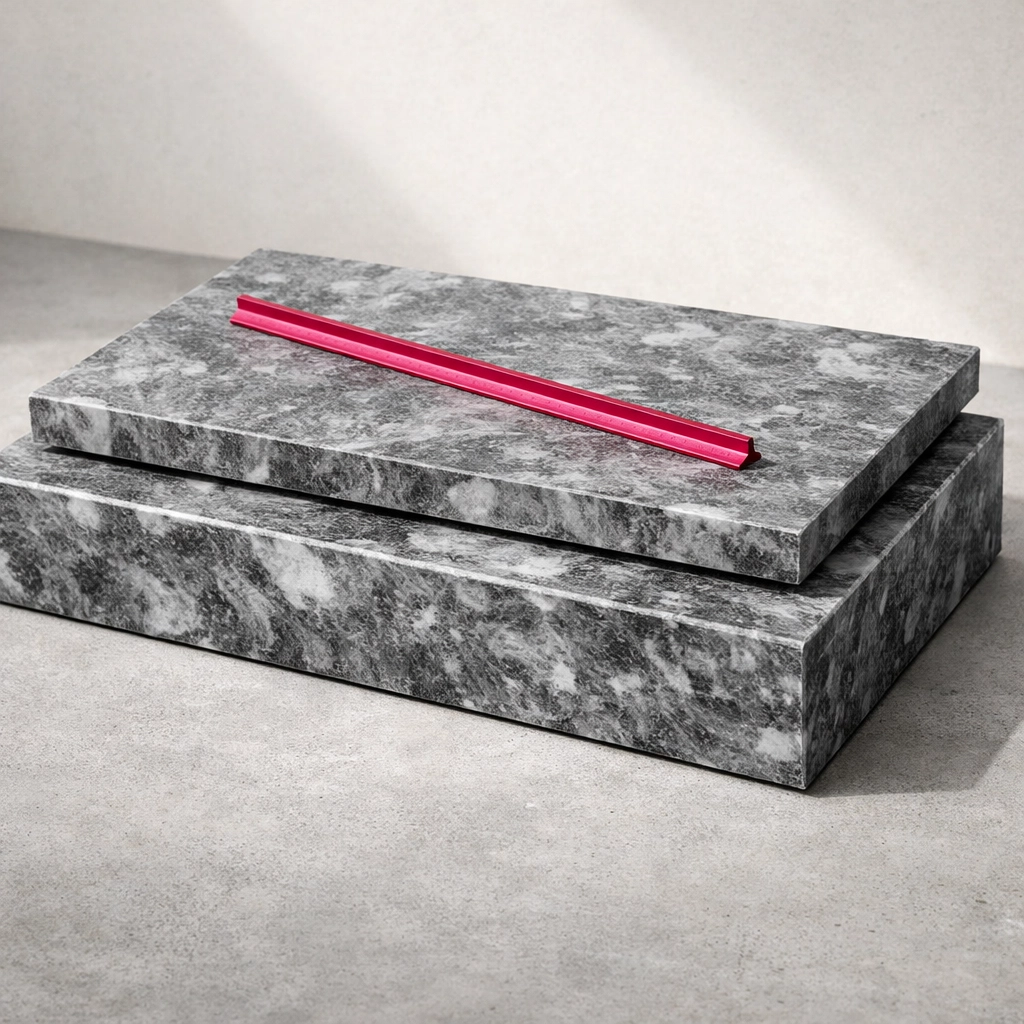
📏 Technical Specs: The Resourceful Living Standard
If you are used to working with standard sheet goods, you’ll find the transition to recycled plastic boards remarkably easy. Our boards are designed to fit seamlessly into existing construction workflows.
- Standard Sheet Size: 2400mm x 1200mm. This matches the standard “8×4” footprint of plywood and plasterboard, meaning no awkward redesigns of your framing or support structures.
- Thickness Range: We manufacture boards from 3mm up to 40mm.
- 3mm – 6mm: Ideal for wall cladding, signage, and decorative linings.
- 10mm – 20mm: The “sweet spot” for cabinetry, furniture, and partitioning.
- 25mm – 40mm: Structural-grade thickness used for heavy-duty worktops, mining products, and site infrastructure.
“The beauty of working with a 40mm recycled plastic board is the density. You get a material that is virtually indestructible, waterproof, and doesn’t require the edge-banding or sealing that traditional timber products demand.” : Jess Hodge, CEO of Resourceful Living.
⚖️ The Comparison: Recycled Plastic vs. Traditional Materials
To understand why the future of sustainable building is leaning so heavily toward plastic, we need to look at the data.
| Feature | Recycled Plastic Board (HDPE/PP) | Marine Plywood | Engineered Stone |
|---|---|---|---|
| Moisture Resistance | 100% Waterproof | High (but will rot over time) | Waterproof |
| Lifespan | 50+ years | 5–15 years | 20+ years |
| Maintenance | Zero (no painting/sealing) | High (sanding/staining) | Moderate (sealing/chipping) |
| Recyclability | 100% Circular | Low (glue/treatments) | Non-recyclable |
| Impact Resistance | Extremely High | Moderate | Low (brittle/prone to cracking) |
| Workability | Standard woodworking tools | Standard woodworking tools | Specialised masonry tools |
While the initial cost of a high-quality recycled plastic board might be higher than a sheet of budget ply, the lifecycle environmental impact and reduced maintenance costs make it the more economical choice over a 10-year period. You can read more about the cost vs. lifespan comparison here.
🛠️ Choosing by Application: Where Does It Fit?
Not every project requires a 40mm structural slab. Here is how to match the board to your specific construction needs:
1. Commercial Fit-outs and Cabinetry
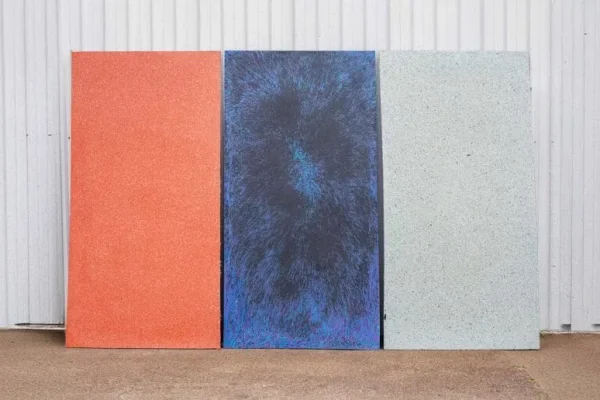
For retail or office spaces, aesthetics matter as much as durability. Our boards come in unique, variegated “marble” patterns that result from the recycling process itself.
- Recommended: 12mm to 20mm boards.
- Why: They are hygienic, easy to wipe down, and don’t off-gas VOCs like some MDF products.
2. Mining and Industrial Sites
In harsh environments, materials fail due to corrosion, termites, or chemical exposure. This is where recycled plastic shines.
- Recommended: 30mm to 40mm boards.
- Application: Wheel stops, cribbing blocks, and rehabilitation products.
- Why: Unlike steel, they won’t rust. Unlike timber, they won’t rot in the red dirt or humid conditions.
3. Site Hoarding and Temporary Shuttering
If you are tired of throwing away warped plywood after a single job, it’s time to switch.
- Recommended: 15mm to 18mm boards.
- Why: These boards can be used, hosed down, and reused up to 50 times. When they finally reach the end of their life, they don’t go into the skip bin: they come back to us.
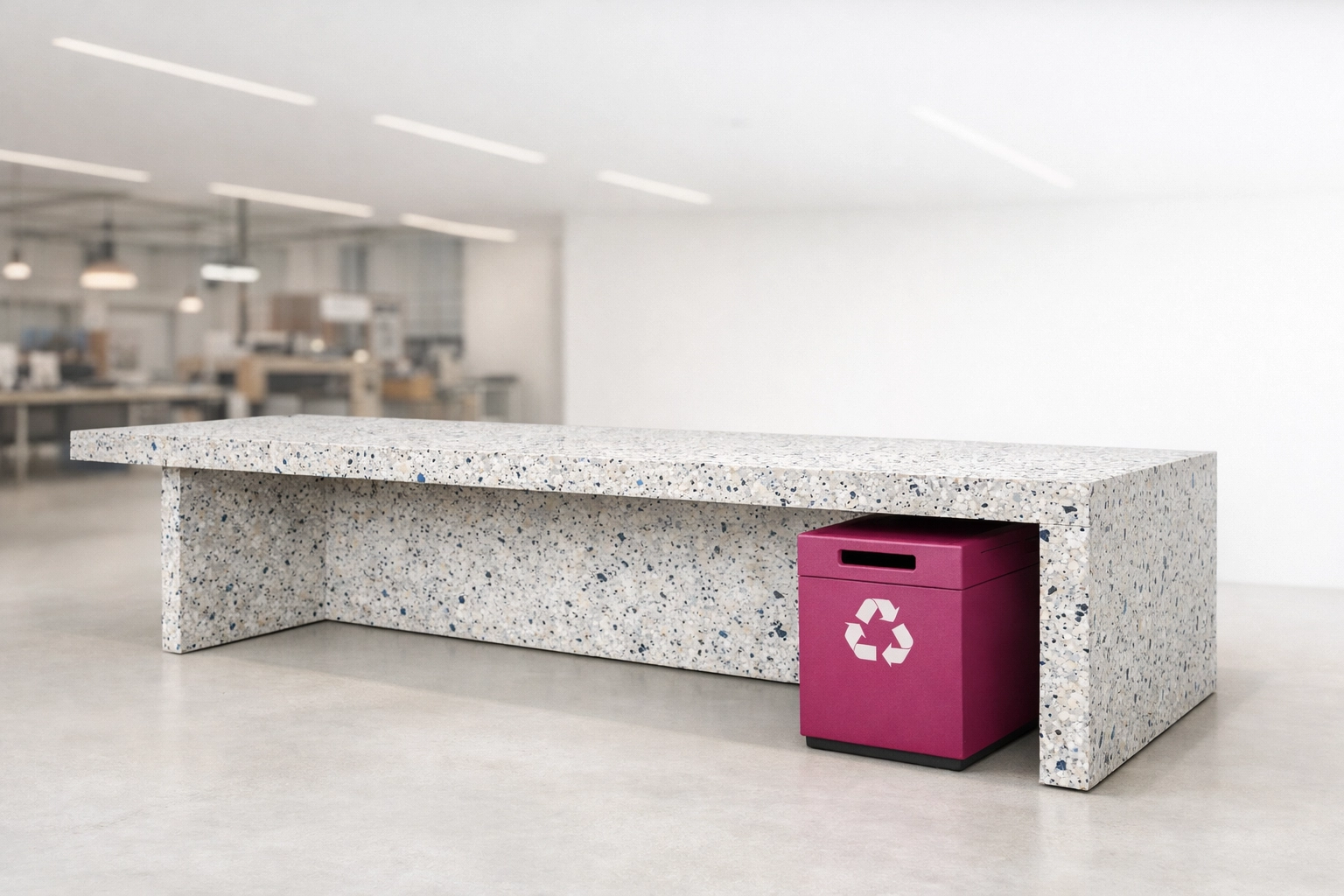
🔄 The “Take-Back” Difference: Real Circularity
The biggest mistake construction companies make is viewing “recycled” as the final step. True sustainability is circular.
At Resourceful Living, we offer a Take-Back Program. If you use our boards for a temporary installation or if you have offcuts from a large-scale fit-out, we don’t want that material ending up in a landfill. We take it back, granulate it, and turn it back into new boards.
This helps our clients reduce landfill costs and meet strict Green Star or ESG (Environmental, Social, and Governance) targets. When you buy Australian-made recycled plastic, you aren’t just buying a board; you’re investing in a closed-loop system.
✅ Your Selection Checklist
Before you place an order, run through this quick checklist to ensure you’re getting the right material for the job:
- [ ] Is it 100% recycled? Some “recycled” boards only contain 10-20% recycled content. Look for 100%.
- [ ] Is it Australian made? Reduce your “materials-miles” and support local waste processing.
- [ ] What is the polymer? Ensure it is a consistent polymer (like HDPE) if you plan on recycling it later.
- [ ] Does it meet your thickness requirements? Remember, plastic has more flex than timber. If you are spanning a long distance without support, you may need to go thicker (e.g., 30mm+) or add more frequent supports.
- [ ] Is there a take-back scheme? Ask the manufacturer if they will take the material back at the end of the project.
🚀 Moving Forward with Resourceful Living
Choosing the right material is the first step toward a more efficient and sustainable build. By opting for recycled plastic boards, you’re choosing a material that is tough, waterproof, and infinitely recyclable.
Whether you’re designing a new commercial kitchen, outfitting a mining site, or looking for eco-friendly building products in Australia, we have the technical expertise to help you spec the right board.
Ready to see the material in person?
Explore our product categories or get in touch with us at Resourceful Living to request a sample pack. Let’s build something that lasts( without costing the earth.)