The construction and fit-out industry is currently undergoing its biggest shift in decades. We’re moving away from the “take-make-waste” linear model and sprinting toward a circular economy. It’s an exciting time, but as with any rapid industry evolution, there’s a lot of room for error.
If you’re specifying materials for a commercial project, a council infrastructure job, or a sustainable renovation, you probably have the best intentions. You want to reduce your environmental footprint and meet those increasingly strict ESG (Environmental, Social, and Governance) targets. However, simply choosing a product because it has a green leaf on the label isn’t enough.
In fact, some “sustainable” choices can actually do more harm than good when you factor in lifecycle, logistics, and end-of-life reality.
Here are the seven most common mistakes we see in the field and, more importantly, how you can fix them to ensure your next project is truly circular.
1. Prioritising Upfront Price Over Lifecycle Value
It’s the classic procurement trap. When comparing a standard material like marine plywood or MDF to a high-performance 100% recycled plastic panel, the upfront cost of the recycled option might look higher on the initial quote.
The mistake here is ignoring the Total Cost of Ownership. Materials like timber and composite boards are susceptible to moisture, rot, termites, and UV degradation. In high-traffic or outdoor environments, they require constant sanding, sealing, and eventually, total replacement within 5 to 10 years.
“Sustainability isn’t just about what a material is made of; it’s about how long it stays out of the bin. If you have to replace a ‘green’ material three times in the lifespan of one durable recycled plastic sheet, you haven’t saved the planet: or your budget.” : Jess Hodge, CEO of Resourceful Living.
The Fix: Switch your mindset to lifecycle costing. Evaluate materials based on maintenance requirements and durability. For example, our recycled plastic rehabilitation products are specifically designed to handle the harshest environments without ever needing a coat of paint.
2. Falling for ‘Greenwashing’ (Additives and Veneers)
This is perhaps the most frustrating hurdle for specifiers. Many products marketed as “sustainable” are actually hybrids or composites. You might find a panel that claims to be made from recycled content but is actually 70% virgin resin with a thin veneer of recycled material on top. Or worse, it’s a “bio-composite” that mixes plastic with organic fibres like sawdust or rice husks.
While these sound great in a brochure, they are a recycling nightmare. Once you mix different types of materials (like plastic and wood fibre) together, they become almost impossible to separate again. This means they are destined for the landfill at the end of their life.
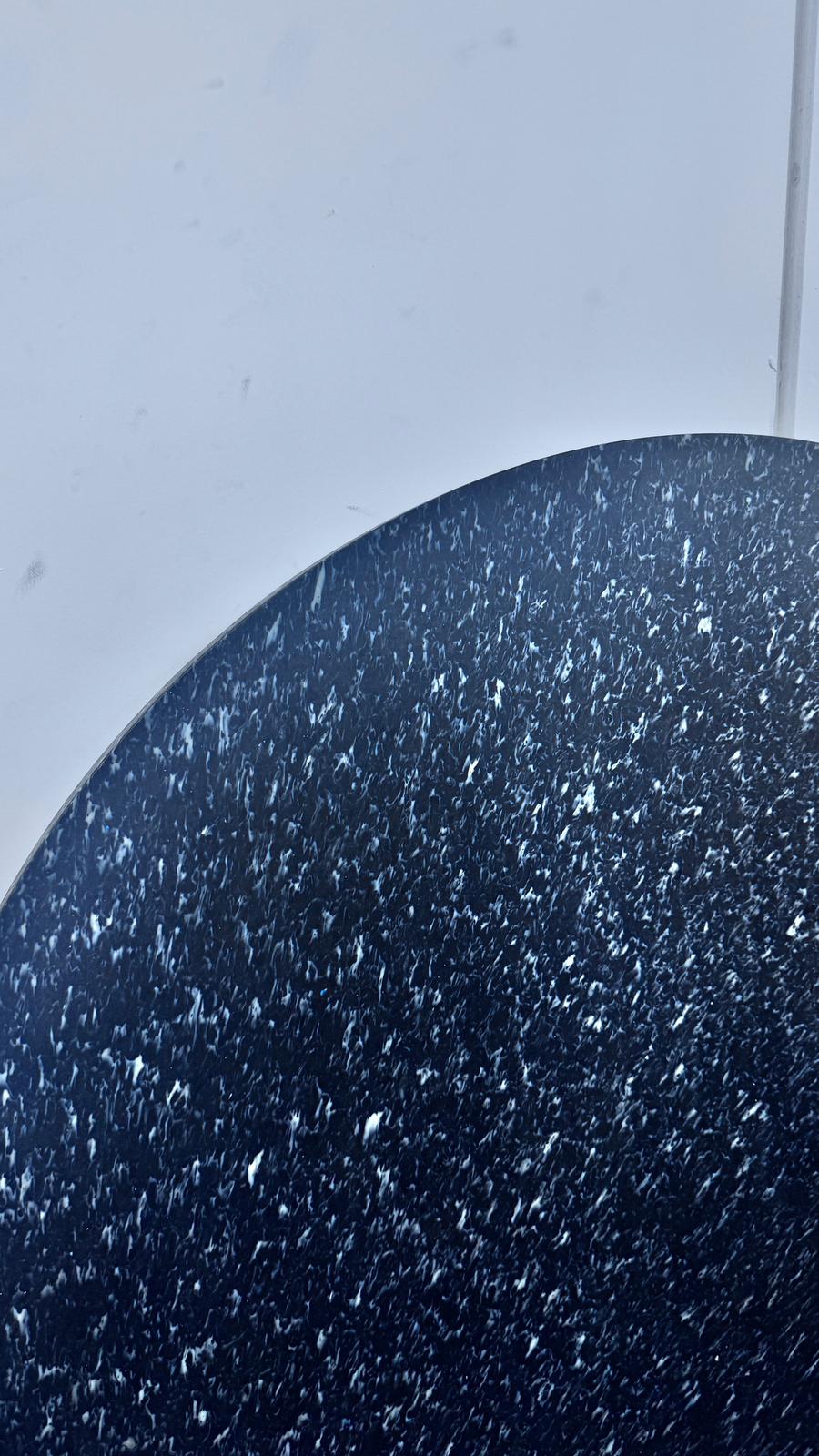
The Fix: Demand 100% recycled content. Look for materials that are “monolithic”: meaning they are made of one single type of material throughout. At Resourceful Living, our panels are made from 100% Australian post-consumer and post-industrial waste (mostly HDPE and PP). No glues, no resins, and no veneers.
3. Ignoring the ‘End-of-Life’ Plan
A material is only truly circular if there is a clear, documented pathway for what happens when the building is eventually demolished or the fit-out is updated. Many “sustainable” materials end up in landfill simply because the manufacturer has no system to take them back.
If you are specifying materials for social procurement or government tenders, you need to be able to prove circularity. A product that is “technically recyclable” but has no local facility to process it is functionally waste.
The Fix: Only work with manufacturers that offer a guaranteed take-back program. We don’t just sell you a panel; we offer a closed-loop service. When your project reaches the end of its life, we take the material back, shred it, and turn it into brand-new products. That is the definition of a circular economy.
4. Overlooking Embodied Carbon in Shipping
You’ve found a fantastic recycled material, but it’s manufactured in Europe or North America. By the time that “sustainable” product is shipped across the globe to an Australian construction site, its carbon footprint has exploded.
Shipping emissions can often negate the environmental benefits of using recycled content in the first place. Furthermore, importing materials makes it much harder to verify the ethical standards of the supply chain.
The Fix: Source locally. By choosing Australian-made recycled materials, you are significantly reducing transport emissions and supporting the local economy. Our facility in Kurri Kurri, NSW, processes 100% Australian waste for the Australian market.

5. Failing to Properly Specify in Construction Documents
We often see generic terms like “recycled plastic” or “eco-friendly board” in architectural specifications. This lack of detail allows contractors to substitute high-quality circular materials for inferior, non-recyclable alternatives that technically meet the vague “eco” description.
If you don’t specify the polymer type, the percentage of recycled content, and the recyclability certification, you are leaving your project’s sustainability goals to chance.
The Fix: Be specific. Use technical terms and reference specific standards. For example, specify “100% Recycled HDPE sheets, UV stabilised, with a manufacturer-backed circular take-back program.” You can find more tips on this in our Tier 1 Council Specifier Guide.
6. Overlooking the Hidden Costs of Reclaimed Materials
Using reclaimed timber or bricks is a beautiful way to support circularity, but it comes with a catch: labour costs. Reclaimed materials are rarely uniform. They require de-nailing, cleaning, resurfacing, and careful sorting. This can drive up your labour budget and blow out project timelines.
While reclaimed materials have their place in bespoke designs, they are often difficult to scale for large-scale commercial fit-outs.
The Fix: Look for manufactured circular materials. Our recycled plastic sheets provide the environmental benefits of reclaimed material but with the consistency of a manufactured product. They are flat, uniform, and can be worked with standard woodworking tools or CNC machines, keeping your labour costs predictable.
7. Choosing Aesthetics Over Durability
We all want our projects to look good, but in the world of sustainable materials, beauty shouldn’t be skin deep. A common mistake is choosing a material based on a colour swatch without checking its performance metrics: like water absorption, impact resistance, or UV stability.
Many “eco” boards use organic dyes that fade in the Australian sun or coatings that chip and peel, exposing the core to the elements. Once the aesthetic fails, the material is usually replaced, regardless of its structural integrity.
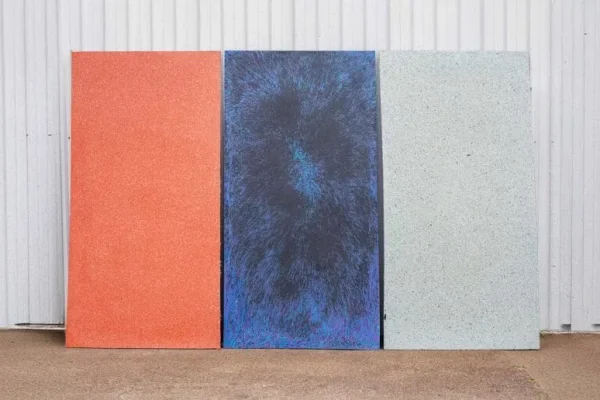
The Fix: Choose materials where the colour is “through-and-through.” Because our panels are made from melted-down coloured plastic (like milk bottles and detergent containers), the colour goes all the way through the sheet. If it gets scratched or dented, it’s still the same colour underneath. No painting, no peeling, no fading.
The Circularity Checklist for Your Next Project
To avoid these pitfalls, run your material selection through this quick checklist:
- ✅ Is it 100% recycled? (Avoid hybrids and veneers).
- ✅ Is it 100% recyclable? (Can it actually be processed at the end of its life?).
- ✅ Is there a take-back program? (Will the manufacturer take it back?).
- ✅ Is it locally made? (Reduce shipping emissions and verify the source).
- ✅ Is it durable? (Will it last 20+ years without heavy maintenance?).
- ✅ Is the colour through-and-through? (Will it maintain its look over time?).
Why True Circularity Matters Now
Australia is rapidly moving toward new circular construction reforms. Government and Tier 1 contractors are no longer just looking for “green” materials; they are looking for traceability and closed-loop systems.
By avoiding these seven mistakes, you aren’t just doing the right thing for the planet: you are future-proofing your business and ensuring your projects meet the highest standards of modern construction.
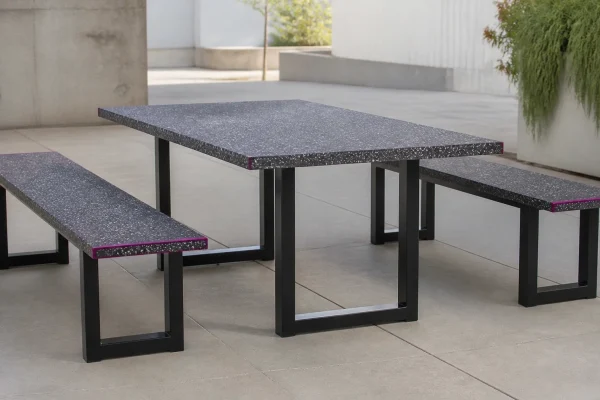
At Resourceful Living, we’ve built our entire business model to solve these exact problems. From transforming 3 million Telstra SIM cards into durable furniture to helping mining operations switch to recycled materials, we are proving that recycled plastic is the superior choice for the future of building.
Ready to specify a truly circular material for your next project? Explore our range of 100% recycled plastic panels or get in touch with our team to discuss your custom requirements. Let’s build something that lasts, and then build it again.