If you've been working in the Australian commercial property or construction space, you’ve probably noticed the goalposts are moving. What used to be a "nice-to-have" sustainability certificate is rapidly morphing into a strict legal and financial requirement.
As we approach the mid-point of the decade, the industry is bracing for a fundamental shift. Circular construction 2026 isn't just a buzzword anymore; it’s the new baseline for how we design, build, and: most importantly: source materials for our interiors.
For retail and office fitouts, the pressure is particularly intense. These spaces have high turnover rates, often being ripped out and replaced every three to seven years. In a linear economy, that’s a disaster. In a circular economy, it’s an opportunity.
The 2026 Procurement Shift: Why "Business as Usual" is Ending
By 2026, the Australian construction landscape will look radically different due to the federal and state-level Environmentally Sustainable Procurement (ESP) policies. We are moving away from a model where the cheapest upfront price wins, toward one where the lifecycle carbon cost determines the contract winner.
Government tenders are already leading the charge. If you want to know how to meet the new environmentally sustainable procurement policy, you need to look at the reporting requirements. Agencies are now mandated to prioritise materials that are:
- Low-carbon (using recycled content).
- Highly durable (reducing replacement cycles).
- Fully circular (capable of being recycled again at the end of life).
This isn't just about the "green feel-good" factor. It’s about embodied carbon reporting. Every panel, desk, and partition you install in a 2026 fitout will likely need a data-backed trail showing exactly where it came from and where it can go next.
The Fitout Problem: The Silent Carbon Emitter
When people think of construction emissions, they usually think of concrete and steel. While those are huge, fitouts are the silent carbon killers of the commercial world.
Think about the average retail shop or corporate office. Every few years, the branding changes, the tenant moves, or the layout is "refreshed." In a traditional model, this results in skips full of MDF, plasterboard, and virgin plastics heading straight to landfill.
Embodied carbon: the emissions associated with manufacturing, transporting, and installing these materials: is locked in the moment the fitout is completed. If that fitout is destroyed in five years, the "carbon debt" is never paid off.
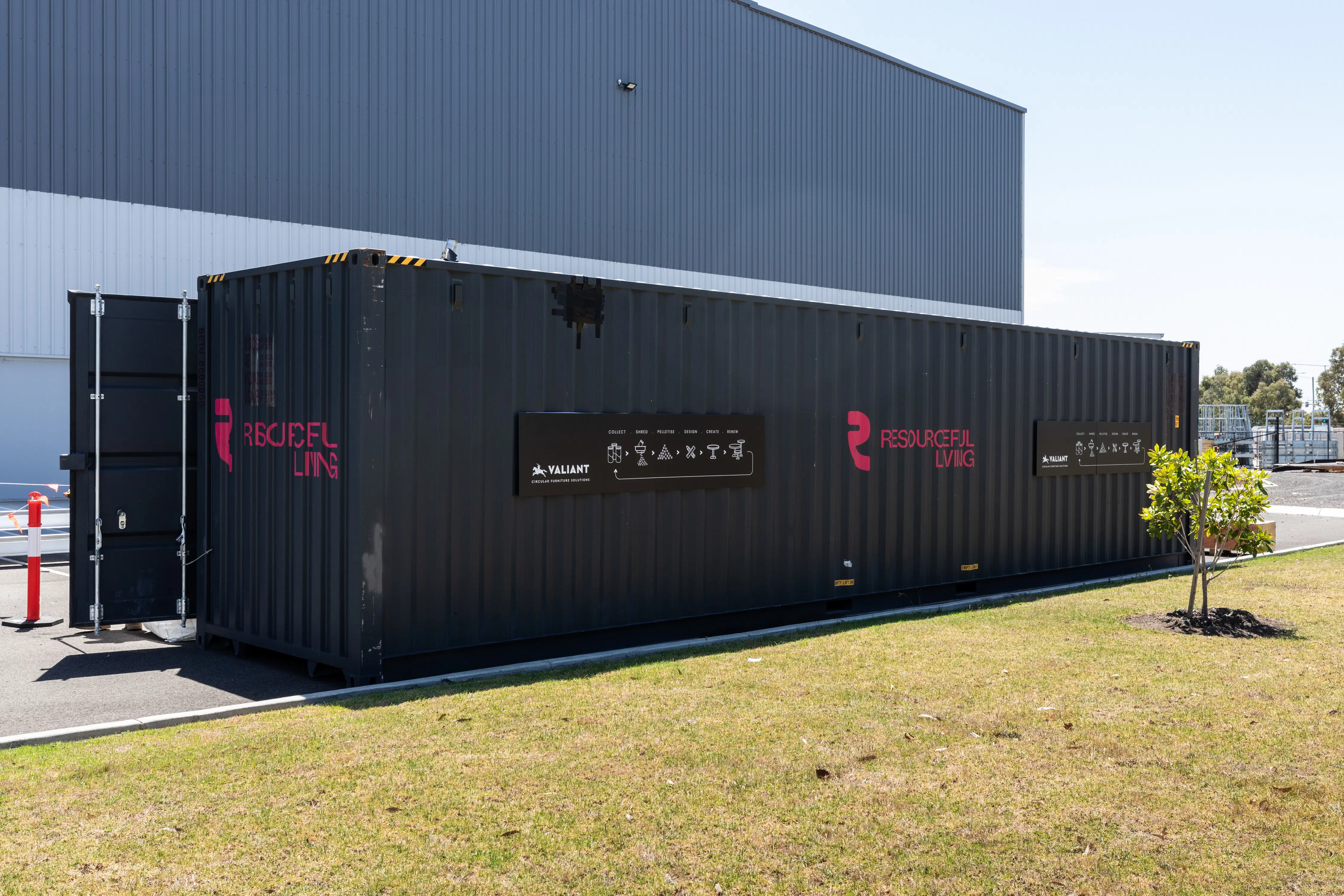
This is why recycled materials for commercial projects are no longer optional. To meet 2026 targets, fitout managers must shift toward materials that keep carbon in the loop.
Why Circularity is the Only Way to Meet 2026 Targets
The math is simple: we cannot reach net-zero by only focusing on operational energy (like LED lights and solar panels). We have to address the materiality of our buildings.
Circular construction 2026 focuses on three core pillars:
- Design out waste: Using modular systems and materials that don't require high-emission manufacturing.
- Keep materials in use: Choosing products like recycled plastic sheets that can withstand multiple "lives" without degrading.
- Regenerate natural systems: Swapping out virgin timber or petroleum-based plastics for 100% recycled Australian post-consumer waste.
"The transition to a circular economy in construction represents a $2 trillion opportunity globally. In Australia, it’s the difference between being a leader in the 2026 market or being regulated out of it."
Resourceful Living: Scaling the Circular Solution
One of the biggest hurdles for circular construction has historically been scale. Developers often ask, "Can you actually supply enough material for a 10-storey fitout?"
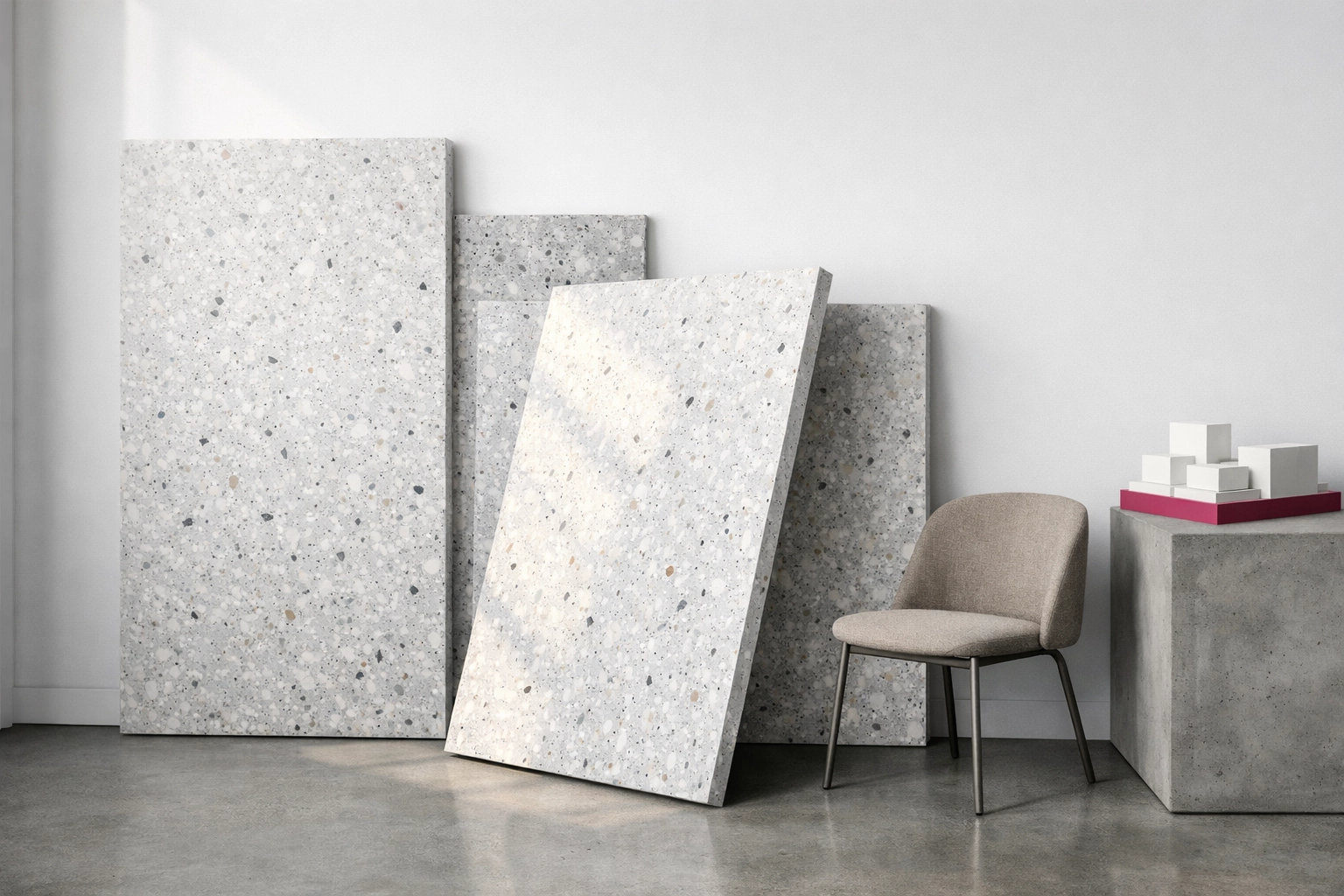
At Resourceful Living, we’ve built our infrastructure specifically to answer that question. We currently have the capacity to process 1 tonne of Australian plastic waste per day.
This isn't just "downcycling" plastic into low-grade products. We are manufacturing high-performance, aesthetically striking sustainable building materials in Australia that compete directly with virgin timber, MDF, and stone.
Capacity Meets Compliance
Our 1-tonne-per-day capacity means we can divert massive amounts of waste from landfill and turn it into architectural-grade panels. For a large-scale office fitout, this translates to:
- Traceable ESG Data: We provide the metrics you need for your embodied carbon reporting.
- Local Supply Chain: No waiting for overseas shipments or dealing with global logistics emissions.
- Closed-Loop Guarantee: When that fitout eventually needs a refresh, we can take those panels back and recycle them again.
Recycled Plastic vs. Traditional Materials: The Performance Reality
If you're still choosing between recycled plastic vs. timber, the 2026 landscape makes the choice much easier. Traditional materials like plywood or MDF often use resins and glues that make them impossible to recycle. Once they get wet or worn, they're landfill-bound.
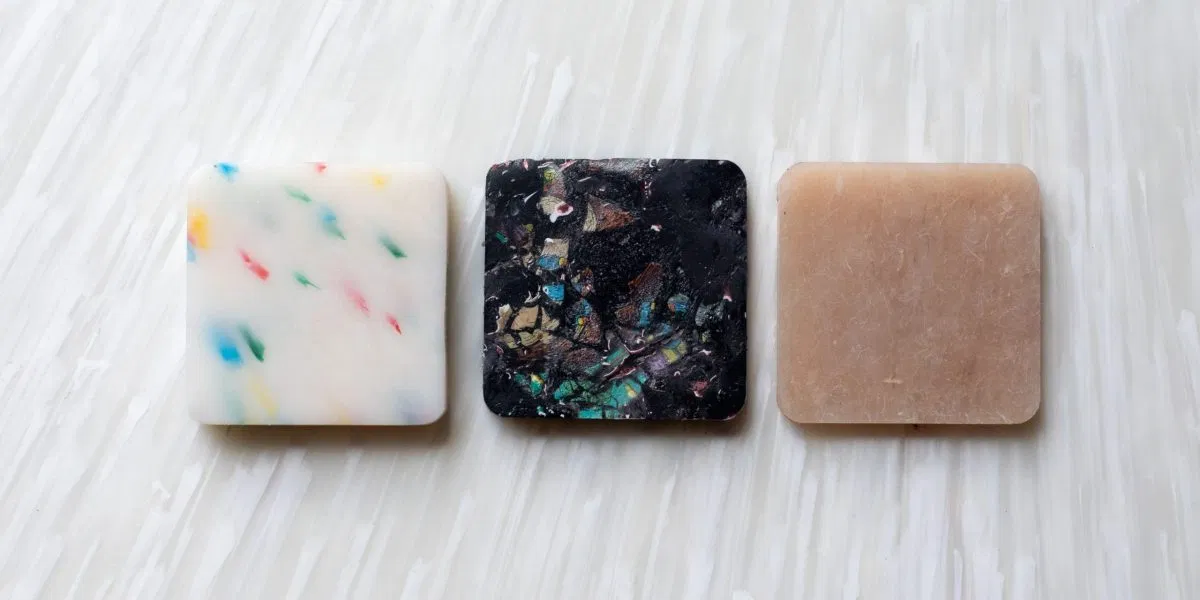
Our 100% recycled plastic panels are:
- Waterproof: Ideal for retail food zones, bathrooms, and high-traffic areas.
- VOC-Free: Improving indoor air quality for office occupants.
- Durable: They don't chip or delaminate like veneered boards.
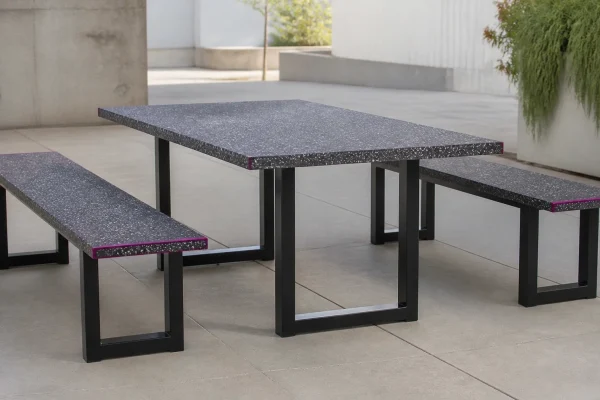
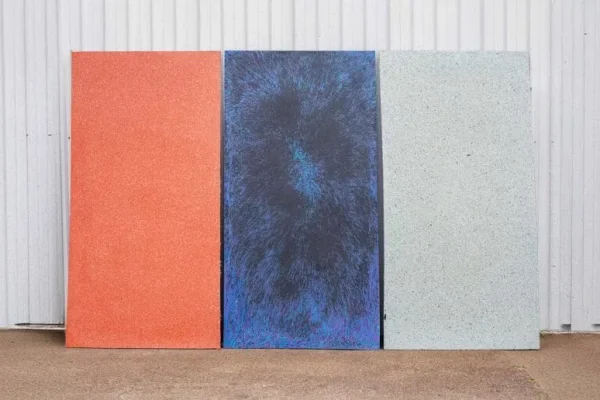
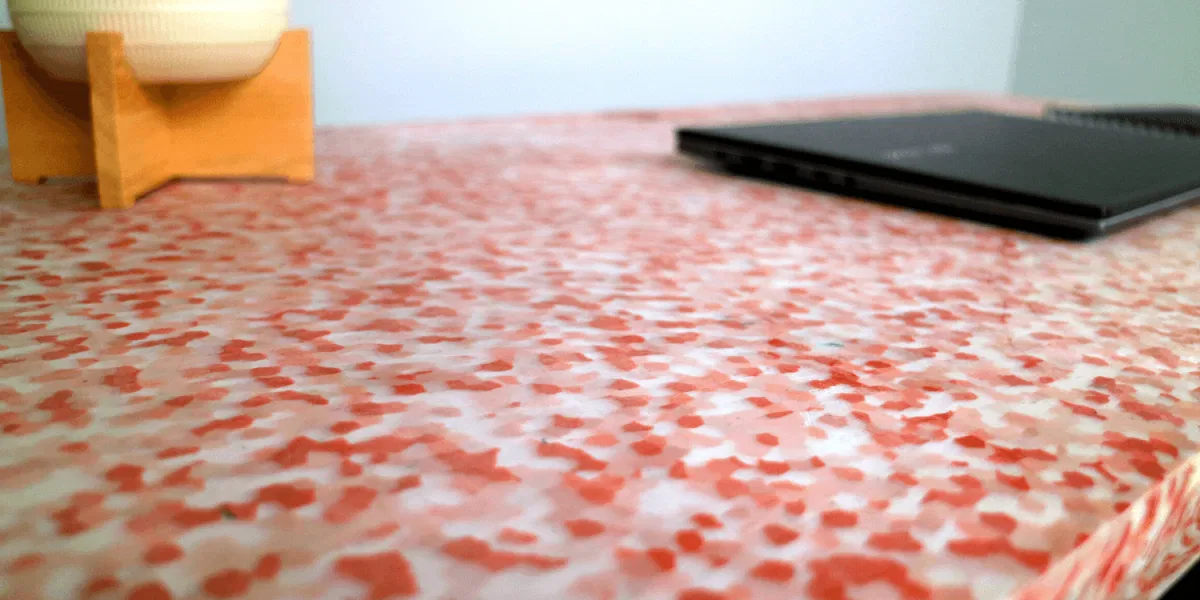
For designers, the "aesthetic of sustainability" has also evolved. You don't have to settle for "recycled-looking" grey boards. Our terrazzo-style finishes provide a premium look that tells a story of innovation.
How to Prepare Your Procurement Strategy for 2026
If you are a project manager, architect, or procurement officer, the time to pivot is now. Here is how you can stay ahead of the circular construction 2026 curve:
- Audit Your Current Waste: Look at your last three fitouts. How much material was actually recycled? If the answer is "we don't know," you have a reporting gap that needs fixing.
- Specify Recycled Content Early: Don't wait for the construction phase. Circularity starts at the drawing board. Check out why builders are switching to 100% recycled plastic sheets to see how they integrate into early-stage designs.
- Partner with Local Manufacturers: By choosing Australian-made recycled products, you reduce transport emissions and support the local circular economy. It also makes you a more attractive candidate for government tenders.
- Join an ESG Partner Program: Moving to a circular model is easier when you have expert guidance. Our ESG Partner Program helps businesses integrate circularity into their core operations.
The Bottom Line
The shift toward circular construction 2026 is more than just a regulatory hurdle: it’s a complete reimagining of what a "successful project" looks like. In the very near future, the most valuable buildings won't just be the ones that look the best; they’ll be the ones that serve as "material banks" for the future.
By leveraging Resourceful Living’s 1-tonne-per-day manufacturing capacity, you aren't just buying a panel; you're securing your place in the future of Australian construction.

Ready to future-proof your next fitout?
Whether you're looking for sustainable construction solutions or need technical data for a tender, our team is here to help you navigate the transition. Let’s build something that lasts, and then build it again.