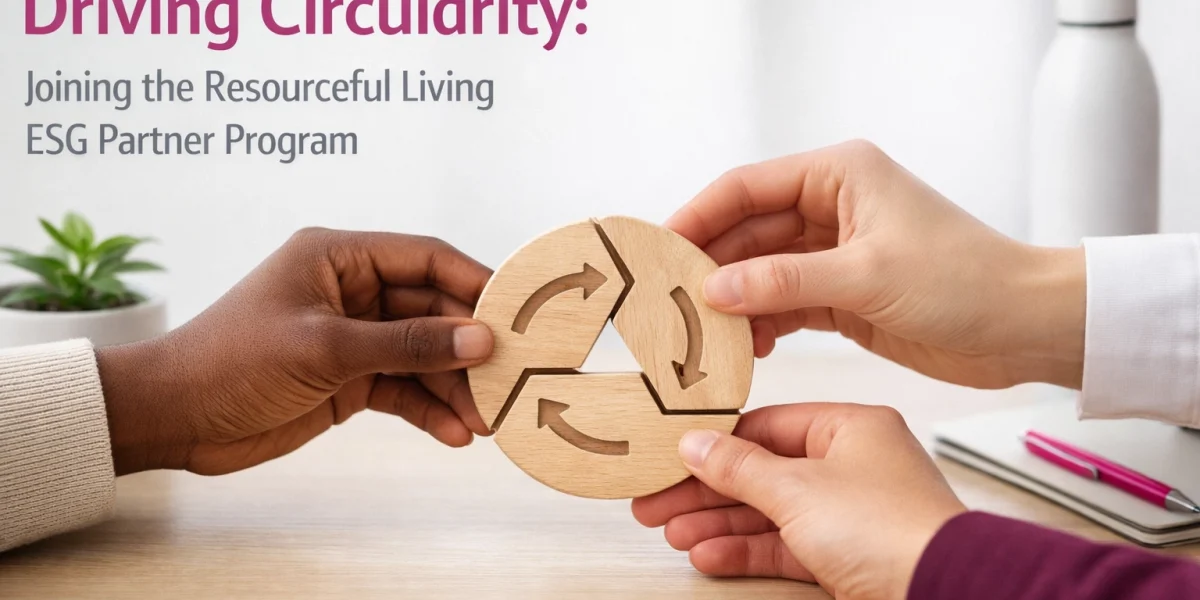
The landscape of the Australian construction and manufacturing sectors is undergoing a fundamental shift. It’s no longer enough to simply deliver a project on time and under budget. Today, Tier 1-3 construction firms and local government bodies are being held to rigorous Environmental, Social, and Governance (ESG) standards.
Whether it’s a state-funded infrastructure project or a commercial high-rise, the demand for sustainable construction materials in Australia has moved from a "nice-to-have" to a mandatory requirement in the tendering process. At Resourceful Living, we recognised that procurement teams didn't just need a product; they needed a systematised approach to circularity.
That is exactly why we developed the Resourceful Living ESG Partner Program. This initiative isn't just about selling recycled plastic panels; it’s about creating a transparent, measurable, and truly circular supply chain that helps your organization meet its carbon neutral and waste reduction targets.
The ESG Challenge in Modern Construction
For many years, "recycled" was a broad term that lacked the data necessary for corporate reporting. Sustainability managers often struggled to verify the origin of materials or the actual environmental impact of their choices. In the context of recycled plastic construction materials, the "greenwashing" risk was high.
Project managers face three primary hurdles:
- Traceability: Knowing exactly where the waste came from and how it was processed.
- Performance: Ensuring that recycled materials can actually stand up to the rigors of a construction site or public space.
- End-of-Life: Preventing the "recycled" product from eventually ending up in a landfill anyway.
Our ESG Partner Program was designed to solve these specific pain points by providing a closed-loop framework that covers the entire lifecycle of the material.

Pillar 1: Radical Supply Chain Transparency
One of the core tenets of our program is transparency. We believe that if you can’t track it, you can’t claim it. Resourceful Living operates with a local-first mentality. We don't source mystery plastic from overseas; we process Australian waste, right here in Australia.
When you join the ESG Partner Program, you gain access to detailed reporting on the provenance of the materials used in your project. We categorize our inputs: ranging from post-industrial waste to post-consumer high-density polyethylene (HDPE): so you can report exactly how many kilograms of waste were diverted from Australian landfills for your specific fit-out or infrastructure build.
This level of detail is critical for Tier 1 contractors who need to provide granular data to stakeholders and government auditors. By choosing locally manufactured recycled plastic construction materials, you are also reducing the "Scope 3" emissions associated with international freight and long-haul logistics.
Pillar 2: The Take-Back Program (True Circularity)
The biggest flaw in traditional recycling is that it is often linear recycling: a product is made from waste, used once, and then discarded. To achieve true circularity, the loop must be closed.
The Resourceful Living ESG Partner Program includes a guaranteed Take-Back Program.
How it works:
- Installation: You use our recycled plastic panels for your hoardings, cabinetry, or infrastructure projects.
- Usage: The materials serve their purpose for 5, 10, or 20 years.
- Recovery: When the project is decommissioned or the fit-out is updated, we take those panels back.
- Re-Manufacturing: We granulate the old panels and turn them into brand-new products.
This "waste-to-infrastructure" model ensures that the plastic remains in a productive cycle indefinitely. It effectively removes "end-of-life" from the vocabulary of your procurement department.
Pillar 3: Quantifiable Environmental Impact
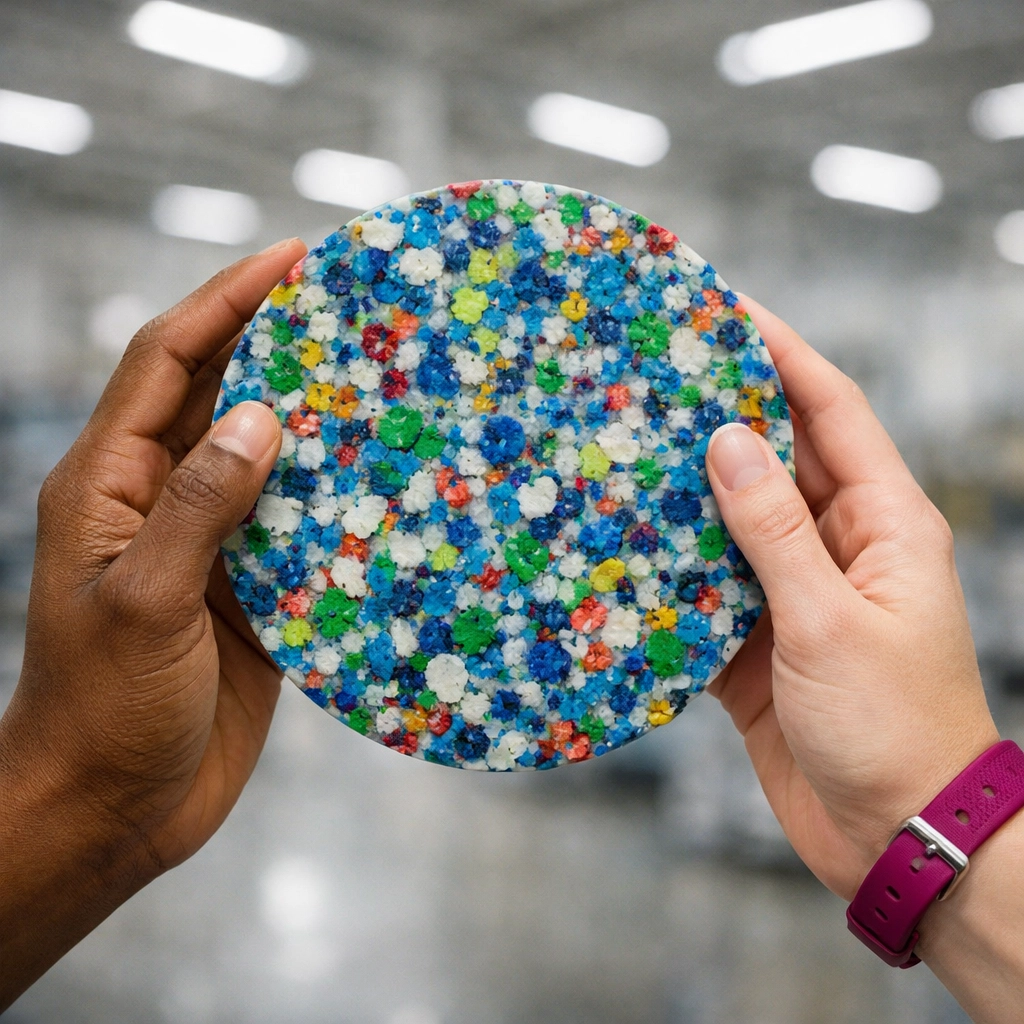
Modern ESG reporting requires more than just a "feel-good" story; it requires metrics. As a partner, you receive data-driven insights into the life cycle environmental impact of the materials you procure.
We provide stats on:
- Landfill Diversion: Total weight (kg/tonnes) of plastic kept out of the ground.
- Carbon Savings: Comparative data showing the CO2e reduction of using recycled HDPE versus virgin plastics or traditional materials like timber and steel.
- Water Usage: Metrics on the low-impact manufacturing process we utilize.
By integrating these metrics into your annual sustainability reports, you demonstrate a commitment to the circular economy that goes beyond simple procurement.
Comparing Material Lifecycles
| Feature | Traditional Timber/MDF | Virgin Plastic | Resourceful Living Recycled Plastic |
|---|---|---|---|
| Durability | Moderate (Rot/Termites) | High | High (Weather/Chemical Resistant) |
| Maintenance | High (Painting/Sealing) | Low | Zero Maintenance |
| Recyclability | Difficult/Limited | Possible (often downcycled) | 100% Circular (Take-Back Program) |
| Carbon Footprint | Variable | High (Petrochemical-based) | Low (Diverted Waste) |
| Moisture Resistance | Poor | Excellent | Excellent |
Tailored Solutions for Different Sectors
The ESG Partner Program isn't a one-size-fits-all solution. We work closely with different tiers of industry to ensure the materials meet specific performance standards.
Tier 1 & 2 Construction
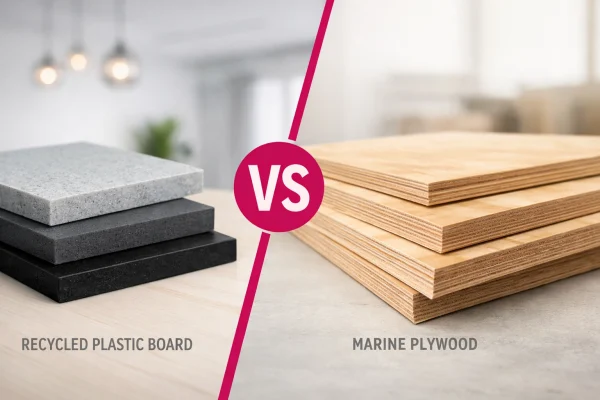
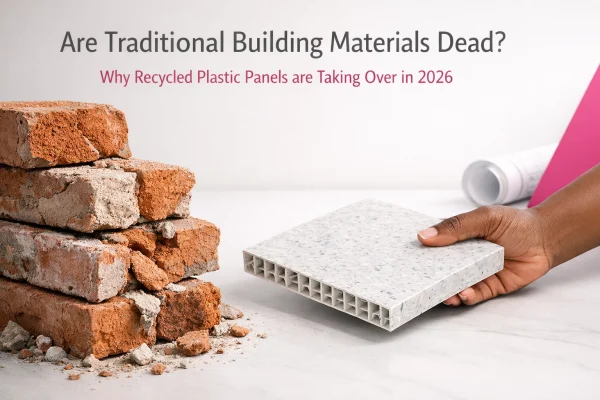
For large-scale commercial builders, we provide durable recycled plastic panels that can replace plywood or laminate in high-traffic areas. These materials are perfect for site hoardings, temporary flooring, and internal partitions. The benefit here is twofold: you meet your sustainable construction materials quota while benefiting from a material that won't warp or rot if exposed to the elements.
Local Government and Councils
Councils are under immense pressure to show "Buy Local" and "Recycled" initiatives. We partner with local governments to turn their own community's plastic waste into park benches, bollards, and signage. This creates a powerful narrative of local circularity: residents see their recycled milk bottles returning to their parks as functional infrastructure.
Mining and Heavy Industry
In the mining sector, durability is non-negotiable. Our partners in this space utilize our recycled plastic wheel stops and rehabilitation products to replace heavy concrete or short-lived timber. These products are lighter to transport (reducing fuel costs) and virtually indestructible in harsh Australian environments.

How to Get Started: The Partnership Roadmap
Joining the ESG Partner Program is a collaborative process. We don't just ship you a pallet of panels; we integrate with your project team to maximize impact.
1. The Circularity Consultation
We begin by reviewing your upcoming projects and waste streams. This often starts with a simple waste audit to identify where recycled materials can replace traditional, higher-carbon alternatives.
2. Custom Specification
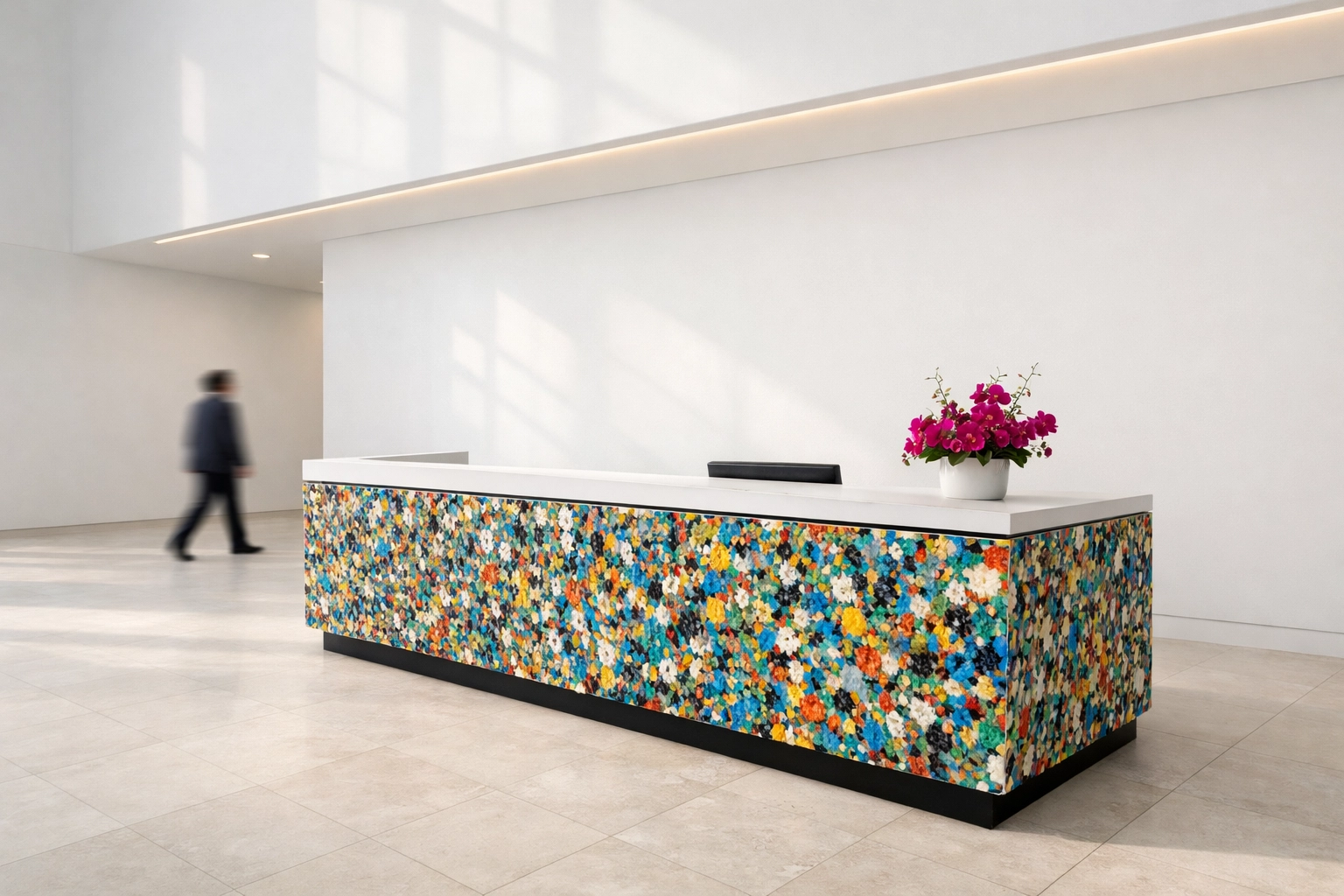
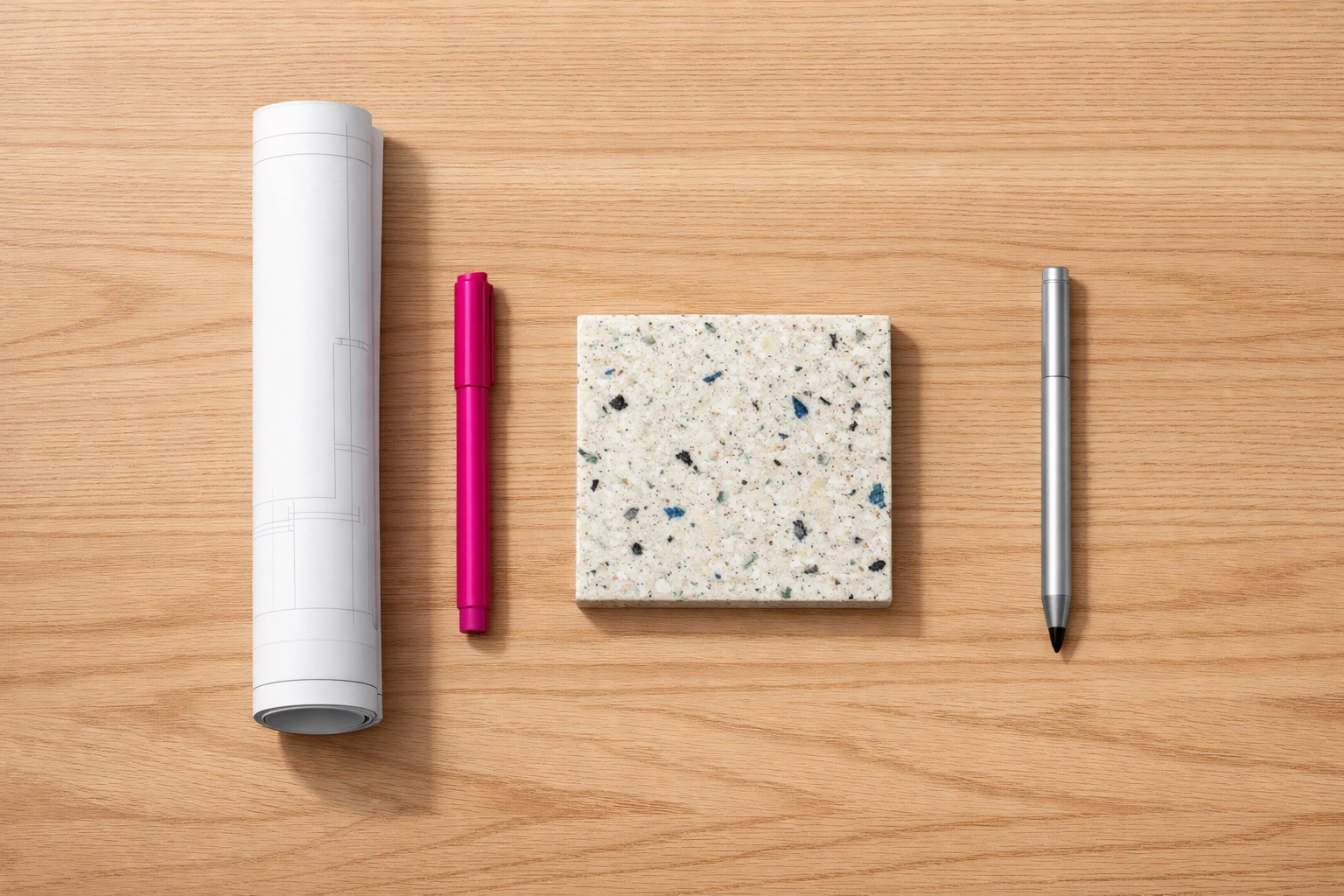
Our team works with your architects and engineers to ensure our recycled plastic construction materials meet the required specifications for fire rating, load-bearing capacity, and aesthetic finish. We can even customise colours and textures to match your brand identity.
3. Implementation and Tracking
Once the materials are on-site, we begin the tracking process. We provide the documentation your ESG team needs for real-time reporting.
4. End-of-Project Review
At the conclusion of a project (or at the end of the material's life), we coordinate the recovery process. This ensures that the loop is successfully closed, and the "waste" is prepared for its next life.
Why Local Manufacturing Matters
In a globalized world, the "greenest" choice is often the one made closest to home. By partnering with Resourceful Living, you are supporting Australian manufacturing.
Every panel we produce is a testament to what is possible when we stop viewing plastic as a problem and start seeing it as a resource. This local focus isn't just about pride; it’s about resilience. You aren't subject to the whims of international shipping delays or global supply chain volatility. You have a direct line to the people making your materials.
Final Thoughts: Moving Beyond the Bin
ESG isn't a box to be checked; it's an opportunity to innovate. The Resourceful Living ESG Partner Program offers a path for Australian businesses to lead the charge in the circular economy transition.
By choosing sustainable construction materials in Australia that come with a guaranteed future, you are protecting your project’s legacy and the environment simultaneously. You are reducing landfill costs, hitting carbon targets, and proving that high-performance infrastructure doesn't have to come at the cost of the planet.
Are you ready to close the loop on your next project? Let’s build something that lasts: and then build it again.
"The circular economy isn't just about recycling more; it's about designing out waste from the very beginning. Our ESG Partner Program provides the framework for businesses to make that transition effortlessly." : Jess Hodge, CEO of Resourceful Living
For more information on how we can support your specific ESG goals, explore our full range of products or reach out to our consultancy team today. Together, we can turn Australia’s waste into our most valuable resource.