
Are you looking for sustainable building materials in Australia?
Australia is rapidly embracing sustainable construction, and for good reason. As climate change intensifies and demand for eco-conscious development increases, builders, architects, and homeowners alike are turning to sustainable building materials to reduce carbon footprints, conserve natural resources, and future-proof their properties.
In this ultimate guide, we explore the best eco-friendly building materials available in Australia, what makes them sustainable, where to source them, and how to use them in residential and commercial construction.
Why Sustainable Building Materials Matter in Australia
Australia’s climate, biodiversity, and urban growth present unique challenges and opportunities for sustainable building. With the construction sector responsible for over 39% of global carbon emissions, there’s growing urgency to adopt materials that are renewable, energy-efficient, and low-impact.
Benefits of Sustainable Building Materials:
- Lower environmental impact
- Healthier living spaces
- Energy efficiency
- Long-term savings
- Reduce landfill contribution
- Earn points for Green Star & NABERS ratings
- Align with circular economy principles
Sustainable building materials also provide long-term savings through durability and reduced maintenance. As clients and stakeholders become increasingly focused on ESG (Environmental, Social, and Governance) goals, integrating sustainable choices into your construction projects is both a strategic and ethical decision.
Top Sustainable Building Materials Available in Australia
Here’s a breakdown of some of the most popular and widely available sustainable materials in the Australian market today:
1. Bamboo
- Why it’s sustainable: Bamboo grows rapidly (up to 91 cm per day), absorbs carbon dioxide, and regenerates without needing replanting.
- Best used for: Flooring, wall panels, cabinetry, decorative finishes.
- Where to find it: Suppliers like Bamboo Australia and House of Bamboo.
2. Recycled Timber
- Why it’s sustainable: Diverts wood waste from landfill and reduces the need for deforestation.
- Best used for: Flooring, beams, cladding, decking.
- Local tip: Reclaimed timber from demolished Queenslanders or heritage buildings has both character and eco-credibility.
3. Rammed Earth
- Why it’s sustainable: Made from locally sourced earth, low embodied energy, and incredible thermal mass.
- Best used for: Walls, feature elements in homes, passive solar buildings.
- Pro tip: Works especially well in arid Australian climates like WA and the NT.
4. Hempcrete
- Why it’s sustainable: Made from hemp hurds and lime, it’s breathable, insulating, and carbon-negative.
- Best used for: Wall construction, insulation, soundproofing.
- Suppliers: Hemp Homes Australia, Australian Hemp Masonry.
5. Recycled Steel
- Why it’s sustainable: 100% recyclable, durable, and reduces need for virgin mining.
- Best used for: Framing, roofing, structural components.
- Note: Using steel framing also deters termites — a major issue in many Australian regions.
6. Low-VOC Paints & Finishes
- Why it’s sustainable: Reduce off-gassing of harmful chemicals, improving indoor air quality.
- Recommended brands: Porter’s Paints, Ecolour, GreenPainters certified products.
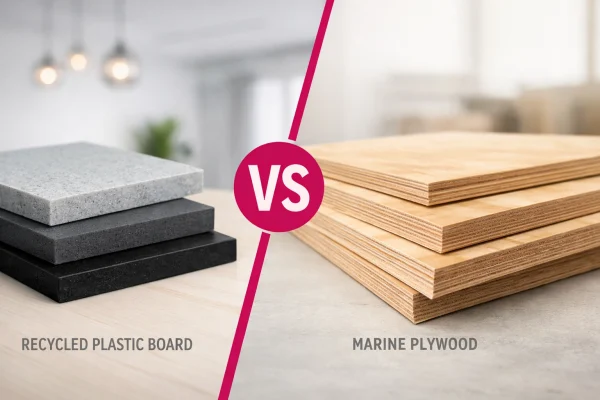
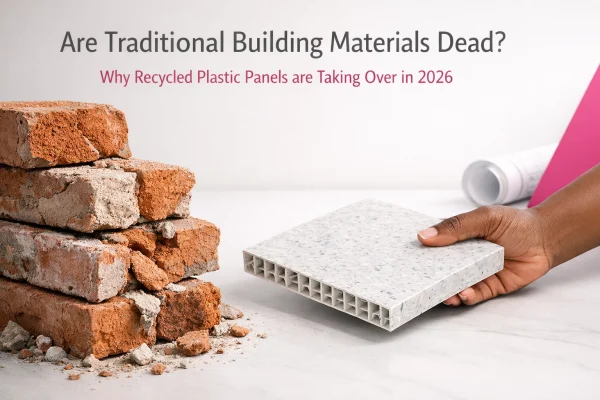
7. Recycled Plastic
- Why it’s sustainable: Transforms plastic waste into high-performance building products, reducing landfill and pollution.
Best used for: Cladding, decking, outdoor furniture, fencing, insulation panels.
Where to find it: Contact Us!
Local insight: In a recent community project the plastic was made into raised garden beds.
Want to understand more, join us for a FREE Online Recycling Lunch and Learn
- Australia-Specific Considerations for Eco-Friendly Building
- Climate Zones
- Australia has eight climate zones, from tropical Darwin to temperate Melbourne. Choose materials suited to your local environment to maximise energy efficiency.
- For instance:
- In hot climates (Brisbane, Darwin), opt for high thermal mass materials like rammed earth or insulated concrete.
- In cold climates (Canberra, Tasmania), consider materials with high insulation properties like hempcrete.
- Bushfire Resilience
- With increasing bushfire risks, materials must meet BAL (Bushfire Attack Level) standards.
- Bushfire-safe sustainable materials include:
- Fire-resistant timber species (e.g., Spotted Gum)
- Rammed earth walls
- Non-combustible steel or Colorbond roofing
- Indigenous Knowledge
- Traditional Aboriginal building techniques offer sustainable insights. Using natural cooling methods, earth integration, and local resources, First Nations architecture can inspire more culturally respectful and environmentally sound designs.
- Where to Source Sustainable Materials in Australia
- EcoSpecifier Australia
- Green Building Supply
- The Green House (Melbourne)
- Recycled Building Centre (Sydney)
- Check for certifications like:
- GECA (Good Environmental Choice Australia)
- FSC (Forest Stewardship Council)
- Global GreenTag
- Integrating Sustainability Into Your Building Process
- Step 1: Design With Sustainability in Mind
- Involve your architect or designer early. Focus on passive solar design, cross-ventilation, and material efficiency.
- Step 2: Source Locally
- Reduce transport emissions by choosing materials produced within your state or territory.
- Step 3: Minimise Waste
- Plan precise cuts, recycle offcuts, and donate or reuse surplus materials.
- Step 4: Certify Your Build
- Strive for certification through:
- Green Star (Green Building Council of Australia)
- NatHERS (Nationwide House Energy Rating Scheme)
- Living Building Challenge
- From a recent eco-home project in Byron Bay, I learned that collaborating with sustainability consultants from day one drastically reduced waste and streamlined council approvals.
- Common Myths About Sustainable Building Materials
- Myth 1: They’re too expensive
- Reality: While some materials may have higher upfront costs, they usually offer long-term savings through durability and energy efficiency.
- Myth 2: They’re hard to find
- Reality: Most major cities in Australia now have dedicated eco-suppliers and sustainable product ranges at Bunnings, Mitre 10, and independent stores.
- Myth 3: They don’t look good
- Reality: Modern sustainable materials come in a wide range of textures, colours, and finishes that can complement any aesthetic.
- Future Trends in Sustainable Construction in Australia
- 3D-Printed Earth Homes: Emerging in remote areas.
- Green Roofs & Vertical Gardens: Especially in urban centres like Sydney and Melbourne.
- Mass Timber Construction: CLT (Cross-Laminated Timber) gaining popularity in mid-rise developments.
- Smart Material Tracking: Blockchain and AI to monitor carbon footprints.
- Building a Better Future
- Sustainable building materials are more than a trend; they’re a necessity for Australia’s future. Whether you’re renovating a cottage in the Blue Mountains, building a passive home in Fremantle, or designing a new apartment block in Brisbane, integrating eco-friendly materials can help reduce emissions, enhance comfort, and add value.
- Start small. Source smart. Think long-term.
- Got questions about building sustainably in your area?
- Get in touch. Let’s build a greener Australia together.