Let’s be honest: in the world of commercial fit-outs, moisture is the ultimate "silent killer." Whether it’s a high-traffic office kitchen, a sleek end-of-trip facility, or an outdoor hospitality space, water always finds a way. For decades, the industry default has been timber: usually plywood or MDF. But as we move into 2026, the cracks (literally) are starting to show.
If you’re managing a high-moisture commercial fit-out, choosing the wrong material isn't just a design flaw; it’s a budget-bleeding liability. Today, we’re putting the traditional stuff under the microscope in a recycled plastic vs timber comparison to see which material actually survives the splash zone.
The Moisture Trap: Why Timber Fails When Things Get Wet
Timber is, by its very nature, a sponge. No matter how many "marine-grade" labels or expensive sealants you slap on it, the cellular structure of wood is designed to move water. In a controlled, dry environment, that’s fine. In a commercial bathroom or a busy kitchen? It’s a ticking time bomb.
The Lifecycle of Rot
When timber is exposed to high humidity or direct splashes, it undergoes a predictable (and expensive) cycle:
- Absorption: Moisture enters through edges or screw holes.
- Swelling: The fibres expand, causing panels to warp and kick out from the wall.
- Delamination: The glues holding the layers together fail.
- Biological Growth: Mould and mildew move in, creating a health hazard.
This isn't just an aesthetic issue. It’s a structural failure that forces you back into the maintenance cycle every few years. If you've ever had to replace a "rotting" vanity in a public space, you know exactly how much that "cheap" timber actually costs in the long run.
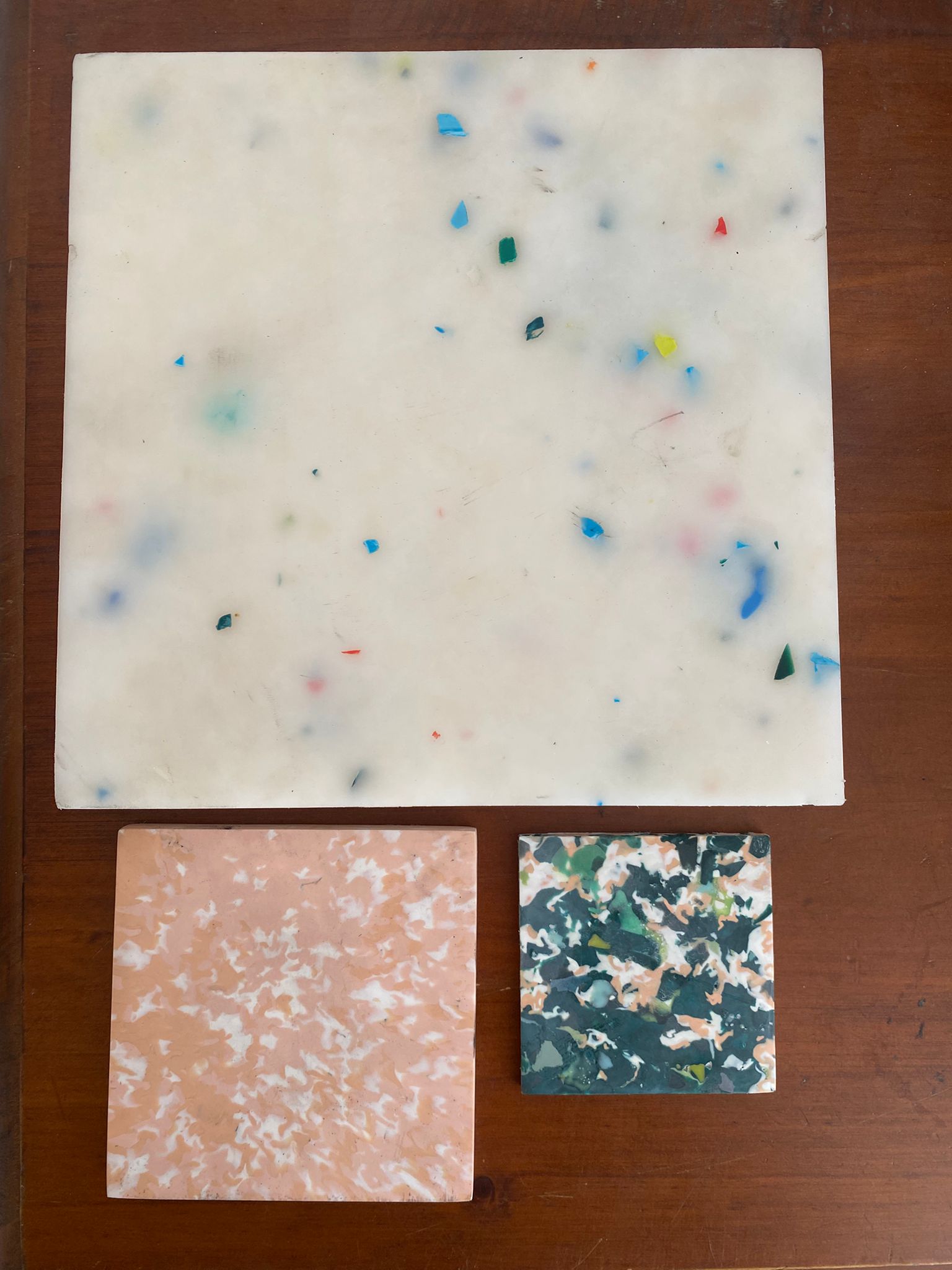
Enter the Plywood Killer: The 100% Recycled Plastic Panel
At Resourceful Living, we’ve developed a material that treats water with complete indifference. Our 100% recycled plastic panels: made right here in Australia: are fundamentally waterproof. They don't just "resist" moisture; they ignore it.
The "5x Longer" Rule
When we talk about ROI, we often cite the "5x rule." In a high-moisture commercial fit-out, a high-quality recycled plastic panel will comfortably outlast traditional plywood by at least five times. While a timber benchtop might start looking "tired" after 24 months of commercial scrubbing and spills, our panels look exactly the same as the day they were installed.
"Maintenance shouldn't be a recurring line item in your budget. If you're replacing timber every three years, you're not just wasting money: you're wasting time. Choosing a moisture-proof alternative is the only logical move for high-traffic zones."
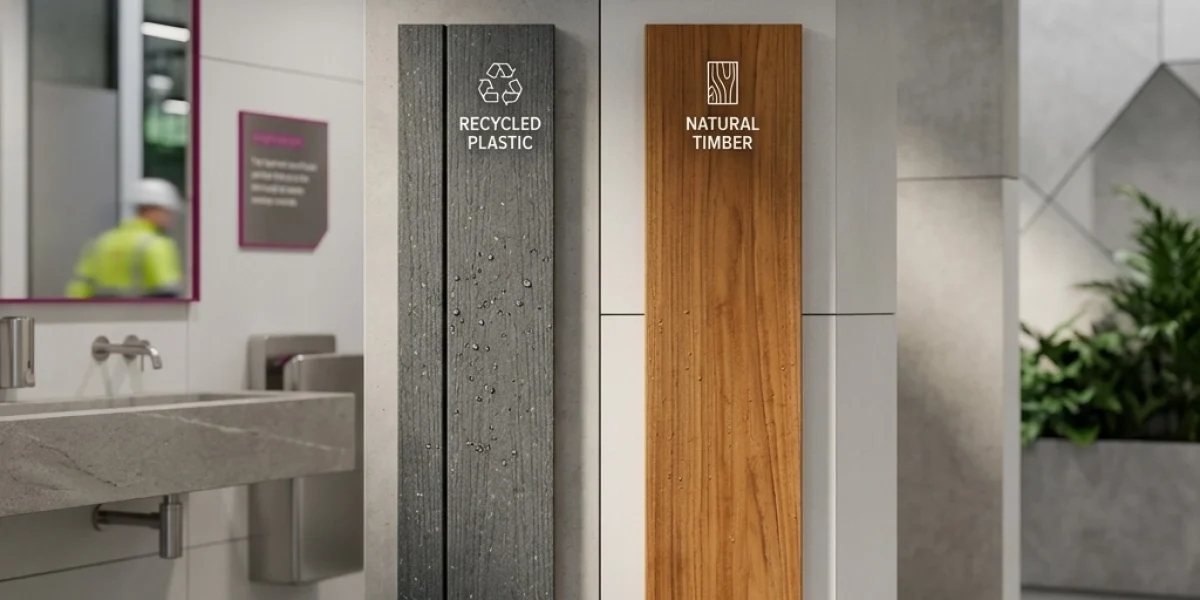
Side-by-Side: Recycled Plastic vs Timber Comparison
To make your next procurement meeting easier, here is the data broken down. We aren't just talking about "being green"; we’re talking about engineering superiority.
| Feature | Timber / Marine Plywood | Resourceful Living Recycled Plastic |
|---|---|---|
| Water Absorption | High (leads to warping/rot) | Zero (completely waterproof) |
| Maintenance | Regular sanding, sealing, painting | None (wipe clean only) |
| Mould Resistance | Poor (organic material feeds mould) | Excellent (non-porous, inert) |
| Chemical Resistance | Low (cleaners can strip finish) | High (stands up to commercial bleach) |
| Lifespan in Wet Areas | 3–7 years | 25+ years |
| Environmental Impact | Logging / Formaldehyde glues | 100% Post-consumer waste / Circular |
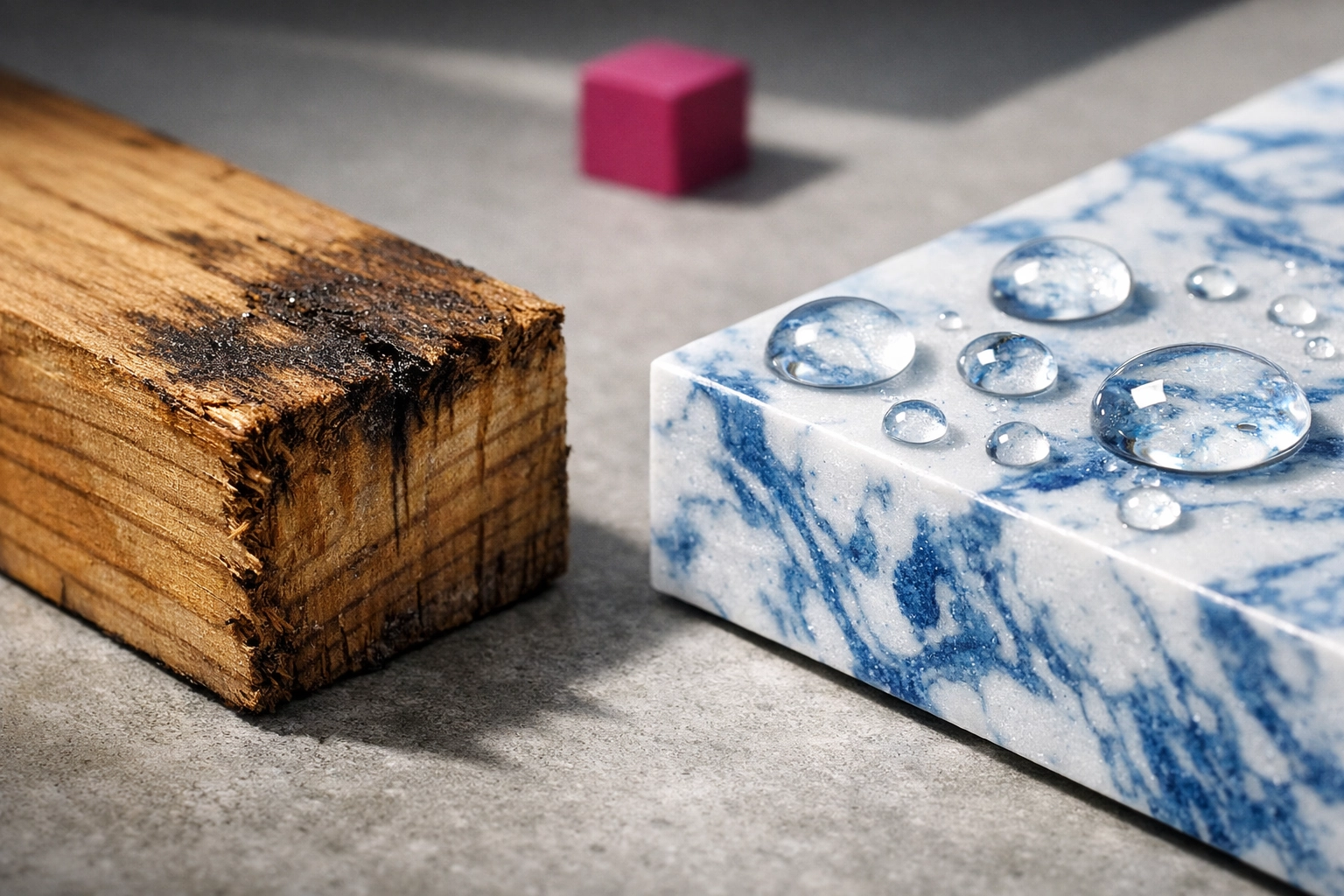
Suggested: A technical graphic or high-res close-up comparing a water-damaged timber edge vs. a crisp, waterproof recycled plastic edge.
Why Fit-Out Specialists are Making the Switch
It’s not just about durability; it’s about the "Lazy Tax." When you install timber in a wet area, you are signing up for a lifetime of work. You have to ensure the cleaners use the right pH-neutral soap, you have to check the seals every six months, and you have to hope nobody leaves a wet rag on the surface overnight.
With our panels, you can be lazy.
- Commercial Kitchens: Splatter them with grease, hose them down, and walk away.
- Public Bathrooms: They stand up to the humidity of showers and the aggression of industrial cleaning chemicals without flinching.
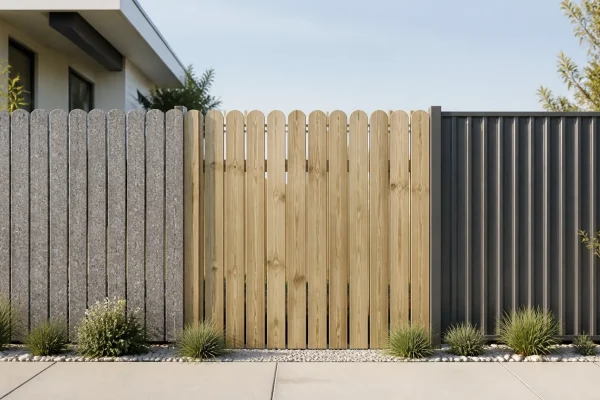
- Outdoor Amenities: Unlike timber, they won't grey out or splinter under the Australian sun.
For more on how councils are already ditching timber for these reasons, check out our case study on replacing rotting timber with maintenance-free plastic.
The Hidden Advantage: Aesthetics and Branding
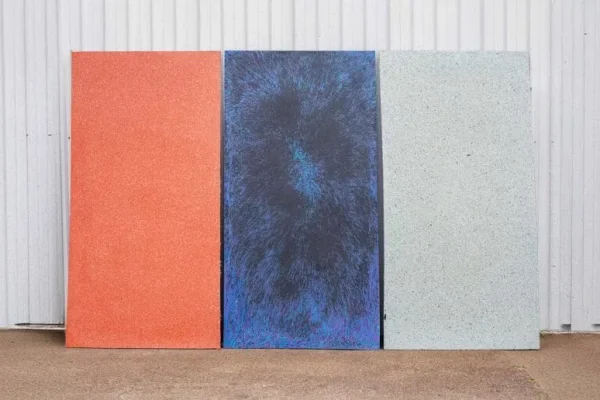
One of the biggest myths about recycled plastic is that it has to look like a "trash can." That couldn't be further from the truth. Our manufacturing process allows for incredible bespoke patterns: from the clean, modern look of our 'N70 White Confetti' to deep, marbled navy tones.
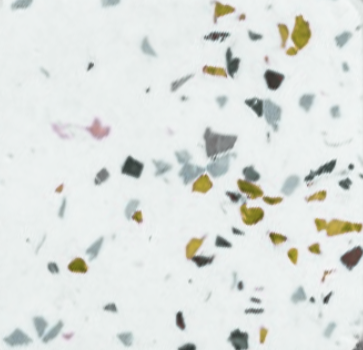
In a high-moisture commercial fit-out, you can use these panels for:
- Vanity units and splashbacks.
- Wall cladding in high-traffic corridors.
- Toilet partitions that never swell at the base.
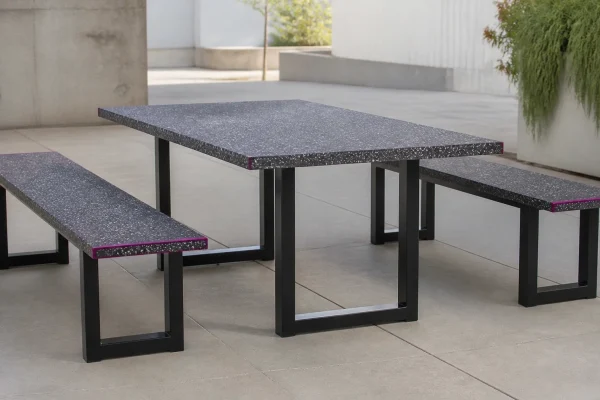
- Outdoor seating and table tops.
Because the colour goes all the way through the material, scratches don't reveal a different colour underneath (unlike laminated MDF). If it gets dinged, you can simply sand it back. It’s a "forever" material.
Meeting the 2026 ESG Mandates
If you're working on a Tier 1 or Tier 2 construction project, you know that "sustainability" is no longer a buzzword: it’s a contractual requirement. Government ESG targets are getting stricter, and embodied carbon reporting is becoming standard.
By choosing recycled plastic over timber, you aren't just solving a moisture problem; you’re hitting your waste diversion targets. Every sheet we produce diverts kilograms of soft plastic and HDPE from Australian landfills. You can see how this fits into the bigger picture in our guide to embodied carbon reporting in Australia.
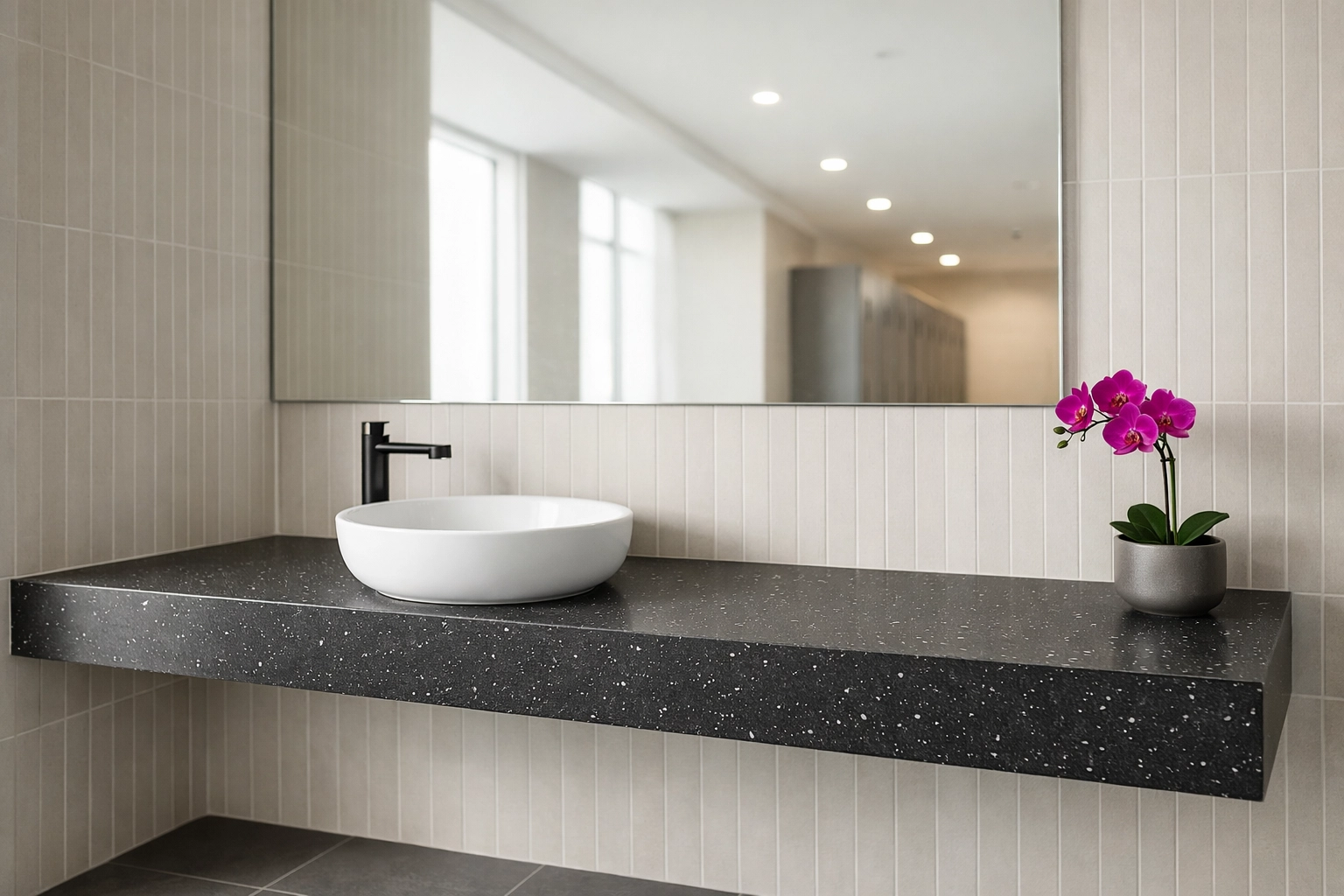
Suggested: An image showing a sleek, modern commercial bathroom or kitchen fit-out using recycled plastic panels to prove the aesthetic value.
Decision Time: Timber or Recycled Plastic?
If your project is a bedroom or a dry office library, timber is a beautiful choice. We love wood! But if you are designing a space that will see water, steam, or high-pressure cleaning, the recycled plastic vs timber comparison has a clear winner.
Why choose Resourceful Living panels?
- Australian Made: Support local manufacturing and reduce your shipping emissions.
- Traceable Waste: We know exactly where our plastic comes from.
- Take-Back Program: When the fit-out eventually changes (decades from now), we’ll take the panels back and recycle them again. That is true circularity.
You can learn more about how we turn waste into these high-performance sheets by checking out the lifecycle of a recycled plastic panel.
Final Thought for Builders and Project Managers
The next time you’re looking at a specification for a high-moisture commercial fit-out, ask yourself: "Do I want to be the person who has to explain why the bathroom vanities are rotting in 2029?"
Switching to recycled plastic is a "set and forget" move. It’s smarter for the planet, better for the client’s long-term budget, and a whole lot easier for your maintenance team.
Ready to see the material in person? Order a sample pack today and feel the difference. Let’s build something that actually lasts.