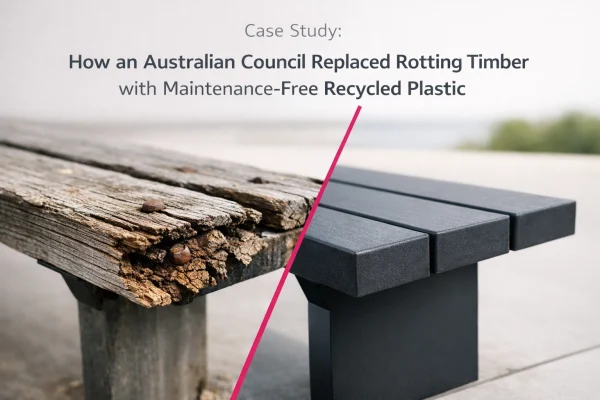
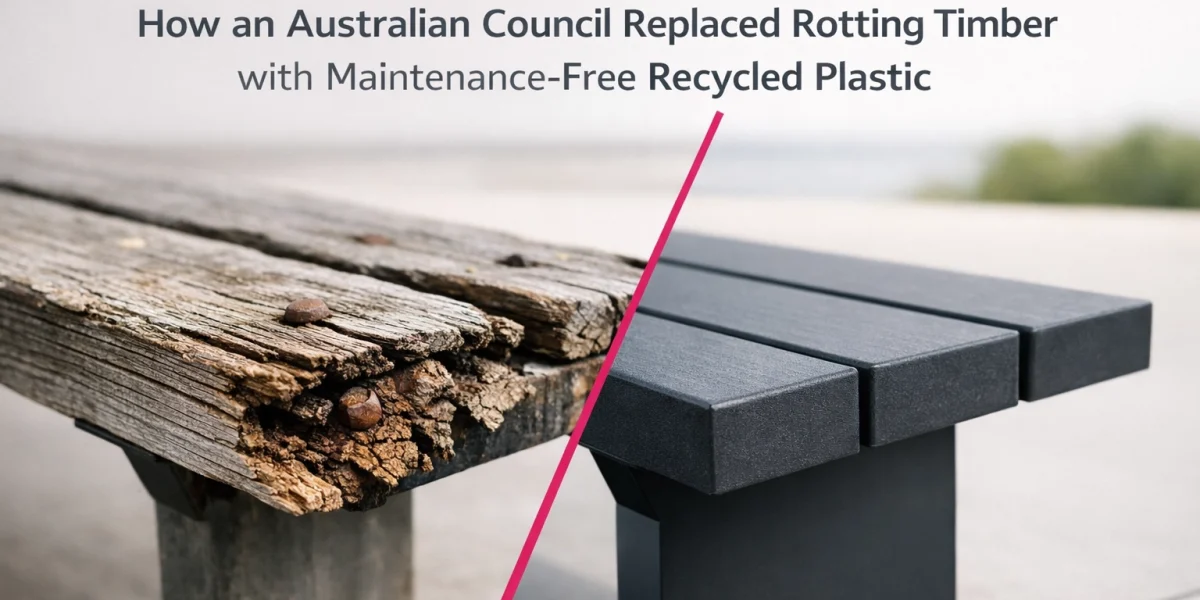
For Australian local governments, managing public assets is a constant battle against the elements. From the salt spray of coastal boardwalks to the blistering UV rays of the outback, traditional materials like timber often struggle to keep up.
Most councils find themselves caught in a cycle of repair, sand, oil, and replace. While timber has long been the "go-to" for its aesthetic appeal, the reality is that it begins to degrade the moment it is installed. Within a few short years, safety hazards like splintering and rot emerge, leading to increased liability and mounting maintenance costs.
One progressive Australian council recently decided to break this cycle. Facing a complete overhaul of their coastal infrastructure, they turned to Resourceful Living to transition from traditional timber to maintenance-free recycled plastic.
This transition didn't just solve their maintenance headache: it also diverted tonnes of soft plastic from Australian landfills, directly contributing to their Circular Economy and ESG targets.
The Problem: The "Timber Trap" in Public Infrastructure
The council in question managed over 15 kilometres of coastal walkways and dozens of public parks. Their primary issue was a high-traffic boardwalk that had become a liability.
The existing timber structure was suffering from:
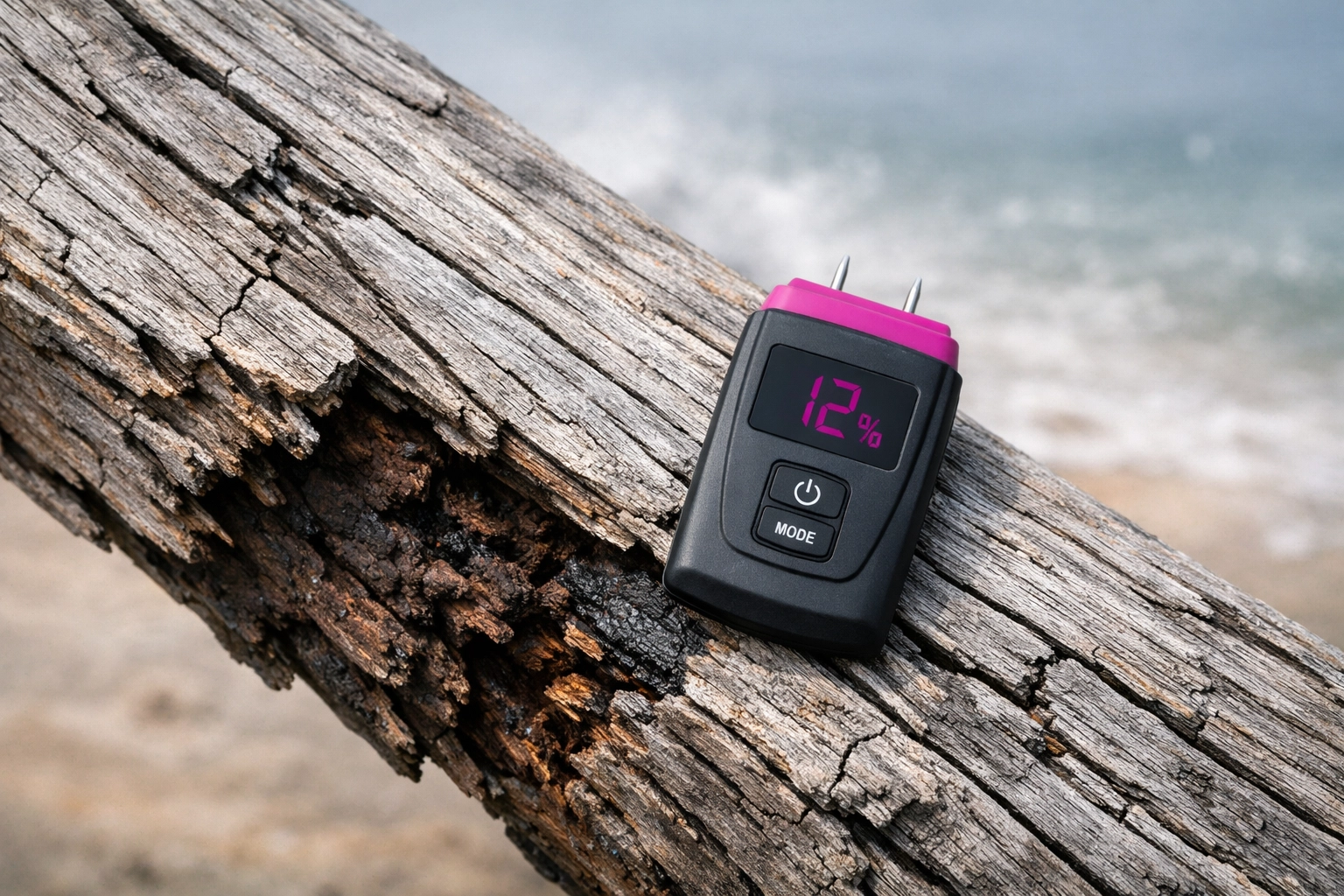
- Structural Rot: The humid, salt-heavy environment accelerated the breakdown of organic fibres.
- High Maintenance Costs: The council was spending thousands of dollars annually on chemical treatments and labour just to keep the wood from splintering.
- Safety Risks: Loose boards and protruding splinters were a constant source of public complaints and potential insurance claims.
- Sustainability Gap: Replacing timber with more timber felt like a temporary fix that didn't align with their commitment to reducing their carbon footprint.
They needed a solution that was durable, cost-effective over its lifecycle, and 100% sustainable.
The Solution: 100% Recycled Plastic Panels
After evaluating several sustainable construction materials in Australia, the council chose Resourceful Living’s 100% recycled plastic panels.
Unlike wood-plastic composites (WPC) that often contain a mix of wood flour and plastic, our panels are engineered from 100% post-consumer Australian plastic waste. This distinction is critical. Because there is zero organic matter in our material, it is physically impossible for the boards to rot, grow mould, or be eaten by termites.
Why Recycled Plastic?
For this council, the decision came down to three primary factors:
- Maintenance-Free Performance: No sanding, no oiling, and no painting. Ever.
- UV Stability: Specifically engineered for the harsh Australian sun, ensuring the panels don’t become brittle or lose structural integrity.
- Local Impact: Using materials made from Australian waste meant the council could demonstrate a "closed-loop" system to their ratepayers.
You can read more about how this compares to other options in our guide on recycled plastic vs. timber vs. steel cost and lifespan.
The Project: From Landfill to Landmarks
The project involved replacing 400 square metres of rotting timber decking and several sets of recycled plastic furniture within the adjacent parkland.
1. Procurement and Circularity
The council utilised our circular procurement model. By choosing Resourceful Living, they weren't just buying "off-the-shelf" products; they were participating in a system that kept Australian plastic out of the ocean. Each square metre of the new boardwalk diverted approximately 30kg of plastic waste from landfill.
2. Engineering and Installation
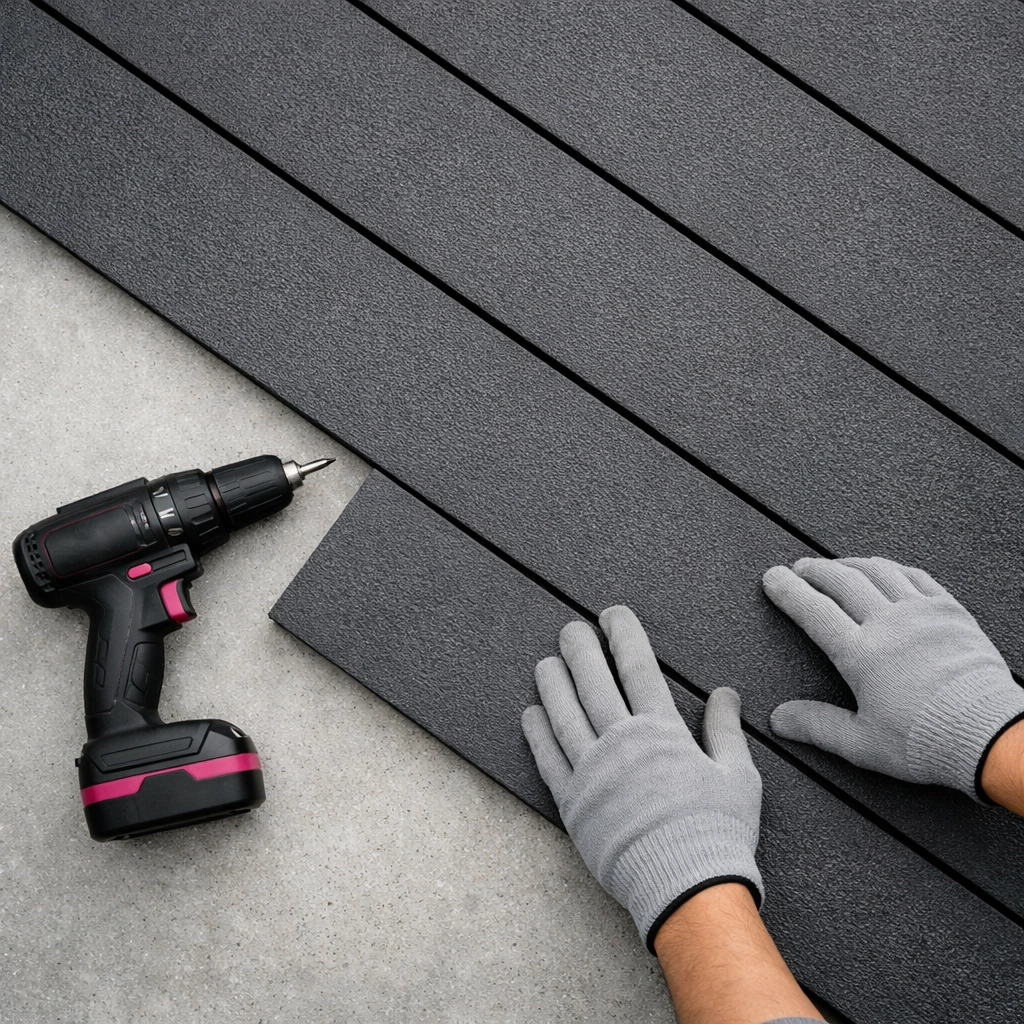
One of the council's concerns was whether the recycled plastic could be handled with standard tools. Our panels are designed to be workable. The installation team used standard woodworking tools to cut and fix the panels to the existing sub-structure.
"The ease of installation was a surprise for our contractors. They didn't need specialised equipment, yet they were installing a material that we know will outlast them." : Council Project Manager.
3. Immediate Results
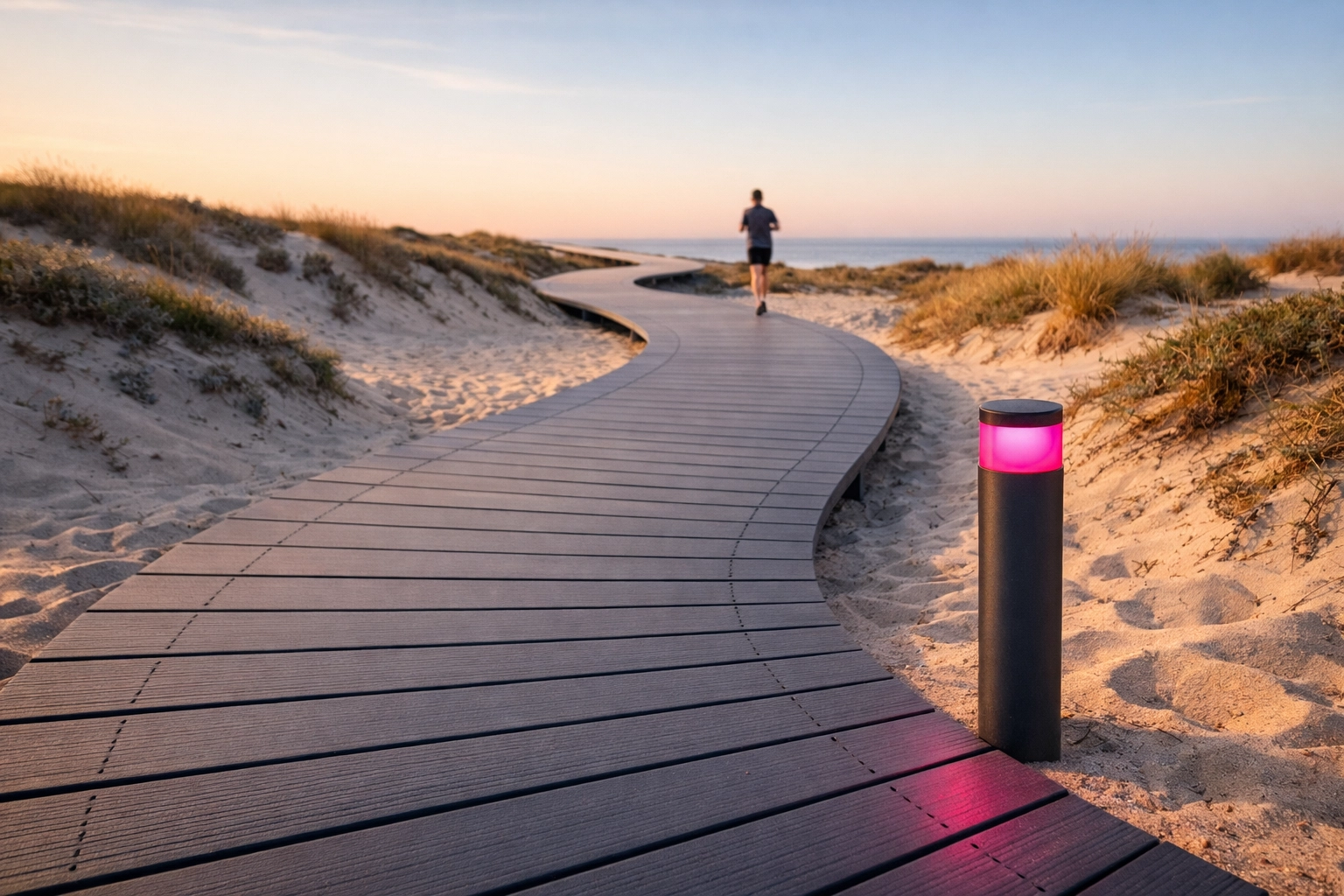
The transformation was instant. The new boardwalk offered a sleek, modern aesthetic that mimicked the organic feel of the coast without the rustic decay of old timber. More importantly, the council’s maintenance schedule for that zone was wiped clean for the next 20+ years.
Quantifying the Impact: Data That Matters
For the council’s ESG reporting, the data was compelling. By opting for recycled plastic building materials, they achieved the following:
- Waste Diversion: Over 12,000kg of Australian soft plastic diverted from landfill.
- Maintenance Savings: Estimated $85,000 saved in labour and materials over the 20-year lifespan of the product.
- Carbon Reduction: Significant reduction in embodied carbon compared to the harvesting, transport, and chemical treatment of hardwood timber.
For a deeper look at the metrics, we recommend reviewing our analysis on the life cycle environmental impact of recycled plastic panels.
Why This Matters for All Australian Councils
This case study isn't an isolated success. It represents a fundamental shift in how we build our shared spaces.
Resistance to the Elements
Australia’s climate is brutal. Timber is prone to "checking" (cracking) under high heat, which then allows moisture to seep in, leading to internal rot. Recycled plastic is inert. It doesn't absorb water, which makes it the ideal material for coastal environments, flood-prone areas, and high-humidity regions.
Enhancing Public Safety
Splinters and rot are the leading causes of injury on public boardwalks. By using a material that remains smooth and structurally sound regardless of age, councils significantly reduce their public liability risk.
Meeting Sustainability Targets
Most councils now have a "Zero Waste" or "Circular Economy" strategy. However, finding tangible ways to implement these strategies can be difficult. Procurement is the most powerful tool a council has. By specifying recycled plastic furniture and building materials, councils create the demand that keeps Australian recycling facilities operational.
A Checklist for Your Next Council Project
If you are looking to replace aging timber infrastructure, consider this checklist to ensure you’re choosing the right material:
- ✅ Is it 100% Australian waste? Many products are imported or use only a small percentage of recycled content. Ensure you are supporting the local circular economy.
- ✅ Is it maintenance-free? Ask for a 20-year maintenance cost projection. If it requires oiling or staining, it isn’t maintenance-free.
- ✅ Is it UV-stabilised? Ensure the material is tested for Australian conditions, not just European or American standards.
- ✅ Does it offer a closed-loop option? Partner with an ESG partner program that can take the material back at the end of its life (even if that is 50 years away).
The Future of Australian Infrastructure
The success of this council's project has paved the way for more ambitious applications. We are now seeing these materials used in mining rehabilitation and even for heavy-duty wheel stops on industrial sites.
The transition from timber to recycled plastic is no longer just a "green" choice: it’s the only logical choice for any organisation looking to reduce costs, improve safety, and build for the future.
Get Started Today
If you’re managing a precinct and aren’t sure where your waste is going or how much you could save by switching materials, start with a simple waste audit. Understanding your waste stream is the first step toward becoming a leader in the circular economy.
Ready to see how Resourceful Living can transform your next project? Explore our range of recycled plastic products and join the revolution in sustainable Australian construction.