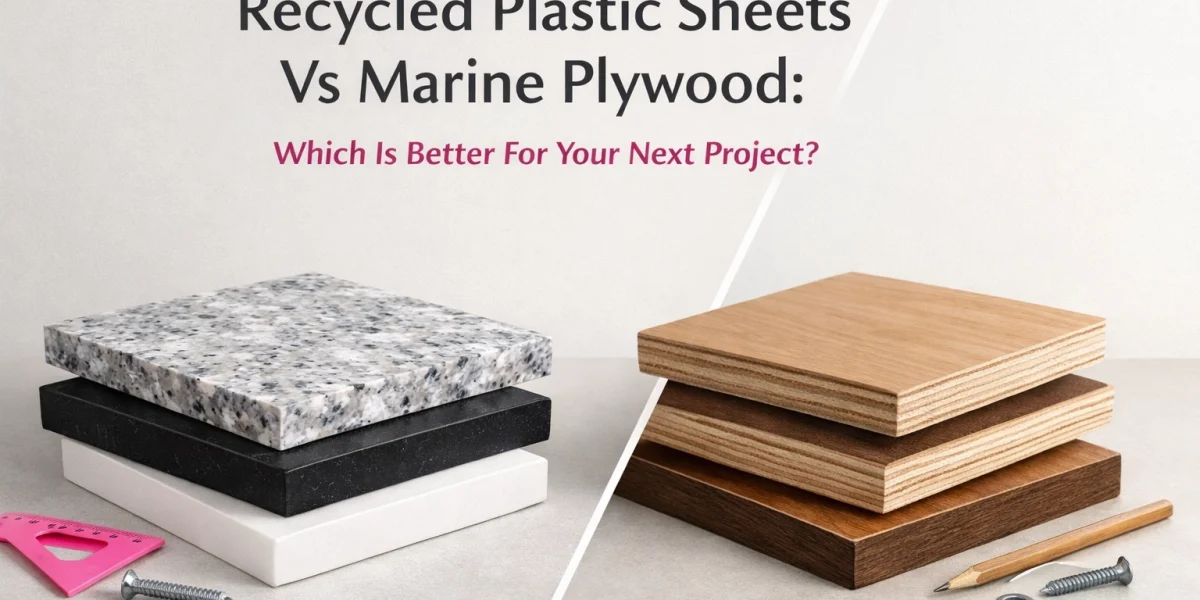
When you’re spec’ing a project that’s going to live outdoors, in a wash-down bay, or on a boat, the “default” choice has traditionally been marine plywood. It’s the old faithful of the construction world. But as we move toward a circular economy and look for materials that actually last longer than a few seasons, a new heavyweight has entered the ring: 100% recycled plastic sheets.
At Resourceful Living, we spend our days turning Australian plastic waste into high-performance panels. We get asked all the time: “Can this actually replace my marine ply?”
The short answer? Yes: and in most high-moisture environments, it’ll actually outperform it.
Let’s dive into the technical details, the maintenance requirements, and the long-term ROI of both materials so you can make an informed decision for your next build.
The Traditional Choice: What is Marine Plywood?
Marine plywood is a high-quality structural plywood manufactured with waterproof (WBP) glue. It’s designed to resist delamination and fungal attack. Unlike standard ply, it has no core gaps, which prevents water from getting trapped inside the board.
However, even the best marine ply is still wood. It relies on chemical treatments and high-grade resins to stay intact. Over time, those resins can break down, and if the protective sealant on the outside is nicked or scratched, moisture finds a way in. Once moisture is in, the clock starts ticking on rot and delamination.
The New Standard: 100% Recycled HDPE Plastic Sheets
Recycled plastic sheets (specifically High-Density Polyethylene or HDPE) are engineered through a process of shredding, washing, and heat-pressing 100% Australian post-consumer waste.
Unlike plywood, these sheets aren’t “treated” to be water-resistant; they are intrinsically waterproof. There are no layers to peel apart, no organic fibres to rot, and no need for toxic chemical preservatives.
The Head-to-Head Comparison
1. Water Resistance and Delamination
This is the biggest pain point for anyone working in marine or high-humidity environments.
- Marine Plywood: While the glue is waterproof, the wood fibres are not. If the edge sealing fails, the wood absorbs water, swells, and eventually the layers begin to separate (delaminate).
- Recycled Plastic: Our HDPE panels are non-porous. They can be fully submerged in salt water or fresh water for decades without changing shape, increasing in weight, or losing structural integrity. They will never rot.
2. Durability and “The Reuse Cycle”
If you are using these materials for formwork, temporary hoarding, or reusable fit-outs, the lifecycle cost is where the real difference lies.
- Marine Plywood: Typically offers 8–12 reuse cycles before the edges soften or the surface becomes too damaged for a clean finish.
- Recycled Plastic: Research and field tests show that recycled plastic sheets can be reused 50+ times. That’s a 5x increase in reusability. For a commercial operation, this shift can drastically lower your long-term material costs.
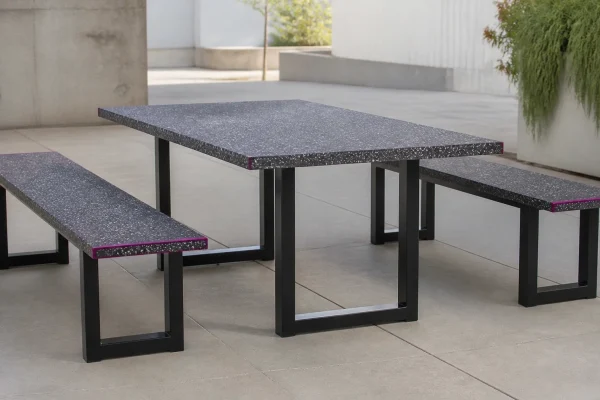
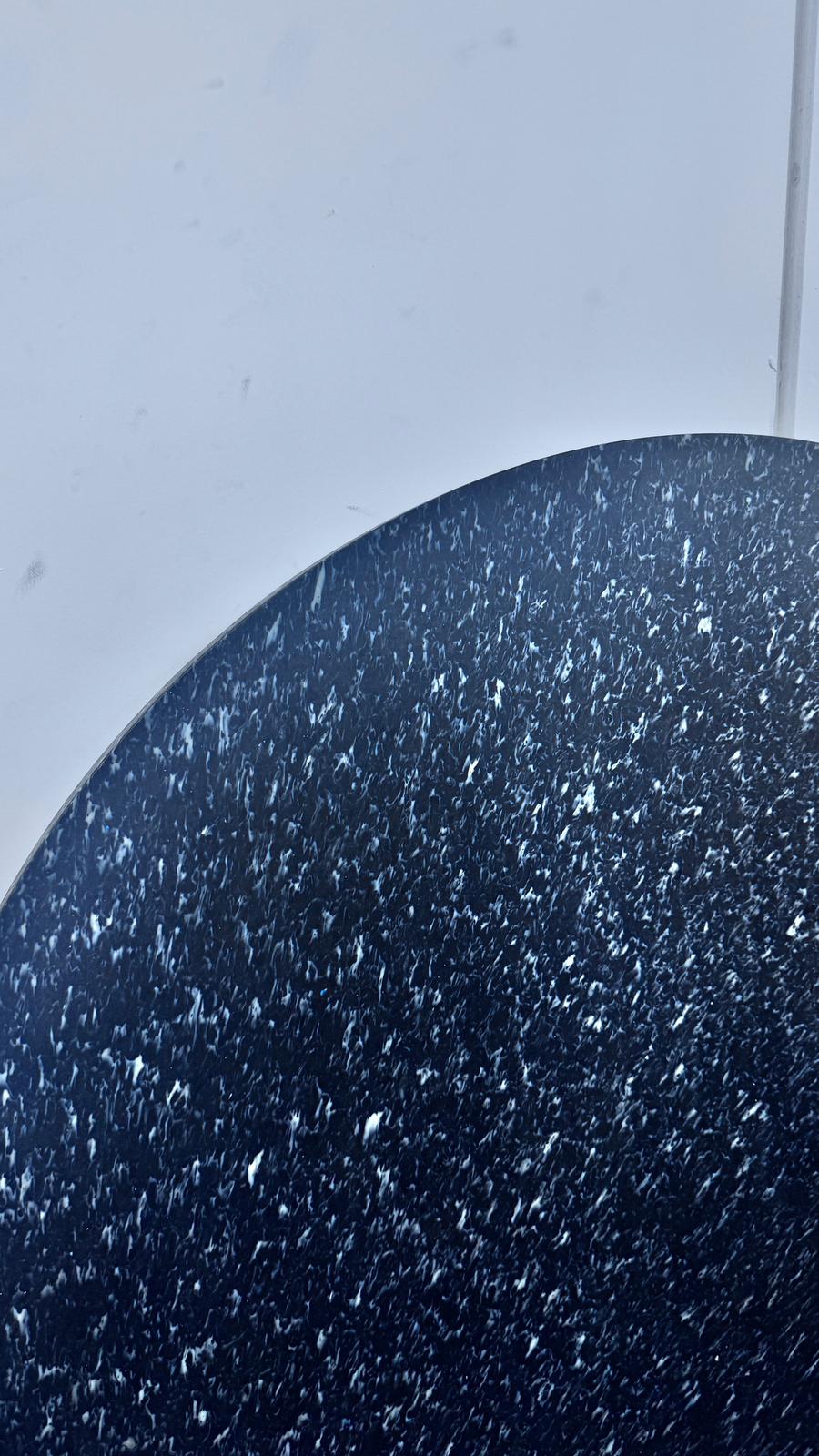
“I’m obsessed with the ‘alchemy’ of waste: the moment a pile of discarded milk crates and shampoo bottles is reborn as a sleek, marble-textured tabletop that’s built to outlast traditional timber.” : Jess Hodge, CEO of Resourceful Living.
3. Maintenance and Upkeep
How much time do you want to spend sanding and painting?
- Marine Plywood: Requires regular inspection. You need to ensure the paint or varnish coating remains intact. If it cracks, you have to sand it back and reseal it to prevent moisture ingress.
- Recycled Plastic: Virtually zero maintenance. The colour is consistent throughout the entire board (it’s not a veneer), so scratches don’t reveal a different colour underneath. You can clean it with a pressure washer or harsh chemicals without worrying about damaging the finish.
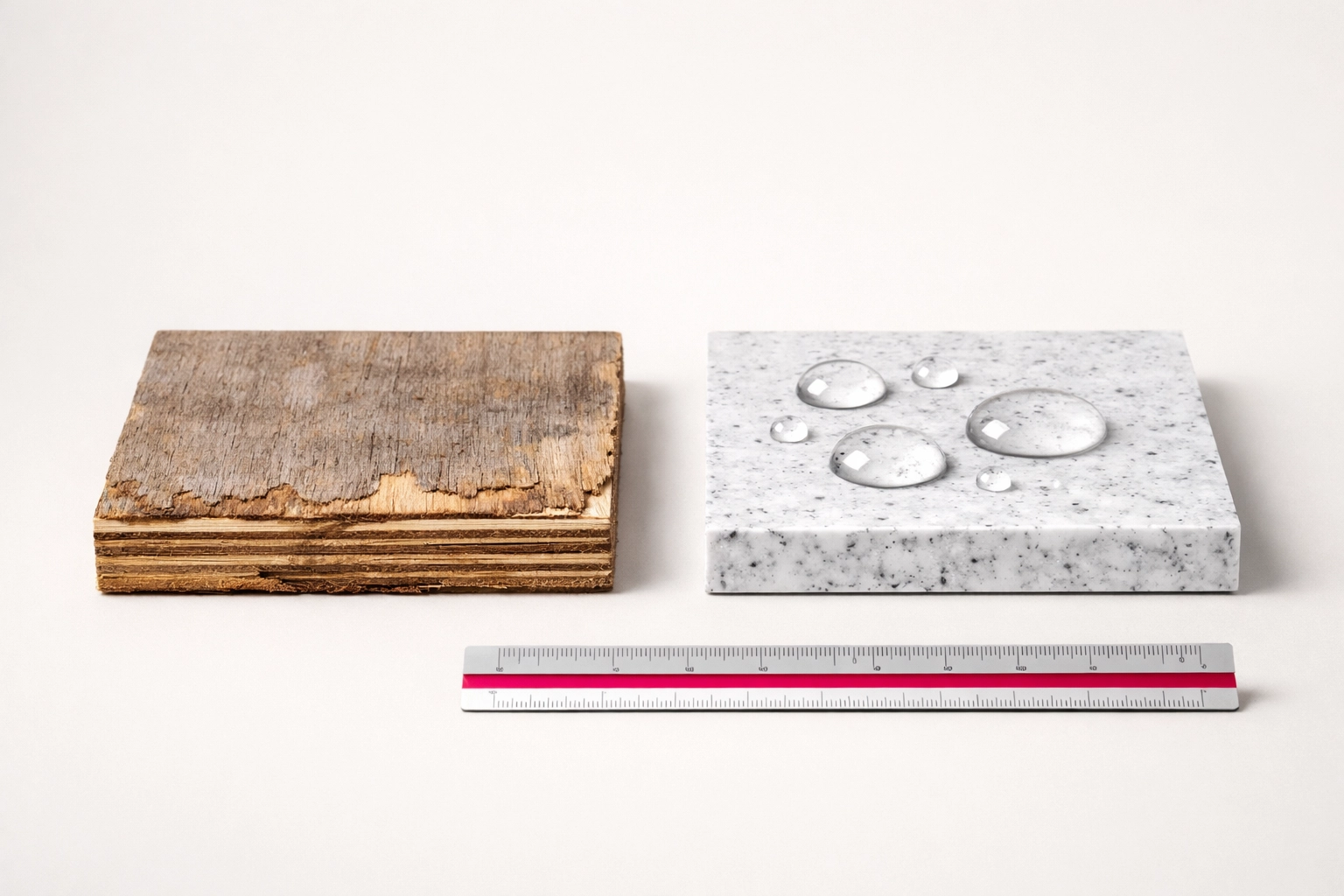
Suggested: A technical comparison table showing Weight, Water Absorption %, Rot Resistance, and Life Expectancy side-by-side.
The Environmental Impact: Choosing Local
When we talk about sustainability, we have to look at the total “cradle-to-cradle” journey.
Most marine plywood used in Australia is imported, often involving long supply chains and wood sourced from offshore forests. Additionally, the glues used in plywood can off-gas formaldehyde and other Volatile Organic Compounds (VOCs).
Resourceful Living sheets are different. We use 100% Australian plastic waste, processed right here in Kurri Kurri.
- Saving Trees: For every 72 sheets of recycled plastic that replaces plywood, you effectively save one mature tree.
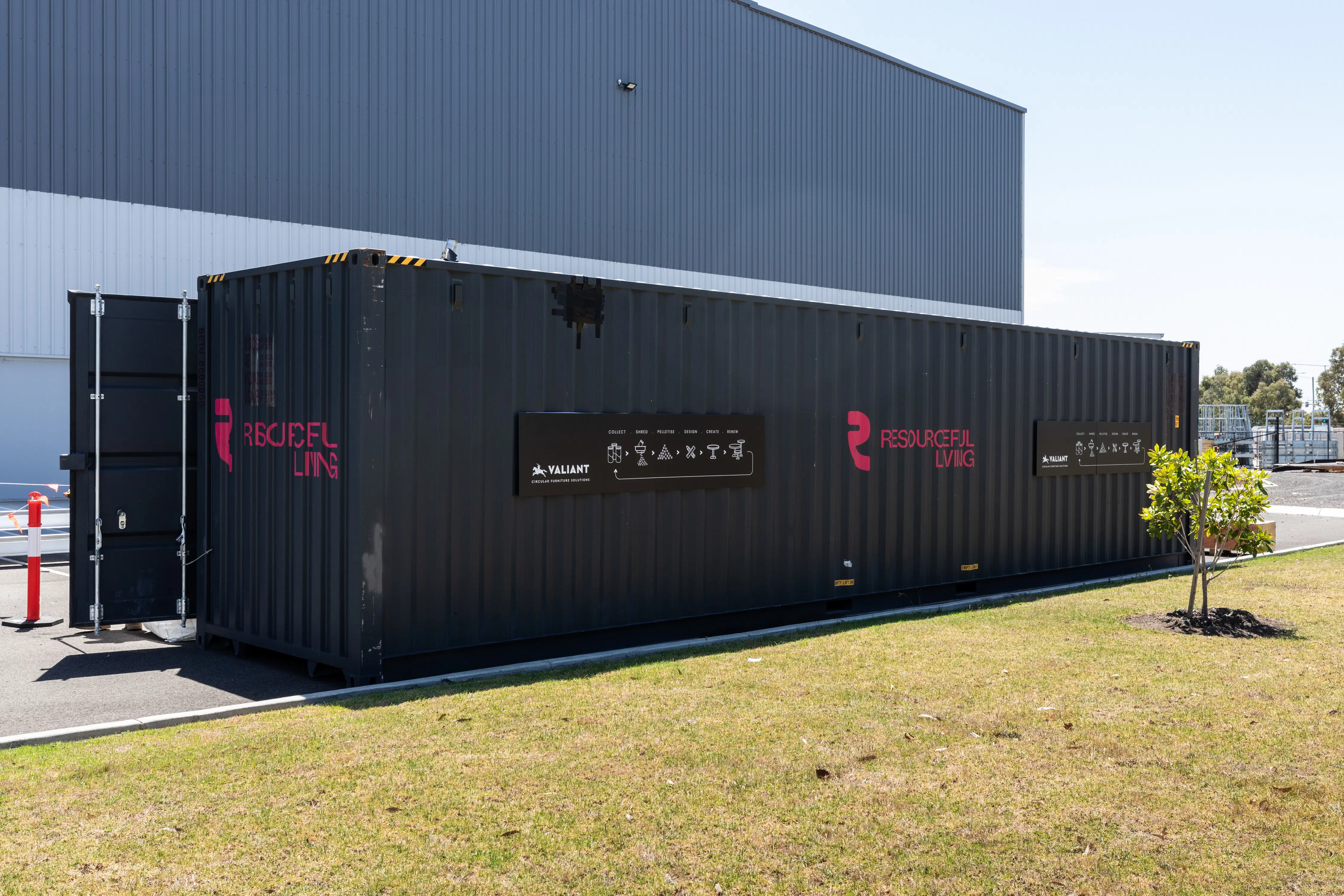
- Zero Waste: Our products are part of a true circular loop. If a panel reaches the end of its life, it doesn’t go to a landfill. It comes back to us through our take-back programme to be shredded and turned into a brand-new sheet.
For those working on government projects, using these materials is a massive win for social procurement and meeting new circular construction reforms.
Working with the Material: Tools and Fabrication
A common myth is that you need specialised “plastic tools” to work with HDPE. This isn’t the case. You can treat our recycled plastic sheets very similarly to timber:
- Cutting: Use standard circular saws or table saws with fine-tooth carbide blades.
- Drilling: Standard high-speed steel (HSS) drill bits work perfectly.
- Routing: HDPE is a dream to route. It leaves a clean, smooth edge that doesn’t require the intense sanding plywood does.
- Fixing: Stainless steel screws are recommended for marine environments. Just remember that plastic expands and contracts slightly more than wood with temperature changes, so using oversized pilot holes is a pro tip for long outdoor runs.
If you’re a specifier looking for technical data on how these materials perform in industrial settings, check out our guide for Tier 1 councils and specifiers.
Cost Analysis: Upfront vs. Lifecycle
Let’s be real: the upfront cost of a 100% recycled plastic sheet is generally higher than a sheet of marine ply. However, looking at the sticker price alone is a mistake for any serious project manager.
- Plywood Cost: Lower initial purchase price + cost of sealants/paint + labour for maintenance + disposal costs when it rots + replacement costs every few years.
- Recycled Plastic Cost: Higher initial purchase price + zero sealant costs + zero maintenance labour + zero replacement costs for decades.
When you factor in that the plastic sheet can be reused 5 times more often than ply, the cost per use of recycled plastic is significantly lower. This is why we are seeing a massive shift in sectors like mining; you can read more about why mining operations are switching to recycled materials here.
Which is Better for Your Project?
Choose Marine Plywood if:
- You are working on a strictly short-term, one-off project where the material will be disposed of quickly.
- You have extreme upfront budget constraints and don’t mind the future cost of replacement.
- You need the specific structural “stiffness” of timber for a very long-span weight-bearing application without additional supports.
Choose Recycled Plastic Sheets if:
- Water exposure is constant: Jetties, boat fit-outs, outdoor cabinetry, or bathroom partitions.
- You want a “fit and forget” solution: No painting, no sanding, no rotting.
- You value sustainability: You want to keep Australian plastic out of landfill and support local manufacturing.
- Hygiene is a priority: HDPE is easy to sanitise and won’t harbour mould or bacteria like damp wood.
Making the Switch
Choosing the right material isn’t just about the build today; it’s about the legacy of the project. By opting for recycled plastic over traditional marine ply, you’re choosing a material that is better, stronger, and built to last.
Are you ready to stop the “rot-and-replace” cycle? Whether you’re working on public space infrastructure or a bespoke commercial fit-out, we’re here to help you get the specifications right.
Check out our full range of 100% recycled panels or get in touch with us at Resourceful Living to discuss your next project.