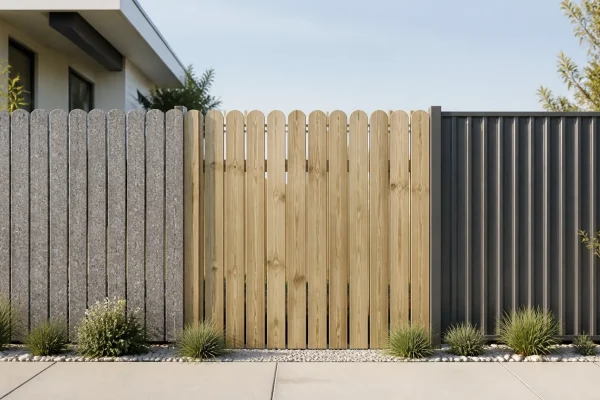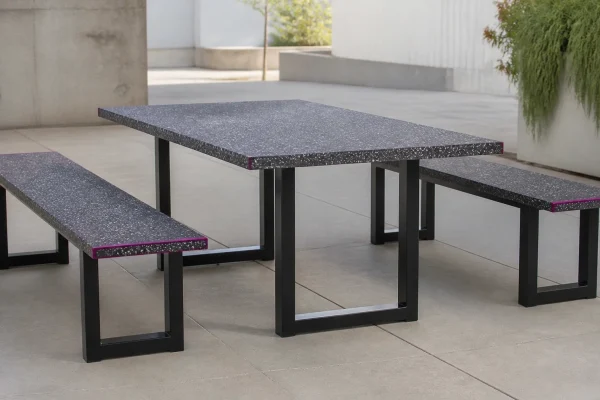

If you’re a tier-1 contractor or a commercial fit-out specialist in Australia, the landscape of material procurement has fundamentally changed. As we move through 2026, the Australian Federal Government’s Environmentally Sustainable Procurement (ESP) Policy has transitioned from a progressive guideline into a mandatory framework for major projects.
Whether you're bidding for a $7.5 million infrastructure project or a $1 million government office refurbishment, your choice of materials is now under the microscope. It’s no longer just about the bottom line; it’s about recycled content, embodied carbon, and circularity.
At Resourceful Living, we’ve seen a massive surge in demand for our 100% recycled plastic sheets. These aren't just "eco-friendly" alternatives: they are strategic tools designed to help you win tenders.
Here are 10 critical things you need to know about the ESP Policy and how using recycled plastic sheets in Australia can give you a competitive edge.
1. The Thresholds are Non-Negotiable
The ESP Policy applies specifically to high-value government procurements. For construction services, the threshold is $7.5 million. However, for furniture, fittings, and equipment (FFE), the crunch point is much lower at $1 million. If your project hits these numbers, you must demonstrate environmental sustainability in your tender response.
2. You Need a Supplier Environmental Sustainability Plan (SESP)
Under the new rules, tenderers are often required to submit a Supplier Environmental Sustainability Plan (SESP). This document outlines how you will manage and report on sustainability metrics throughout the contract. By specifying recycled plastic panels, you’re providing concrete, quantifiable data: like exactly how many kilograms of plastic waste were diverted from landfill: to satisfy this requirement.
3. Local Sourcing is Now a Priority
The government is increasingly prioritising "sovereign capability" and the "ReMade in Australia" initiative. Importing "recycled" materials from overseas often comes with a massive carbon footprint and questionable traceability. Choosing Australian-made recycled plastic sheets ensures your project supports local jobs and minimises transport-related emissions, which scores higher in the "Climate Change Mitigation" pillar of the ESP.

4. Traceability is the New Gold Standard
"Greenwashing" won't fly in 2026. The ESP Policy requires evidence. At Resourceful Living, we manage the end-to-end recycling process. We can tell you exactly where the waste came from: whether it was post-consumer milk bottles or industrial scraps. This level of traceability is essential for passing green audits and meeting the reporting requirements of government departments.
5. Embodied Carbon Reporting is Mandatory
Every material in your build has a carbon "price tag." Recycled plastic sheets have significantly lower embodied carbon compared to virgin plastic, concrete, or even some treated timbers. Our panels are made from 100% recycled material with no added resins or glues, helping you stay below the strict carbon limits set for new government builds.
"The shift toward circular procurement isn't just about saving the planet; it's about future-proofing Australian businesses. If you're not building with the end in mind, you're building a liability." : Jess Hodge, CEO of Resourceful Living
6. The Circular Economy Requires a "Take-Back" Strategy
A core pillar of the ESP Policy is the Circular Economy. It’s not enough for a product to be made from recycled content; it also needs a plan for when it reaches the end of its life. Resourceful Living offers a take-back program, where we collect our products at the end of their lifecycle for free, remanufacturing them back into new sheets. This closes the loop and simplifies your waste management reporting.

7. Silica-Free Safety is a Major Bonus
With the recent bans and restrictions on engineered stone containing silica, builders are looking for safer alternatives for benchtops and partitions. Our recycled plastic sheets are 100% silica-free, making them a safer choice for your tradespeople and a lower-risk option for government agencies concerned with workplace health and safety.
8. Durability Reduces the Total Cost of Ownership (TCO)
The ESP Policy encourages "Value for Money," which includes the long-term cost of maintenance. Unlike timber, which can rot, or plywood, which can swell in high-moisture areas, recycled plastic sheets are waterproof, UV-stable, and chemical-resistant. They don’t need painting, oiling, or staining, making them a "fit and forget" solution that saves taxpayer dollars on maintenance.
9. Design Flexibility Meets Compliance
Sustainable doesn't have to mean boring. Our panels come in a range of vibrant colours and unique textures, allowing architects to create stunning retail displays, office workstations, and public amenities that look high-end while meeting strict environmental targets. You can even request custom colours to match a specific agency's branding.
10. Fast Turnaround is Essential for Tenders
Construction timelines are tighter than ever. Because we manufacture locally in Australia, we can produce 1 tonne of plastic sheets per day. This fast turnaround means you aren't waiting months for international shipments, helping you keep your project on schedule and your tender commitment reliable.
How to Get "Tender-Ready"
If you’re preparing a bid for a government contract, don't leave your material selection to the last minute. Circular supply chains require coordination and verified data.
Your Action Plan:
- Step 1: Identify if your project falls under the $7.5M (Construction) or $1M (Furniture) threshold.
- Step 2: Download our technical data sheets to include in your SESP.
- Step 3: Order a sample pack to show the client the quality and texture of 100% recycled Australian plastic.
- Step 4: Contact us for a custom quote that includes waste diversion metrics for your tender document.
The era of "take-make-waste" is officially over. By integrating recycled plastic sheets into your next Australian project, you aren't just complying with the ESP Policy; you're leading the charge toward a more resourceful future.