For a long time, the conversation around sustainable building in Australia was dominated by one thing: operational energy. We talked about solar arrays, double glazing, and high-efficiency HVAC systems. While these are critical, they only tell half the story.
As we move into 2026, the focus of the Green Building Council of Australia (GBCA) and leading architectural firms has shifted toward a more elusive opponent: embodied carbon.
If you’re an architect, interior designer, or property owner planning a commercial fit-out, you need to look beyond the roof. The real carbon battle is being fought in the materials you specify for your partitions, joinery, and workstations.
In this guide, we’ll break down why embodied carbon is the next frontier for Australian construction and how choosing low carbon building materials: specifically 100% recycled plastic panels: can fast-track your path to Green Star certification.
What Exactly is Embodied Carbon?
Think of a building's total carbon footprint as an iceberg. Operational carbon (the energy used to run the building) is the part you see above the water. Embodied carbon is the massive bulk hidden beneath the surface.
Embodied carbon refers to the greenhouse gas emissions generated throughout the entire lifecycle of a material. This includes:
- Extraction: Mining raw materials or harvesting timber.
- Manufacturing: The energy-intensive processes used to turn raw materials into usable products.
- Transportation: Shipping materials from overseas or across the country to your site.
- Construction: The energy used during the actual fit-out process.
- Disposal: What happens when that fit-out is ripped out in five to ten years.
In a typical commercial office, fit-outs happen every 7 to 10 years. Over the sixty-year life of a building, the cumulative embodied carbon from multiple fit-outs can actually exceed the carbon footprint of the building’s original structure.

The GBCA Shift: Why Circularity is Now Mandatory
The Green Building Council of Australia isn't just suggesting we do better; they are rewriting the rules. The latest Green Star circularity guides place a heavy emphasis on reducing upfront carbon.
To achieve a high Green Star rating in 2026, projects must demonstrate a significant reduction in embodied carbon compared to a "standard" reference building. This is where Green Star recycled plastic credits become a game-changer for designers.
The Role of Circular Procurement
Circular procurement isn't just about "buying recycled." It’s about ensuring that the materials you bring into a space can be recovered and reused at the end of their life. By specifying sustainable construction materials in Australia, you aren't just checking a box; you are participating in a recycled plastic circular economy that keeps waste out of landfills.
Comparing the Carbon: Recycled Plastic vs. The Alternatives
When reducing embodied carbon in fit-outs, your material choice is your most powerful lever. Let's look at how recycled plastic panels stack up against traditional materials often used in commercial interiors.
1. Virgin Plastics vs. Recycled Plastics
Virgin plastic is a carbon nightmare. It relies on the extraction of fossil fuels and energy-heavy cracking processes. In contrast, 100% recycled plastic panels: like those we manufacture at Resourceful Living: skip the extraction phase entirely. By using post-consumer and post-industrial waste, we drastically lower the "upfront carbon" of the material.
2. Timber (The Complicated Contender)
While timber is often touted as "carbon neutral," the reality in a commercial fit-out is complex. Unless the timber is ethically sourced (FSC certified) and, more importantly, reusable, its benefits diminish. Many commercial veneers use high-VOC glues and resins that make the timber un-recyclable.
3. Steel and Aluminium
These are high-strength but high-emission. While they are recyclable, the energy required to melt and reform them is substantial. For non-structural elements like wall cladding or cabinetry, switching to a lower-density, recycled material is an immediate win for your carbon budget.
| Material Type | Embodied Carbon Level | Circularity Potential |
|---|---|---|
| Virgin Acrylic/Laminate | Very High 🔴 | Low – Often ends in landfill |
| Virgin Aluminium | High 🔴 | High – But energy intensive |
| FSC Timber | Low 🟢 | Medium – Depends on finishes |
| 100% Recycled Plastic | Very Low ✅ | Excellent – 100% Recyclable |
Designing for Deconstruction: The "Fit-out" Problem
One of the biggest contributors to embodied carbon in Australia is the "demolish and dispose" culture of commercial tenancies. When a lease ends, the fit-out is often treated as rubbish.
Reducing embodied carbon in fit-outs requires a shift toward designing for deconstruction.
Using 100% recycled plastic panels allows for a modular approach. Because our panels are durable, waterproof, and UV-stable, they can be mechanically fixed (screwed rather than glued), making them easy to remove and relocate to a new office space or return to the manufacturer for re-processing.
Check out our deep dive on the life cycle environmental impact of recycled plastic panels to see the data behind this.

How to Secure Green Star Recycled Plastic Credits
If you are aiming for a 5 or 6-star Green Star rating, you need to document your material choices carefully. Here is how to leverage recycled plastic panels in your submission:
- Request EPDs: Ensure your supplier provides an Environmental Product Declaration (EPD). This is the "nutrition label" for the material's carbon footprint.
- Verify Recycled Content: Under Green Star, "recycled content" must be verified. At Resourceful Living, we provide clear traceability for our 100% recycled HDPE and LDPE products.
- Specify "End-of-Life" Pathways: Credits are often awarded for having a documented "take-back" scheme. We work with architects to ensure that at the end of the fit-out's life, the panels come back to us to be turned into new products.
- Target the "Responsible Products" Credit: Using locally manufactured, recycled materials directly contributes to the Responsible Building Materials credit.
Practical Applications in Commercial Interiors
Where can you actually use these low carbon building materials? The versatility of 100% recycled plastic might surprise you.
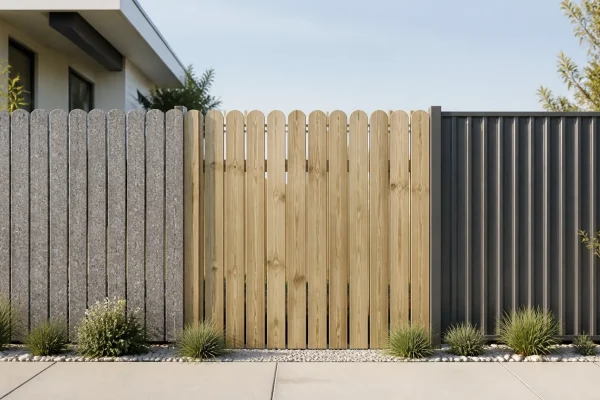
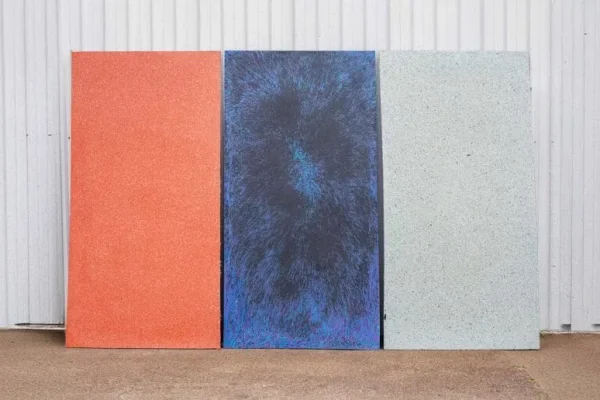
- Wall Cladding & Feature Walls: Create stunning, textured surfaces that are far more durable than traditional plasterboard or laminate.
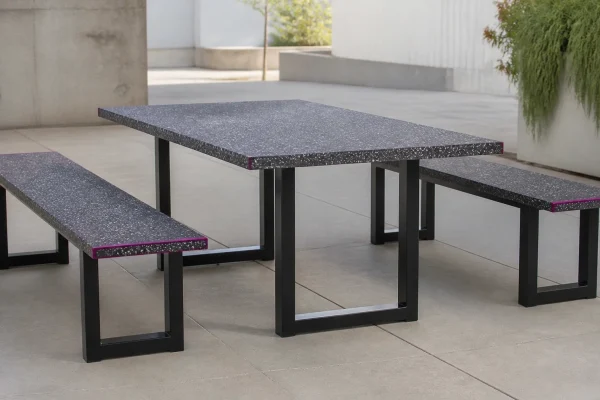
- Office Furniture: From desktops to breakout area stools, recycled plastic provides a modern, "industrial-chic" aesthetic that tells a sustainability story.
- Wet Area Fit-outs: Because our panels are 100% waterproof, they are perfect for end-of-trip facilities, kitchens, and bathrooms: replacing high-carbon tiles and heavy adhesives.
- Signage & Wayfinding: A small but impactful way to integrate recycled content throughout a multi-floor tenancy.
"The future of the Australian office isn't just about how much energy it uses while we're inside it. It's about the carbon we 'spent' just to build the desk we're sitting at." : Jess Hodge, CEO of Resourceful Living.

The Local Advantage: Why Australian Made Matters
When calculating embodied carbon, transportation is a major variable. Importing "sustainable" materials from Europe or North America often negates the carbon savings due to the emissions from international shipping.
By choosing eco-friendly building products in Australia, you are drastically reducing the "Transport" phase of the life cycle. Resourceful Living manufactures right here in Australia, meaning your materials don't have to travel halfway across the globe to get to your site.
Your Checklist for a Low-Carbon Fit-out
If you’re ready to start your next project, follow these steps to ensure you're actually moving the needle on carbon:
- Conduct a Waste Audit: Understand what materials are currently in the space and what can be diverted from landfill. (Use our waste audit template to get started).
- Prioritise "Mono-Materials": Use products made of a single material (like 100% HDPE) rather than composites, which are nearly impossible to recycle.
- Calculate the Carbon Factor: Multiply the quantity of your material by its carbon factor (provided in the EPD).
- Ask About Take-Back Schemes: Ensure your supplier has a plan for the material in 10 years' time.
- Specify Locally: Reduce transport emissions by sourcing Australian-manufactured recycled products.
Conclusion: Lead the Revolution
The shift toward low carbon building materials in Australia is no longer a niche trend: it is a regulatory and ethical necessity.
Solar panels are a great start, but to truly tackle the climate crisis, we have to look at the "stuff" we build with. By opting for recycled plastic panels, you aren't just creating a beautiful commercial space; you are actively reducing the embodied carbon of our built environment and helping drive Australia's transition to a truly circular economy.
Ready to specify recycled plastic for your next project?
Explore our range of recycled plastic products or contact the team at Resourceful Living today to discuss how we can help you hit your Green Star targets.