
If you’ve been chasing NSW government tenders lately, you’ve probably noticed the goalposts haven’t just moved, they’ve been completely redesigned. It’s no longer enough to just be the cheapest or the fastest. Now, you have to be the most circular.
The NSW Government’s "If Not, Why Not" procurement policy has shifted the burden of proof onto project managers and Tier 1 contractors. Instead of asking "Why should we use recycled materials?", the department is now asking you: "Why aren't you using them?"
If you can’t provide a solid technical or economic reason to say "no" to recycled content, you’re likely to lose points on your tender: or worse, lose the contract entirely.
I’m Jess from the sales team here at Resourceful Living, and I talk to PMs every day who are scrambling to figure out how to navigate circular construction 2026 targets. The good news? It’s not as hard as it looks once you have the right strategy.
Here are five steps to mastering this new procurement landscape and making sure your next bid is the one they can’t turn down.
1. Flip the Script: Embrace the Justification Requirement
Under the new Sustainable Procurement Policy, the "If Not, Why Not" framework means that recycled content is now the default expectation. If you choose virgin plastic, timber, or concrete for a non-structural application where a recycled alternative exists, you have to justify that choice in writing.
Most PMs see this as a hurdle. Smart PMs see it as a competitive advantage.
Instead of waiting for the government to ask why you didn't use recycled materials, lead with the solution. By specifying 100% recycled Australian plastic panels early in your bid, you’re saving the procurement officer the headache of having to challenge you. You are essentially doing their job for them.
Expert Tip: Don't just list "recycled materials" as a bullet point. Explicitly state that your choice aligns with the NSW Government’s Environmentally Sustainable Procurement (ESP) Policy. It shows you’re paying attention to the fine print.
Check out our guide on winning government tenders for more on how to frame these responses.
2. Leverage Real Data: Embodied Carbon is King
In 2026, "looking green" isn't enough. You need the numbers to back it up. Government agencies are increasingly focused on embodied carbon reporting. This is the total greenhouse gas emissions generated to produce a built asset.
When you use Resourceful Living materials, you aren't just "recycling": you are significantly lowering the carbon footprint of your project. Why? Because we use 100% Australian waste, which means zero international shipping emissions and a highly efficient manufacturing process.
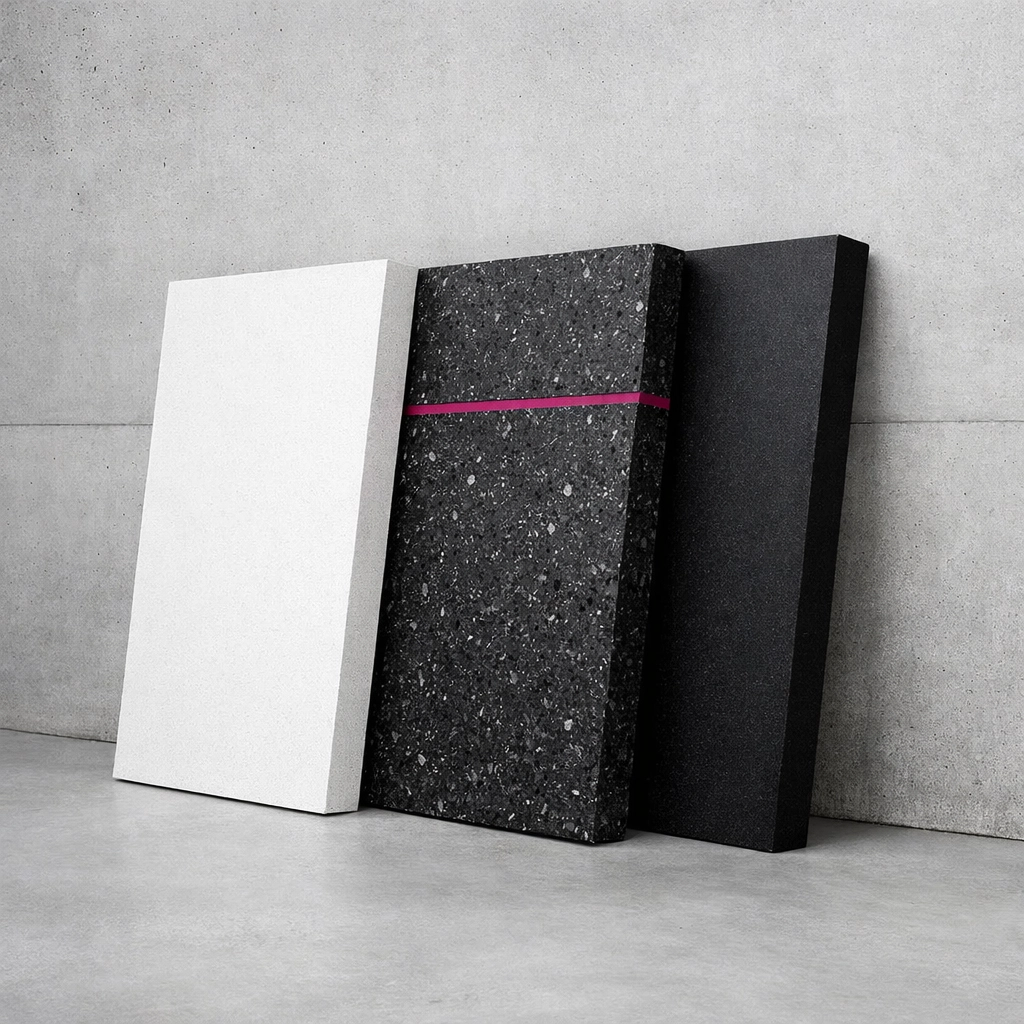
When you're writing your tender, include the carbon savings. If you swap out traditional plywood (which has a high turnover rate due to rot) for recycled plastic vs timber, you can demonstrate:
- Reduced replacement cycles: Our panels don’t rot, swell, or get eaten by termites.
- Lower Scope 3 emissions: High-quality recycled HDPE has a much lower carbon intensity than virgin alternatives.
Does embodied carbon really matter in 2026? You bet it does. It’s often the deciding factor in close tender races.
3. Scale and Reliability: Solve the Supply Chain Headache
One of the biggest reasons PMs shy away from recycled materials is the fear of supply chain instability. There’s a common misconception that recycled plastic is only for "boutique" or "niche" projects because small-scale manufacturers can’t handle the volume.
We’ve fixed that.
At Resourceful Living, we have the capacity to process 1 tonne of plastic waste every single day.
When you’re bidding for a large-scale infrastructure project: think noise barriers for Transport for NSW (TfNSW) or hoarding for a massive commercial site: you need to know the material will show up on time. Our industrial-scale facility ensures that we can meet the demands of commercial projects without breaking a sweat.
By partnering with an Australian manufacturer that has real industrial scale, you remove the "Why Not" risk of supply failure. You can confidently tell the government: "We are using recycled materials because the supply is guaranteed and the capacity is proven."
4. Align with Circular Construction 2026
The industry is currently in a massive transition phase leading up to circular construction 2026. This isn't just a buzzword; it’s a fundamental shift in how we build. The goal is to move away from the "take-make-waste" model and toward a closed-loop system.
To win tenders in this environment, your project plan needs to address the end-of-life of the materials you’re using.
Standard building materials often end up in a skip bin at the end of a project. Our recycled plastic sheets for construction are different. Because they are made from 100% rHDPE, they are fully recyclable.
We even offer a take-back program. When your project is over, or your hoarding is no longer needed, it can come back to us to be shredded and turned into new panels again. That is true circularity, and it’s exactly what the NSW government wants to see in your tender response.
"Circularity is about keeping materials at their highest value for as long as possible. If your tender doesn't explain where the material goes after the project is done, you're missing half the story."
Read more about why circular construction 2026 will change the way you buy materials.
5. Prioritise 100% Australian Traceability
Social procurement is a huge part of NSW tenders. Government bodies want to see that their spending is supporting local jobs and solving local problems.
There are plenty of "recycled" products on the market that are actually imported from overseas or use a tiny percentage of recycled content mixed with virgin plastic. That doesn't help the Australian circular economy, and it doesn't look great on a tender.
Every single panel we produce is:
- 100% Australian Sourced: We take waste from Australian households and businesses (like those 3 million Telstra SIM cards).
- 100% Australian Made: We manufacture right here in the Hunter Region, NSW.
- Fully Traceable: We can tell you exactly where the waste came from.
When you specify Resourceful Living, you are checking the "Environmental" box and the "Social/Local Content" box at the same time. It’s a double win for your tender score.
The "If Not, Why Not" Checklist for Your Next Tender
Before you hit "submit" on your next bid, run through this quick checklist to ensure you've maximised your sustainability score:
- ✅ Have you identified non-structural areas? (Hoarding, site offices, noise barriers, signage, fit-outs). These are the easiest places to swap virgin material for recycled plastic.
- ✅ Is the material 100% recycled? Don't settle for 10% or 20% blends. The government wants to see a commitment to high-recycled content.
- ✅ Is the supply chain Australian? Highlight the reduction in transport emissions and support for local industry.
- ✅ Have you mentioned the 1-tonne-per-day capacity? This proves you have a reliable supplier that can handle the project's scale.
- ✅ Is there an end-of-life plan? Mention our take-back program to prove your project is aligned with circular construction 2026.

Final Thoughts: The Future is Circular
The "If Not, Why Not" policy is actually a massive opportunity for project managers who are willing to lead. By moving away from "business as usual" and embracing 100% recycled Australian materials, you aren't just ticking a compliance box: you're building a more resilient, sustainable, and profitable future for the NSW construction industry.
If you’re working on a tender right now and need technical specs, carbon data, or a quote to include in your bid, give us a shout. We’re here to help you make the justification for recycled materials as easy as possible.
Let's build something that lasts, using the waste we already have. 🚀
Ready to de-risk your next project?
Explore our range of recycled plastic panels for commercial projects or join one of our online recycling lunch and learns to get your whole team up to speed.