For decades, marine plywood has been the default substrate for everything from jetty decking to boat cabinetry and seaside infrastructure. It was the "gold standard" for moisture resistance. But as we move through 2026, the industry is witnessing a massive shift in procurement.
Marine contractors and jetty builders are increasingly identifying plywood not as a reliable material, but as a significant financial and structural liability. Between rising labor costs for maintenance and the intensifying Australian climate, the "Timber Trap" is closing.
At Resourceful Living, we’re seeing the transition to High-Performance Recycled HDPE (High-Density Polyethylene) accelerate. It’s no longer just about being "green"; it’s about eliminating the replacement cycle entirely.
The "Marine Plywood Fallacy" – Why Waterproof Isn't Forever
The term "Marine Grade" suggests a level of invincibility that simply doesn't exist in high-salt, high-moisture environments. Marine plywood is essentially a stack of wood veneers glued together with waterproof resin. While the glue itself may not fail, the wood fibres remain porous.
In the context of a jetty or boat ramp, moisture eventually finds its way into the end-grain or through fastener holes. Once inside, it triggers three inevitable failures:
- Delamination: The internal pressure from moisture and salt crystallisation forces the layers apart.
- Internal Rot: Because the exterior is often sealed, moisture gets trapped inside, rotting the core while the surface looks fine.
- Fungal Growth: Timber is an organic food source. In the humid coastal regions of NSW and QLD, it is a breeding ground for mold and structural decay.
By 2026 standards, using a material that is guaranteed to fail within 7–10 years is becoming a risk that commercial contractors can no longer afford to take on their balance sheets.

Enter High-Performance Recycled HDPE: The Zero-Delamination Reality
Unlike plywood, our 100% recycled plastic sheets are not "layered." They are manufactured as solid, monolithic blocks of Australian-sourced HDPE. There are no veneers to peel, no glues to fail, and absolutely no organic matter for rot to take hold of.
Why HDPE Wins in Marine Environments:
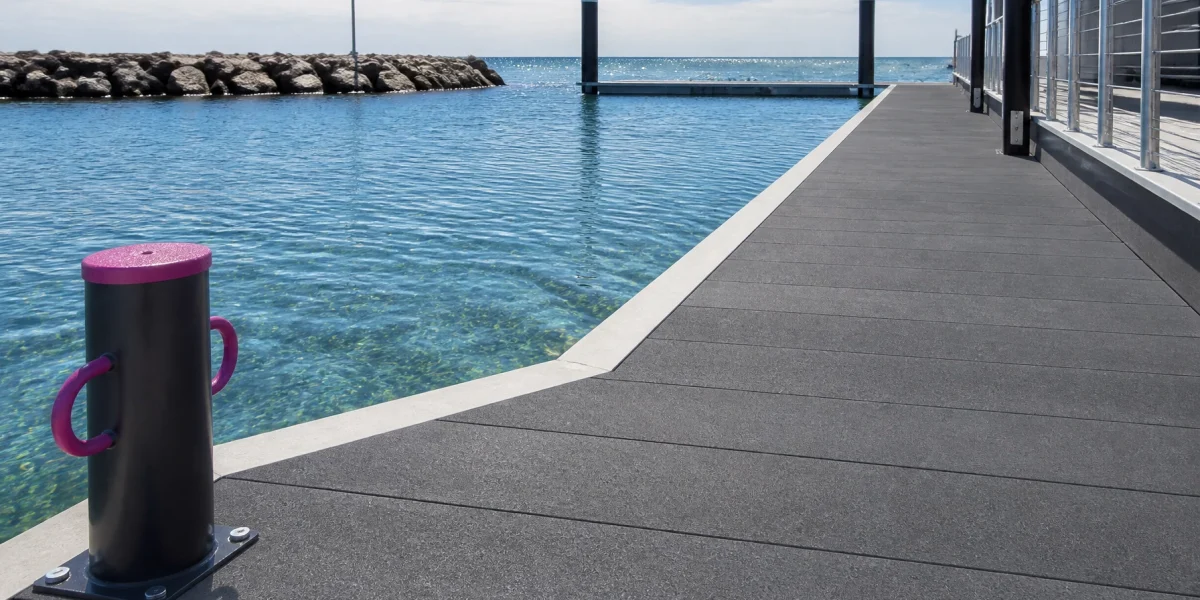
- Hydrophobic Nature: HDPE is entirely non-porous. It does not "drink" water. Whether it is splashed by the tide or fully submerged, its mass and integrity remain 100% unchanged.
- Chemical and Salt Resistance: Saltwater is chemically inert to HDPE. While salt crystals break down the cellular structure of timber, they simply sit on the surface of plastic, easily washed away.
- UV Stability: Our panels are engineered for the Australian sun. We integrate UV stabilisers during the manufacturing process, ensuring the material won't become brittle or chalky after years of exposure on a sun-drenched marina.
- Impact Resistance: In heavy-duty marine applications: like fenders or boat sliders: HDPE absorbs impact without cracking, whereas plywood would splinter or shatter.
Head-to-Head: Recycled Plastic vs. Marine Plywood
When you look at the raw data, the comparison for coastal infrastructure isn't even close.
| Feature | Marine Plywood (BS 1088) | Resourceful Living HDPE |
|---|---|---|
| Water Absorption | 5% – 15% (over time) | 0% (Hydrophobic) |
| Delamination Risk | High (Layered construction) | Zero (Solid block) |
| Maintenance | Annual sealing/painting | Zero (High-pressure wash only) |
| Lifespan (Coastal) | 7–12 Years | 50+ Years |
| Workability | Standard tools | Standard tools |
| End-of-Life | Landfill (Chemical treatments) | 100% Recyclable (Take-back prog.) |
| Traceability | Global supply chain | 100% Australian Waste |
The Lifecycle Math: Why Contractors are Saving $85k+ per Project
We often hear that timber is "cheaper" upfront. While a sheet of plywood might have a lower initial price tag, the Total Cost of Ownership (TCO) tells a different story.
Consider a mid-sized council boardwalk or private jetty project. With timber, you are signing up for a 10-year maintenance trap:
- Year 1: Install, seal, and oil.
- Year 3-7: Regular re-staining, sanding back splinters, and replacing warped boards.
- Year 10: Structural failure at the fastener points, requiring a full teardown and replacement.
"When you factor in the replacement costs of timber: labour, new materials, and disposal of the old rotted wood: recycled plastic isn't just a sustainable choice; it's the only one that makes financial sense over a 10-year lifecycle." : Jess Hodge, Company Owner at Resourceful Living.
In a recent Coastal Boardwalk Case Study, switching to recycled plastic saved an Australian council an estimated $85,000 in maintenance and replacement costs over the project's life.

Workability and Installation for Marine Contractors
One of the biggest hurdles to adopting new materials is the "tooling" factor. The good news? Recycled HDPE works like a very dense hardwood.
You don't need specialized equipment. You can cut, drill, and route our 2400mm x 1200mm panels using the standard woodworking tools you already have in your trailer.
- Fastening: Use stainless steel deck screws. Because HDPE doesn't rot, the "holding power" of the fastener remains consistent for decades.
- Thermal Expansion: Like all polymers, HDPE expands and contracts slightly with temperature. We provide clear installation guides on how to allow for this movement, ensuring a perfect fit that doesn't buckle.
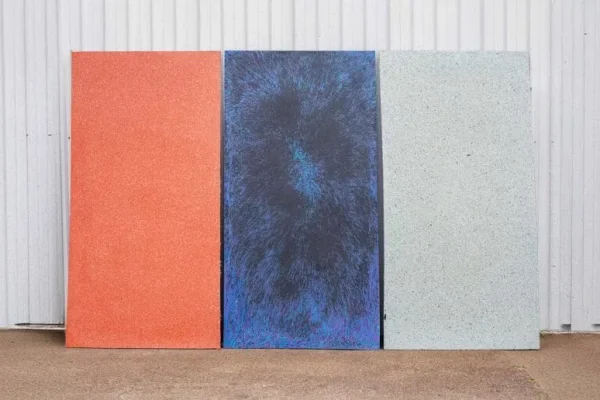
- Solid Colour: Unlike painted plywood, our colour is consistent throughout the entire sheet. If a boat hull scratches your jetty, the colour underneath is exactly the same. No touch-ups required.
The 2026 Mandate: Local Waste and Social Procurement
In 2026, government tenders and Tier 1 construction projects in Australia are heavily weighted toward Social Procurement and Circular Economy principles.
Using marine plywood: which is often imported or treated with toxic chemicals like CCA: does nothing for your sustainability reporting. By choosing Resourceful Living, you are:
- Diverting Australian Plastic Waste: Every tonne of plastic we manufacture is 1 tonne of waste kept out of local landfills.
- Meeting Embodied Carbon Targets: Our manufacturing process has significantly lower emissions compared to traditional virgin materials. You can learn more in our guide to Embodied Carbon Reporting.
- Future-Proofing Assets: With our Take-Back Program, we collect our products at the end of their 50-year life and remanufacture them back into new sheets. It is the definition of a closed loop.
Conclusion: Making the Switch
Marine plywood had its time, but in a world of rising maintenance costs and strict environmental standards, it has become a liability. High-Performance Recycled HDPE offers marine contractors a "set and forget" solution that protects both the client's investment and the local environment.
Whether you are designing a private pontoon, a public boat ramp, or commercial sea-wall cladding, the material choice is the most critical factor in your project's long-term success.
Ready to specify maintenance-free materials for your next marine project?
- Browse our 100% Recycled Plastic Sheets
- Download Technical Specifications
- Contact our Newcastle team for a custom quote