
In the world of Australian construction, the choice of materials has never been more scrutinized. As we move through 2026, the industry is no longer just looking at initial cost and load-bearing capacity; we are now legally and ethically bound to consider embodied carbon, maintenance lifecycles, and end-of-life recyclability.
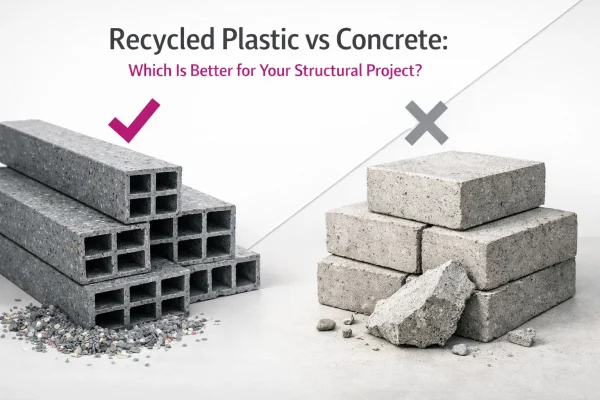
When you're planning a project, the "default" has historically been concrete. It’s heavy, it’s permanent, and it’s familiar. However, for a vast range of secondary structural and non-structural applications, recycled plastic (specifically rHDPE) is proving to be a superior, more durable, and significantly more sustainable alternative.
But which one is right for your specific project? To answer that, we need to look past the surface and dive into the technical specs of sustainable construction materials in Australia.
The Core Difference: Structural vs. Non-Structural
Before we compare these two, we need to clarify one thing: Recycled plastic is not a 1:1 replacement for concrete in high-load structural applications like skyscraper foundations or bridge pylons. If you are pouring a slab for a high-rise, concrete remains the heavyweight champion.
However, construction is about much more than just foundations. For retaining walls, boardwalks, coastal infrastructure, public furniture, and site hoarding, the choice between concrete and recycled plastic becomes much more nuanced. In these scenarios, concrete's weight and rigidity often become liabilities rather than assets.
Concrete: The Heavyweight Champion (With Baggage)
Concrete has been the backbone of infrastructure for centuries. It’s prized for its high compressive strength. But in a modern context, concrete has several "pain points" that builders are struggling to manage:
- The Carbon Problem: Concrete is one of the most carbon-intensive materials on earth. With Australia's new embodied carbon rules now in full swing, using excessive concrete can make it difficult to hit Green Star or NABERS targets.
- The Cracking Issue: Concrete is brittle. It cracks under thermal expansion, ground movement, or moisture ingress. Once it cracks, the internal steel reinforcement begins to corrode (spalling), leading to expensive remediation.
- Weight and Logistics: Concrete is incredibly heavy (approx. 2,400 kg/m³). This requires heavy machinery, high transport costs, and significant site preparation.
Recycled Plastic (rHDPE): The High-Performance Challenger
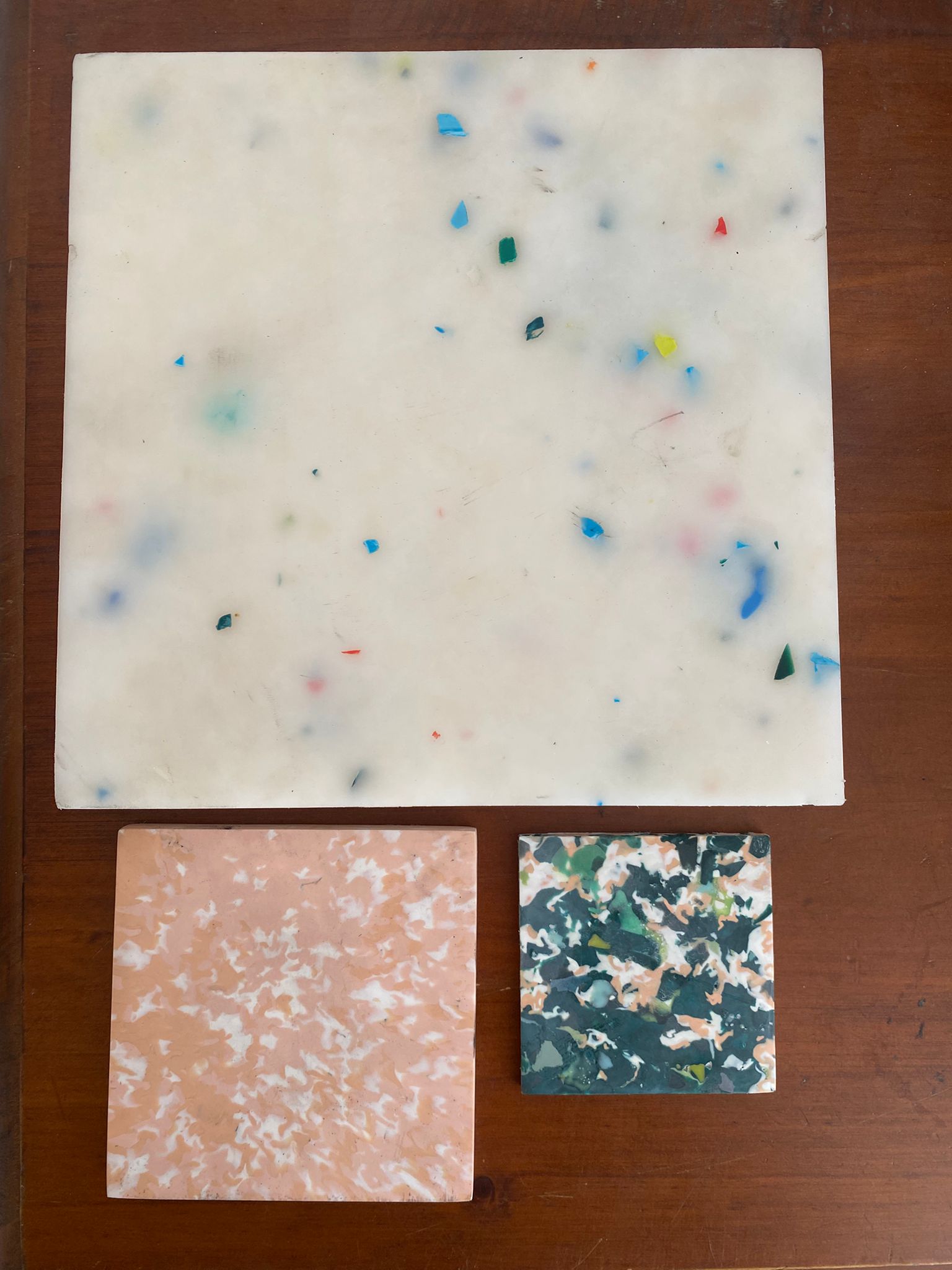
At Resourceful Living, we specialise in recycled plastic building materials made from 100% Australian post-industrial and post-consumer waste. Our rHDPE panels offer a range of physical properties that concrete simply cannot match.
1. Extreme Lightweight Efficiency
While concrete sits at 2,400 kg/m³, our recycled plastic panels have a density of 0.94-0.96 g/cm³. This means they actually float in water. For builders, this translates to lower transport costs, easier manual handling on-site, and a reduced need for heavy-duty lifting equipment.
2. Impervious to the Elements
Unlike concrete, which is porous and susceptible to salt damp and chemical erosion, rHDPE is 100% waterproof and chemical resistant. It won't rot, it won't rust, and it won't harbour mould. This makes it the ideal choice for coastal projects where treated timber or concrete might fail.
3. No Cracking or Spalling
Because rHDPE is a thermoplastic, it possesses a level of flexibility. It can absorb impacts and minor ground shifts without cracking. If you’ve ever seen a concrete public bench or walkway crack after two years of exposure, you’ll understand why Australian councils are switching to 100% recycled plastic for public infrastructure.
Technical Comparison: Recycled Plastic vs. Concrete
| Feature | Recycled Plastic (rHDPE) | Standard Concrete |
|---|---|---|
| Density | 0.94 – 0.96 g/cm³ (Lightweight) | ~2.4 g/cm³ (Heavy) |
| Water Absorption | 0% (Waterproof) | 3% – 10% (Porous) |
| Chemical Resistance | High (Acids, oils, salts) | Low (Susceptible to acid/salt) |
| Maintenance | Zero (No painting/sealing) | High (Requires sealing/patching) |
| End of Life | 100% Recyclable | Downcycled (Rubble/Landfill) |
| Cracking Risk | Extremely Low | High (Brittle) |
| Standard Sizes | 2.4m x 1.2m sheets (Up to 40mm) | Custom pour or pre-cast |
Why "100% Australian Waste" Matters for Your Tenders
When you are applying for construction tenders in Australia, the origin of your materials matters. Government projects now heavily weigh Social Procurement and Circular Economy metrics.
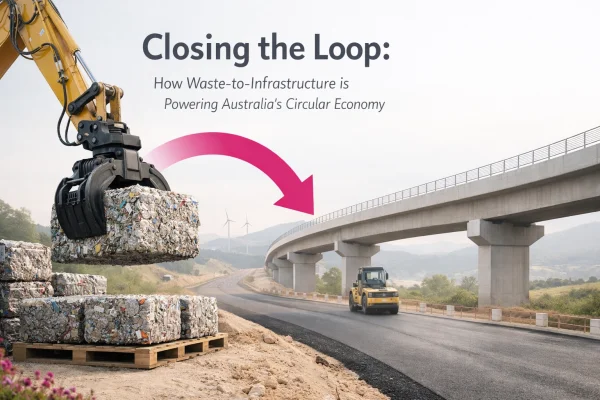
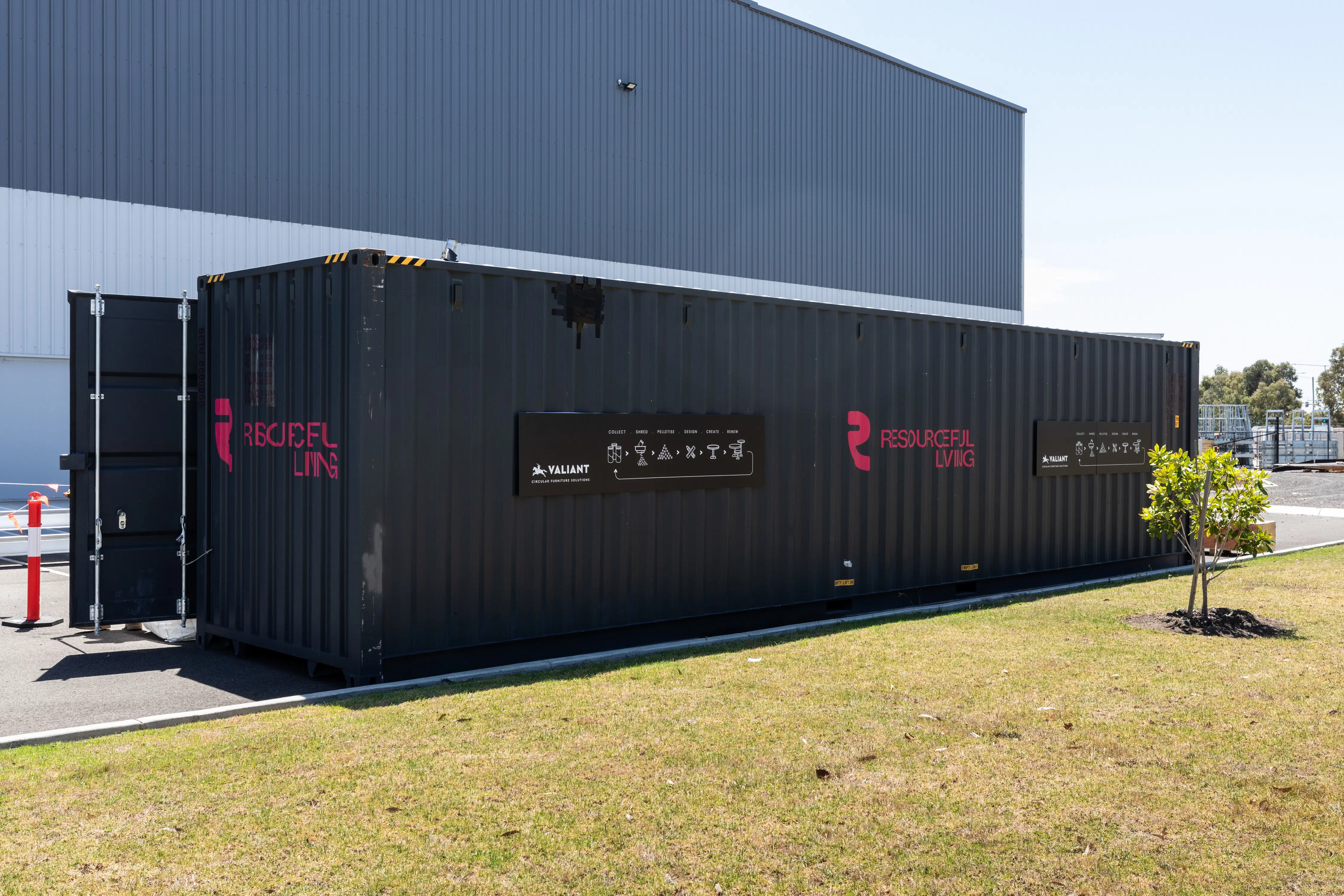
Using a Resourceful Living panel isn't just about getting a durable board; it’s about proving that your project is actively diverting waste from Australian landfills. Our panels are made from 100% Australian waste and are 100% recyclable through our own take-back programs. This creates a closed-loop system that concrete simply cannot provide.
"The shift we're seeing in 2026 isn't just about aesthetics. It's about 'Circular Procurement': the idea that the materials we use today must be the resources we use tomorrow."
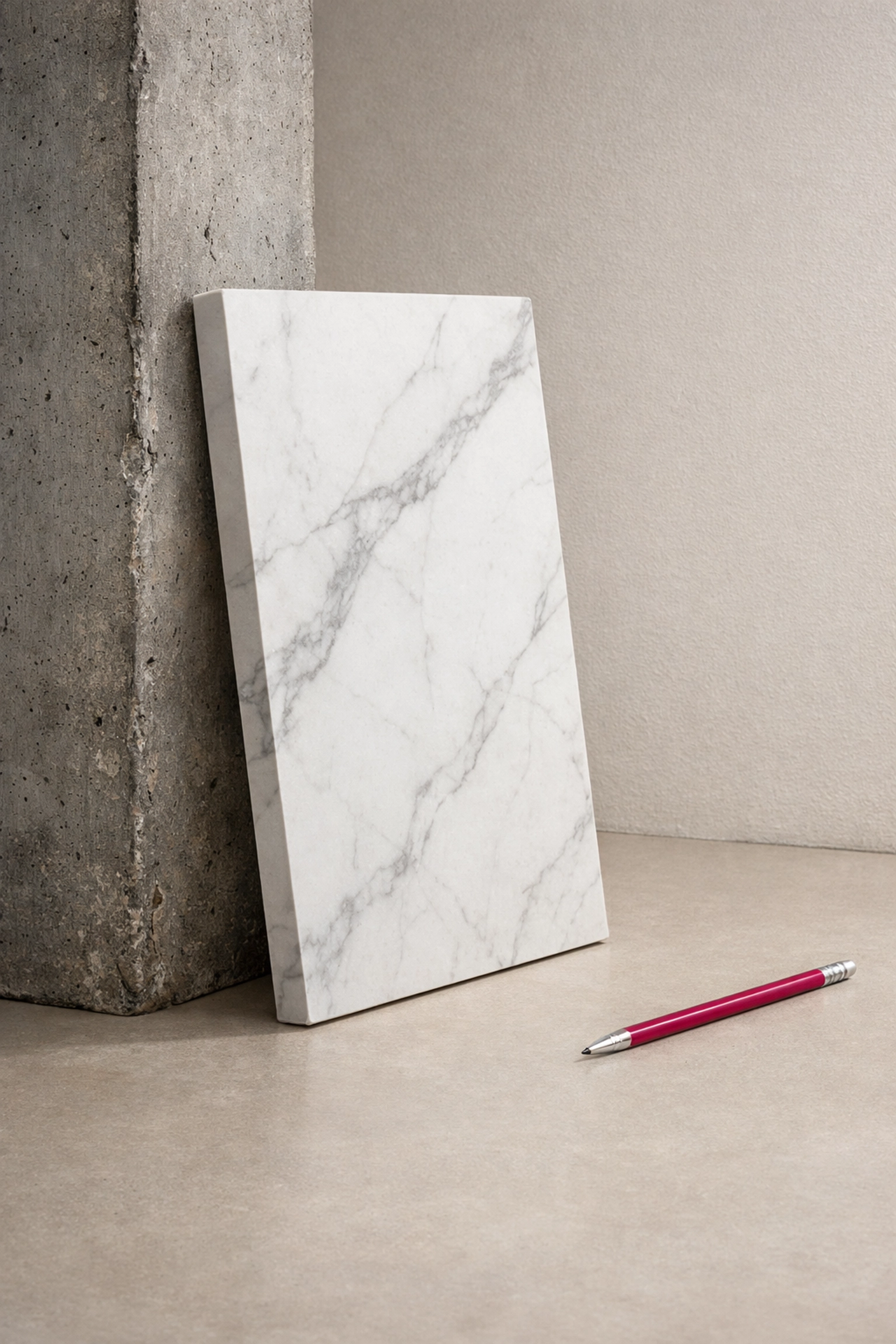
Where to Specify Recycled Plastic Over Concrete
If you're looking to slash your site waste and choose sustainable materials, here are the prime areas to substitute concrete for recycled plastic:
Public Amenities and Landscaping
Concrete planter boxes and retaining walls are prone to cracking and staining. rHDPE panels, available in thicknesses up to 40mm, offer the structural integrity needed for these items while maintaining a "new" look for decades with zero maintenance.
Marine and Coastal Infrastructure
Saltwater is the enemy of concrete. It penetrates the pores and eats the rebar. Recycled plastic is completely inert in marine environments, making it the superior choice for jetty components, seawall liners, and beach access paths.
Modular and Off-Site Construction
In the world of modular construction, weight is the enemy. By substituting concrete or heavy masonry panels with lightweight recycled plastic sheets, you can significantly reduce the structural requirements of the building frame and the cost of transport.
Handling and Fabrication: The Builder's Advantage
One of the biggest advantages for the "tradie" on-site is that recycled plastic works like timber, but lasts like stone.
Unlike concrete, which requires specialised forms, curing times, and heavy-duty cutting gear (with dangerous silica dust risks), rHDPE panels can be:
- Cut with standard circular saws.
- Drilled with standard bits.
- Routed to create custom shapes or branding.
- Fixed with standard stainless steel screws.
This speed of installation can shave days off a project timeline, providing a better ROI than waiting for concrete to cure.
Managing the ESG Shift
In 2026, every major developer has an ESG (Environmental, Social, and Governance) strategy. If you are a project manager, you are likely being asked for EPDs (Environmental Product Declarations).
Integrating low-carbon materials like our rHDPE sheets is a fast track to improving your NABERS rating and demonstrating a commitment to the circular economy. We even offer a Closed-Loop ESG Partner Program where we take back off-cuts from your site and recycle them back into new panels.
Conclusion: Making the Final Call
Is recycled plastic better than concrete?
Yes, if you value longevity, weight reduction, and sustainability in non-load-bearing or secondary structural applications.
No, if you are building the core foundation of a skyscraper.
For the modern Australian builder, the goal should be Material Optimisation. Use concrete where you absolutely need the compressive strength, but switch to sustainable construction materials like rHDPE for everything else. You'll save on maintenance, reduce your carbon footprint, and build infrastructure that actually stands the test of time without cracking.
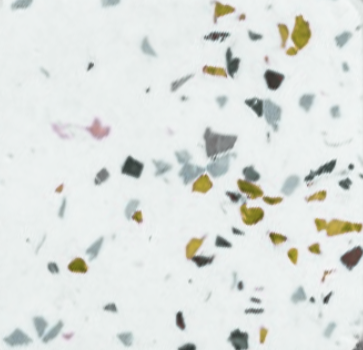
Ready to see the material in person? At Resourceful Living, we produce standard 2.4m x 1.2m sheets in a variety of thicknesses and finishes, from our popular 'N70 White Confetti' to sleek 'Navy Marble'.
Explore our full range of recycled plastic sheets here and let’s build something that doesn't just last, but makes a difference.