
Construction waste isn’t just an environmental headache; it’s a massive leak in your project’s profit margin. In Australia, the construction and demolition sector accounts for nearly 40% of the country’s total waste. When you factor in the rising costs of landfill levies and the increasing demand for high NABERS ratings, "business as usual" is becoming an expensive liability.
Transitioning to sustainable construction materials in Australia doesn't have to be a logistical nightmare. By shifting your focus from "cheapest upfront" to "circular and durable," you can significantly reduce your site footprint while improving your bottom line.
Here is a practical, 5-step guide for builders and project managers to master material selection and slash site waste.
Step 1: Conduct a Material Audit (Before You Break Ground)
You can't manage what you don't measure. Most site waste occurs because of over-ordering, poor storage, or choosing materials that have no secondary life.
Before starting your next fit-out or build, audit your typical waste stream. Look at your past three projects:
- How many skips did you fill with offcuts of treated timber or plywood?
- How much of that material was damaged by weather before it was even installed?
By identifying the volume and type of waste, you can adjust your procurement strategy. For example, if you find yourself constantly tossing rotted timber hoarding, it’s a clear sign you need a weather-resistant, multi-use alternative like recycled plastic sheets.
"The most sustainable material is the one you don't have to throw away. If your site plan doesn't account for the 'afterlife' of a panel, you're essentially planning for future waste." : Jess Hodge, CEO of Resourceful Living.
Step 2: Prioritise Local Sourcing and Traceability
Global supply chains are fragile and carbon-intensive. Sourcing sustainable construction materials in Australia reduces "material miles" and ensures you aren't inadvertently supporting unethical manufacturing processes elsewhere.
When you source locally, you also gain better control over customisation. At Resourceful Living, we manufacture our panels right here in Australia using 100% post-consumer plastic waste. This ensures that the material you use is actually diverting waste from Australian landfills, rather than just being "recyclable" in theory.
- Check the provenance: Ask your suppliers where the raw material comes from.
- Look for transparency: Does the manufacturer have a closed-loop manufacturing process?
Using locally made materials also streamlines your logistics. Instead of waiting months for an overseas shipment, you can work with local manufacturers to hit your project milestones on time.
Step 3: Choose Multi-Use and Durable Materials
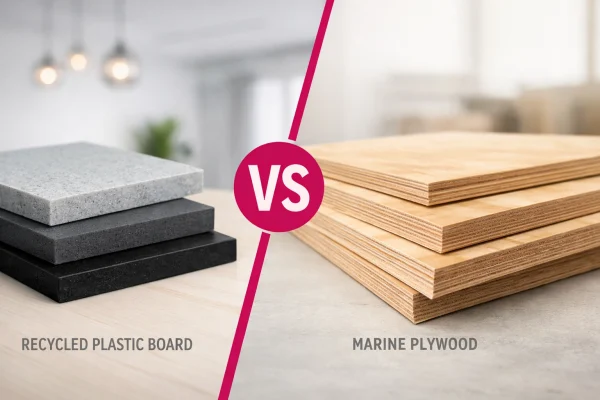
A major cause of site waste is the use of "temporary" materials that fail after one use. Treated timber, marine plywood, and standard MDF are often the culprits. They swell, rot, or delaminate when exposed to the Australian elements.
To slash site waste, you need to invest in materials that offer longevity and versatility.
Why Durability Matters:
- Weather Resistance: Materials like recycled plastic do not absorb water, meaning they won't rot or grow mould on a damp site.
- Zero Maintenance: Unlike timber, these panels don't require staining or chemical treatments, which further reduces site-based chemical waste.
- Impact Resistance: High-density recycled plastic is incredibly tough, making it ideal for high-traffic commercial fit-outs or site hoarding.
When you choose a material that can be used for site hoarding on Project A, then cleaned and repurposed for cabinetry on Project B, you are drastically reducing your long-term procurement costs. You can read more about how this compares to traditional options in our breakdown of recycled plastic vs. timber vs. steel.
Step 4: Implement Circular Procurement with Recycled Plastic Sheets
Circular procurement is the practice of purchasing products that are designed with their entire lifecycle in mind. This is where recycled plastic sheets become a game-changer for modern builders.
Our panels come in a standard 2400x1200mm size: the industry benchmark: making them a direct, "drop-in" replacement for traditional sheet goods. We also offer custom thicknesses and sizes to meet specific project requirements, reducing the need for onsite cutting and the resulting offcut waste.
The Technical Edge of Recycled Plastic:
- Workability: You can cut, drill, and screw these panels using standard woodworking tools. No specialized equipment is required.
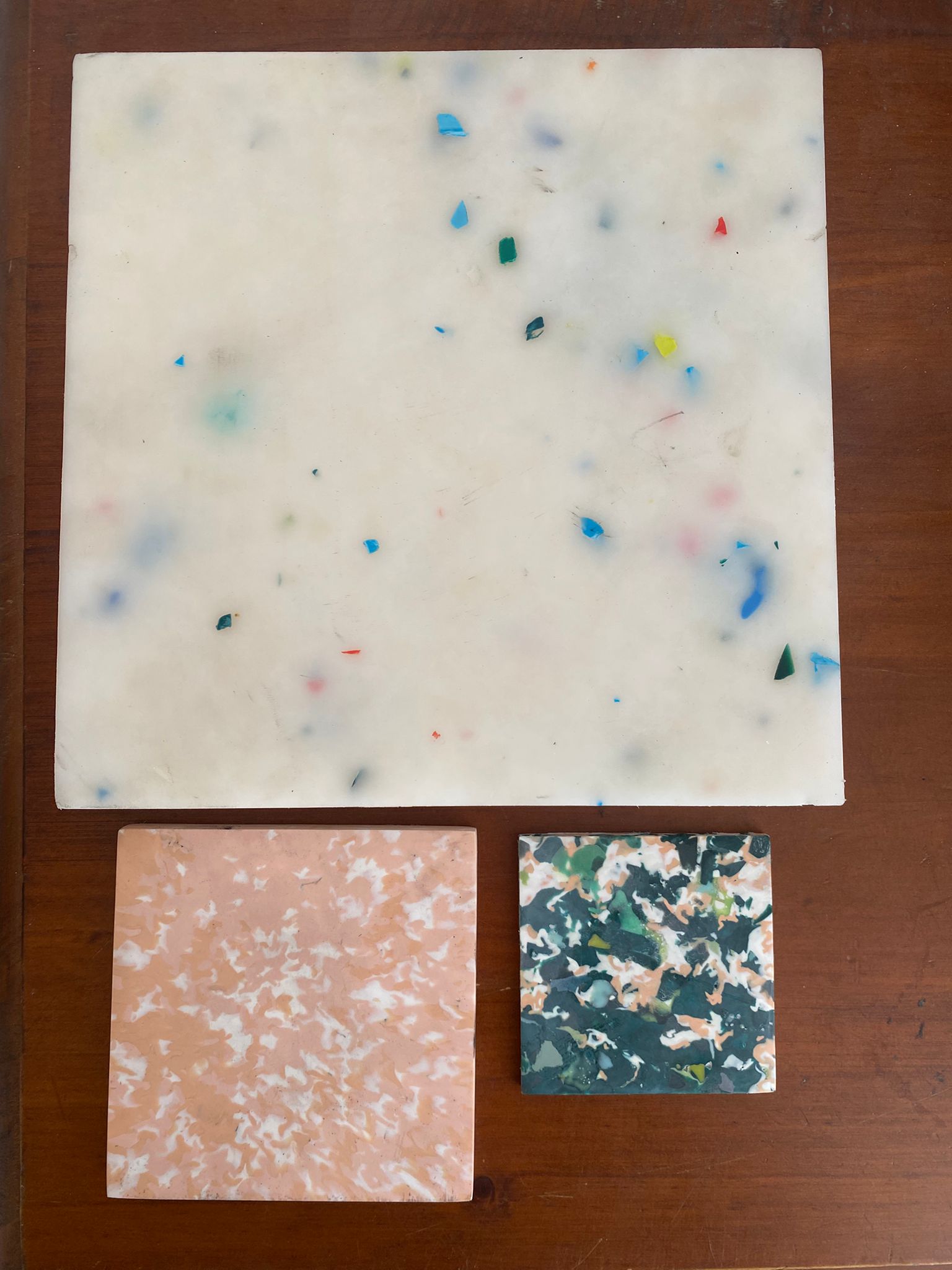
- Aesthetics: From the "N70 White Confetti" to deep marbling, these panels provide a high-end finish that doesn't need additional laminates or veneers (which are often impossible to recycle).
- Low Embodied Carbon: By using waste as a resource, you are significantly lowering the embodied carbon of your build.
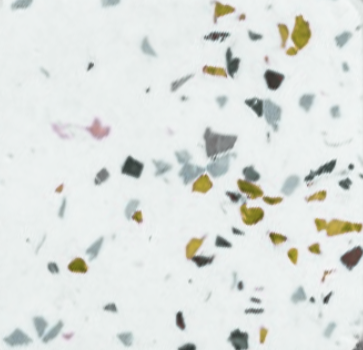
Using these panels helps you align with 4 principles of a true circular economy, positioning your firm as a leader in sustainable construction.
Step 5: Plan for End-of-Life and Take-Back Programs
The final step in slashing site waste is ensuring that nothing you bring onto the site ends up in a hole in the ground at the end of the project.
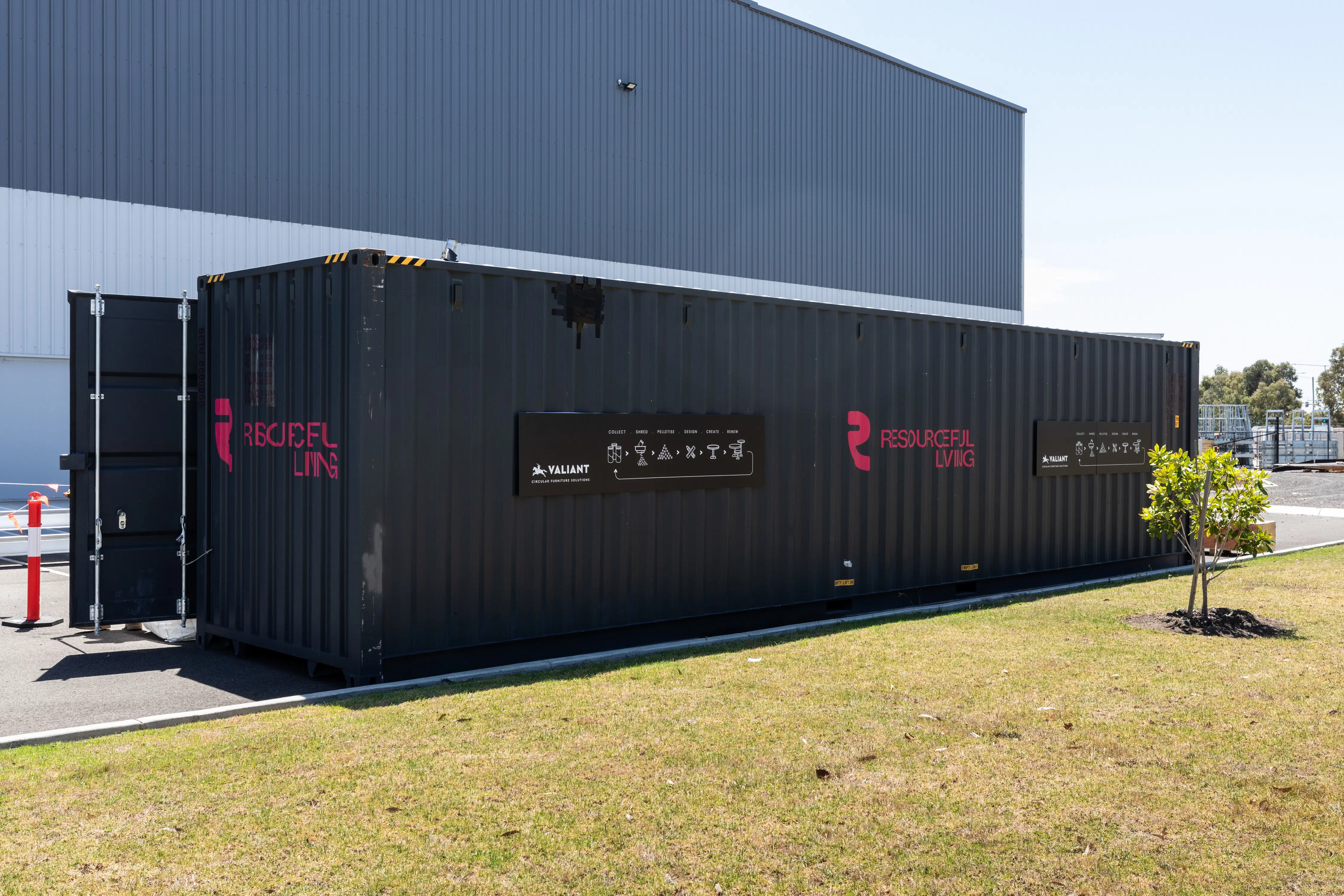
True sustainability requires a take-back program. When a builder uses our recycled plastic boards, they aren't just buying a product; they are entering a partnership. Once the material has reached the end of its life: whether that’s in 5 years or 50: we take it back, shred it, and turn it into new panels.
How to Execute a Take-Back Plan:
- Identify Recyclables: Clearly label materials that are part of a circular program so site crews don't toss them in the general waste skip.
- Partner with Professionals: Work with companies that offer on-site shredding or collection units.
- Document the Loop: Use the recycling data for your ESG reporting or Green Star certification.
Comparison: Traditional Materials vs. Recycled Plastic Panels
| Feature | Marine Plywood / Treated Timber | Recycled Plastic Panels |
|---|---|---|
| Water Resistance | Low (absorbs moisture, rots) | 100% Waterproof |
| Maintenance | High (sanding, painting, sealing) | Zero Maintenance |
| Site Waste | High (one-time use, offcuts to landfill) | Low (reusable, 100% recyclable) |
| Chemicals | Often contains formaldehyde/arsenic | BPA Free & Non-Toxic |
| Lifespan | 2–10 years (outdoors) | 50+ years |
Summary Checklist for Builders
If you're ready to start slashing site waste today, use this quick checklist for your next procurement meeting:
- Switch to standard 2400x1200mm recycled plastic sheets for applications where timber typically fails.
- Specify locally manufactured materials to reduce transport emissions and support Australian jobs.
- Eliminate single-use plastics and timber hoarding in favour of durable, reusable alternatives.
- Verify the "Take-Back" potential of every major material you purchase.
- Leverage the ROI of longer-lasting materials to justify the shift to your stakeholders. Check out the ROI of recycled plastic boards for the hard data.
The Bottom Line
Choosing sustainable construction materials in Australia is no longer a niche environmental choice; it is a strategic business decision. By auditing your waste, sourcing locally, and embracing circular procurement with recycled plastic sheets, you can build faster, cleaner, and more profitably.
Are you ready to close the loop on your next project? Explore our range of 100% recycled plastic products and see how we can help you hit your sustainability targets.