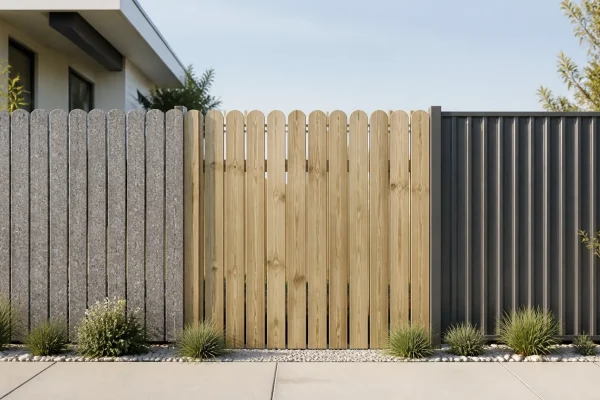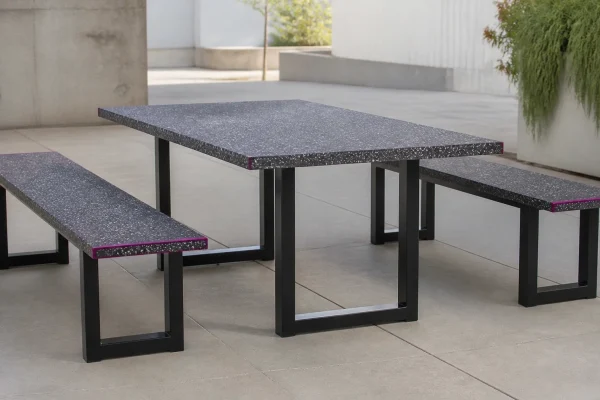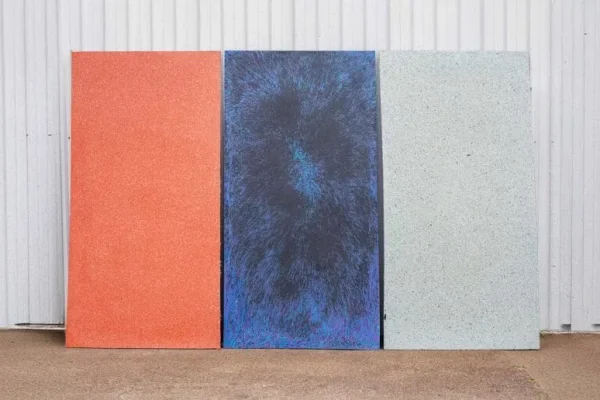

For decades, concrete has been the undisputed "default" for Australian infrastructure. Whether it's a retaining wall, a noise barrier, or a simple erosion control system, the logic was simple: if it needs to last, pour it in concrete.
But as we hit mid-2026, the landscape has fundamentally shifted. Between the new Environmentally Sustainable Procurement (ESP) Policy and the tightening grip of embodied carbon reporting, the "build at any cost" mindset is dead. Builders and engineers are now asking a much more critical question: Is concrete actually the most durable: and responsible: choice for the job?
When you compare traditional concrete against 100% recycled High-Density Polyethylene (HDPE) panels, the data tells a compelling story. From slashing logistics costs to ending the cycle of "concrete cancer," recycled plastic isn't just a "green" alternative; it's a high-performance structural upgrade.
1. The Carbon Equation: 8% vs. Circularity
The most glaring difference between these two materials lies in their environmental debt. It is a well-documented fact that cement production is responsible for roughly 8% of global CO2 emissions. It is an energy-intensive process that relies on the extraction of non-renewable sand and stone.
In contrast, our recycled plastic panels operate on a circular model:
- Waste Diversion: Every square metre of Resourceful Living material locks away thousands of pieces of Australian plastic waste: like milk bottles and lids: that were destined for landfill.
- Energy Efficiency: Manufacturing recycled panels uses significantly less energy and water than cement production, reducing overall upfront emissions by up to 60%.
- Closed Loop: Unlike concrete, which is often demolished and landfilled at its end-of-life, our panels are part of a Take-Back Program. When the project is over, we shred the panels and turn them back into new ones.
"In 2026, a material's value isn't just its price per unit; it's its carbon liability. If your materials aren't helping you hit Net Zero targets, they’re costing you the tender." : Jess Hodge, Owner of Resourceful Living.
2. Weight and Logistics: 1/3 the Weight = 3x the Speed
In construction, weight equals cost. Concrete is notoriously heavy, roughly 2,400kg per cubic metre. This density requires heavy-duty machinery, specialised cranes, and a massive amount of fuel just to move the material from the plant to the site.
Recycled HDPE panels are a logistical game-changer. They are approximately one-third the weight of concrete equivalents.
Why Weight Matters for Your 2026 Project:
- Lower Transport Emissions: You can fit 3x more material on a single truck, immediately slashing your transport-related carbon footprint.
- Manual Handling: Two workers can often carry and position plastic components that would require a forklift if made of concrete. This improves site safety and reduces crew fatigue. 🏗️
- Foundation Loads: Lighter materials mean lower dead loads on your sub-structures, potentially allowing for smaller, less expensive foundations.

3. Durability: Ending the Era of "Concrete Cancer"
Concrete's greatest myth is that it is "maintenance-free." Any council engineer will tell you otherwise. Concrete is porous; over time, water and salt seep in, reaching the internal steel reinforcement (rebar). This leads to rust, expansion, and cracking: the dreaded concrete cancer (spalling).
Recycled plastic is chemically inert. It doesn't just resist moisture; it's completely impervious to it.
- ✅ Zero Corrosion: It won't rot, swell, or rust. This makes it the ultimate choice for marine environments, coastal boardwalks, and erosion control.
- ✅ Chemical Resistance: It’s unaffected by salt, oils, and acids that would normally degrade a concrete barrier or retaining wall.
- ✅ Impact Resilience: While concrete is brittle and prone to chipping or shattering under impact, HDPE has a degree of "flex." It absorbs shocks, making it far superior for high-traffic noise barriers or bollards. 🛡️
4. Practical Applications in 2026 Infrastructure
While you won't be using plastic for a 40-storey skyscraper's foundation just yet, it is rapidly replacing concrete in critical civil and structural applications across Australia.
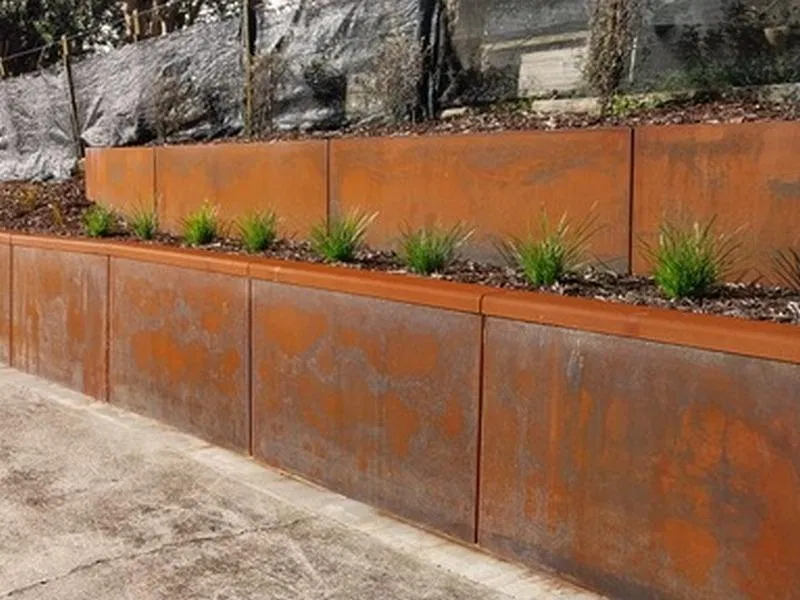
Retaining Walls & Garden Edging
Traditional concrete blocks are prone to shifting and cracking as the ground moves. Our modular retaining wall panels are lightweight, easy to install with standard tools, and look incredible with custom "rust-effect" or "ochre" finishes.
Noise Barriers & Acoustic Cladding
Concrete noise walls are expensive to install and nearly impossible to repair. Recycled plastic panels offer excellent acoustic properties, are graffiti-resistant (as the colour is solid-core), and can be replaced in minutes if damaged.
Erosion Control & Coastal Structures
In 2026, coastal resilience is a priority. Using a material that thrives in salt spray without the risk of spalling is a no-brainer. From boardwalks to sea-wall cladding, recycled plastic is the logic-driven choice.

Comparison At-A-Glance: Concrete vs. Recycled Plastic
| Feature | Traditional Concrete | Resourceful Living Recycled Plastic |
|---|---|---|
| Weight | Very Heavy (Requires cranes) | Lightweight (Hand-portable) |
| Installation | Days/Weeks (Needs curing) | Hours/Days (Ready instantly) |
| Maintenance | High (Sealing, crack repair) | Negligible (Inert, no rot) |
| CO2 Impact | High (8% global emissions) | Low (Uses 100% Aussie waste) |
| Life Cycle | Linear (Landfill at end-of-life) | Circular (100% Recyclable) |
| Workability | Specialized diamond tools | Standard woodworking tools |
The Verdict: Which Should You Choose?
It is important to be realistic: Recycled plastic is not a 1:1 replacement for concrete in every scenario. If you are pouring the slab for a major highway bridge or the core of a high-rise, concrete’s compressive strength is still king.
However, for the thousands of square metres of retaining walls, noise barriers, boardwalks, and cladding that make up our urban environment, concrete is increasingly becoming the "expensive" choice: expensive for your budget, your timeline, and the planet.
By switching to 100% Australian recycled plastic, you aren't just building a project; you're building a solution to Australia’s plastic waste crisis while future-proofing your business against the carbon reporting standards of 2026.
Ready to specify recycled plastic for your next tender?
- Step 1: Download our Material Data Sheets to see the technical specs.
- Step 2: Request a sample pack to feel the durability for yourself.
- Step 3: Contact our team for a custom quote and carbon-offset estimate.
Let's close the loop together. ♻️🇦🇺