Let’s be honest: for a long time, if you were building something "structural" in Australia, concrete was the only name in the game. It’s heavy, it’s permanent, and we all know how to use it. But as we head into 2026, the construction landscape is shifting, fast. Between new embodied carbon reporting requirements and the explosion of the modular building sector, builders are looking for smarter, lighter, and greener alternatives.
That’s where the "recycled plastic vs concrete structural" debate really heats up. While we aren’t suggesting you pour your next 40-storey foundation with melted milk bottles (yet!), for a massive range of modular and secondary structural applications, recycled plastic sheets in Australia are actually outperforming the old-school heavyweight.
In this deep dive, we’re breaking down the structural performance, weight advantages, and massive carbon savings that come with swapping "wet" concrete for "dry" recycled HDPE.
The Structural Reality: Strength vs. Toughness
One of the biggest misconceptions in the industry is that "strength" only means "how much weight can this hold before it squashes?" In technical terms, that’s compressive strength, and yes, concrete (at 25–40 MPa) wins that battle every day of the week.
However, in modular construction, we often care more about toughness and impact resistance. Concrete is inherently brittle. It cracks under ground movement, thermal expansion, or, as many Aussie coastal builders know, moisture ingress that leads to "concrete cancer."
Why Recycled HDPE is the "Tough" Choice
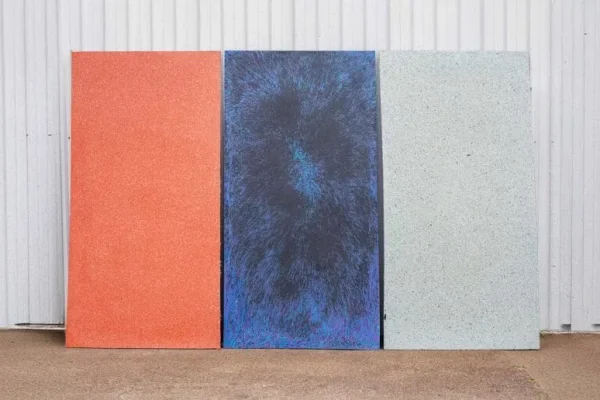
Our recycled plastic panels are manufactured from 100% Australian recycled HDPE. Unlike concrete, which fails through cracking, HDPE fails through deformation. It’s flexible. It can absorb impact and shift with the ground without losing its integrity.
- Impact Resistance: High-density polyethylene is notoriously hard to break. It won't shatter if a forklift clips it or if the ground settles under a modular unit.
- Zero Moisture Absorption: While concrete is porous and prone to spalling, our panels are 100% waterproof. For modular builds in wet or coastal environments, this is a literal lifesaver.
- Weatherability: Our sheets are tested for UV resistance and durability, ensuring they don't degrade in the harsh Australian sun.
The "Modular" Advantage: Weight and Logistics
If you’re in the modular space, you know that weight is money. Every extra kilogram adds to your crane costs, your transport permits, and your fuel consumption.
Concrete is heavy, roughly 2,400kg per cubic metre. In contrast, our 100% recycled plastic panels are 35–40% lighter than their concrete equivalents. When you’re shipping a pre-fab module from a factory to a remote site, that weight reduction is a game-changer.
1. Simplified Logistics
You can fit more material on a single truck. Period. By reducing the number of transport runs required, you’re not just saving on diesel; you’re directly lowering the upfront carbon of your project.
2. Site Safety and Manual Handling
A standard 2400mm x 1200mm recycled plastic sheet can often be handled by two workers. A concrete slab of the same size requires a crane or heavy-duty forklift. By choosing recycled plastic sheets in Australia, you're reducing the reliance on heavy machinery, making your site safer and your installation faster.
3. "Dry" vs "Wet" Trades
Modular construction thrives on speed. Concrete requires curing time, sometimes days or weeks, before you can move to the next stage. Working with our panels is a "dry" process. They can be cut, drilled, and installed using standard woodworking tools, allowing your team to move at a faster product turnaround.
Decarbonisation: Meeting the 2026 Targets
The Australian government’s Environmentally Sustainable Procurement Policy is no longer a "nice to have." By 2026, meeting recycled-content targets will be a prerequisite for winning government tenders.
Concrete is one of the most carbon-intensive materials on the planet, largely due to the energy required to fire cement kilns. Recycled plastic panels, however, represent a circular economy in action.
"Switching from concrete to recycled plastic in non-load-bearing structural roles can cut project emissions by up to 60% while preventing tonnes of plastic from reaching Aussie landfills."
Upfront Carbon Savings
When you use a Resourceful Living panel, you are using material that has already "lived" as a milk bottle or a detergent container. There is no new mining, no high-heat chemical reactions, and very little water usage.
- Low Embodied Carbon: Our manufacturing process involves minimal reprocessing, which according to industry standards, can result in 95% less embodied carbon than virgin materials.
- End-of-Life Take-Back: Unlike concrete, which often ends up as landfill rubble, our products are part of a Closed Loop ESG Partner Program. We take our panels back at the end of their life to shred them and make new ones.

Comparison Table: Recycled Plastic vs. Concrete
| Feature | Concrete (Traditional) | Recycled Plastic Panels (rHDPE) |
|---|---|---|
| Weight | ~2,400 kg/m³ (Heavy) | ~950 kg/m³ (Lightweight) |
| Embodied Carbon | Very High (Cement-intensive) | Very Low (100% Recycled) |
| Installation | Wet trade / High lead times | Dry trade / Instant use |
| Moisture Resistance | Porous (Risk of concrete cancer) | 100% Waterproof |
| Maintenance | Cracks require patching/sealing | Zero maintenance / UV stabilised |
| End-of-Life | Downcycled to road base / Landfill | 100% Recyclable (Circular) |
Practical Applications for Modular Builders
So, where exactly should you be making the swap? While you'll still need concrete for your primary structural slabs, recycled plastic vs concrete structural performance is winning in these key modular areas:
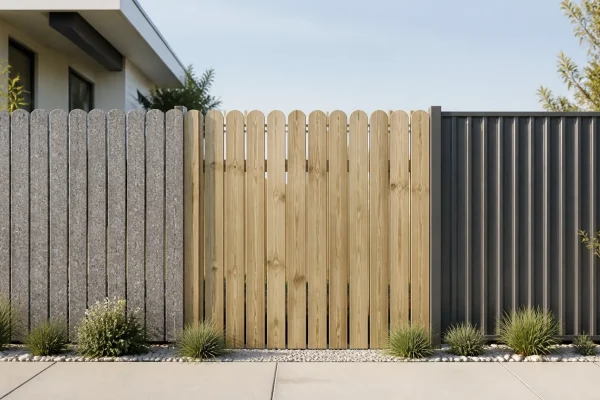
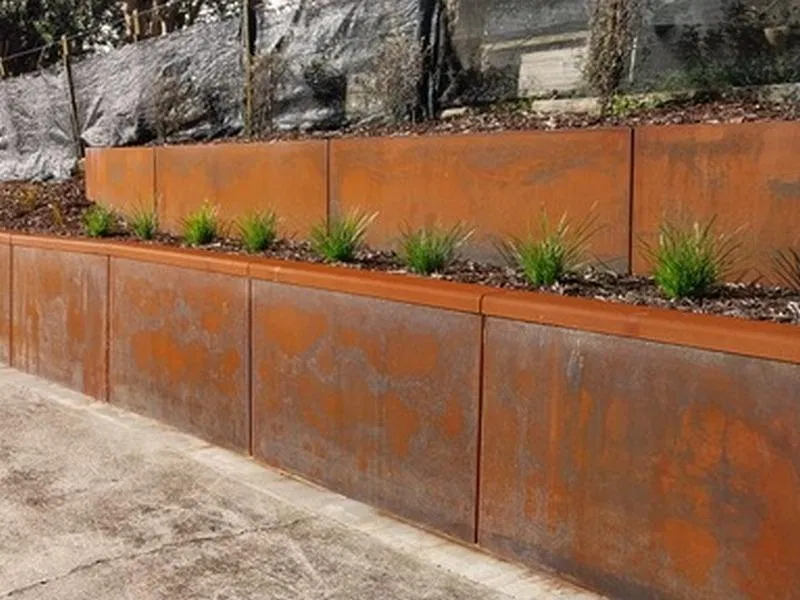
- Retaining Walls & Erosion Control: Our panels won't rot, rust, or crack like timber or concrete sleepers.
- Noise Barriers & Acoustic Fencing: The density of rHDPE makes it an incredible sound dampener for roadside or industrial modular units.
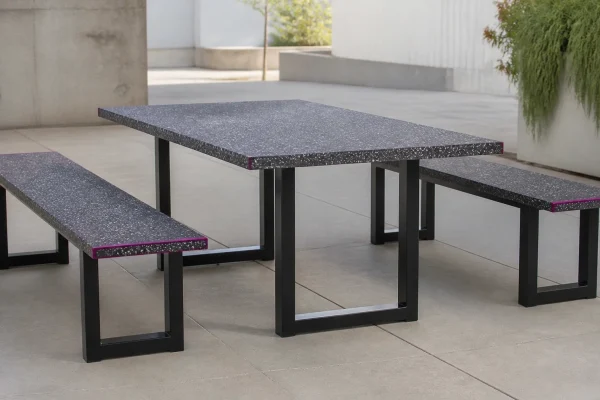
- Internal Structural Fit-outs: Use them for storage units, partition walls, and wet-area linings where moisture resistance is critical.
- Site Hoarding & Formwork: Stop buying plywood that ends up in a skip. Our panels can be reused dozens of times and then recycled.

Checklist: Is Recycled Plastic Right for Your Next Module?
Before you specify concrete for your next project, ask yourself these four questions:
- Is this a high-load foundation? (If yes, stay with low-carbon concrete. If no, consider plastic).
- Is weight a factor for transport or craning? (Plastic will save you 40% on weight).
- Is the project located in a high-moisture or coastal zone? (Plastic won't corrode or spall).
- Do I need to meet a specific 2026 recycled-content target? (Using 100% Australian recycled plastic is the easiest way to hit your numbers).
The Future is Circular
As we move toward a decarbonised built environment in Australia, the materials we choose define our legacy. Concrete will always have its place, but the "default" mentality is dying.
By integrating recycled plastic sheets in Australia into your modular builds, you aren't just choosing a material that is easier to handle and faster to install: you’re choosing a material that respects the planet.
Ready to see the difference? Order a sample pack of our 100% recycled Australian plastic panels today and see how they stack up against your current specs.