
In 2026, the Australian construction landscape has shifted. Building a "green" project is no longer just about operational efficiency: how many solar panels you have or the R-value of your insulation. Today, the focus has moved squarely onto embodied carbon.
If you are a builder, developer, or specifier, you already know that "carbon neutral" claims aren't enough anymore. You need the data to back it up. With the NCC 2025 standards now in full swing and NABERS Embodied Carbon ratings becoming the industry benchmark, reporting has moved from a voluntary "nice-to-have" to a mandatory compliance hurdle.
This guide provides a practical, no-nonsense roadmap for integrating embodied carbon reporting into your Australian projects, focusing on how to use material data and Environmental Product Declarations (EPDs) to meet modern mandates.
Why Embodied Carbon is the New Compliance Frontier
Operational carbon (the energy used to run a building) is relatively easy to track. Embodied carbon: the emissions generated during the extraction, manufacture, transport, and assembly of building materials: is much harder.
Historically, this was the "hidden" part of a building's footprint. However, as our grid decarbonises, embodied carbon is expected to account for up to 85% of a new building’s lifecycle emissions by 2050.
The Regulatory Drivers in 2026:
- NABERS Embodied Carbon Rating: Launched in late 2024, this is now the gold standard for commercial and large-scale residential projects.
- NCC 2025/2027: The National Construction Code has introduced pathways that require builders to demonstrate a reduction in upfront carbon.
- Government Procurement: From July 2024, any Commonwealth-funded infrastructure project over $7.5m must measure and report embodied carbon.
"If you aren't measuring your material carbon today, you aren't just failing the environment: you're failing your tender requirements."
Step 1: Establish Your Carbon Baseline Early
The biggest mistake you can make is trying to "find" the carbon data at the end of the project. To successfully report for NABERS or NCC compliance, you must establish a baseline during the concept design phase.
- Define the Scope: Are you reporting just on upfront carbon (Stages A1–A3: "Cradle to Gate") or the full lifecycle (including transport and construction)? Most Australian frameworks currently prioritise upfront carbon.
- Use a Reference Design: Compare your proposed material list against a "Business as Usual" (BAU) version. This highlights where your biggest "carbon hotspots" are: typically steel, concrete, and aluminium.
- Identify High-Impact Substitutions: This is where you can win. Replacing traditional timber or virgin plastic with 100% recycled Australian materials can drastically lower your baseline.

Step 2: Source Verified Data (The Power of EPDs)
To get a NABERS star rating, you can't just guess. You need Environmental Product Declarations (EPDs). Think of an EPD as a nutritional label for a building product. it tells you exactly how much CO2e (carbon dioxide equivalent) was produced to make that item.
The Data Hierarchy
When reporting, the quality of your data matters:
- Priority 1: Product-Specific EPDs. These are third-party verified and provide the most accurate data for your LCA (Life Cycle Assessment).
- Priority 2: Industry-Average EPDs. Good for early-stage planning but less persuasive in a competitive tender.
- Priority 3: National Default Factors. These are "worst-case scenario" numbers. Using defaults often makes your project look higher-carbon than it actually is.
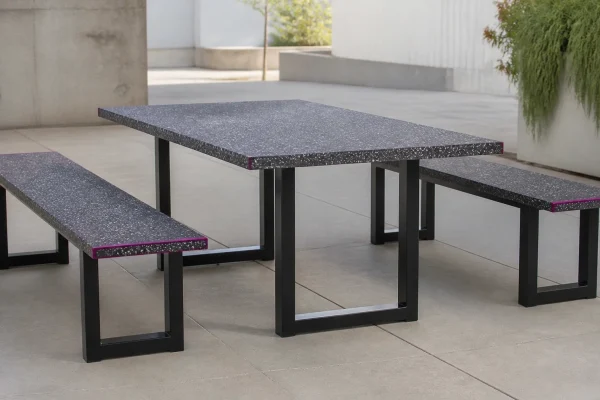
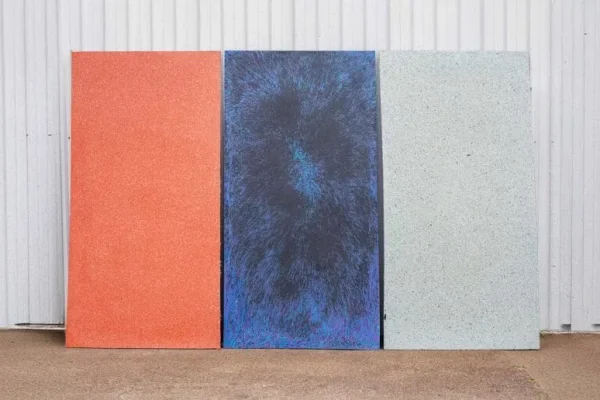
At Resourceful Living, we prioritise data transparency. When you specify our recycled plastic sheets, you aren't just getting a durable product; you are getting a traceable, low-carbon solution that feeds directly into your reporting software.

Step 3: Integrating Carbon into Your Workflow
Reporting shouldn't be a separate task; it should be part of your standard project management.
✅ Procurement Specs
Update your tender documents to require EPDs from all major suppliers. If a supplier can't provide carbon data in 2026, they are a risk to your project’s compliance. Learn more about winning government tenders using the recycled content lever.
✅ Bill of Quantities (BoQ)
Your BoQ needs to be "carbon-ready." Ensure line items include material type, volume/weight, and the specific supplier. This allows your LCA consultant to quickly map materials to carbon factors.
✅ Site Logs
Track what actually arrives on site. Substitution is a common issue: if a low-carbon concrete mix is swapped for a standard mix last minute, your report will be inaccurate.

Suggested Image: An infographic showing the flow of data from Manufacturer (EPD) to Builder (BoQ) to NABERS Assessor (Report).
Step 4: Leverage Traceability as a Competitive Edge
In 2026, greenwashing is a legal liability. The ACCC and other regulatory bodies are cracking down on "recycled" claims that can't be proven. This is where local traceability becomes your best friend for embodied carbon reporting.
When you use materials sourced and manufactured in Australia, your transport emissions (Stage A4) are significantly lower than imported alternatives. Furthermore, you can verify the "waste-to-product" journey.
Why Resourceful Living’s traceability matters for your report:
- 100% Australian Sourced: We use local post-consumer and post-industrial waste.
- Closed-Loop Reporting: We provide the data you need to prove the material stayed out of landfill, contributing to circular economy targets.
- Standardised Sheets: Our 2400mm x 1200mm sheets are easy to quantify in a BoQ, making your auditor's job simpler.
Check out our guide on how to audit your supply chain for 100% traceable Australian recycled plastic.

Step 5: Navigating NABERS and NCC Compliance
Once you have your data, you need to submit it.
For NABERS Embodied Carbon:
You will need an accredited assessor. They will take your as-built BoQ and verified carbon claims to issue a star rating. Projects achieving 5 or 6 stars are currently seeing significantly higher valuations and lower finance rates through "green loans."
For NCC Compliance:
The NCC provides several pathways. You can either use a prescriptive approach (using specific low-carbon materials) or a performance-based approach (demonstrating your whole-of-building carbon is below a certain threshold).
For many builders, the performance-based approach is easier when using innovative materials like RHDPE (Recycled High-Density Polyethylene), as it allows you to offset high-carbon structural elements with ultra-low-carbon fit-out materials.
Comparing Materials: A Quick Cheat Sheet
When you're trying to hit a carbon target, the materials you choose make or break the report.
| Material | Embodied Carbon Profile | Maintenance Requirement | Traceability |
|---|---|---|---|
| Virgin Timber | Low (but carries high "end of life" emissions) | High (Rot/Termites) | Variable |
| Concrete | Very High | Low | High |
| Virgin Plastic | High | Low | Low |
| Resourceful Living Recycled Plastic | Ultra-Low | Zero | 100% Australian |
If you're debating between materials, read our deep dive on Recycled Plastic vs Timber for asset maintenance budgets.
Summary Checklist for Builders and Developers
To ensure your next project meets the 2026 standards, follow this checklist:
- Appoint an LCA Consultant early (at the schematic design stage).
- Set a carbon reduction target (e.g., 20% lower than BAU).
- Insert "EPD Required" clauses into all sub-contractor agreements.
- Prioritise Australian-made materials to reduce transport emissions and ensure data reliability.
- Use a digital tracking system for site deliveries to verify as-built quantities.
- Finalise your NABERS rating post-completion to secure your building's market value.

The Bottom Line
Embodied carbon reporting isn't just about paperwork; it’s about future-proofing your business. As Australia moves toward a circular economy, the builders who master carbon data today will be the ones winning the premium contracts tomorrow.
At Resourceful Living, we’re here to make that transition easy. Our 100% recycled Australian plastic sheets provide a high-performance, low-carbon alternative to traditional materials, backed by the traceability you need for airtight reporting.
Ready to lower your project's carbon footprint? Explore our technical guide to recycled plastic sheets or reach out to see how we can help with your next NABERS-rated project.