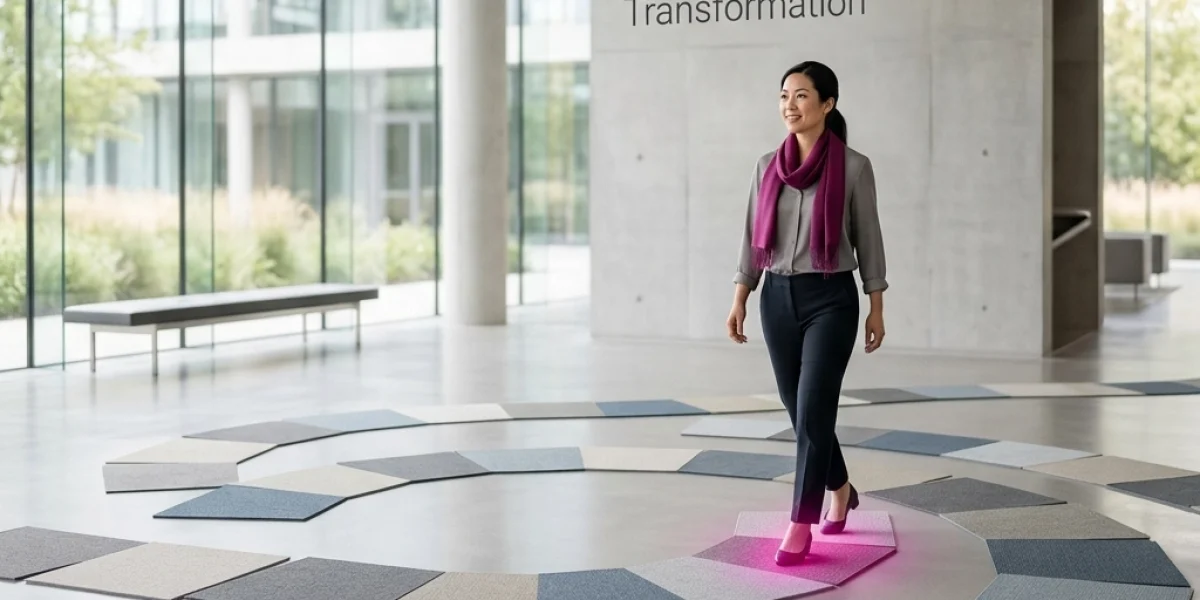
As the construction and design industries pivot toward a zero-waste future, the challenge of managing complex waste streams remains a significant hurdle. In the flooring sector, particularly for global leaders like Milliken, the transition from a linear "take-make-waste" model to a circular one requires not just intention, but rigorous Technical Research and Development (R&D).
This proposal outlines a strategic partnership between Resourceful Living and Milliken, focused on a specific, high-impact goal: transforming flooring waste into durable, aesthetic, and 100% recycled plastic assets. By leveraging our Australian-made manufacturing capabilities, we aim to turn a disposal liability into a high-value resource.
The Proposal: Circular Flooring Transformation
To: Shaneel Deo, Milliken
From: Jess Hodge, Resourceful Living
Date: 7 April 2026
Project: Transforming flooring waste into 100% recycled plastic sheets.
1. Project Goal
The primary objective of this R&D initiative is to divert Milliken's flooring waste from landfill and re-engineer it into high-performance recycled plastic panels. This project seeks to prove that the complex polymers found in commercial flooring can be successfully processed through thermal compression to create structural materials suitable for commercial resale or internal fit-outs.
2. Primary Deliverable
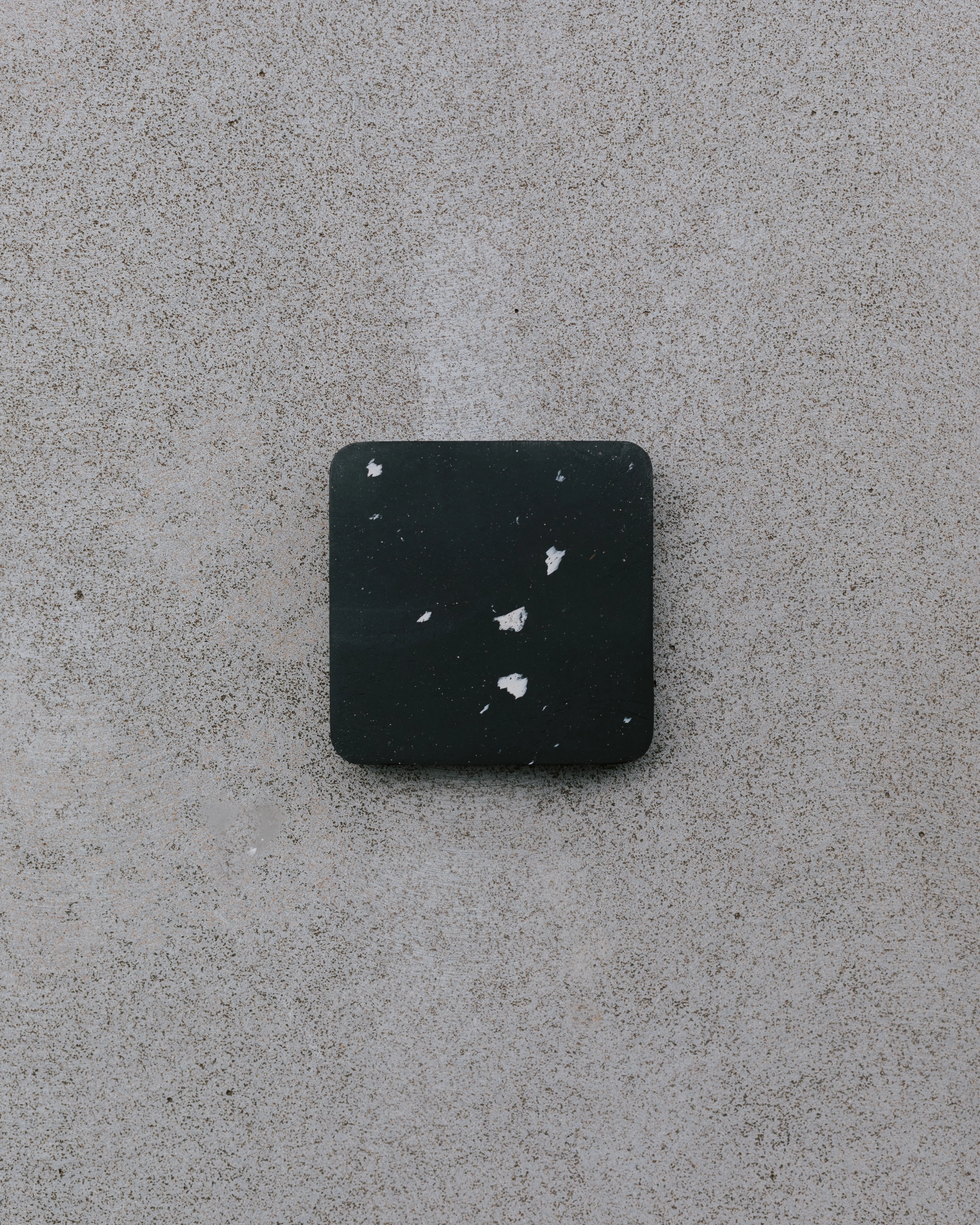
The cornerstone of this phase is the production of a specific 200 x 200 x 20mm textured sample. This physical asset will serve as the "Proof of Concept" (PoC), demonstrating the material’s structural integrity, aesthetic appeal, and finish quality.
3. 4-Phase Technical Roadmap
To ensure the highest standards of material performance and safety, Resourceful Living follows a structured, scientific approach to material transformation.
- Phase 1: Material Audit (Waste Composition & Compatibility Review):
We begin by analysing the chemical and physical makeup of the Milliken waste stream. This includes identifying backing materials (PVC, Polyolefin, or bitumen) and yarn fibres (Nylon 6 or 6,6). Understanding the melting points and flow rates is critical to ensuring the final panel doesn't delaminate or fail under stress. - Phase 2: Shredding/Processing (Granulation and Thermal Trial):
The waste is processed through our industrial granulators to achieve a uniform particle size. We then conduct small-scale thermal trials to determine the optimal pressure-to-heat ratio required to bond the disparate fibres into a solid matrix. - Phase 3: Prototyping (Production of the 200x200x20mm Sample):
Using the data from Phase 2, we manufacture the primary deliverable. This sample features a textured finish to showcase how the material can be utilised in high-traffic or aesthetic applications. - Phase 4: Validation (Structural and Aesthetic Testing):
The final phase involves rigorous testing for density, impact resistance, and UV stability. This ensures the material meets the requirements for choosing the best recycled plastic sheets in the Australian market.
Why Circularity Matters for Milliken
Milliken has already established itself as a pioneer in sustainability through initiatives like the N/XT Life™ programme and investments in circular technologies. However, the "missing link" in many circular strategies is the local, high-value upcycling of waste that cannot be easily returned to the original manufacturing loop.
By partnering with Resourceful Living, Milliken can offer a truly closed-loop Australian solution. Instead of shipping waste offshore or downcycling it into low-value aggregate, we create premium panels that can be used for furniture, retail displays, or structural components. This aligns perfectly with the shift toward circular construction in 2026, where material traceability and local manufacturing are paramount.
Impact Metrics (NCIG-Style Reporting)
In today’s regulatory environment, "sustainability" must be backed by hard data. Our R&D process provides the metrics needed for comprehensive embodied carbon reporting.
- ✅ Waste Avoidance: Complete diversion of specialised flooring waste from landfill, reducing long-term environmental liability.
- ✅ Carbon Reduction: Every tonne of plastic recycled through our process saves between 0.9 and 1.75 tonnes of CO2 equivalent, compared to virgin plastic production or incineration.
- ✅ Resource Efficiency: We turn a disposal cost into a tangible asset, providing a secondary revenue stream or a low-carbon material source for Milliken’s own facilities.
Technical Deep Dive: The Science of Transformation
One of the biggest hurdles in flooring recycling is the multi-material composition. Carpet tiles are often a sandwich of face fibres, primary backings, and heavy secondary backings.
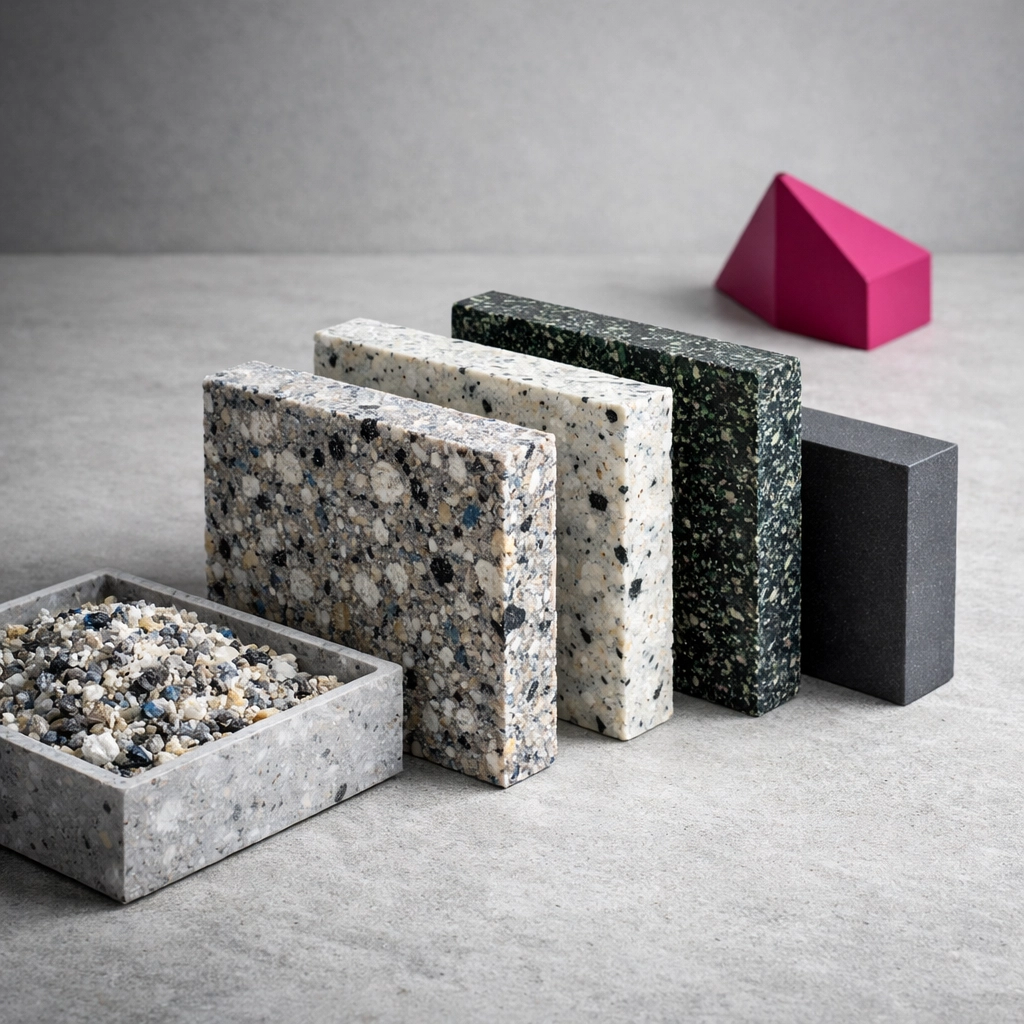
Traditional recycling often fails here because these layers have different melting points. At Resourceful Living, our proprietary thermal compression process creates a homogenous matrix. By carefully controlling the "dwell time" in our presses, we allow the lower-melt plastics to act as a binder for the higher-melt fibres, resulting in a composite material that is often stronger than the sum of its parts.
"True circularity isn't just about collecting waste; it's about re-engineering it into a product that outperforms its virgin predecessors." : Resourceful Living Engineering Team
Visualising the Result
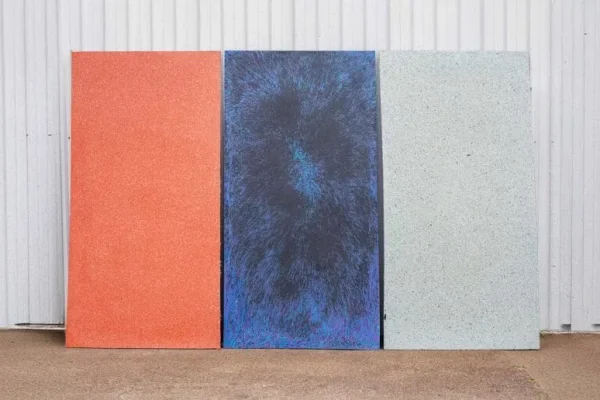
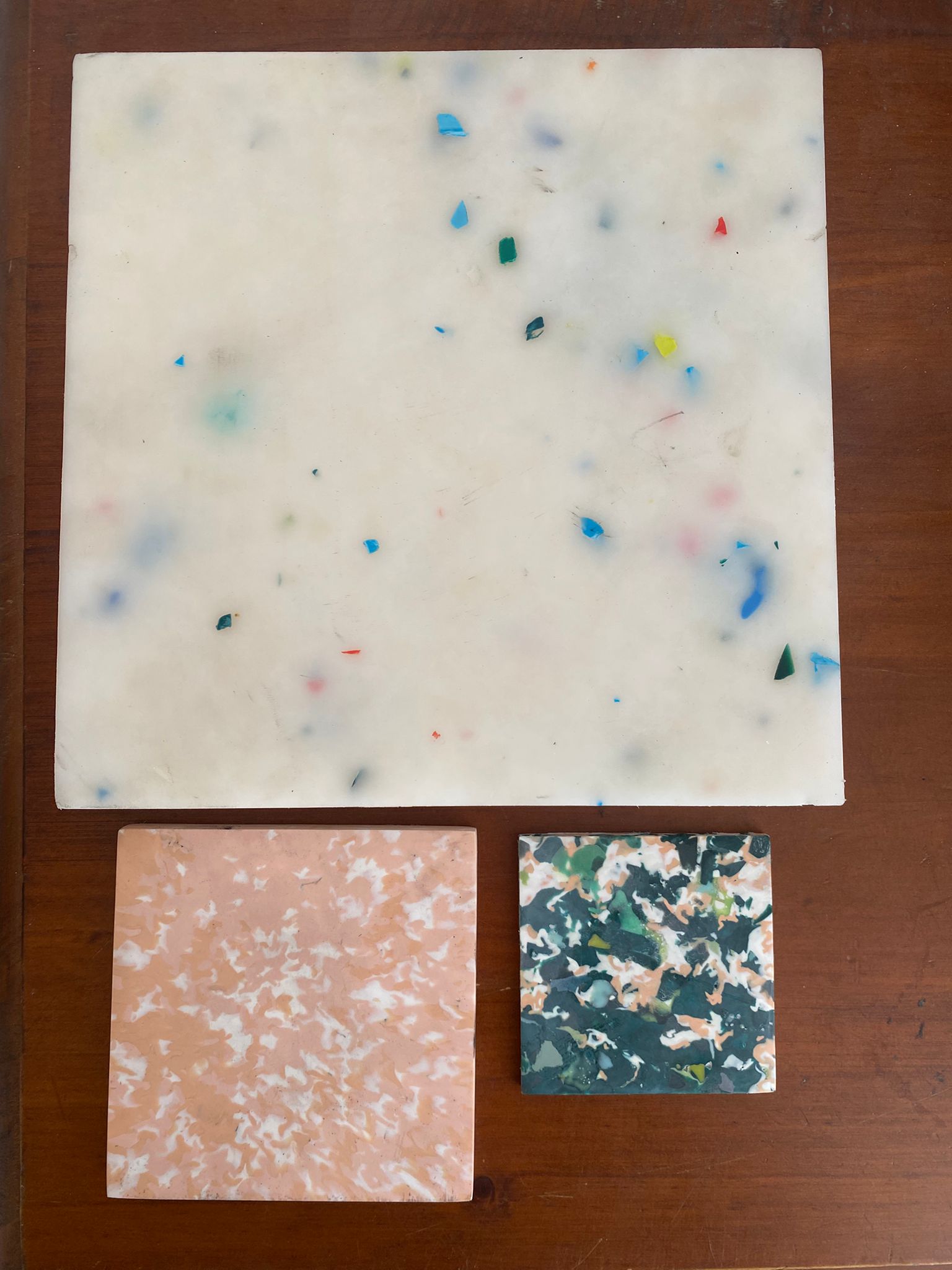
The proposed 200 x 200 x 20mm sample isn't just a piece of plastic; it's a window into the future of Milliken's product lifecycle. The textured surface provides tactile feedback for architects and designers, proving that "recycled" doesn't have to mean "industrial" or "unrefined."
Scalability: From Sample to Industrial Production
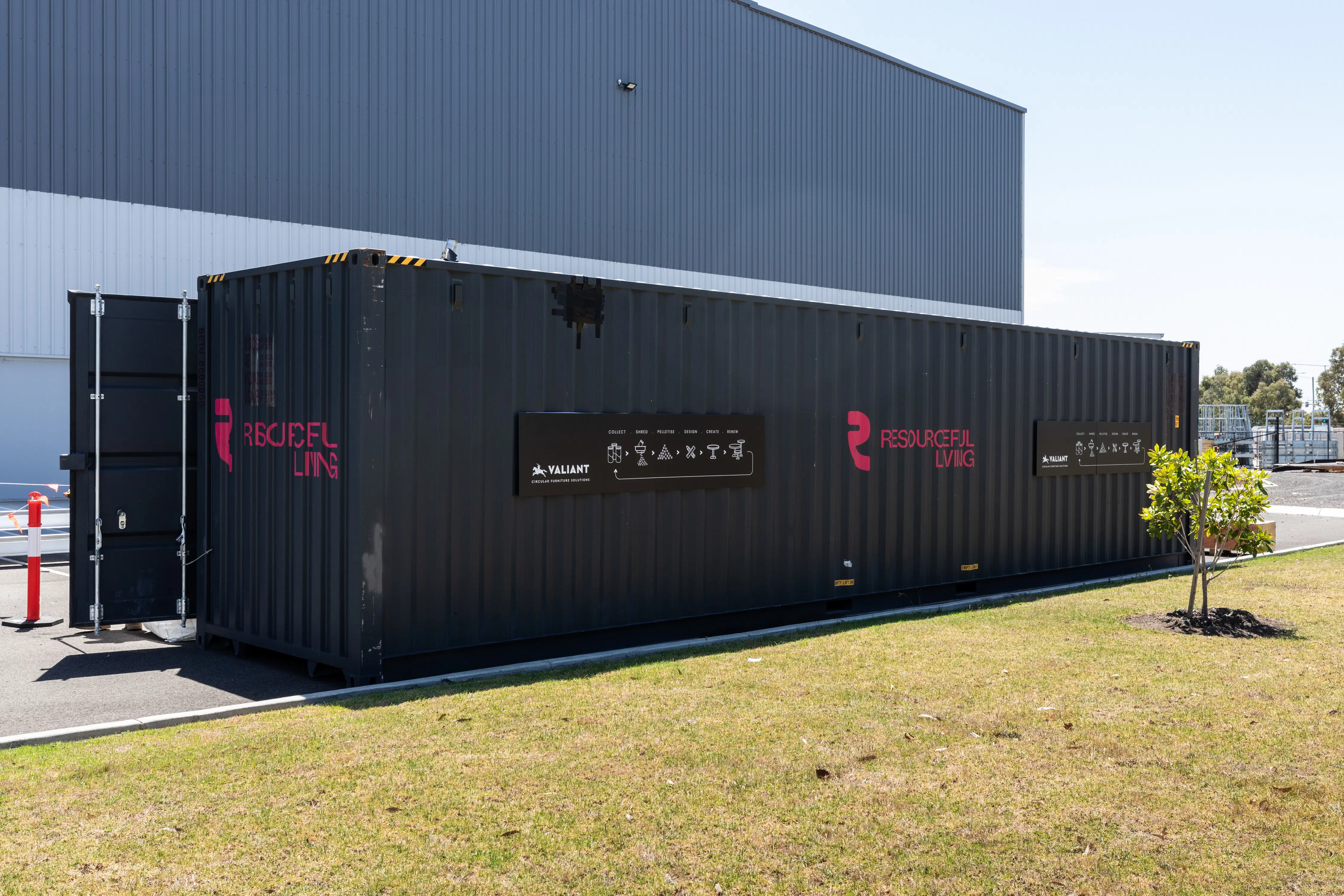
While this R&D proposal focuses on the initial prototype, our infrastructure is built for scale. Our onsite mobile recycling units allow for efficient collection and processing of waste directly at the source or at central hubs, reducing the carbon footprint associated with logistics.
Comparative Advantage
When comparing our recycled plastic sheets to traditional materials like concrete or virgin timber, the benefits are clear:
- Maintenance: Unlike timber, these sheets are moisture-proof and rot-resistant.
- Weight: significantly lighter than concrete, reducing transport emissions.
- End-of-Life: The panels themselves are 100% recyclable through our take-back programme, ensuring they never enter the waste stream again.
| Feature | Resourceful Living Panel | Traditional Timber/MDF |
|---|---|---|
| Moisture Resistance | 100% Waterproof | Swells/Rots |
| Carbon Footprint | Negative (Sequestration) | High (Processing/Logistics) |
| Recyclability | Infinite | Limited (Glues/Resins) |
| Durability | High Impact Resistance | Scratches/Dents Easily |
Investment and Commitment
The path to innovation requires a dedicated investment in engineering and testing. Resourceful Living is committed to providing Milliken with a clear, transparent cost structure for this R&D phase.
- R&D Phase Fee: $1,500 – $3,500 + GST.
- Includes: All material testing, granulation, prototyping, and the delivery of the 200mm textured sample.
This investment is the first step toward a broader partnership that could redefine flooring sustainability in the Asia-Pacific region.
Call to Action: Partnering with Resourceful Living
The transition to a circular economy is no longer a "nice-to-have": it is a commercial necessity. For an organisation like Milliken, which is already leading the charge globally, this R&D proposal offers a practical, local, and highly visible way to demonstrate commitment to Australian sustainability.
By choosing Resourceful Living, you are choosing a partner that is 100% Australian Made and deeply invested in the lifecycle of every plastic panel we produce.
Next Steps:
- Formal Approval: Review and sign off on the R&D fee.
- Material Transfer: Milliken to provide 50kg of mixed flooring waste for Phase 1.
- Kick-off Meeting: A technical briefing with our manufacturing team to align on aesthetic goals.
We look forward to the possibility of working with Shaneel Deo and the Milliken team to transform the future of flooring. Let's turn waste into the foundation of your next project.
For more information on our technical capabilities or to view our previous case studies, visit our main website or explore our guide to hitting net-zero.