
If you’re managing a construction or infrastructure project in Australia in 2026, the goalposts have moved. It’s no longer just about meeting deadlines and staying under budget; it’s about embodied carbon.
As operational emissions (those from running a building) decrease thanks to a greener grid, the focus has shifted to the emissions "hidden" in the materials themselves. This is embodied carbon reporting in Australia, and if you’re a busy project manager, you need a way to quantify it without losing hours to spreadsheets.
At Resourceful Living, we’re helping PMs skip the guesswork by providing hard data that plugs directly into your ESG (Environmental, Social, and Governance) reports.
The Current State of Play: NABERS and Infrastructure Guidance
Australia has formalised how we track these "locked-in" emissions. Whether you’re working on a high-rise in Sydney or a regional rail project, two frameworks likely govern your reporting:
- NABERS Embodied Carbon Rating: Specifically for buildings, this measures emissions from the manufacturing, transport, and construction phases.
- Embodied Carbon Measurement for Infrastructure: A nationally consistent framework approved in mid-2024 to ensure infrastructure projects use the same "yardstick" for emissions.
The reality? Embodied carbon can account for up to 80% of a building’s lifetime emissions. Unlike operational energy use, which can be improved later with solar panels or better HVAC, embodied carbon is permanent the moment the project is finished.
Why You Can’t Ignore the "Lock-In" Effect
For project managers, reporting isn't just about compliance; it’s about tender competitiveness. Government and Tier 1 contractors are increasingly mandating strict carbon limits.
"Embodied carbon is the carbon debt we incur before a building even opens its doors. If we don’t measure it at the procurement stage, we’ve already lost the battle against Net Zero."
If you haven't already, check out our guide on why circular construction 2026 will change the way you buy materials forever to understand the broader shift in the Australian market.
The Resourceful Living Cheat Sheet: Key Metrics for Your Report
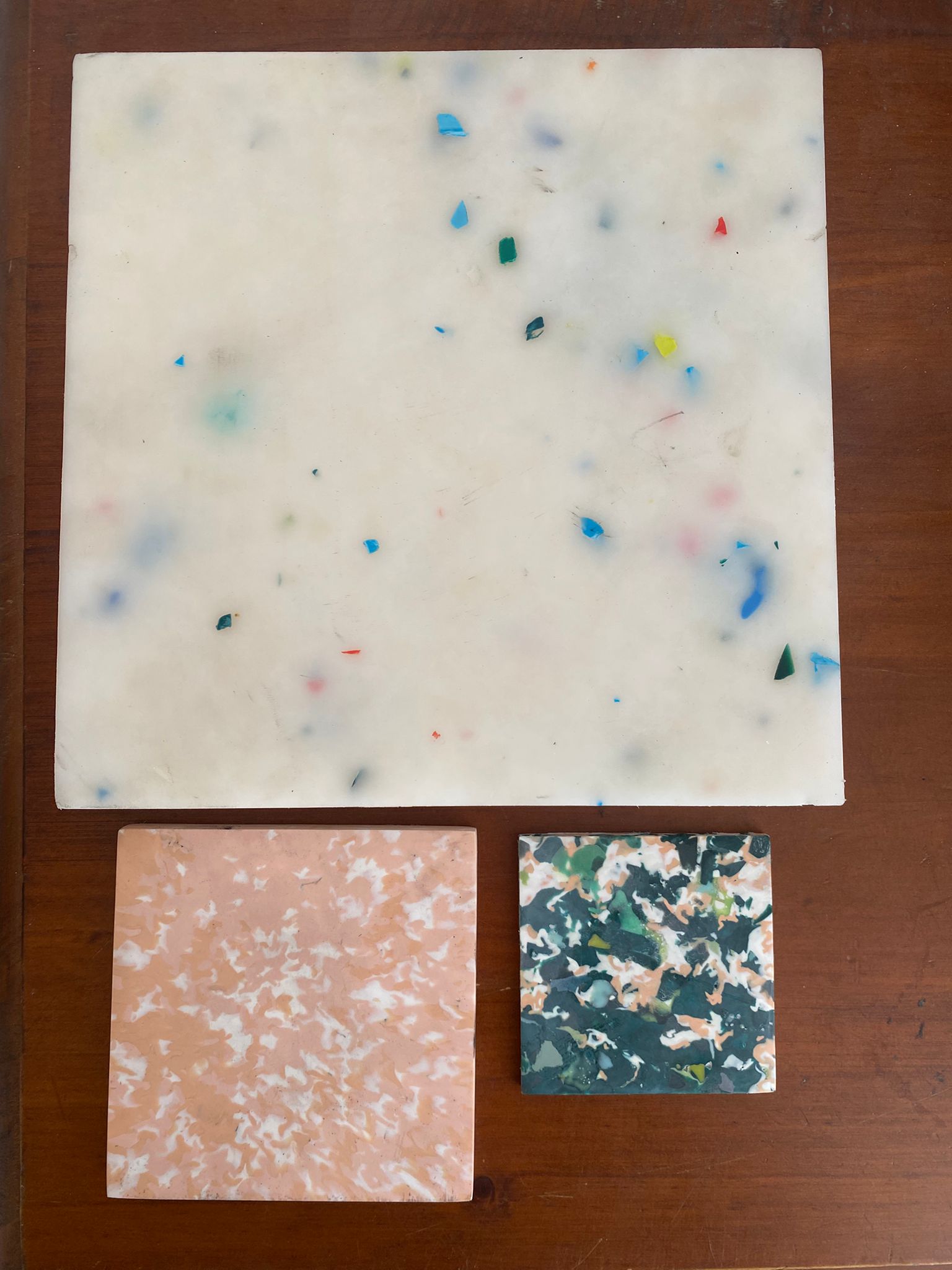
We know you’re busy. You don’t need a 50-page manifesto; you need numbers. When you specify our 100% Australian recycled plastic sheets, here is the data you can immediately feed into your reporting tools:
1. Waste Diversion: 20kg Per Sheet
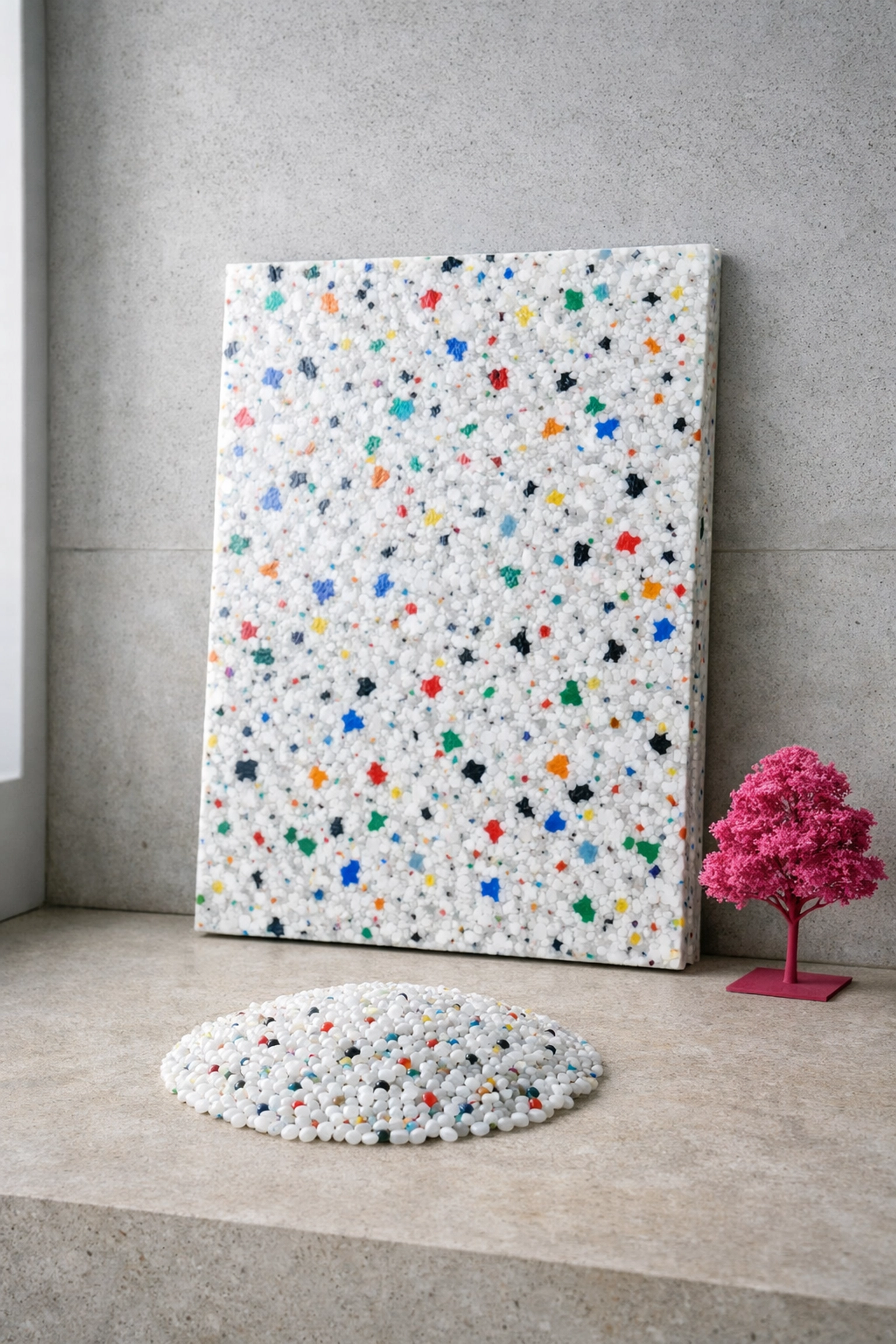
Every standard sheet of our material (12mm-20mm average) represents approximately 20kg of plastic waste diverted from Australian landfills.
- Why it matters: This directly supports your waste management plan and circular economy targets.
- Pro Tip: If your project uses 500 sheets for hoarding or internal fit-outs, you’ve just diverted 10 tonnes of waste. That is a massive "win" for your sustainability report.
2. Carbon Emissions Savings: 0.9 to 1.75 Tonnes per Tonne
This is the heavy hitter for your carbon spreadsheet. For every tonne of HDPE (High-Density Polyethylene) panels you use instead of virgin plastic or high-emissions timber alternatives, you realise a saving of 0.9 to 1.75 tonnes of CO2 emissions.
- A1-A3 Impact: Because our manufacturing process uses 100% recycled feedstock and happens right here in Newcastle, the "Upfront Carbon" (Modules A1-A3) is significantly lower than imported materials.
Understanding the Reporting Modules (A1–A5)
To master embodied carbon reporting in Australia, you need to know where your materials fit. The standard breakdown involves five key modules:
- A1: Raw Material Supply: Extraction and processing of raw materials. (For us, this is the collection of Australian waste).
- A2: Transport: Getting those raw materials to the factory.
- A3: Manufacturing: The energy used to create the final product.
- A4: Transport to Site: Shipping the finished product to your project.
- A5: Construction/Installation: Site energy and waste during the build.
By using 100% Australian-made recycled plastic sheets, you are effectively slashing the A1-A3 emissions (compared to virgin materials) and the A4 emissions (compared to imports from Europe or China).
How to Calculate the ROI of Going Green
It’s a common misconception that "green" means "expensive." When you look at the cost-per-use, recycled plastic often outperforms traditional materials like plywood.
| Feature | Recycled Plastic Sheets | Traditional Plywood |
|---|---|---|
| Embodied Carbon | Low (0.9 – 1.75t saving/tonne) | High (Deforestation + Processing) |
| Lifespan | 20+ years (UV/Waterproof) | 1-3 years (Rot/Delamination) |
| Maintenance | Zero | High (Painting/Replacing) |
| End of Life | 100% Recyclable | Landfill |
Step-by-Step: Reporting Your Material Impact
If you’re staring at a NABERS Embodied Emissions Material Form and wondering what to do next, follow these steps:
- Identify the Material Quantity: Measure the total square metres or tonnage of material required.
- Request the Traceability Data: Ask your supplier for the origin of the feedstock. (At Resourceful Living, we provide data on the specific Australian waste streams used).
- Apply the Emissions Factor: Use the 0.9–1.75t saving per tonne of material to offset the carbon footprint of your fit-out or infrastructure project.
- Include the Take-Back Clause: Many modern tenders require a plan for when the material reaches its end of life. We offer a take-back program where we re-grind old sheets to make new ones, effectively giving you a Module C (End of Life) carbon credit.
For more details on this process, read our 3-minute guide for busy builders.
Practical Applications for PMs
Where should you be using these materials to maximise your carbon savings?
- Temporary Works: Use our panels for site hoarding instead of painted plywood. They don't rot, they look better, and they are reusable.
- Commercial Fit-outs: Kitchenettes, bathroom partitions, and wall cladding are perfect candidates for carbon-negative surfacing.
- Public Infrastructure: Council benches, boardwalks, and signage.
You can see a real-world example of this in our case study on replacing rotting timber with maintenance-free plastic.
The "Data-Driven" Advantage
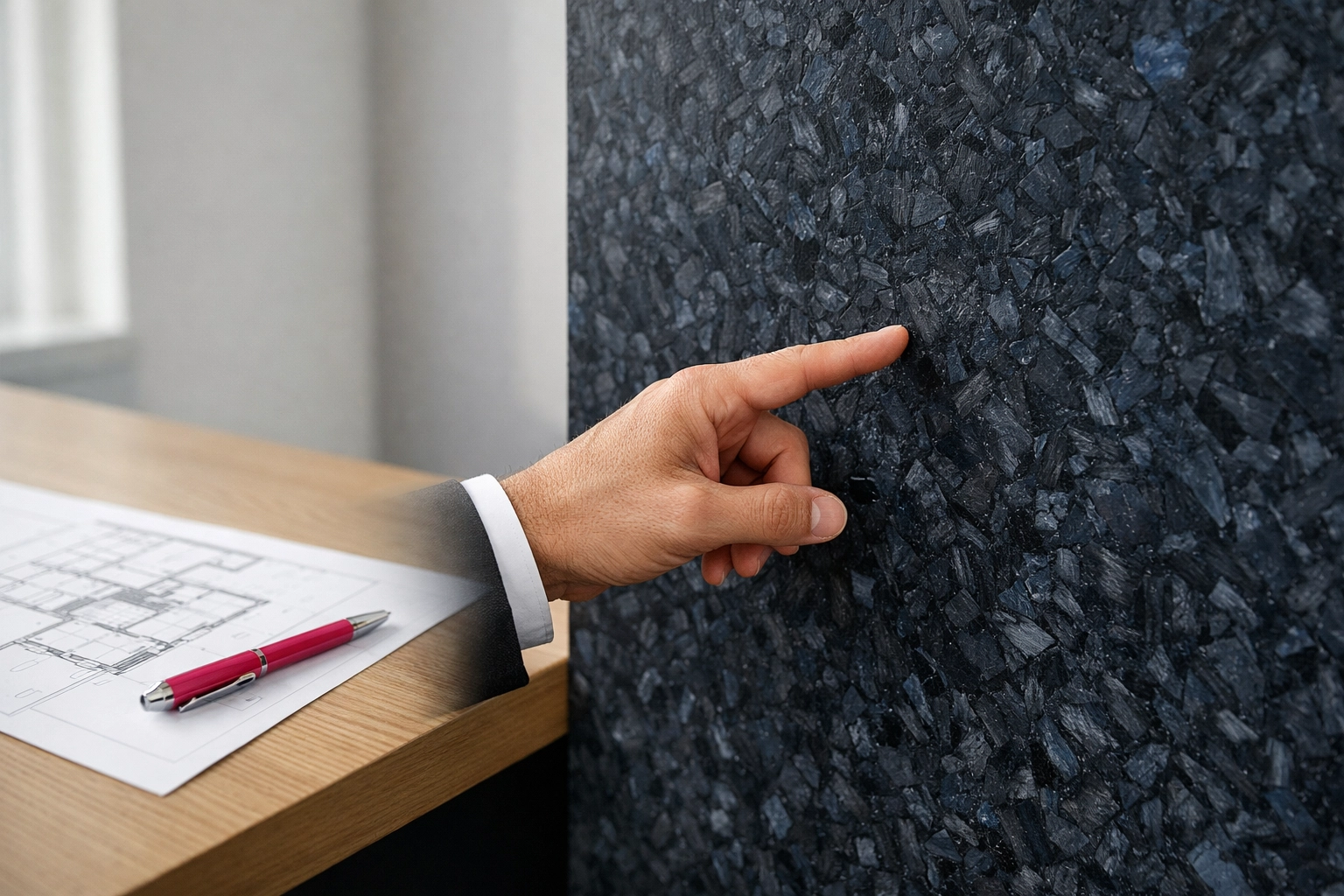
The construction industry is moving away from vague claims of "sustainability" toward hard, verifiable data. By choosing materials that come with clear carbon emissions savings and waste diversion metrics, you make your job as a project manager significantly easier.
Instead of hunting for obscure data sheets from international manufacturers, you have a direct line to an Australian manufacturer that understands the local regulatory environment.
Quick Checklist for Your Next ESG Report:
- Total weight of plastic diverted (Weight of panels x 100%).
- Total CO2 savings (Weight in tonnes x 1.75).
- Reduction in A4 transport emissions (Specify "Australian Made").
- Circularity confirmation (Specify "100% Recyclable at End of Life").
Final Thoughts for the Busy PM
Embodied carbon reporting doesn't have to be a headache. By making smarter procurement choices early in the design and delivery phases, you can meet government mandates, win more tenders, and actually contribute to a circular economy.
If you’re ready to see how our materials can fit into your next project’s carbon budget, or if you need specific data points for a tender you’re writing right now, we’re here to help.
Mastering your carbon reporting starts with knowing your materials. Let’s build something that doesn't just look good but does good for the planet.
Want to dive deeper into the technical side?
Check out our analysis on whether recycled plastic sheets can actually help you hit Net Zero.