
If you've been working in the Australian built environment for more than five minutes, you've heard the term "embodied carbon" tossed around like a hot potato. For years, it was a "nice-to-have" metric: something for the marketing team to put on a glossy brochure or for a boutique project to chase a Green Star rating.
But the "vibe-based" era of sustainability is officially over.
As we charge toward 2026, embodied carbon is shifting from a voluntary badge of honour to a legal requirement. Thanks to new mandatory climate-related financial disclosures, the data behind your building materials is about to become as important as the price per square metre.
If you aren't prepared to back up your material choices with hard, traceable data, you’re not just risking a "greenwashing" accusation: you’re risking your ability to win tenders, secure financing, and comply with Australian law.
The 2026 Shift: From "Nice-to-Have" to Legal Mandate
The catalyst for this change is the Treasury Laws Amendment (Financial Market Infrastructure and Other Measures) Act 2024. This isn't just another industry guideline; it’s a federal law that introduces the Australian Sustainability Reporting Standards (ASRS).
Specifically, the AASB S2 standard focuses on climate-related disclosures. While the rollout is staggered, here’s the timeline you need to care about:
- Group 1 (The Giants): Large entities with over 500 employees, $1B in assets, or $500M in revenue start reporting Scope 1 and 2 emissions from January 2025.
- The Scope 3 Pivot: For these Group 1 entities, Scope 3 emissions (which include embodied carbon in materials) become mandatory for reporting years commencing between 1 January and 30 June 2026.
- Group 2 (The Mid-Market): Most medium-to-large construction and development firms will fall into Group 2, with mandatory reporting kicking in from 1 July 2026.
What does this mean for you? Even if your business isn't a "Group 1" giant, your clients likely are. To report their Scope 3 emissions, they are going to demand product-specific carbon data from every supplier and contractor on their books.
If you can't provide that data, you’re essentially a liability on their balance sheet.
Why Embodied Carbon Data is Your New Competitive Advantage
In the construction industry, embodied carbon accounts for the emissions generated during the extraction, transport, and manufacturing of materials. Unlike operational carbon (which can be lowered with solar panels later), embodied carbon is locked in the moment the building is finished.
"Data reliability is the new currency of the construction industry. By 2026, a material without a verifiable carbon footprint will be as difficult to sell as a building without a structural certificate." : Industry Insight
The "Audit-Ready" Reality
When the auditors come knocking in 2026, they won't accept "industry averages." They’ll want primary data. This is where many imported materials fall short. If your "recycled" plastic or steel is coming from an opaque supply chain halfway across the world, proving its carbon footprint is a nightmare.
This is why local traceability is no longer just a feel-good story; it's a risk-mitigation strategy.

The Greenwashing Gap: Why Local Traceability Wins
The biggest hurdle for 2026 compliance is the "data gap." Many materials claim to be sustainable, but when you dig into the secondary data, the trail goes cold.
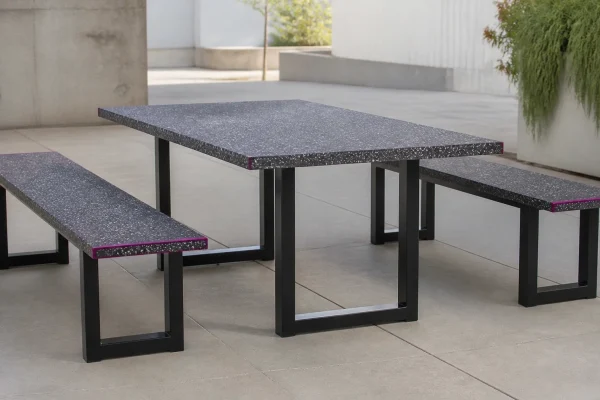
At Resourceful Living, we’ve built our entire manufacturing process to solve this specific problem. We don’t just make 100% recycled plastic panels; we manage the end-to-end cycle.
100% Australian Waste = 100% Traceable
We use only Australian-sourced plastic waste. Because we collect, shred, and manufacture right here in New South Wales, we can trace the material source with a level of precision that offshore manufacturers can't match.
- No Additives: Our panels are solid blocks of recycled HDPE/PP. No veneers, no secret fillers, no "blends" that complicate recycling.
- Low Transport Emissions: By sourcing locally and manufacturing locally, we slash the "transport" portion of the embodied carbon equation.
- Take-Back Guarantee: Our circular economy model includes a free take-back program. This allows you to report on the End-of-Life (Category 12) emissions of your project with 100% certainty.

How to Get Your Materials Audit-Ready for 2026
Preparing for the new reporting regime isn't something you can do in a weekend. You need to start integrating embodied carbon reporting into your procurement process today.
Your 5-Step Compliance Checklist:
- ✅ Audit Your Current Suppliers: Ask for Environmental Product Declarations (EPDs). If they only offer "global averages," they aren't audit-ready for 2026.
- ✅ Prioritise Local Sourcing: The shorter the supply chain, the easier the data collection. Local traceability is the "easy button" for Scope 3 reporting.
- ✅ Focus on "Category 1" Emissions: Under AASB S2, you must report emissions from Purchased Goods and Services. This is where materials like concrete, steel, and timber (or our recycled panels) sit.
- ✅ Request Life Cycle Assessments (LCA): Move beyond just "recycled content %" and look at the whole-of-life impact.
- ✅ Plan for Deconstruction: Ensure your materials can be recovered. A product that ends up in landfill is a "waste emission" on your future reports. Our recycled plastic vs timber comparison highlights how durability affects these long-term metrics.
Resourceful Living: The Data-First Partner
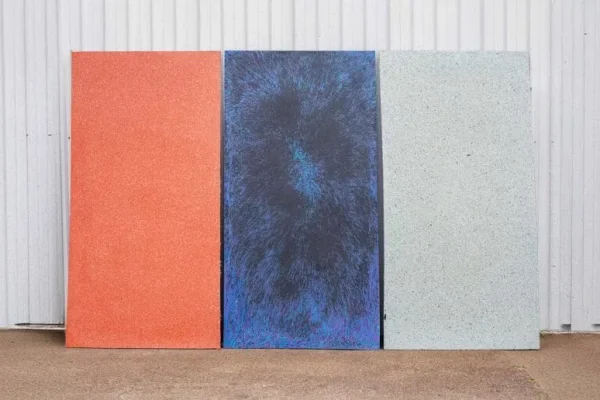
We aren't just a material supplier; we’re a consultant for the circular economy. We manufacture 1 tonne of plastic per day, turning local waste into high-performance 2400mm x 1200mm panels that range from 3mm to 40mm in thickness.
Our materials are designed for the built environment sector: from kitchen renovations and retail fit-outs to heavy-duty erosion control and noise barriers.
Why our data simplifies your 2026 reporting:
- Direct Environmental Impact: We provide clear metrics on how much Australian plastic was diverted from landfill for your specific project.
- Performance Tested: Our panels are tested for strength, durability, and weather resistance, ensuring the "replacement cycle" (which adds more carbon) is as long as possible.
- Standardised Sizing: Our 2400mm x 1200mm sheets make quantity surveying and carbon calculation simple and repeatable.

The Road to 2026: Don't Wait for the Deadline
The transition to mandatory climate reporting is the biggest shift in Australian business since the introduction of the GST. It's going to change who gets hired, what gets built, and how success is measured.
By switching to materials with verified, local data, you aren't just doing the "right thing" for the planet: you’re future-proofing your business.
Ready to get your next project audit-ready?
Explore our range of 100% recycled Australian panels and let’s talk about how we can help you meet your sustainability targets with data you can actually trust.
👉 Browse the Resourceful Living Panel Range