
As we move deeper into 2026, the landscape of the Australian construction industry has shifted. It’s no longer enough to just talk about "being green": you have to prove it with hard data. With the Green Building Council of Australia (GBCA) tightening requirements and government tenders demanding strict embodied carbon reporting in Australia, the stakes have never been higher.
If you’re preparing for a Green Star audit, you know that embodied carbon: the emissions associated with the manufacturing, transport, and installation of building materials: is the new frontline of compliance. Yet, many project teams are still tripping over the same technical hurdles.
At Resourceful Living, we’ve seen how high-quality, sustainable building materials in Australia can make or break an audit. Here are the seven most common mistakes teams make with embodied carbon reporting and, more importantly, how you can fix them to secure those crucial credit points.
1. Misclassifying Primary vs. Secondary Data
The first mistake happens before the spreadsheet is even full. Many teams call their data "primary" simply because it came from a supplier brochure or a global average tool.
The Risk: For Green Star, using secondary data (global averages or generic databases) often results in a "penalty" or a lower score because it lacks the precision of project-specific information. If an auditor sees a contractor’s "best guess" labelled as primary data, it undermines the credibility of your entire Life Cycle Assessment (LCA).
The Fix:
- Define your types: Only use the term Primary Data for project-specific, measured data: such as actual mix designs, mill certificates, or plant-specific Environmental Product Declarations (EPDs).
- Source locally: Using Australian Made materials from suppliers who provide transparent LCA data allows you to claim primary data status confidently.
- Log everything: Create a data log for every major material that explicitly states the source, version, and whether it is primary or secondary.
2. Over-Reliance on Generic EPDs and Imported "Green" Materials
It’s tempting to grab a generic EPD from a global database for a material manufactured halfway across the world. However, generic data doesn't account for the high transport emissions (Life Cycle Stage A4) associated with shipping heavy materials to Australia.
The Risk: Global averages often reflect manufacturing processes in regions with different energy grids or environmental regulations. Using these for an Australian project can lead to significant inaccuracies in your embodied carbon reporting.
The Fix:
- Prioritise product-specific EPDs from local manufacturers.
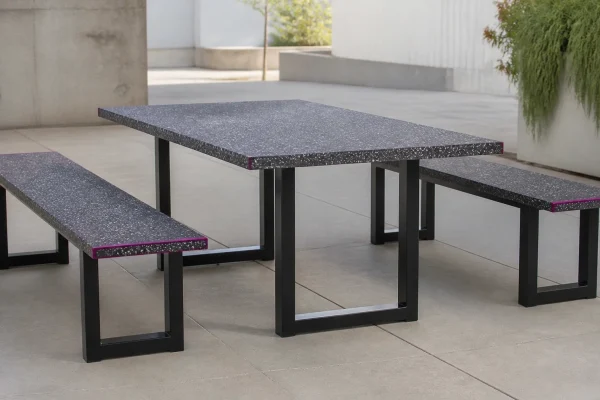
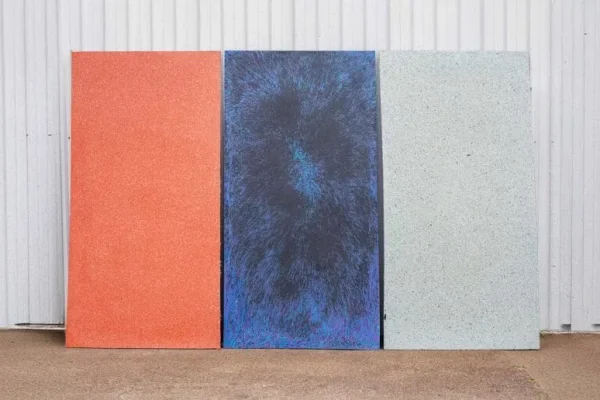
- When you choose Australian Made recycled plastic sheets, you aren't just getting a sustainable material; you're getting data that reflects local energy use and zero international shipping emissions.
- Build EPD requirements into your procurement contracts early to ensure you aren't chasing paperwork a week before the audit.

3. Confusing Cost Payback with Carbon Payback
In the boardroom, we often talk about ROI in terms of dollars. In a Green Star audit, the only ROI that matters for certain credits is the carbon payback.
The Risk: Many teams dismiss low-carbon alternatives like recycled HDPE because the initial "cost payback" doesn't look as attractive as traditional timber or concrete. However, embodied carbon is upfront and irreversible. Once the building is up, those emissions are locked in.
The Fix:
- Run separate analyses for cost ($/m²) and carbon (tCO2e/m²).
- Focus on upfront carbon (Stages A1–A5). This is where the most significant gains are made.
- Use "abatement cost" (dollars per tonne of CO2e avoided) as your metric. This often shows that switching to recycled plastic vs timber provides a much better "carbon bargain" over the life of the project.
4. Ignoring End-of-Life and Circularity (Stages C & D)
Embodied carbon isn't just about how a material is made; it's about what happens when the building is eventually decommissioned. Many reports stop at "Cradle to Gate" (A1-A3), ignoring the massive impact of demolition and landfill.
The Risk: Ignoring the "End-of-Life" (Stage C) and "Beyond the Building Life Cycle" (Stage D) means you're missing out on the benefits of circular construction. If your material can’t be recycled, its carbon footprint is effectively higher because it represents a linear waste stream.
The Fix:
- Select materials designed for circularity. Our 100% recycled Australian plastic sheets are not only made from waste but are 100% recyclable at the end of their life.
- Document the traceability of your materials. Knowing exactly where the waste came from and where it can go next is a powerful piece of evidence for auditors.
- Read more on why circular construction in 2026 is changing waste valuation.

(Suggested: A graph showing the carbon lifecycle difference between a linear material vs. a circular material like recycled plastic)
5. Sloppy Quantities and Inconsistent Conversion Factors
This is the "death by a thousand papercuts" of reporting. Mixing kilograms, tonnes, and cubic metres without consistent density assumptions is a fast way to lose an auditor's trust.
The Risk: If your LCA report says you used 500 tonnes of material, but the cost plan says 400, the auditor will flag it. Inconsistencies suggest a lack of rigour and can lead to your submission being rejected.
The Fix:
- Standardise early: Choose one primary unit for each material category and stick to it across all documentation.
- Use a single dataset: Avoid mixing emission factors from different tools (e.g., using one tool for concrete and another for plastic) unless absolutely necessary.
- QA Step: Have an independent team member cross-check your quantities against the as-built BIM model or Bill of Quantities (BoQ).
6. Treating the LCA as a Post-Construction "Tick-the-Box" Exercise
Too many projects wait until the building is finished to start their embodied carbon reporting. By then, it’s too late to make any changes that actually reduce emissions.
The Risk: You end up reporting a high carbon footprint that you can’t change. This might lead to failing to meet the 2026 recycled content targets required for many government tenders.
The Fix:
- Iterative Modelling: Run your first LCA during the concept or schematic design phase. Use it to identify "hot spots" like the structural frame or façade.
- Set Baselines: Establish a carbon budget early, just as you would a financial budget.
- Update at Milestones: Re-run the numbers at each major design switch to ensure value engineering hasn't accidentally inflated your carbon footprint.
7. Weak Documentation and Lack of Local Traceability
The biggest mistake is having a great story but no proof. An auditor doesn't care if you say a material is sustainable; they need to see the "receipts."
The Risk: If you claim a material is recycled but cannot prove the origin of the feedstock, an auditor may disregard the claim entirely. This is particularly common with cheap, imported materials that claim to be "recycled" but lack verified traceability.
The Fix:
- Build an Audit-Ready Register: Collect all PDFs of EPDs, delivery dockets, and manufacturer certificates as the project progresses.
- Leverage Local Certifications: Look for the Australian Made and Owned logo. This isn't just about supporting the local economy; it’s a shorthand for shorter supply chains and verifiable local waste sourcing.
- Traceability Reports: At Resourceful Living, we provide data on the source of our recycled plastic, giving you a clear audit trail from waste collection to the final product on your site.

How to Prepare for Your Next Audit
Mastering embodied carbon reporting in Australia requires a shift in mindset from "compliance" to "strategy." By focusing on high-quality sustainable building materials in Australia and maintaining a rigorous audit trail, you don't just pass the audit: you lead the industry.
Your Pre-Audit Checklist:
- Verify Data Quality: Are you using primary data (EPDs) or relying on generic global averages?
- Check Local Content: Have you prioritised Australian Made materials to reduce transport emissions?
- Confirm Boundaries: Does your LCA cover Stages A through D, or are you ignoring the end-of-life impact?
- Review Traceability: Can you prove the origin of your recycled content?
- Audit the Quantities: Do your LCA figures match your as-built BoQ?
If you are looking to integrate high-performance, low-carbon materials into your next project, our team at Resourceful Living is here to help. We provide the specific LCA data and traceability reports you need to satisfy the toughest Green Star auditors.
"The difference between a successful Green Star rating and a failed audit often comes down to the quality of the data behind the materials. Local, traceable data is the gold standard in 2026."
Ready to ditch the high-carbon timber or concrete and switch to a more durable, circular alternative? Check out our guide on how to integrate embodied carbon reporting or explore our range of recycled plastic sheets to see how we can support your sustainability goals.