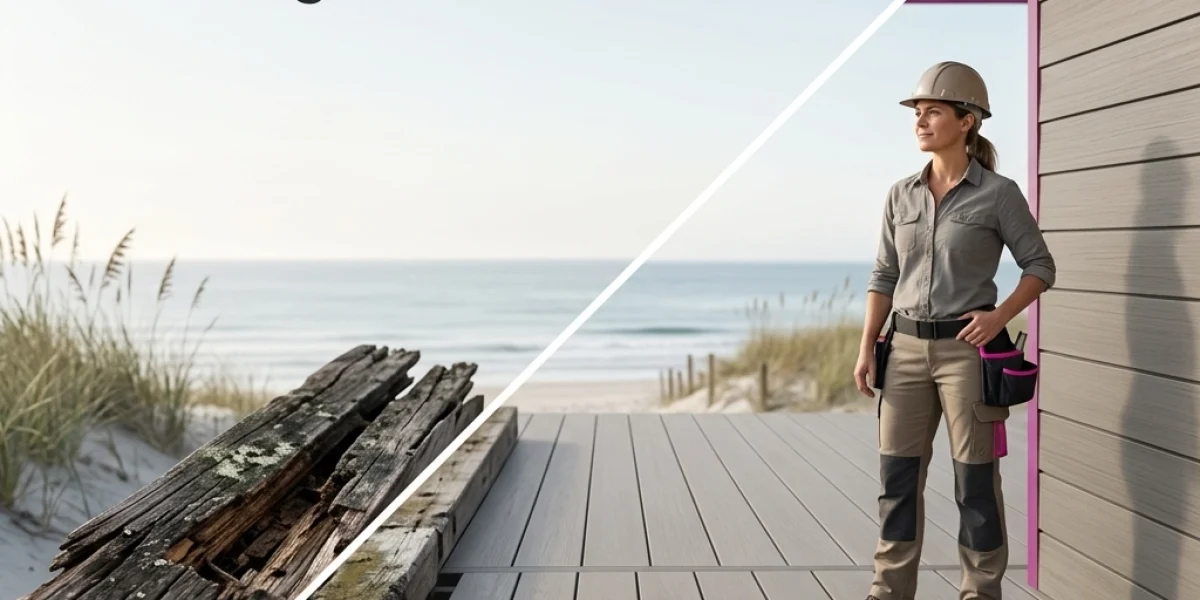
If you’ve ever built on the Australian coast, you know the "Coastal Tax." It’s not a government levy; it’s the relentless toll the environment takes on your materials. Between the salt-laden air, wind-driven rain, and brutal UV exposure, traditional timber doesn't just age: it surrenders.
For decades, we’ve accepted this as the cost of doing business. We specify the highest-grade cedar or treated pine, knowing full well that in three years, the client will be calling about warping, fading, or rot.
But the industry is shifting. Smart coastal builders are moving away from the "build-and-repair" cycle and toward waterproof building materials that actually thrive in salt spray. Specifically, they’re switching to Recycled High-Density Polyethylene (rHDPE).
Here is why rHDPE is rapidly becoming the gold standard for coastal construction and why your next project should ditch the timber trap.
The Coastal Triple Threat: Salt, Moisture, and UV
The Australian coastline is one of the harshest environments on Earth for building. Timber, being a porous, organic material, is inherently disadvantaged here.
- Salt-Laden Moisture: Salt crystals grow inside the wood fibres as water evaporates, physically pushing the cells apart. This leads to cracking and "furring" of the timber surface.
- Constant Humidity: In coastal zones, the moisture content in the air rarely drops. This creates the perfect breeding ground for wood-decay fungi and termites.
- UV Degradation: The sun’s rays break down the lignin that holds wood fibres together. Once the lignin is gone, the wood turns silver-grey and becomes brittle, losing its structural integrity.
When you use recycled plastic sheets in Australia, you aren’t just choosing a "green" alternative; you’re choosing a material that is chemically inert. It doesn’t care about salt. It doesn’t absorb water. And it doesn’t rot.
"In coastal zones, you aren't just buying a product: you're buying a maintenance schedule. With rHDPE, that schedule effectively disappears."
Why rHDPE Outperforms Timber in the Splash Zone
Recycled HDPE is made from post-consumer waste: think milk bottles and detergent containers: that has been washed, melted, and extruded into dense, solid panels. At Resourceful Living, we’ve engineered these sheets specifically for the demands of the Australian building industry.
100% Waterproof and Non-Porous
Unlike timber or even some composite boards, rHDPE is completely non-porous. Water cannot penetrate the surface. This means no swelling, no warping, and zero risk of internal rot. Whether it’s used for coastal boardwalks, outdoor cabinetry, or recycled plastic garden edging, the dimensions stay exactly the same on day 1,000 as they were on day 1.

UV Stability
One of the biggest concerns with plastic in Australia is "sun-rot." However, high-quality rHDPE is manufactured with UV stabilisers that protect the material from the inside out. Unlike timber, which requires a new coat of oil or stain every 6–12 months to maintain its look, rHDPE keeps its colour and strength without any chemical intervention.
Termite and Pest Immunity
Termites are a significant risk in damp, coastal areas. Since rHDPE contains no organic cellulose, it is of zero interest to pests. You can install it directly into the ground or in high-moisture "dead zones" without worrying about a hidden infestation.
The "Hidden" Cost of Timber: Capex vs. Opex
Builders often focus on the "upfront cost" (Capex), where timber usually looks cheaper on a spreadsheet. But for the savvy developer or homeowner, the real metric is Total Cost of Ownership.
We call this the timber trap. When you factor in the labour and material costs for sanding, staining, and eventually replacing rotted sections, timber becomes significantly more expensive within just five years.
| Feature | Coastal Timber | Resourceful Living rHDPE |
|---|---|---|
| Initial Cost | Lower | Moderate |
| Maintenance | Annual sanding/oiling | Occasional wash-down |
| Lifespan (Coastal) | 5–10 years | 25+ years |
| Water Resistance | Absorptive (swells) | 100% Waterproof |
| End of Life | Landfill | 100% Recyclable |
By choosing rHDPE, you are moving a massive chunk of the project’s Opex (Operating Expenditure) back into the Capex, resulting in a much higher ROI over the life of the building. This is exactly why councils and mining companies are leading the charge in adopting these materials.
Practical Applications for Coastal Builders
Where should you be swapping timber for rHDPE? Almost anywhere that is exposed to the elements or high moisture.
1. Exterior Trim and Fascia
Timber fascia boards are notorious for rotting at the joints where water sits. rHDPE sheets can be machined with standard woodworking tools to create beautiful, rot-proof fascia and decorative trim that never needs a paintbrush.
2. Outdoor Kitchens and Cabinetry
The trend for "indoor-outdoor" living is huge in coastal renovations. However, traditional cabinetry carcasses often fail in humid air. rHDPE is the perfect substrate for outdoor kitchens, providing a waterproof structure that can be hosed out if needed.
3. Coastal Retaining Walls and Edging
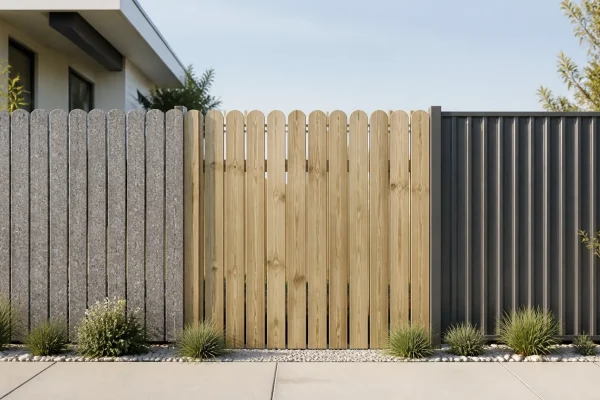
Traditional timber sleepers eventually succumb to ground moisture and salt. Using recycled plastic panels for landscaping provides a permanent solution that handles soil contact and salt spray without breaking down.

Caption: Recycled plastic sheets being used as a high-durability, waterproof alternative to timber in a coastal landscape setting.
4. Public Infrastructure
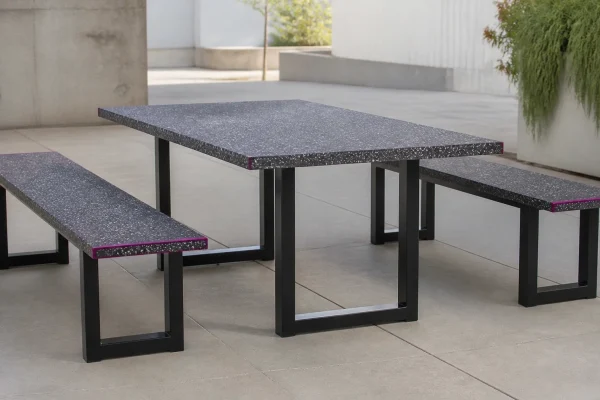
Boardwalks, beach showers, and public seating are prime candidates. We’ve seen firsthand how custom recycled plastic solutions have saved local councils tens of thousands in avoided maintenance.
Meeting the 2026 Sustainability Mandates
Beyond performance, there is a regulatory "stick" approaching. With the 2026 recycled-content targets looming, builders who familiarise themselves with these materials now will have a massive competitive advantage.
Government tenders are increasingly requiring high levels of "Circular Economy" participation. Using 100% recycled, Australian-made plastic isn't just a design choice; it’s a lever for winning million-dollar contracts.
By specifying Resourceful Living products, you are also improving your Embodied Carbon Reporting. Every tonne of rHDPE used is a tonne of plastic diverted from landfill and a reduction in the carbon-heavy processes associated with harvesting and transporting virgin materials.
Why Local Manufacturing Matters
When you’re on a tight project timeline, you can’t afford to wait 12 weeks for a shipment of "eco-material" from overseas.
Resourceful Living is Australian Made and Owned. We process local waste right here in Australia and turn it into high-performance sheets. This means:
- Traceability: You know exactly where your material came from.
- Short Lead Times: We can go from "waste to site" in record time.
- Support: If you need technical advice on specifying recycled plastic, we’re just a phone call away.
Conclusion: Stop Repairing, Start Building
The era of "disposable" coastal architecture is ending. Clients are smarter, budgets are tighter, and the environment is getting harsher.
If you are still specifying timber in high-salt, high-moisture areas, you are essentially building in a "failure date" for your project. Switching to rHDPE allows you to deliver a finished product that looks incredible, performs under pressure, and: most importantly: requires zero maintenance.
Ready to see the difference?
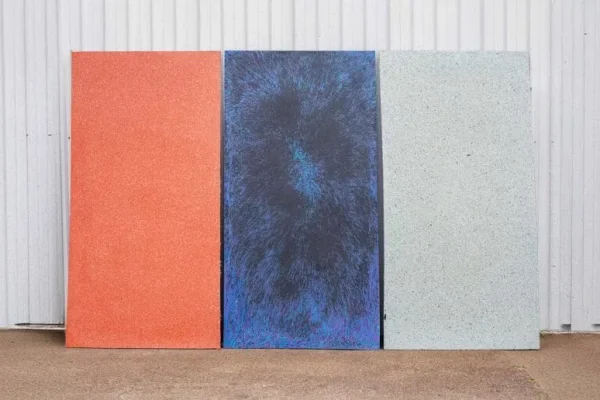
Don't just take our word for it. You need to feel the density and see the finish of these panels to understand how they’ll transform your next coastal build.
👉 Order your Recycled Plastic Sample Pack here
Whether you need a classic white-fleck terrazzo look or a solid, industrial charcoal, we have the technical specifications to match your project’s needs. Let’s build something that actually lasts.