
If you’re a Tier-1 contractor in Australia right now, the landscape of government procurement has shifted beneath your feet. We aren't just talking about "green credentials" anymore; we’re talking about mandatory, data-backed compliance.
As of early 2026, the Environmentally Sustainable Procurement (ESP) Policy has moved from a suggestion to a hard requirement. Specifically, the $1M threshold for furniture and internal fit-outs is catching many firms off guard. You can no longer win a major government contract simply by being the lowest bidder: you have to prove your project contributes to a circular economy.
This is where circular construction 2026 strategies become your greatest asset. At Resourceful Living, we’ve spent years preparing for this shift. Our 100% recycled plastic panels aren't just building materials; they are verified data points designed to help you secure your next major tender.
The $1M Fit-Out Mandate: What’s Changed?
The 2026 ESP Policy is clear: any government-funded fit-out project with a value over $1M must demonstrate a significant reduction in embodied carbon and a measurable diversion of waste from landfill.
For many contractors, this feels like a headache. Traditional materials like timber and virgin plastics come with high carbon footprints and opaque supply chains. If you can’t provide a clear product data sheet that lists exactly where your material came from and where it can go at the end of its life, your bid is likely to be marked down or discarded.
Why the old ways are failing:
- Timber's "Tax": While seen as "natural," timber in high-use government environments often requires replacement every 3–5 years due to moisture and wear.
- Virgin Plastics: These are now viewed as a liability in ESG reporting.
- Lack of Traceability: Most suppliers can’t tell you the "waste diversion weight" of their products, leaving a hole in your tender response.

The 20kg Advantage: Data That Wins Tenders
The secret to winning tenders in this new environment is quantifiable impact. When you specify our recycled plastic sheets in Australia, you aren't just buying a board; you’re buying a metric.
Every single standard sheet of Resourceful Living material represents 20kg of Australian plastic waste diverted from landfill.
Think about what that does for your bid. Instead of saying, "We use sustainable materials," your tender response can say:
"By specifying Resourceful Living panels for this $1.2M fit-out, we are directly diverting X tonnes of post-consumer plastic waste from Australian landfills, providing a 100% circular solution that is fully recyclable at end-of-life."
That level of specificity is what procurement officers are looking for. It simplifies their reporting and makes your firm look like the most prepared operator in the room.
Why Circular Construction 2026 Requires Traceability
The days of "greenwashing" are over. Under the current embodied carbon reporting standards in Australia, contractors are being asked to provide evidence of the supply chain.
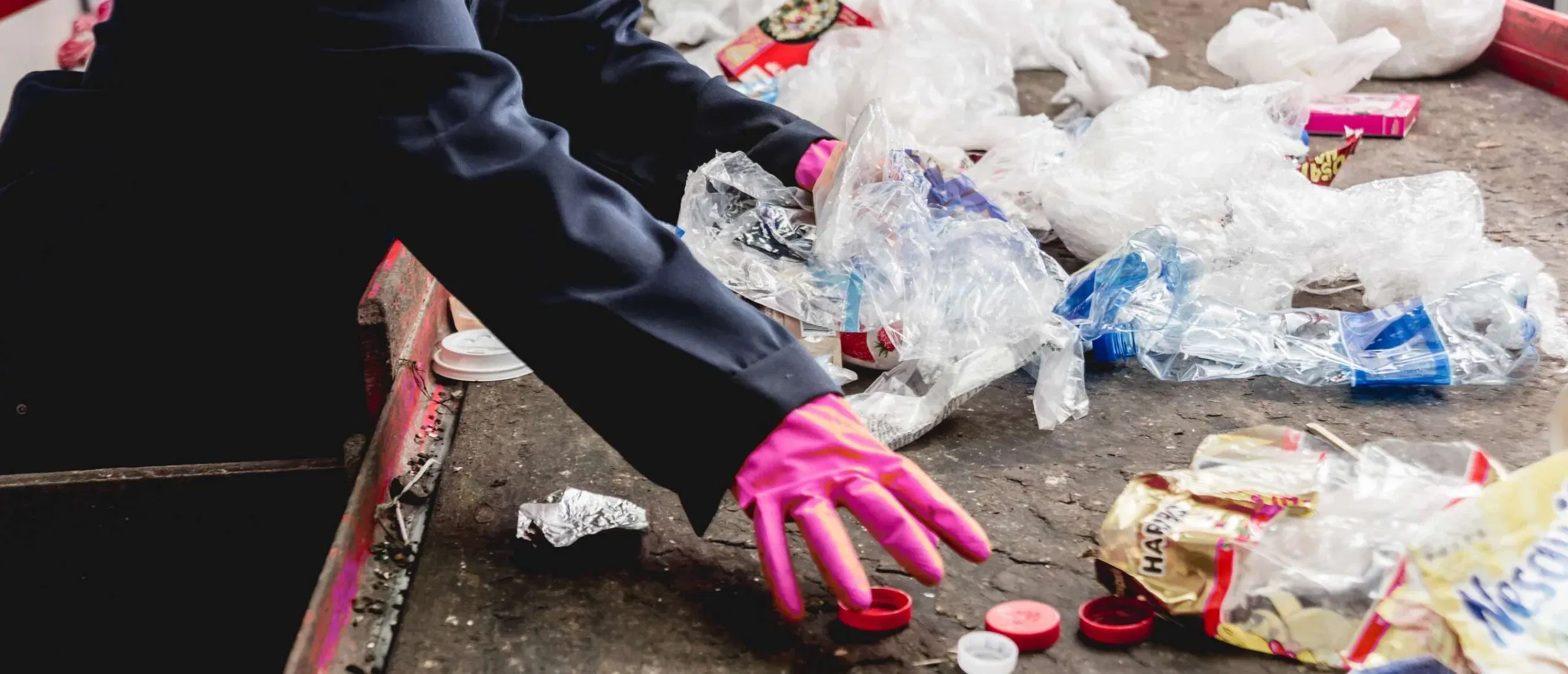
We take this seriously. Our process involves sorting post-consumer waste manually to ensure the highest quality and purity. This isn't a mystery mix from overseas; it’s local waste, processed locally, for local projects.
Key traceability features for your BOQ (Bill of Quantities):
- 100% Recycled Content: Guaranteed no virgin resin fillers.
- Locally Sourced: Reduces "Scope 3" transport emissions significantly.
- End-of-Life Buy-Back: We can take the material back at the end of the project's life (10–20 years from now) to shred and re-manufacture it again. This is the definition of circular construction.
Comparing Materials: Recycled Plastic vs. The Field
When you’re arguing for a specific material in a government bid, you need to justify the choice based on durability, cost, and sustainability.
| Feature | Resourceful Living Panels | Marine Plywood / Timber | Virgin Plastic Panels |
|---|---|---|---|
| Recycled Content | 100% (Australian Waste) | 0% | 0% |
| Moisture Resistance | 100% Waterproof | High (but degrades) | High |
| Maintenance | Zero (no painting/sanding) | High (requires sealing) | Low |
| End-of-Life | Fully Recyclable | Landfill/Incineration | Landfill |
| Tender Points | High (ESP Compliant) | Low/Medium | Low |
For high-moisture or high-traffic government projects: think public park amenities, school wet areas, or commercial kitchen fit-outs: our panels consistently outperform timber. You can see a full comparison for 2026 projects here.

Solving the "Landfill Double-Dip"
In the sales world, we often see Tier-1 contractors getting hit by the "Landfill Double-Dip." This happens when a site pays a waste management company to haul away plastic waste, and then pays a supplier to bring in virgin materials for the build.
You’re paying to get rid of the very resource you need.
By partnering with us, you can potentially close this loop. We offer on-site shredding and collection for large-scale infrastructure projects. This not only slashes your waste disposal costs but gives you an incredible "story" for your tender: the waste from the demolition phase was used to create the furniture for the completion phase.
Practical Applications for Your Next Bid
Where exactly do our panels fit into a $1M+ government tender?
- Internal Fit-Outs: Partitioning, wall cladding, and recycled plastic benchtops.
- Commercial Joinery: Cabinetry and storage solutions that need to be indestructible.
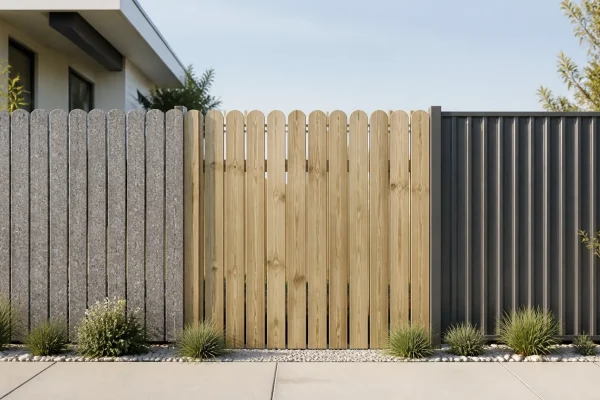
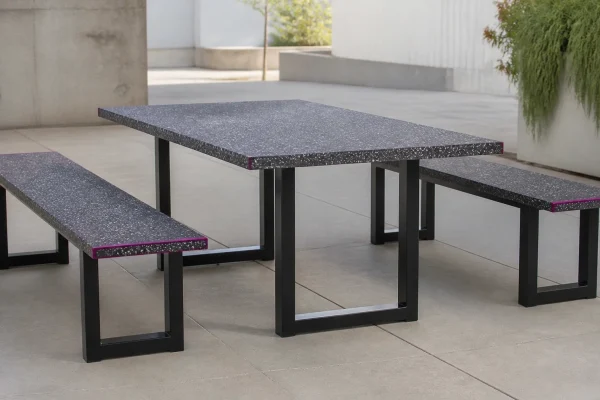
- External Infrastructure: Public seating, signage, and acoustic barriers.
- Site Hoardings: Using recycled panels for site hoarding is a massive "easy win" for sustainability points before the building even goes up.
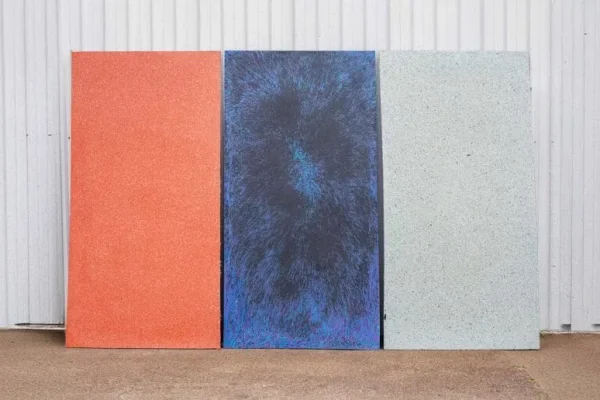
The aesthetic has also evolved. These aren't the dull, grey recycled products of a decade ago. Our current range includes vibrant oranges, deep blues, and sophisticated speckled greys that fit the modern designer's lookbook.

Compliance Checklist for Your Tender Response
Before you hit "submit" on your next bid, ensure you’ve ticked these boxes regarding sustainable building materials in Australia:
- Verify the Origin: Can your supplier prove the material is Australian-made? (Look for the official certification).
- Quantify the Waste: Have you included the "kg of waste diverted" metric in your environmental impact statement?
- End-of-Life Plan: Does the material have a circular pathway, or is it destined for landfill?
- Carbon Data: Have you factored in the reduced transport emissions of using locally manufactured panels?
How to Get Started
The 2026 ESP Policy doesn't have to be a hurdle. When used correctly, it’s a filter that removes lower-quality, less-prepared competitors from the running. By integrating recycled plastic sheets from Australia into your design early, you position your firm as a leader in the circular economy.
We know that every project is different. Whether you need a 7-day fast-track for a commercial fit-out or a custom colour-matched panel for a brand-specific government rollout, we have the infrastructure to deliver.
Ready to boost your tender win rate with verified sustainability data?
[Book a Waste Audit]
Let us look at your current procurement and waste streams. We’ll show you exactly how many "points" you’re leaving on the table and how Resourceful Living panels can help you claim them.
Stop guessing your environmental impact and start measuring it.