If you're operating in the Australian built environment today, the goalposts aren't just moving: they've been completely redesigned. By 2035, the Australian government’s Nationally Determined Contribution (NDC) target aims for a 62–70% reduction in net national greenhouse gas emissions. For the construction sector, this isn't a "nice-to-have" future goal; it’s a direct mandate for a radical shift in how we source, measure, and report on materials.
The focus has shifted from operational carbon (the energy used to run a building) to embodied carbon (the emissions locked into the materials themselves). With the ASBEC (Australian Sustainable Built Environment Council) roadmap targeting a 60–75% reduction in embodied carbon by 2035, the days of "greenwashing" are over.
In this guide, we’ll break down why the 2035 roadmap is the most significant regulatory shift in a generation and how choosing the right sustainable building materials in Australia today will determine your ability to win tenders tomorrow.
The 2035 Roadmap: From Voluntary to Mandatory
Currently, in 2026, we are in the "transition phase." The NCC 2025 updates introduced voluntary pathways for reporting upfront carbon, but the industry consensus is that these will become mandatory by the NCC 2028 update.
The 2035 roadmap effectively sets a countdown for every builder, architect, and developer in the country. To meet a 60%+ reduction, projects finished toward the end of this decade will need to demonstrate deep decarbonisation across their entire supply chain.
Key Policy Levers Driving Change:
- Measurement & Disclosure: Routine embodied carbon reporting in Australia is becoming the standard for any project seeking government or institutional funding.
- Performance Standards: We are moving toward mandatory carbon caps (kg CO₂-e/m²) for all new builds.
- Circular Procurement: Preferencing "closed-loop" materials that can be remanufactured at the end of their life.
"The construction sector is responsible for nearly half of Australia’s waste. By 2035, the industry is expected to double its circularity, meaning every material spec must include an end-of-life plan." : Resourceful Living Industry Insight
Why Embodied Carbon Reporting is Your New "Price Tag"
In the past, a material’s value was determined by cost and durability. In 2026, a third metric is just as critical: Global Warming Potential (GWP).
Embodied carbon reporting in Australia now requires data on four key stages of a material’s lifecycle:
- A1–A3 (Product Stage): Extraction, transport to factory, and manufacturing.
- A4 (Transport Stage): Moving the product from the factory to your construction site.
- A5 (Construction Stage): The energy used during installation.
- C1–C4 (End of Life): What happens when the building is eventually demolished or renovated.
By specifying sustainable building materials in Australia that are locally made from 100% recycled content, you effectively "hack" these reporting stages. You eliminate the emissions from virgin extraction (A1) and drastically reduce the transport emissions (A4) associated with imported materials.

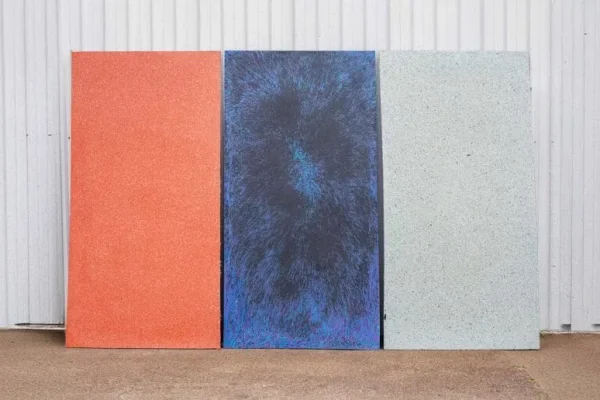
Our 100% Australian recycled plastic panels provide a traceable, low-carbon alternative to traditional finishing materials.
Comparing the "Old Guard" vs. The Circular Solution
To hit the 2035 targets, we have to address the "heavy hitters" of embodied carbon. While concrete and steel represent the largest chunk of a structural footprint, the finishing materials: joinery, partitioning, and landscaping: are where builders can make the fastest, most cost-effective gains.
| Feature | Traditional Timber / Plywood | Imported Virgin Plastic | Resourceful Living Recycled Panels |
|---|---|---|---|
| Embodied Carbon | Medium (Needs EPD verification) | High (Oil-based + shipping) | Ultra-Low (100% Recycled) |
| Traceability | Variable | Low | High (Local Waste Source) |
| Durability | Rots/Swells in moisture | High | Indestructible / Waterproof |
| Maintenance | High (Oiling/Painting) | Low | Zero |
| Circular Potential | Low (Often ends in landfill) | Low | 100% Recyclable (Take-Back) |
The "A4" Advantage: Why Local Matters
One of the biggest mistakes builders make in embodied carbon reporting in Australia is ignoring the "A4" transport emissions. Imported "eco" materials often lose their sustainability edge the moment they are loaded onto a container ship. By sourcing 100% Australian-made recycled sheets, you are securing a product with a fraction of the transport footprint.
The Future-Proof Solution: 100% Recycled Plastic Panels
At Resourceful Living, we’ve built our manufacturing process to align perfectly with the 2035 Carbon Roadmap. Our panels aren't just "sustainable": they are a functional tool for meeting your ESG targets.
1. Zero Virgin Extraction
We don't use a single drop of new oil. Every panel is made from 100% post-consumer and post-industrial Australian plastic waste. This bypasses the most carbon-intensive part of the material lifecycle.
2. Full Traceability for EPDs
Meeting Green Star or NABERS requirements requires data. We manage the end-to-end recycling and manufacturing cycle, allowing us to provide clear data on the source of the material. This makes your LCA (Life Cycle Assessment) significantly easier to complete.
3. The Take-Back Program (Closing the Loop)
A key part of the 2035 roadmap is the "C" stage (End of Life). Most traditional materials are destined for the skip bin. Our materials are 100% recyclable. We offer a free take-back program, meaning you can specify our panels with the confidence that they will never contribute to landfill emissions.

From waste collection to high-performance building materials: our process ensures every kilogram of plastic stays in the economy and out of the environment.
How to Prepare Your Projects for the 2035 Shift
If you want to be "tender-ready" for the next decade of Australian construction, you need to change your procurement strategy now.
✅ Step 1: Audit Your Current Materials
Look at the non-structural elements of your next project. Can that marine plywood hoarding, kitchen joinery, or outdoor furniture be swapped for a low-carbon, recycled alternative?
✅ Step 2: Demand EPDs and GWP Data
Stop accepting "eco-friendly" as a description. Ask your suppliers for verified Global Warming Potential (GWP) values. If they can’t provide them, they aren't ready for the 2035 roadmap.
✅ Step 3: Join a Closed-Loop Program
Partner with manufacturers who take responsibility for their products. Our Closed Loop ESG Partner Program is designed to help builders automate their sustainability reporting and secure a competitive edge in government tenders.

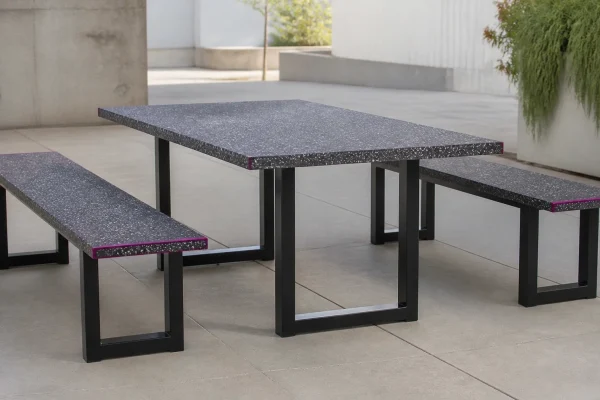
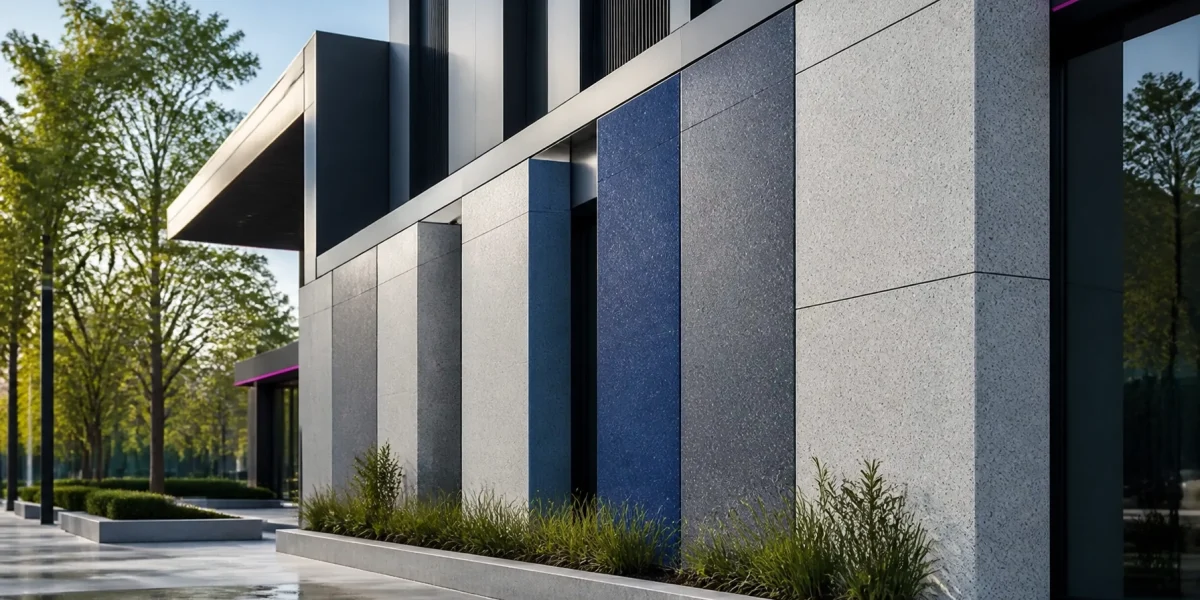
Sustainable building materials don't have to look "recycled." Our furniture and panels offer a premium, modern aesthetic for any commercial fit-out.
Summary: The Cost of Waiting
The 2035 roadmap isn't just about the environment: it’s about business survival. Builders who continue to spec high-carbon, imported, or non-recyclable materials will find themselves locked out of major projects as NABERS and NCC mandates tighten.
By switching to recycled plastic sheets in Australia, you aren't just doing the right thing; you're future-proofing your business against the most significant regulatory change in our history.
Ready to lower your project's embodied carbon?
Contact the Resourceful Living team today to discuss how our 100% Australian recycled panels can help you meet your 2035 targets.