If you’re still specifying marine plywood for your high-moisture projects in 2026, you aren’t just building a maintenance headache: you’re creating a financial liability.
With the full implementation of the National Construction Code (NCC) 2025/2026 updates and the Australian Government’s Environmentally Sustainable Procurement (ESP) Policy, the “traditional” way of building is becoming prohibitively expensive. The industry is moving toward circular construction 2026 models where the builder is no longer just responsible for the installation, but for the material’s entire lifecycle.
At Resourceful Living, we’re seeing a massive shift in the built environment. Savvy procurement officers are abandoning the “replace and repeat” cycle of timber and switching to 100% recycled HDPE panels.
Here is why the financial case for switching from marine plywood to recycled plastic is now undeniable.
The “Marine Plywood Myth”: Why It’s Failing in 2026
For decades, marine plywood was the “gold standard” for wet-area construction. But as we enter a new era of sustainable building materials in Australia, the cracks are literally starting to show.
1. It’s Water-Resistant, Not Waterproof
Despite the name, marine ply is organic. It relies on A-bond glues and high-quality veneers, but the wood fibres themselves still absorb moisture. Once a screw pierces the surface or an edge is left unsealed, delamination and rot are inevitable. In the harsh Australian climate, this leads to a replacement cycle of every 5–7 years for outdoor infrastructure.
2. The Maintenance Trap
To keep marine plywood functional, it requires annual sanding, re-sealing, or painting. In a commercial or council environment, the labour costs of maintenance over 10 years often exceed the original material cost by 300%.
3. Termite Vulnerability
Even treated timber is a target. In 2026, the cost of chemical termite barriers and the risk of structural failure make organic materials a high-risk choice for ground-contact or high-moisture applications.

The HDPE Advantage: Waterproof, Termite-Proof, Maintenance-Free
When you switch to 100% recycled plastic sheets, you aren’t just buying a board; you’re buying an engineered asset.
- 100% Waterproof: Our HDPE panels are non-porous. You could submerge them for 50 years, and they would not absorb a single drop of water. No rot, no swelling, and no delamination.
- Naturally Termite-Resistant: Plastic offers zero nutritional value to pests. This eliminates the need for toxic chemical treatments on-site.
- Zero Maintenance: No sanding. No oiling. No painting. Ever. A simple pressure wash is all that’s required to keep them looking brand new.
- Impact Strength: Unlike plywood veneers that crack when hit, HDPE is incredibly impact-resistant, making it ideal for high-traffic public spaces or industrial fit-outs.
“The shift isn’t just about ‘being green.’ It’s about ‘being smart.’ When you factor in the lack of maintenance and the extended lifespan, the total cost of ownership for recycled plastic is significantly lower than traditional timber.” : Jess Hodge, Sales at Resourceful Living
The Financial Breakdown: ROI Over 50 Years
Let’s look at the hard data. While the upfront cost of a 100% recycled plastic sheet may be higher than marine ply, the Return on Investment (ROI) is realized almost immediately after the first maintenance cycle is avoided.
| Feature | Marine Plywood | Recycled HDPE (Resourceful Living) |
|---|---|---|
| Upfront Cost | Low to Medium | Medium to High |
| Lifespan (Outdoor) | 5–10 Years | 50+ Years |
| Maintenance Cost | $150+/year (Labour + Materials) | $0 |
| Termite Risk | High | Zero |
| End-of-Life Value | Landfill Cost ($) | Take-Back |
| Total Cost (50 yrs) | $8,000+ (incl. 5 replacements) | $350 – $600 (Original cost only) |
By choosing HDPE, you are effectively cutting your long-term material costs by 80% while simultaneously meeting the new NCC durability standards.

Circular Procurement: Your Product is a Financial Asset
One of the most significant changes in circular construction 2026 is the concept of “Material as a Service.” At Resourceful Living, we don’t just sell you a panel; we offer a guaranteed take-back program.
The Take-Back Program Explained
Under new ESG reporting rules, the “end-of-life” plan for a material is a critical metric. When your project reaches the end of its life: whether that’s in 10 years or 50: we take our products back.
We then shred those panels and turn them back into new sheets. This means:
- Zero Landfill Fees: You avoid the skyrocketing costs of construction waste disposal.
- Carbon Credits: You can claim 100% circularity in your embodied carbon reporting.
- Future-Proofing: You are protected against future “waste taxes” that are expected to target non-recyclable composites and treated timbers.
Winning 2026 Tenders with “If Not, Why Not” Logic
Government and Tier 1 commercial tenders now operate under an “Environmentally Sustainable Procurement” framework. This means if you don’t choose a sustainable material, you have to justify why.
By specifying Resourceful Living panels, you provide the procurement officer with:
- 100% Australian Sourcing: We use local waste, helping you hit “Australian-made” and “social procurement” targets.
- Full Traceability: We can tell you exactly which waste stream your panels came from, providing the data needed for Green Star v1.1 and NABERS ratings.
- Lower Embodied Carbon: Our panels have a significantly lower carbon footprint than concrete, steel, or even chemically-heavy treated timbers.

How to Make the Switch: 3 Simple Steps
Switching from plywood to HDPE doesn’t require a change in your workflow: just a change in your mindset.
- Use Standard Tools: You don’t need specialized equipment. You can cut, drill, rout, and screw our panels using the same woodworking tools you use for plywood.
- Design for Circularity: Use mechanical fixings (screws) rather than permanent glues. This allows the panels to be easily removed and returned to us at the end of the project life.
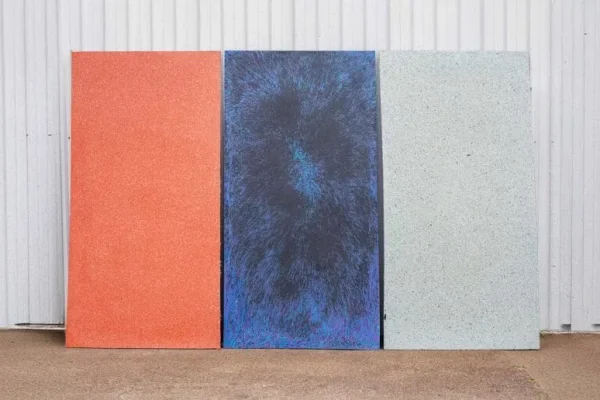
- Request a Sample: Before your next tender, order a sample pack to feel the weight and durability of the material. Seeing the “N70 White Confetti” or “Midnight Blue” patterns in person often seals the deal for architects and clients alike.
The Bottom Line
In 2026, building with marine plywood is a short-term fix with a long-term price tag. Switching to recycled HDPE is a strategic financial move that protects your margins, reduces your maintenance liability, and ensures your project is compliant with the most stringent sustainability laws in Australian history.
Stop sanding, stop sealing, and start building for the future.
Ready to future-proof your next project? Explore our range of 100% recycled plastic panels or contact our team to discuss how we can help you win your next tender.