For decades, Australian coastal infrastructure has been locked in a losing battle against the elements. From the salt-heavy spray of the Great Ocean Road to the high-humidity environments of Tropical North Queensland, traditional timber has long been the default: and the primary maintenance headache: for builders and local councils.
However, as we move through 2026, a significant shift is occurring in the built environment. Specifiers are moving away from "the way it’s always been done" and moving toward materials engineered for survival. In high-corrosion zones, 100% recycled plastic panels are now the strategic choice over treated timber for everything from boardwalks and jetties to retaining walls and public furniture.
This isn't just about "being green." It’s about asset management, life-cycle costs, and structural reliability.
The "Coastal Decay Cycle": Why Timber Fails
In a marine environment, timber is under constant attack from four main fronts. Even the highest-grade "marine plywood" or treated hardwood eventually succumbs to what engineers call the "Coastal Decay Cycle."
- Salt Crystal Wedging: As salt water permeates timber fibres and evaporates, salt crystals grow. This internal pressure causes the wood to check, crack, and eventually split from the inside out.
- UV Degradation: The harsh Australian sun breaks down the lignin in wood, leading to surface silvering and structural embrittlement.
- Marine Borers & Termites: In wet or coastal soils, timber is a buffet. Even treated wood requires constant chemical monitoring to prevent catastrophic internal failure.
- Moisture Absorption: Wood is naturally hydrophilic. It swells and shrinks with every tide and rain event, leading to warped boards and loosened fasteners.
"In the marine environment, timber isn't just a building material; it's a ticking maintenance clock. Once that first crack appears, the salt takes over." : Resourceful Living Engineering Team
Technical Performance: Recycled Plastic vs. Timber
When we talk about recycled plastic in 2026, we aren't talking about flimsy park benches. We are talking about industrial-grade rHDPE (Recycled High-Density Polyethylene) panels. At Resourceful Living, we manufacture these as solid blocks of 100% Australian plastic waste, with no additives or veneers.
1. Zero Moisture Absorption (Hydrophobic Nature)
Unlike timber, rHDPE is 100% waterproof. It has a moisture absorption rate of 0.0%. This means it is physically impossible for salt-laden water to enter the material. There is no swelling, no warping, and no internal rot. For a boardwalk or jetty project, this translates to a surface that remains flat and safe for decades.
2. Immunity to Biological Attack
Marine borers and termites cannot digest plastic. This eliminates the need for toxic chemical treatments (like CCA) that eventually leach into our pristine coastal ecosystems. Choosing recycled plastic is a permanent biological barrier.
3. UV Stability for the Australian Sun
Our panels are engineered with high-grade UV stabilisers specifically for the Southern Cross. They don't become brittle or lose their structural integrity. While timber requires annual oiling or staining to stay "healthy," recycled plastic panels simply exist.

Comparative Data: The 50-Year Asset Strategy
For project managers and procurement officers, the decision usually comes down to the bottom line. While the initial material cost of recycled plastic is roughly 1.8x higher than treated pine, the Total Cost of Ownership (TCO) paints a completely different picture.
Material Performance Comparison Table
| Feature | Treated Timber (Hardwood/Pine) | 100% Recycled Plastic Panels |
|---|---|---|
| Moisture Absorption | 15% – 30%+ (Leads to rot) | 0.0% (Fully Waterproof) |
| Salt Resistance | Poor (Structural degradation) | Excellent (Impervious) |
| Expected Lifespan | 7 – 15 Years (In coastal zones) | 50+ Years |
| Maintenance | Sanding, staining, oiling, board replacement | Occasional pressure wash only |
| Safety | High risk of splinters/warping | Zero splinters, consistent surface |
| End of Life | Landfill (Often contaminated) | 100% Recyclable (Take-back program) |
The ROI Breakdown:
Recent data shows that over a 50-year period, recycled plastic infrastructure is 80% cheaper than timber. You effectively eliminate 3-4 full replacement cycles and 50 years of maintenance labour.
High-Intent Applications in Coastal Construction
Builders and specifiers are currently integrating our 2400mm x 1200mm panels (available in 3mm to 40mm thickness) across several critical coastal categories:
1. Boardwalks and Beach Access
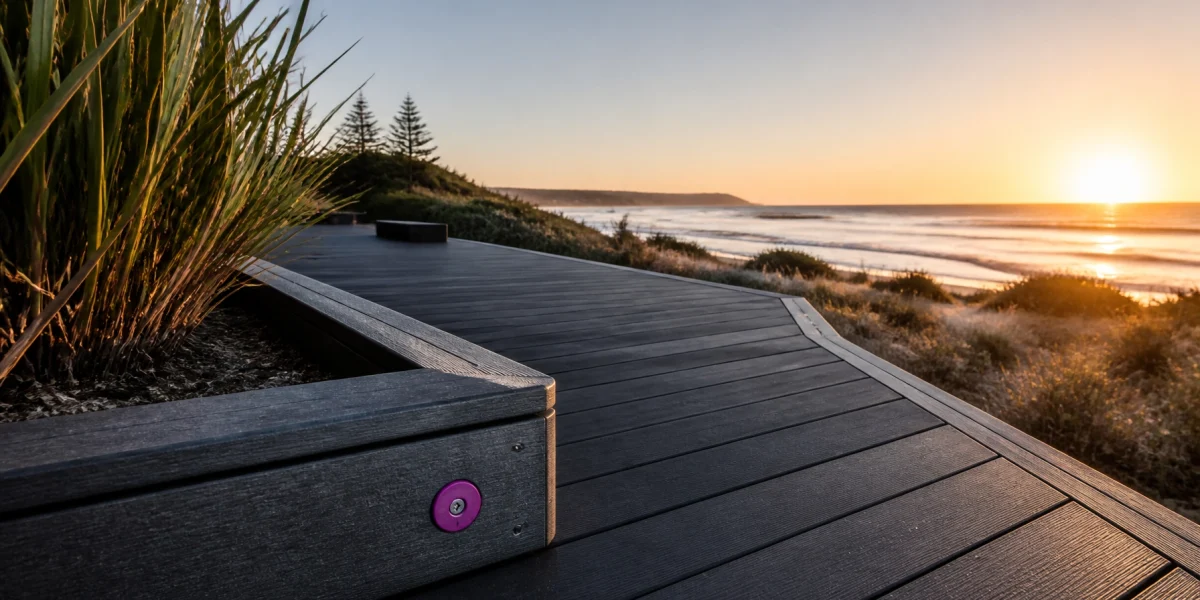
Traditional timber boardwalks are notorious for splinters: a massive liability for public beach access. Recycled plastic panels offer a non-slip, splinter-free surface that withstands constant sand abrasion.

2. Sea Walls and Retaining Structures
In the splash zone, concrete cracks and timber rots. Recycled plastic sheets are being used as durable liners and structural components for retaining walls, providing a barrier that salt cannot penetrate.
3. Coastal Signage and Wayfinding
Wayfinding signs near the ocean are usually the first things to look "shabby." The paint peels and the wood cracks. By using CNC-routed recycled plastic panels, councils can create permanent, vandal-resistant signage that looks as good in year 20 as it did on day one.
4. Marine-Grade Furniture
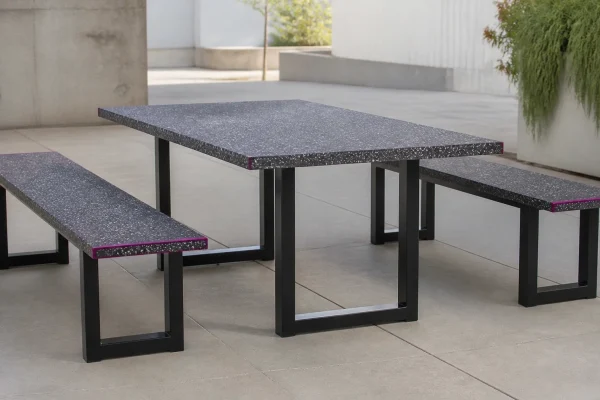
From beachside picnic tables to park benches, commercial-grade recycled plastic furniture is replacing timber and metal. It won't rust, it won't rot, and it doesn't need to be bolted down for "maintenance seasoning."
Circularity: Meeting 2026 Sustainability Targets
Beyond the technical superiority, there is a regulatory push. With embodied carbon reporting becoming mandatory for many large-scale tenders, the choice of material is under the microscope.
- 100% Australian Waste: We only use plastic collected here in Australia, helping you meet local content requirements.
- Low Carbon Emissions: Our manufacturing process has a significantly lower carbon footprint compared to traditional material production.
- The Take-Back Program: We don't just sell you the material. At the end of its 50+ year life, we collect the products free of charge to remanufacture them. This is true circularity.

Checklist: Is Recycled Plastic Right for Your Project?
If you are currently spec'ing a coastal project, use this checklist to determine if you should make the switch:
- Is the site within 1km of the ocean? (High salt spray risk).
- Is the area prone to high humidity or heavy rainfall?
- Are there budget constraints for ongoing maintenance?
- Does the project require "barefoot friendly" surfaces (no splinters)?
- Are you required to report on recycled content or carbon footprint?
If you checked more than two boxes, specifying recycled plastic is the logical, long-term solution.
The Bottom Line
The era of replacing "rotting timber" every decade is coming to an end. In the harsh Australian coastal environment, durability isn't just a feature: it’s a necessity. By switching to 100% Australian recycled plastic, you aren't just building a boardwalk or a jetty; you're building a 50-year asset that supports our local environment.
Ready to see the material in person?
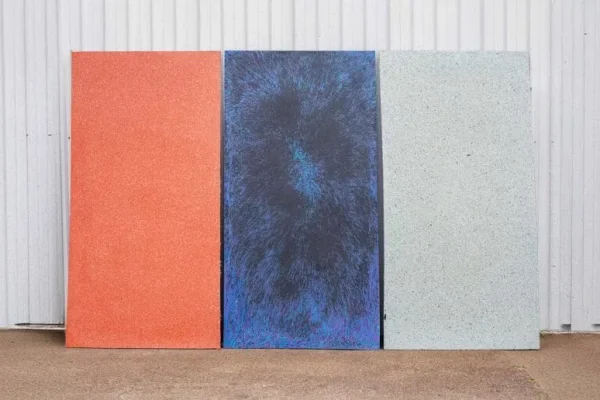
We manufacture 1 tonne of plastic per day and offer a variety of colours and custom sizes. Contact the Resourceful Living team today to request a sample pack for your next coastal tender.