The Australian construction landscape has reached a definitive tipping point in 2026. The transition from a "take-make-waste" linear model to a circular construction economy is no longer a visionary concept: it is a procurement requirement. For specifiers, architects, and developers, this shift necessitates a total re-evaluation of material selection, moving away from high-maintenance traditional assets toward materials that offer guaranteed circularity.
At the centre of this revolution are 100% recycled plastic sheets. As project tenders increasingly demand rigorous embodied carbon reporting and verified end-of-life pathways, the ability to specify a material that can be recycled up to 11 times without losing structural integrity is becoming the new industry benchmark.
The 2026 Pivot: Why "Sustainable" Is No Longer Enough
For years, "sustainability" was used as a broad umbrella term that often lacked technical depth. In 2026, the industry has matured. We are now seeing the 2026 Circular Construction Pivot, where procurement rules have shifted to favour materials that demonstrate a closed-loop lifecycle.
Specifiers are moving away from traditional materials like timber and concrete for non-structural applications due to three primary drivers:
- Supply Chain Traceability: The need for 100% Australian-made materials to mitigate global logistics risks and verify environmental claims.
- Maintenance Costs: The rising cost of labour makes high-maintenance materials like timber a long-term financial liability.
- End-of-Life Liability: New regulations now hold developers accountable for the waste generated at a building’s end of life.
"The shift toward circularity in 2026 is driven by the realisation that waste is simply a design flaw. By specifying materials that are engineered for remanufacturing, we eliminate the future cost of landfill." : Industry Insight
The 11-Cycle Lifespan: Engineering for Infinite Reuse
The most significant advantage of Resourceful Living's recycled plastic panels is their mechanical recyclability. Unlike composite materials that use glues, resins, or veneers, our panels are solid blocks of 100% recycled plastic. This purity allows the material to be shredded, melted, and reformed into new panels up to 11 times.
Technical Specifications for Circular Specifying
- Standard Size: 2400mm x 1200mm
- Thickness Range: 3mm to 40mm
- Composition: 100% Australian post-consumer and post-industrial plastic waste.
- Additives: Zero (No veneers, no chemical binders, no VOCs).
- Manufacturing Capacity: 1 tonne of plastic processed per day.
By integrating these panels into commercial and public infrastructure, you are not just selecting a material; you are securing a renewable asset. When a project reaches its end of life, these panels don't become a waste disposal cost. Through our take-back program, we collect the material free of charge to return it to the manufacturing cycle.

Recycled Plastic vs. Traditional Materials: The Data
In 2026, data-driven decision-making is paramount. When comparing recycled plastic to traditional materials like timber, the long-term value proposition is clear, especially when considering durability and maintenance data.
| Feature | 100% Recycled Plastic Sheets | Traditional Timber (Hardwood) |
|---|---|---|
| Maintenance | Zero (UV-stable, rot-proof) | High (Oiling, sanding, painting) |
| Moisture Resistance | 100% Waterproof | Absorbs moisture; prone to rot |
| Chemical Resistance | High (Acid & Alkali resistant) | Low (Prone to staining) |
| Recyclability | 11+ Cycles (Closed-loop) | Limited (Down-cycled or landfill) |
| Embodied Carbon | Low (Australian-made waste) | Variable (Logging & transport) |
| Lifecycle Cost | Low (Initial cost = Total cost) | High (Ongoing maintenance) |
✅ Benefit: Recycled plastic panels eliminate the need for ongoing chemical treatments, which is critical for projects aiming for Green Star v1.1 certification.
Strategic Applications in 2026 Infrastructure
As the Australian "Circular Economy" gains momentum, we are seeing recycled plastic sheets replace traditional materials across a wide variety of high-traffic and high-impact sectors.
1. Commercial and Retail Fit-Outs
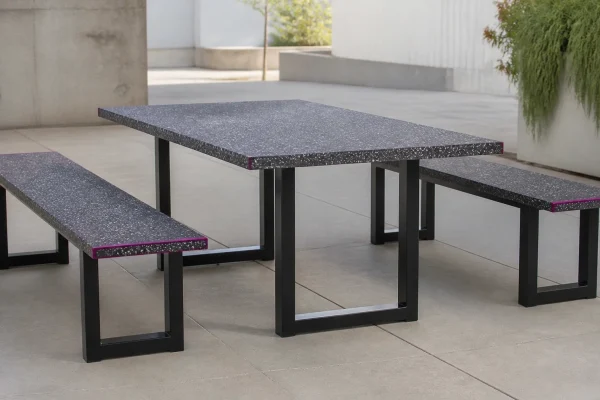
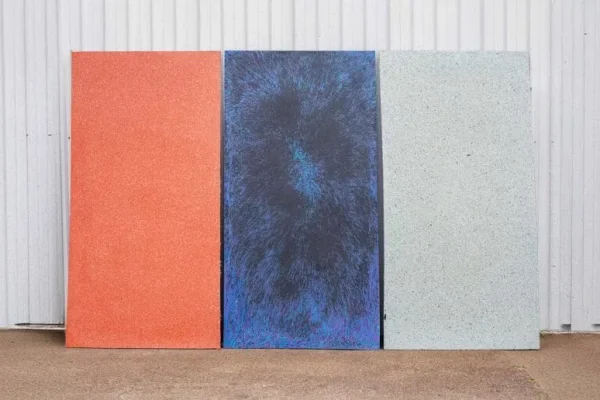
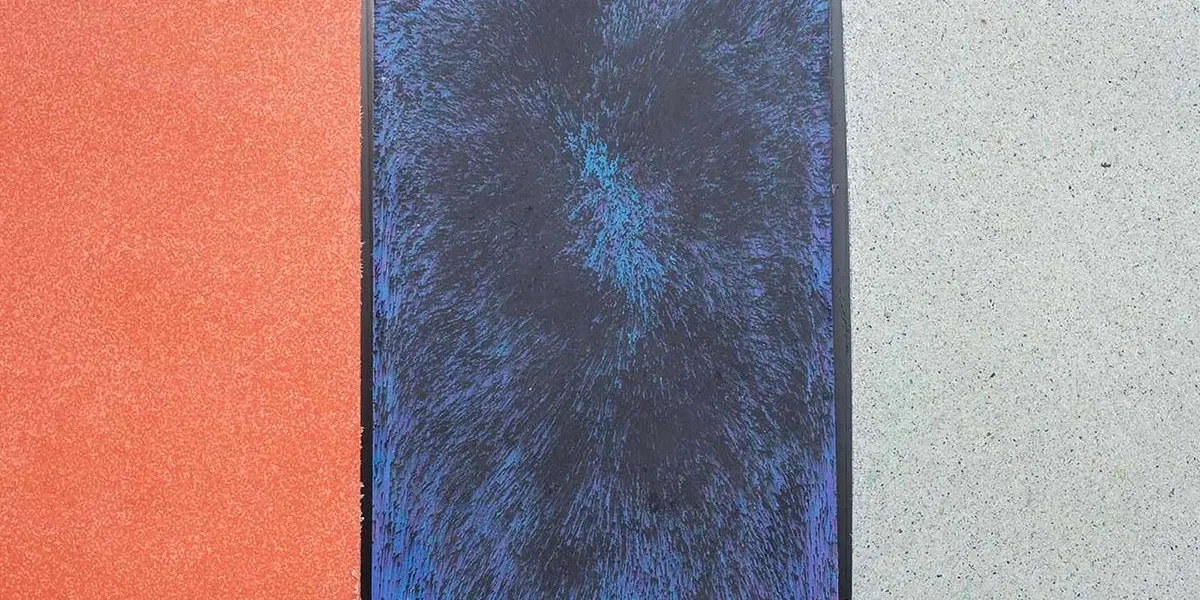
Retailers are under immense pressure to reflect their sustainability values in their physical stores. Our panels are used for heavy-duty shelving, retail displays, and internal wall cladding. The N70 White Confetti style, for instance, provides a high-end aesthetic while telling a clear recycling story.
2. Public Infrastructure and Wayfinding
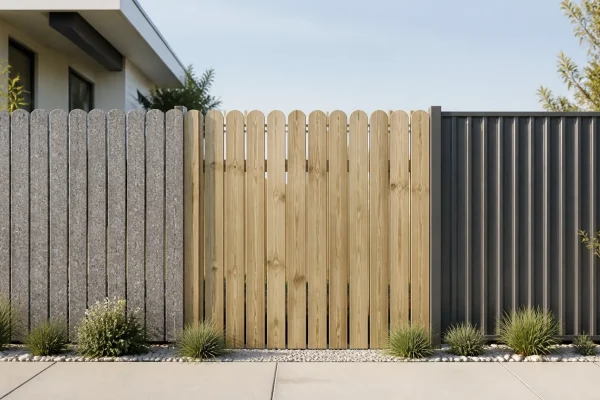
In public spaces, durability is the primary requirement. Recycled plastic is increasingly specified for noise barriers, signage substrates, and erosion control panels. Because the material is solid-core, it is highly resistant to graffiti and mechanical impact.
3. Site Hoardings and Temporary Works
The construction industry is one of Australia's largest waste generators. By swapping single-use plywood hoardings for reusable, recyclable plastic panels, builders can significantly reduce their site waste. These panels can be used on one project, then returned and remanufactured for the next, supporting embodied carbon reduction targets.

How to Spec for Success: The 2026 Checklist
To ensure your project meets the new standards for circularity, follow this checklist when specifying recycled plastic materials:
- [ ] Verify 100% Australian Content: Does the manufacturer use 100% Australian waste? Avoid imported recycled plastics which often have high transport emissions and opaque supply chains.
- [ ] Demand Solid-Core Material: Ensure there are no veneers or additives. Purity is the key to recyclability.
- [ ] Confirm a Take-Back Program: Does the manufacturer have a formal program to collect the material at the end of its life?
- [ ] Review Traceability Data: Can the supplier trace the plastic back to its source (e.g., post-consumer milk bottles)?
- [ ] Check for Testing Metrics: Ensure the material has been tested for UV resistance, strength, and fire safety relevant to the NCC 2025/26 standards.
The Economic Reality of Circularity
Choosing circular materials is no longer just an environmental choice: it is an economic one. Landfill levies in Australia continue to rise, making the disposal of traditional construction waste increasingly expensive. By specifying a material that belongs to a closed-loop system, you effectively "future-proof" the project's decommissioning costs.
Furthermore, companies that can demonstrate a high percentage of recycled content in their projects are more likely to win government tenders. The Australian government's focus on sustainable procurement means that circularity is now a competitive advantage.

Conclusion: Lead the Change
The shift toward circular construction in 2026 is the most significant change to the Australian building industry in decades. By moving away from "single-use" materials and embracing high-performance, 100% recycled plastic sheets, specifiers are leading the way toward a waste-free future.
Ready to transition your next project to a circular model?
Resourceful Living provides the data, the traceability, and the high-quality materials needed to meet 2026’s rigorous standards.
👉 Download our Technical Specification Guide to see how our 100% recycled panels can replace traditional materials in your next commercial or public infrastructure project.