If you’re still thinking about site waste as something you simply "throw away" at the end of a project, 2026 is going to be a wake-up call. The days of cheap skip bins and "out of sight, out of mind" waste management are officially over.
In Australia, we’ve hit a tipping point. Circular construction 2026 isn't just a buzzword for sustainability consultants anymore; it’s a fundamental shift in how we procure, use, and recover materials. With landfill levies skyrocketing and new regulatory frameworks from the Green Building Council of Australia (GBCA) taking effect, managing your site waste has become a critical financial necessity.
At Resourceful Living, we’re seeing a massive increase in builders and developers who are moving away from linear "take-make-waste" models. They aren’t doing it just to be "green": they’re doing it to protect their margins.
The Financial Reality: Why Your Waste Bill Just Tripled
The most significant driver behind the circular construction shift in 2026 is the sheer cost of disposal. Across most Australian states, landfill levies have seen aggressive increases designed to divert material back into the productive economy.
When you factor in transport, bin hire, and the levy itself, the cost of sending mixed C&D (Construction and Demolition) waste to landfill is often higher than the cost of the material itself. If your project relies on high-waste materials like traditional plywood hoardings or single-use plastics, your "waste tax" is eating your profit.
The Rise of the "Resource Management" Plan
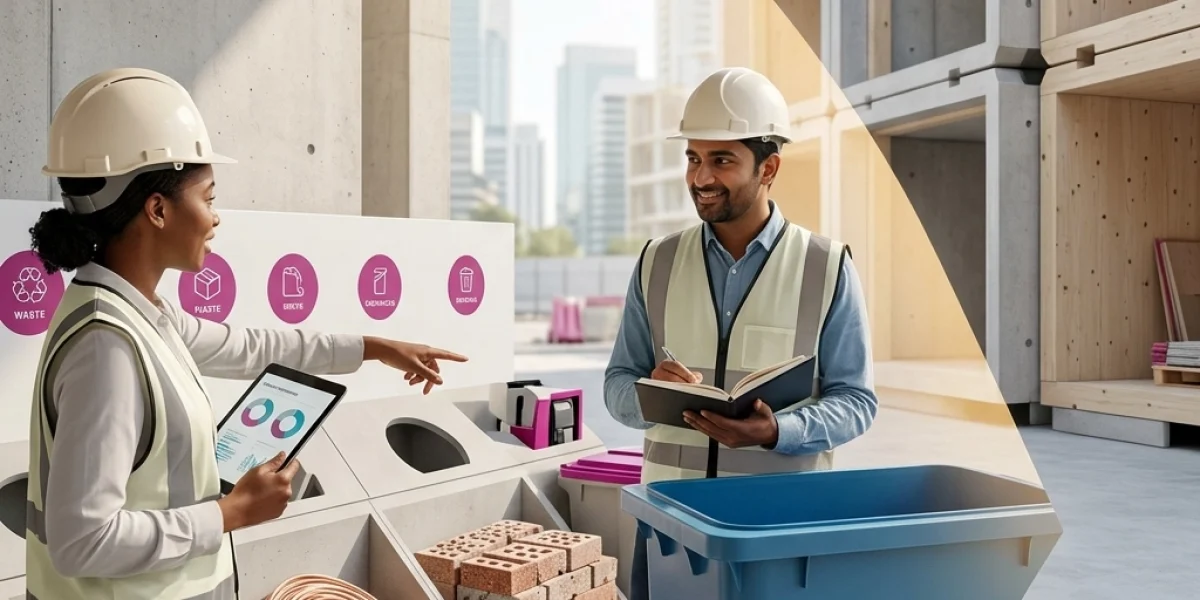
In 2026, a standard waste management plan isn't enough. Leading tier-one and tier-two contractors are now implementing Resource and Waste Management Plans (RWMPs) from the pre-construction phase. This involves:
- Accurate quantity surveying to reduce over-ordering.
- On-site segregation to avoid contamination levies.
- Procurement of materials with guaranteed end-of-life pathways.
By treating waste as a resource, you aren't just complying with regulations; you're avoiding the "dead money" associated with traditional disposal methods.
New GBCA Frameworks: Beyond the Star Rating
The Green Building Council of Australia has updated its Green Star frameworks to put a much heavier emphasis on circularity. In 2026, it’s no longer enough to just recycle a bit of steel and concrete. To achieve high ratings, projects must demonstrate traceable circularity.
This means you need to show exactly where your "recycled" material came from and where it goes after the building is decommissioned or the fit-out is replaced. This is where embodied carbon reporting becomes vital. If you can’t track the data, you can’t claim the points: or the carbon credits.
"The shift in 2026 is about moving from 'recyclable' to 'recycled and tracked.' If you don't have the data to back up your material's lifecycle, it doesn't count toward your circularity goals."
For more on how to navigate these requirements, check out our guide on embodied carbon reporting Australia matters.
Specifying for Zero Waste: The Power of Recycled Plastic Panels
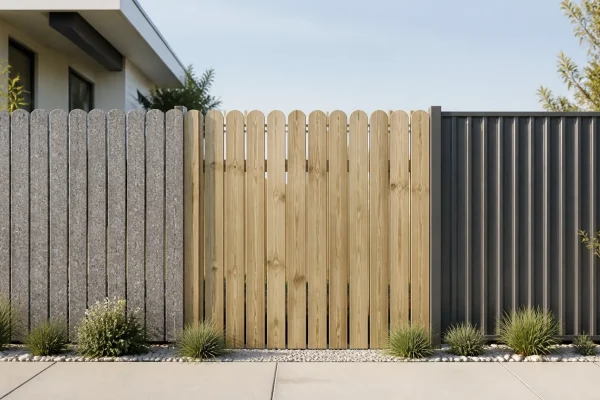
One of the easiest ways to implement circular construction 2026 principles is through smarter material specification. Traditional site materials, like marine plywood or low-grade timber, are often treated with chemicals that make them impossible to recycle at the end of their life. They become permanent landfill.
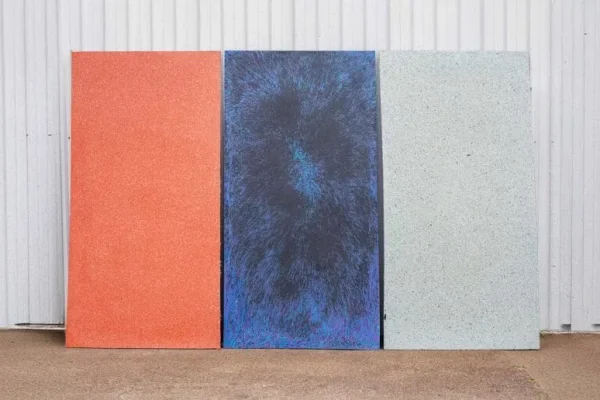
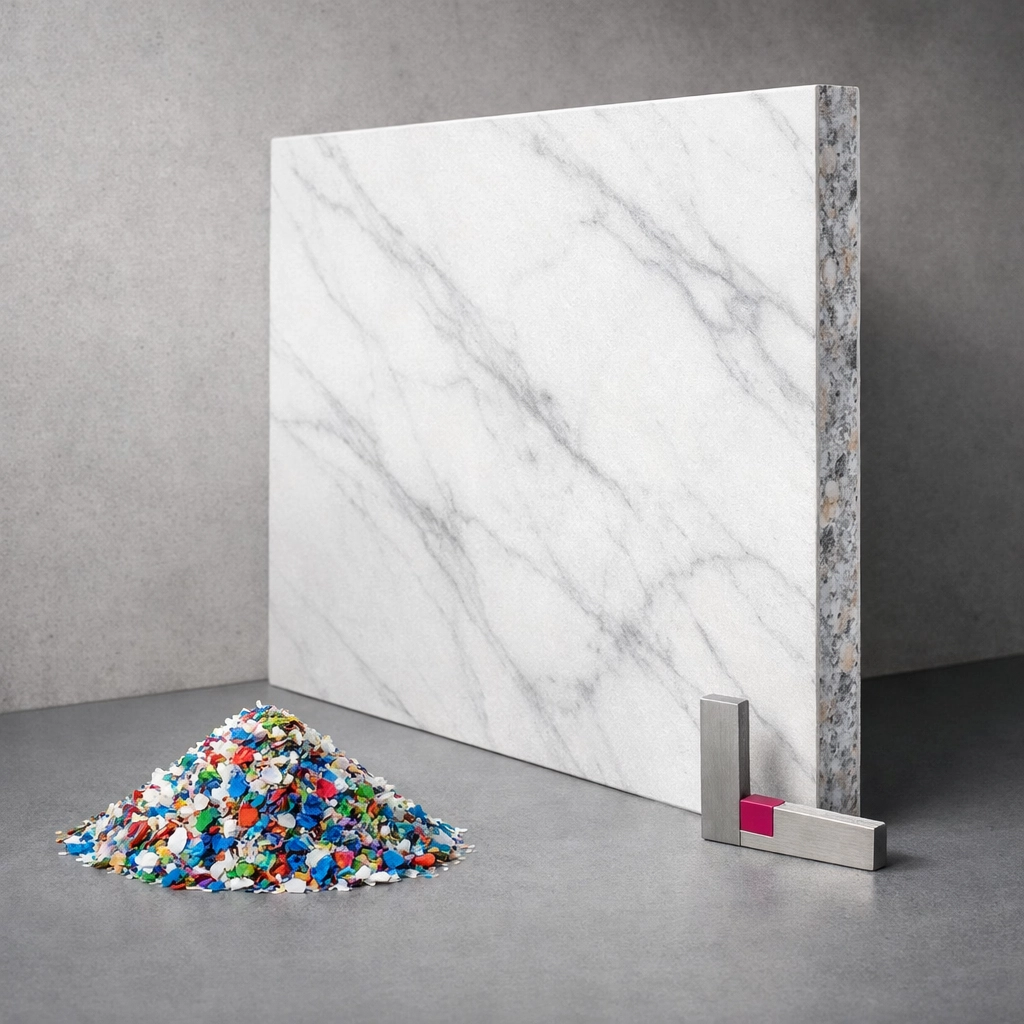
By specifying recycled plastic sheets Australia, you are choosing a material that is inherently circular.
Why HDPE Panels are a Game Changer:
- Zero Chemical Contamination: Unlike treated timber, our HDPE panels are 100% plastic, meaning they can be shredded and remanufactured infinitely.
- Durability: They don't rot, swell, or delaminate. This means you can reuse them across multiple projects, drastically reducing your procurement costs over time.
- End-of-Life Certainty: When a panel finally reaches the end of its functional life, it doesn't go in a skip. It comes back to us.
You can compare the long-term costs of these materials in our 2026 price guide.
On-Site Waste Management: Bringing the Factory to the Site
The logistical nightmare of site waste often comes down to volume. Bulky materials like expanded polystyrene (EPS) or large plastic offcuts take up massive amounts of space and require frequent, expensive truck movements.
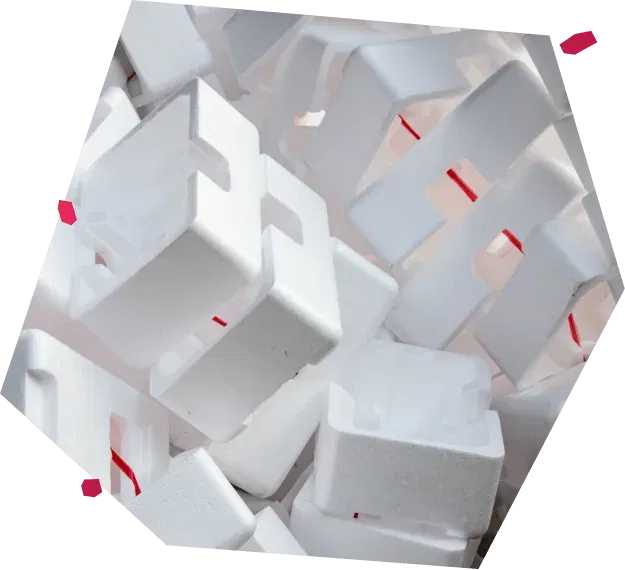
In 2026, the industry is moving toward on-site processing. Instead of paying to haul air (which is essentially what you do when you skip un-crushed plastic or foam), smart sites are using mobile shredding units.
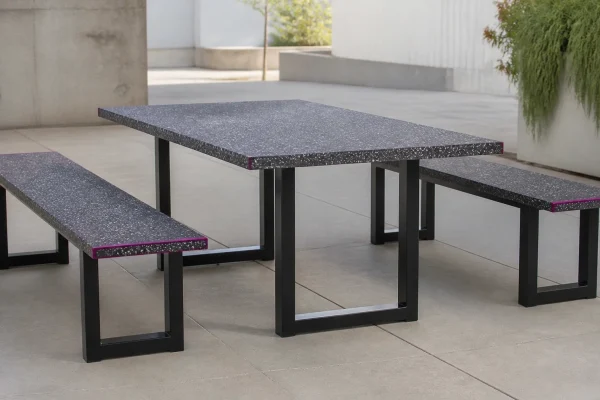
We’ve pioneered this with our on-site shredding service. We bring the processing equipment to your doorstep, turn your waste into clean, shredded flake, and transport it back to our facility to be turned into your next batch of furniture or panels.
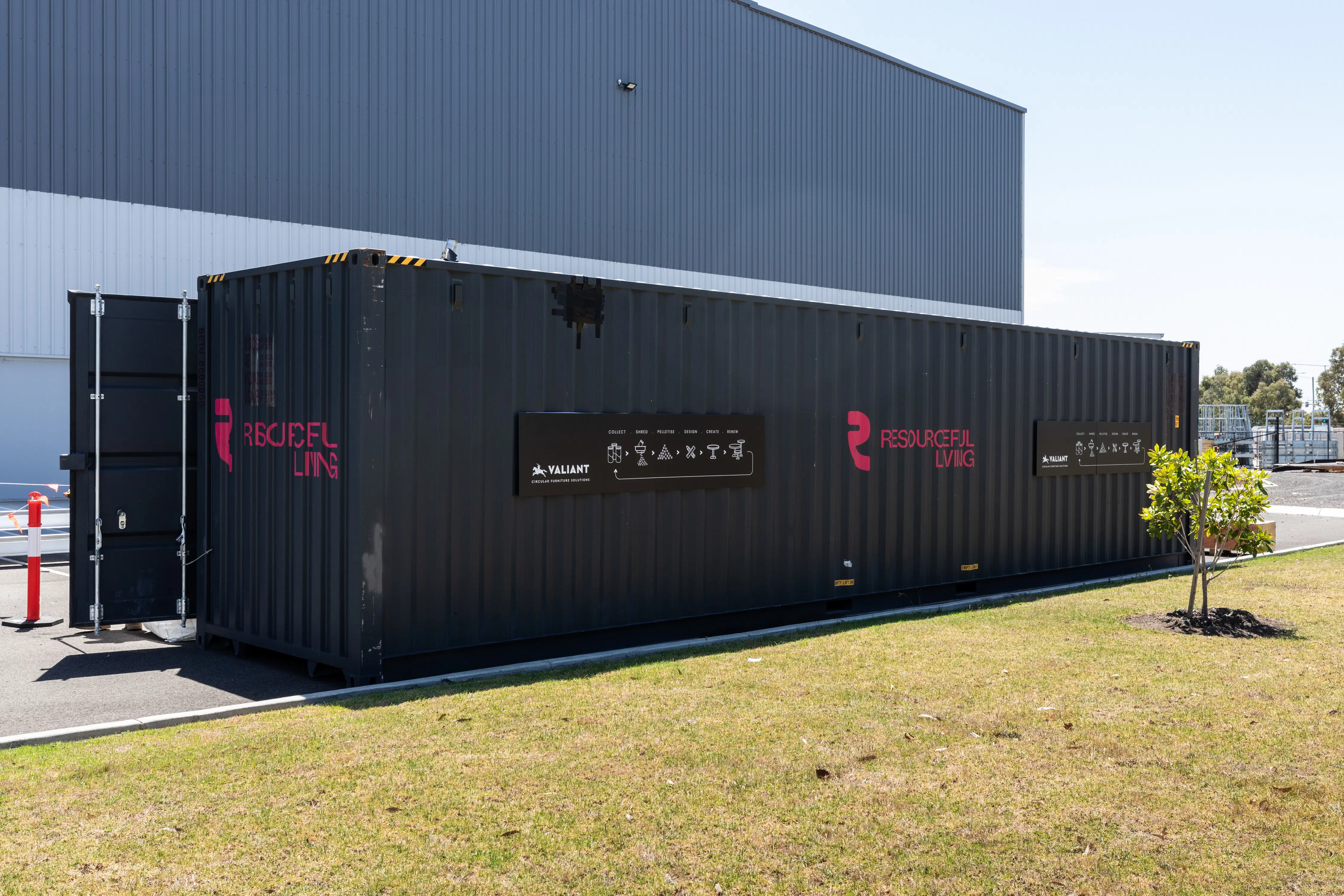
This drastically reduces your carbon footprint by cutting down on transport emissions and ensures that 100% of the material is diverted from landfill.
Closing the Loop: The Take-Back Program
A "circular" system only works if the loop actually closes. In the past, the construction industry relied on third-party recyclers who often exported waste or downcycled it into low-value products.
Circular construction 2026 is defined by Producer Responsibility. When you buy a product from Resourceful Living, you aren't just buying a sheet of plastic; you’re buying into a system. We offer a guaranteed take-back program for all our panels.
Whether it's offcuts from a commercial fit-out or panels from a temporary hoarding, we take them back, shred them, and make them into something new. This isn't just good for the planet: it’s a massive win for your Waste Diversion Targets.
Practical Implementation: 3 Steps to Circularity
If you’re ready to overhaul your site waste management, here is how to start:
- Audit Your Current Waste: Look at your skip bin receipts from the last six months. How much of that was "avoidable" waste like timber offcuts or packaging?
- Switch Your Specs: Replace single-use materials with reusable or fully recyclable alternatives. Our recycled plastic vs. timber comparison shows exactly how to make the switch.
- Partner with a Local Manufacturer: Ensure your supplier is actually using Australian waste and has a local facility. Greenwashing is rife, and "local traceability" is your only real defense.
The ROI of Circularity
Let's talk numbers. While the upfront cost of a high-quality recycled plastic panel might be higher than a cheap sheet of ply, the Total Cost of Ownership (TCO) is significantly lower.
In a circular model, you have:
- Reduced procurement costs through material reuse.
- Eliminated landfill levies through take-back programs.
- Increased project value through higher Green Star ratings.
- Potential Carbon Credits for diverting high-emissions waste.
You can learn more about this in our guide on how to claim your carbon credits.
Summary: A Future-Proof Strategy
The transition to circular construction 2026 is no longer optional. Between the financial pressure of landfill levies and the regulatory requirements of the GBCA, the industry has reached a point where the linear model is simply too expensive to maintain.
By focusing on on-site waste management, specifying truly recyclable materials, and partnering with local manufacturers who can "close the loop," you aren't just helping the environment: you’re future-proofing your business.
Ready to see how circularity can work on your next project?
Explore our Designers Lookbook for inspiration or reach out to us to discuss our on-site shredding and take-back programs.
The future of construction isn't about what we build; it's about what we don't throw away. Let’s make 2026 the year we stop wasting our potential.