If you're bidding for tier-one or government construction projects in 2026, the goalposts haven't just moved: they've been replanted in an entirely different stadium. "Sustainability" is no longer a "nice-to-have" section at the back of your submission; it is a mandatory procurement requirement that can determine whether your bid is even opened.
The Australian construction landscape has shifted toward Circular Construction. This means clients aren't just looking for energy-efficient buildings; they are demanding proof of where your materials came from, how much embodied carbon they carry, and exactly what happens to them when the building is eventually decommissioned.
This guide outlines the critical procurement shifts in 2026 and how specifying Australian-made recycled plastic gives you the data-backed edge needed to win.
1. The 2026 Procurement Landscape: Beyond "Greenwashing"
In 2026, the Commonwealth's Environmentally Sustainable Procurement (ESP) Policy is in full swing. For any government construction project over $7.5 million, bidders must demonstrate specific sustainability outcomes.
Mandatory Sustainability Outcomes
To secure these high-value contracts, your tender must address:
- Waste Repurposing: Strategies to eliminate construction waste from landfills.
- Recycled Content Targets: Clear percentages of recycled materials used in the build.
- Circular Design: Evidence that materials can be recovered and reused at the end of their life.
"The 'Value for Money' calculation under the Commonwealth Procurement Rules now explicitly includes environmental sustainability and circularity. If you can't quantify your material's second life, you're leaving points on the table." : Industry Procurement Consultant.
By moving away from single-use materials like traditional plywood and toward circular construction materials, you align your bid with federal and state mandates like Victoria's Recycled First policy.
2. Embodied Carbon: The New Currency of Construction
While operational carbon (energy use) used to be the focus, embodied carbon: the emissions locked into materials during manufacture: is now the primary metric for 2026 tenders.
The A1–A5 Framework
Most modern tenders, especially those following NABERS or Green Star v1.1, require reporting on "Upfront Carbon." This covers:
- A1–A3: Raw material extraction and manufacturing.
- A4: Transport to the site.
- A5: Construction waste and site energy.
Why Resourceful Living Gives You the Advantage
Our 100% recycled plastic sheets are a "carbon cheat code" for your ESG manager:
- The 19-Sheet Rule: For every 19 sheets of our 20mm panels used, you save 1 tonne of CO2 emissions.
- Traceability: We use 100% Australian plastic waste. This means your A4 transport emissions are drastically lower than imported alternatives, and your A1-A3 data is 100% traceable and auditable.
- Mechanical Recycling: Our process avoids the heavy chemical and fossil-fuel-intensive steps required for virgin plastic or high-emission composites.

3. Product Substitution: High-Impact Wins
You don't have to redesign the entire structure to win a circular tender. Some of the most effective points are scored through material substitution in high-volume areas.
| Application | Traditional Material | Sustainable Alternative | Competitive Edge |
|---|---|---|---|
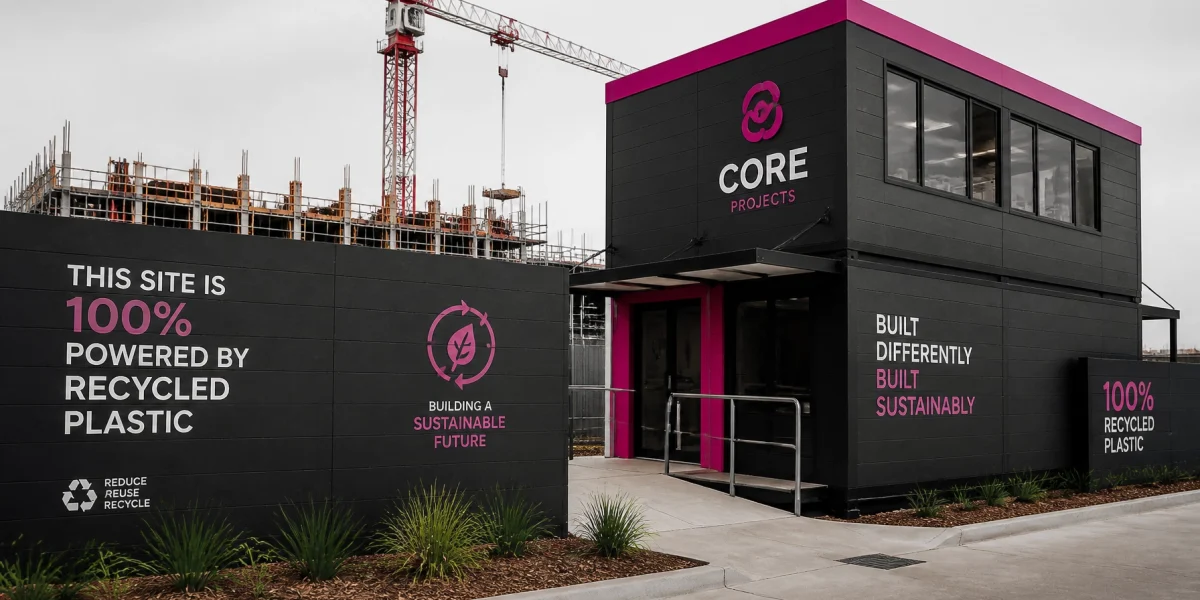
| Site Hoarding | Single-use Plywood | Recycled Plastic Sheets | Zero rot, 100% recyclable, professional finish. |
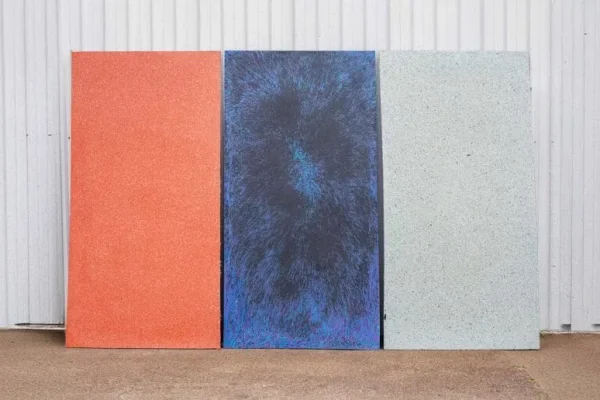
| Internal Linings | Virgin Plastic/MDF | 100% Recycled Panels | Lower embodied carbon, water-resistant. |
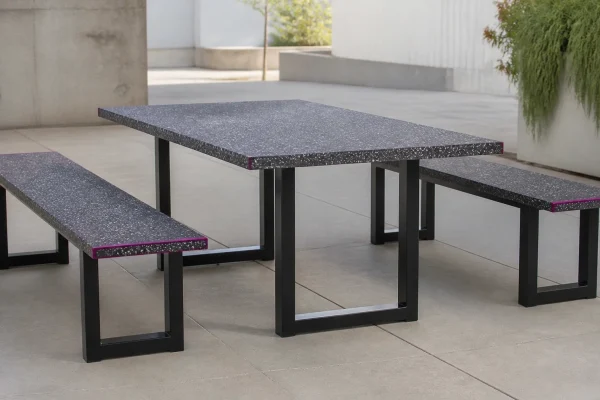
| Retail Fit-outs | Composite Veneers | Speckled HDPE Panels | Aesthetic "sustainability" story, zero-VOC. |
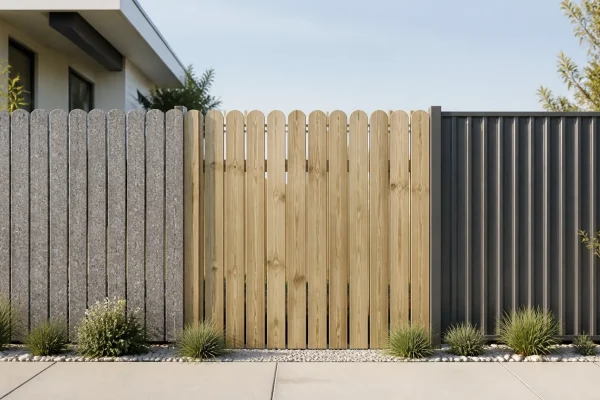
| Noise Barriers | Treated Timber | Solid Recycled Sheets | 50+ year lifespan, zero maintenance. |
By substituting recycled plastic for traditional materials, you are providing a quantified reduction in Scope 3 emissions for your client: a major selling point for Group 1 and Group 2 entities under the AASB S2 disclosure regime.
4. Closing the Loop: The Take-Back Advantage
A true circular economy doesn't end when the ribbon is cut. One of the most common pitfalls in 2026 tenders is failing to account for the End-of-Life (EoL) phase.
Resourceful Living offers a formal take-back program. When our products reach the end of their useful life: whether that’s in 5 years or 50: we collect them free of charge to be remanufactured into new panels.
This allows you to state in your tender:
- "100% of the material used for [hoarding/fit-out] will be diverted from landfill at the end of use."
- "The material is part of a closed-loop Australian manufacturing cycle."
- "End-of-life logistics are pre-arranged through a verified manufacturer take-back scheme."
This level of detail is exactly what commercial builders switching to recycled plastic use to differentiate their bids from competitors relying on landfill-bound materials.
5. Your 2026 Tender-Ready Checklist
Before you hit "submit" on your next bid, ensure you have these five components locked in:
✅ Verified EPDs: Do your suppliers provide product-specific Environmental Product Declarations? (Resourceful Living provides the technical data you need for embodied carbon reporting).
✅ Australian-Made Provenance: Can you prove the material hasn't been shipped across the globe? (Choosing local helps hit Local Jobs First and ESP transport targets).
✅ Quantified Carbon Savings: Don't just say it's "green." State: "This selection reduces project upfront carbon by X tonnes of CO2e compared to the reference design."
✅ Zero-Waste Commitment: Does your material supplier have a take-back program to ensure zero landfill?
✅ Traceability Report: Can you trace the plastic back to its source? (Our end-to-end management allows for 100% source traceability).

Summary: Winning the Future
In 2026, the winners of the construction tendering game won't just be the ones with the lowest price. They will be the companies that provide the highest circular value with the lowest carbon risk.
By integrating 100% Australian recycled plastic sheets into your projects, you aren't just buying a material; you're buying a data-backed narrative of efficiency, local impact, and climate leadership.
Ready to boost your next tender submission?
At Resourceful Living, we manufacture 1 tonne of recycled plastic every day in our Australian facility. Our panels are tested for strength, durability, and weather resistance, making them the logical choice for the modern built environment.
👉 Get a Price Guide for your next bid or contact Jess and the team to discuss custom bespoke solutions for your project.