As the Australian construction industry pivots toward circular construction in 2026, the demand for high-performance, low-carbon materials has reached an all-time high. Recycled plastic sheets Australia buyers can actually specify with confidence have moved from "experimental" to a "standard specification" for architects, builders, and shopfitters who need to meet strict sustainability targets without sacrificing durability.
At Resourceful Living, we manufacture 1 tonne of recycled plastic every single day, right here in Australia. We get asked a lot of questions about how our recycled plastic sheet material behaves on-site. This guide is designed to be your comprehensive technical resource for specifying, comparing, and sourcing 100% recycled plastic sheets in Australia.
If you're researching where to buy recycled plastic sheets, how recycled plastic sheets price compares over the full lifecycle, or whether custom sheet manufacturing is possible for your project, you'll find the key answers below.
1. Can recycled plastic sheets be used structurally?
The short answer is no.
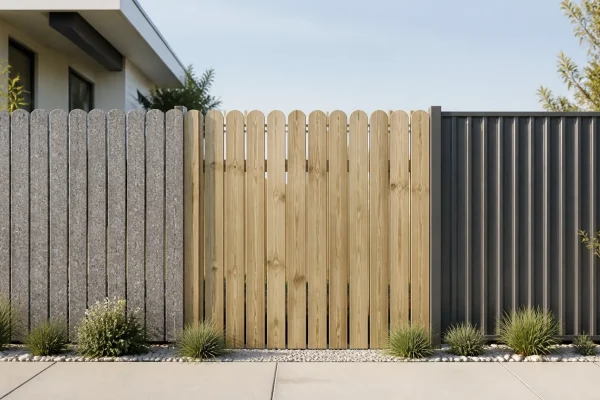
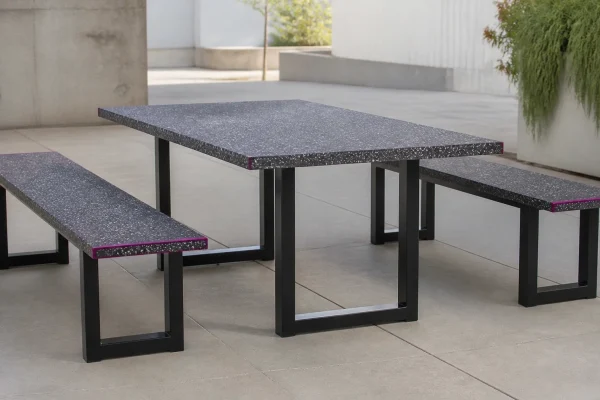
While our sheets are incredibly dense and offer high impact resistance, they are categorized as non-structural materials. They are ideal for fit-outs, surfacing, furniture, wall linings, and joinery, but they should not be used as primary load-bearing elements like floor joists or structural beams.
"When specifying for 2026 projects, treat recycled plastic as a superior alternative to plywood, MDF, or stone surfaces rather than a replacement for structural steel or concrete." , Jess Hodge, Resourceful Living.
If your project requires data on mechanical performance for non-structural modular builds, you can explore our deep dive on recycled plastic vs concrete performance.
2. How do you cut and join recycled plastic sheets?
One of the biggest advantages of our material is its workability. You don't need specialized plastic-welding machinery for basic fabrication.
Cutting
You can cut, drill, and router our sheets using standard timber-working tools.
- Circular Saws: Use a fine-tooth blade for the cleanest edge.
- CNC Routing: Our panels are perfect for CNC machining, allowing for intricate designs and high-precision nesting to minimize waste.
- Jigsaws: Effective for curved cuts or cut-outs for sinks and power outlets.
Joining
- Mechanical Fastening: You can screw directly into the material. We recommend pre-drilling to ensure a flush finish.
- Adhesives: High-quality construction adhesives or epoxy resins work well for bonding sheets to substrates.
- Plastic Welding: For waterproof seams (common in wet-area fit-outs), the sheets can be heat-welded using standard HDPE welding rods.

3. Are the sheets UV stable for Australian conditions?
Yes. We engineer our sheets to withstand the harsh Australian sun.
Our material is UV stable, making it an excellent choice for external cladding, signage, and public realm furniture. Unlike timber, it will not rot, split, or require oiling when exposed to the elements. Over a 50-year lifecycle, this translates to zero maintenance costs related to weather degradation.
For a detailed breakdown of how this stacks up against traditional materials, see our report on recycled plastic vs timber durability.
4. Can they be recycled again at the end of their life?
This is the core of circular construction. Our sheets are 100% recyclable.
We don't just sell you a product and walk away. We offer a comprehensive take-back program. At the end of a project’s life, whether it’s 5 years or 50 years, we will collect our products free of charge and bring them back to our facility to be shredded and remanufactured into new sheets.
- ✅ Zero waste to landfill
- ✅ Traceable material loops
- ✅ Closed-loop manufacturing
This process is critical for meeting new procurement rules in 2026 which often require a proven end-of-life pathway.
5. How do they compare in price?
While the upfront cost of a recycled plastic sheet might be higher than low-grade plywood or MDF, the Total Cost of Ownership (TCO) is significantly lower. If you're comparing recycled plastic sheets price against conventional materials, it's important to assess maintenance, replacement cycles, water damage risk, and labour over the life of the asset.
| Feature | Timber (Hardwood/Ply) | Resourceful Living Sheet |
|---|---|---|
| Initial Cost | Lower | Moderate |
| Maintenance | Annual sanding/oiling | Zero |
| Lifespan | 5–15 years (external) | 50+ years |
| Water Resistance | Low (rots/warps) | 100% Waterproof |
| Termite Proof | No | Yes |
When you factor in the 80% reduction in maintenance labor over a decade, recycled plastic becomes the clear financial winner for commercial assets and public infrastructure.
What affects recycled plastic sheets price?
✅ Thickness: 3mm sheets will naturally cost less than 40mm sheets.
✅ Sheet size: Standard 2400mm x 1200mm is the most efficient format.
✅ Colour selection: Standard colours typically support faster quoting and production.
✅ Custom sheet manufacturing: Bespoke dimensions, colour matching, or production runs may affect lead time and price.
✅ Project volume: Larger orders can improve manufacturing efficiency.
If you need to buy recycled plastic sheets for a fit-out, joinery package, signage project, or public infrastructure upgrade, the cheapest sheet on paper isn't always the lowest-cost material in service.
6. What sizes, performance data, and colours are available?
We maintain a high-volume production schedule to ensure fast turnaround times for large projects.
Standard Sizes
- Dimensions: 2400mm x 1200mm (Standard Australian sheet size).
- Thickness: Ranging from 3mm to 40mm.
- Customization: We can manufacture custom thicknesses and sizes upon request.
Technical section: material density and tensile strength for 2026 building compliance
If you're specifying recycled plastic sheet material for a 2026 project, you should request current technical data rather than relying on generic plastic assumptions. For Australian compliance workflows, designers and builders typically need product data that supports internal engineering review, fit-out documentation, and non-structural material selection.
What to check
- Material density: Density affects sheet weight, handling, fixing strategy, and expected performance in fabrication.
- Tensile strength: Tensile data helps assess resistance to pulling forces, fabrication suitability, and durability in service.
- Test method: Ask for the relevant testing methodology and latest test data for the exact sheet type and thickness being quoted.
- Application suitability: Confirm the intended use is non-structural, especially for joinery, wall linings, cladding elements, furniture, and wet-area fit-outs.
Why density and tensile strength matter in 2026
✅ Compliance reviews are more rigorous: Specifiers increasingly need documented performance data for procurement and approval pathways.
✅ Fabrication decisions depend on the data: Density and tensile performance influence machining, fastening, support spacing, and finished weight.
✅ Not all recycled plastic sheets are equivalent: Material formulation, sheet thickness, and manufacturing quality can affect consistency.
For 2026 building compliance, the safest approach is simple: specify recycled plastic sheets with project-specific technical data, not generic recycled content claims.
At Resourceful Living, we can provide technical information to support specification discussions for recycled plastic sheets Australia projects, including guidance for teams seeking custom sheet manufacturing for specific dimensions, thicknesses, and end-use requirements.
Colour Palette
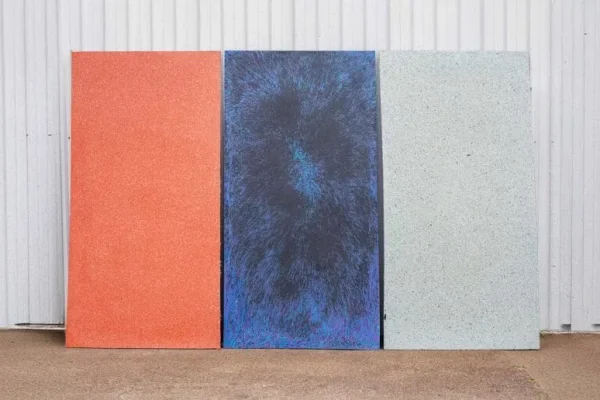
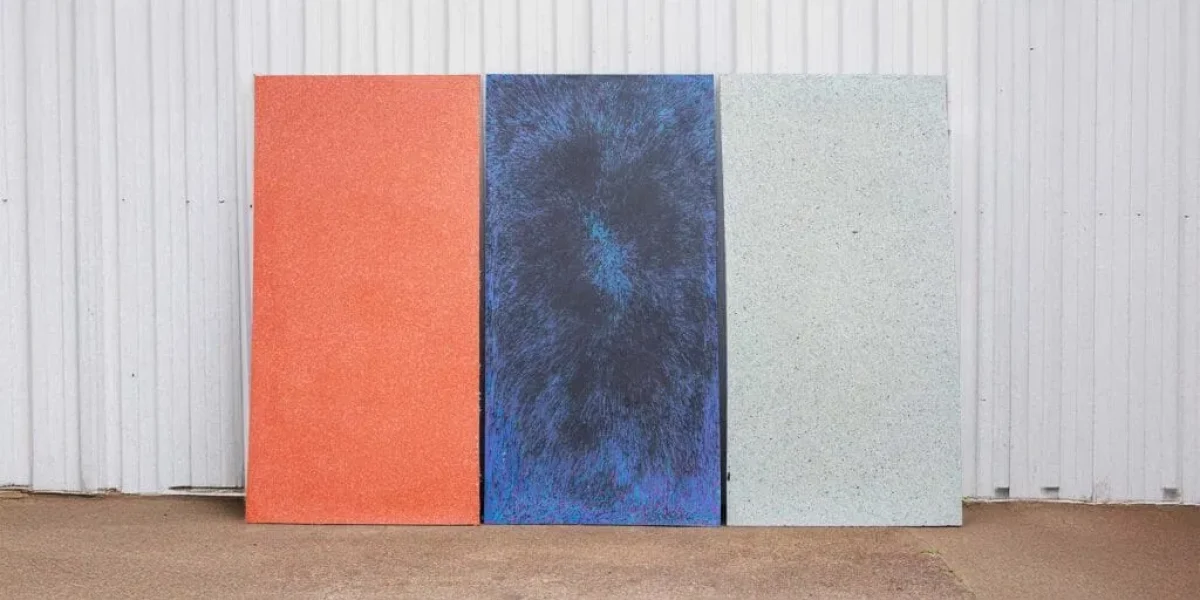
We offer 6 popular standard colours readily available, but because we manage the entire recycling process, we can also produce custom colours for bespoke branding projects. Our sheets are solid blocks of plastic: there are no veneers or coatings to chip off, meaning the colour goes all the way through.
- Ochre: A warm, earthy terracotta tone.
- Lumen: A clean, light-reflective speckled grey.
- River: Deep blues and blacks with organic patterns.
- White Confetti: A bright base with multi-coloured highlights.

7. How do I specify this for a 2026 tender?
To ensure your project meets the 2026 circularity standards, include the following in your specification:
- Material: 100% Australian Recycled HDPE/LDPE.
- Source: Must be 100% traceable Australian waste (no imported "recycled" pellets).
- End-of-Life: Supplier must provide a documented Product Take-Back Program.
- Embodied Carbon: Supplier must provide data for embodied carbon reporting.
Ready to Start Your Project?
If you are planning a retail fit-out, commercial renovation, or public space project, our team can provide technical data sheets, samples, and advice on the right recycled plastic sheet material for your application.
Need custom sheet manufacturing?
If you need to buy recycled plastic sheets in a non-standard size, thickness, or colour, we can help. Our custom sheet manufacturing service is built for specifiers, builders, shopfitters, and designers who need Australian-made material with traceable recycled content and practical turnaround times.
Next steps
- Send us your project requirements — dimensions, thickness, colour, and intended application.
- Request technical data — including suitability guidance for your 2026 compliance workflow.
- Ask for a quote — we'll help you assess recycled plastic sheets price based on volume, specification, and manufacturing requirements.
Contact Resourceful Living today to request a quote, discuss custom sheet manufacturing, or source recycled plastic sheets Australia projects can rely on.